






Paragraph 1
In the world of aviation, we are constantly bombarded by lists, tables, and statistics. Each year, industry experts and data analysts release countless rankings that tell us which airline is the safest, which one is the most punctual, and which one offers the most luxurious first-class suites. These assessments are typically built on dry metrics, safety audits, and rigorous technical inspections. They tell us a lot about operational efficiency, but they often miss the soul of the flying experience. However, a refreshing new survey has just been released, and it flips the script entirely. Instead of relying on the analytical opinions of a select group of aviation experts, this particular ranking has been determined by the very people who actually buckle their seatbelts, sip the mediocre coffee, and wait at the baggage carousel: the passengers themselves. The Flyers’ Choice Awards 2026, organized by the well-respected aviation safety and product rating website AirlineRatings.com, has recognized the best airlines across a dizzying array of categories. From the favorite low-cost carrier for budget-conscious travelers to the most aesthetically pleasing livery, from the smartest cabin crew uniforms to the most comfortable business and economy classes, this year’s awards have pitted airlines against each other in a battle for global passenger approval. By choosing to base the results solely on traveler votes, the awards have effectively created a massive, crowd-sourced referendum on the airline industry, giving a voice to the everyday flyer who might be a nervous flier, a frequent business traveler, or a family on a budget vacation.
Paragraph 2
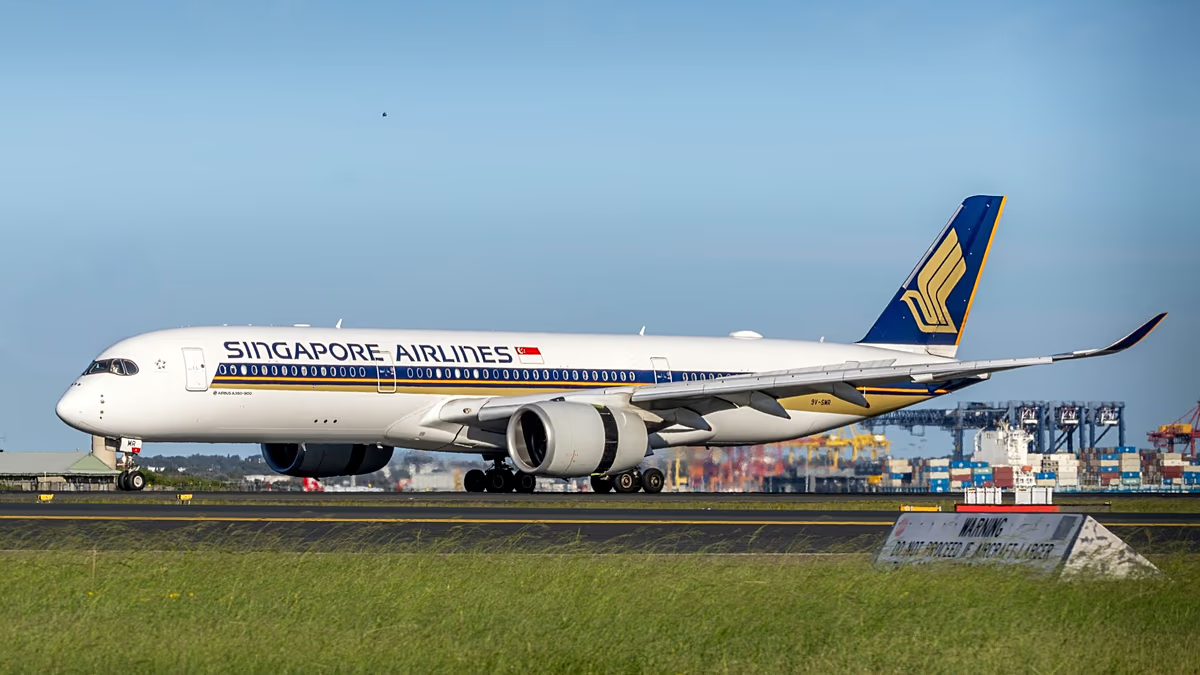
When the final ballots were counted, there was one clear, shining hero that dominated the competition, and its victory likely came as no surprise to anyone who has ever boarded one of their flights. The undisputed champion of the Flyers’ Choice Awards 2026 was none other than Singapore Airlines, the iconic carrier from the island nation that has long been the gold standard for premium air travel. In a stunning display of consistent excellence, this airline swept four major categories, taking home the awards for preferred economy airline, best cabin crew service, best airline in central and south-east Asia, and, perhaps most vitally, the airline that gave the greatest peace of mind. While winning one category is impressive, securing four is a testament to a culture deeply embedded in the airline’s DNA. It is one thing to have elegant lounges or fancy amenities, but it is quite another to be consistently praised by the flying public for the warmth of the service and the serenity of the journey. Passengers have spoken, and their message is clear: flying with Singapore Airlines feels less like a logistical necessity and more like a genuine hospitality event. The airline has managed to turn the mundane act of crossing the globe into a distinctive experience, one where cabin crew members are celebrated for their intuitive service and where the attention to detail in even the most basic economy class seat feels extraordinary.
Paragraph 3
Perhaps the most telling of Singapore Airlines’ victories is the award for the “greatest peace of mind,” a category that taps into a deep-seated psychological need that all travelers harbor. For many, air travel is synonymous with anxiety—the fear of turbulence, the dread of delays, the stress of missed connections, or the simple unease of being 30,000 feet above the ground. The airlines that succeed in this category are those that manage to soothe these irrational fears and make passengers feel completely secure from takeoff to landing. AirlineRatings.com’s CEO, Sharon Petersen, touched upon this profound connection between airline brand and passenger trust when announcing the results. She noted that the continued dominance of brands like Singapore Airlines and Qantas in the Peace of Mind category is a real credit to the deep reservoirs of trust they have built up with their passengers over many years of reliable service. Confidence in an airline is not achieved overnight; it is earned through decades of safe flying, transparent communication, and handling the inevitable hiccups of air travel with grace and efficiency. By taking the top spots, Singapore Airlines, followed by Qantas and Etihad Airways in second and third place, have demonstrated that they have mastered not just the art of moving people, but also the art of calming them. They are the aviation equivalent of a warm, reassuring presence in an often chaotic world. This emotional connection is far more powerful than a fancy meal or a flat bed; it is the sense that you are in safe, capable hands.
Paragraph 4
While the sweeping victory of Asian carriers is a heartwarming story of excellence, the results of the 2026 Flyers’ Choice Awards painted a rather grim picture for European airlines on the global stage. If we look strictly at the numbers, the performance of European carriers was, quite honestly, underwhelming. While they are certainly not poor airlines, they failed to dominate the top tiers in many of the key categories. The most notable exception came in the budget sector, where the iconic British carrier easyJet managed to secure a spot in the top three, tying for the title of joint-third best low-cost carrier globally alongside Australia’s Jetstar. However, they were soundly beaten by the dynamic Asian duo of Vietjet Air, which took the top prize, and AirAsia, which secured second place. This result highlights a significant shift in the low-cost market, where the relentless innovation, aggressive expansion, and vibrant branding of Southeast Asian budget carriers have seemingly captured the imagination of travelers far more than the more utilitarian European models. For easyJet, being named joint-third is a commendable achievement, but the fact that the top two positions were seized by carriers from a completely different region suggests that European budget airlines might need to rethink how they connect with their passengers on an emotional level, moving beyond mere efficiency to offer a more vibrant and engaging travel experience.
Paragraph 5
The disappointments for European airlines extended far beyond the low-cost category. When it came to the more glamorous and aesthetically-driven awards, such as the best livery, the preferred business class, the preferred premium economy, and the best cabin crew uniforms, European carriers were conspicuously absent from the podium. These are the categories where an airline’s brand identity truly shines, where the visual appeal of the aircraft paint job or the elegance of the flight attendant’s attire can make a lasting impression on passengers. Unfortunately for Europe, these particular honors were captured almost entirely by carriers from other continents, demonstrating a clear gap in how the world perceives European airline branding versus their Asian and Middle Eastern counterparts. Perhaps the most stinging defeat was in the “preferred economy” category, where Singapore Airlines triumphed, leaving European legacy carriers in the dust. The only small shimmer of hope for the continent came in the “Peace of Mind” category, where it managed to break the top ten. The Latvian carrier airBaltic secured sixth place, a respectable finish that shows the strength of its operational reliability. Yet, even this minor success feels like a moral victory rather than a triumph. The absence of European names in the top echelons of the crew service, aesthetics, and premium classes suggests that the region’s airlines, which often boast impeccable safety records, may be perceived as colder, stiffer, or less service-oriented compared to their global competitors who prioritize hospitality over formality.
Paragraph 6
Despite their global struggles, European travelers have their favorites, and the awards recognized these regional champions as well. The preferred airlines within Europe were deemed to be the major legacy carriers: British Airways, Lufthansa, and KLM. These three heavyweights have long been the pillars of European aviation, connecting the continent to the rest of the world with extensive networks and reliable schedules. They represent the classic, traditional airline experience that many Europeans have grown up with and continue to trust. Their inclusion in the “preferred airlines in Europe” list is comforting for the region, providing a sense of stability and reassurance in a market that is increasingly fragmented by ultra-low-cost operators. Ultimately, the Flyers’ Choice Awards 2026 serve as a fascinating mirror reflecting the priorities of the modern passenger. We live in a world where travelers have more choices than ever before, and they are using their votes to reward airlines that truly stand out. The overwhelming success of Singapore Airlines demonstrates that passengers are willing to reward excellence in service, comfort, and reliability. While European airlines like easyJet, BA, Lufthansa, and KLM continue to serve millions of passengers efficiently every day, the global outlook suggests that to truly win the hearts and minds of the flying public, they may need to look beyond just getting passengers from point A to point B, and instead focus on creating a journey that feels personal, calm, and genuinely memorable. As the aviation industry continues to evolve, these passenger-driven awards will serve as a crucial barometer for what truly matters to the people in the seats.