



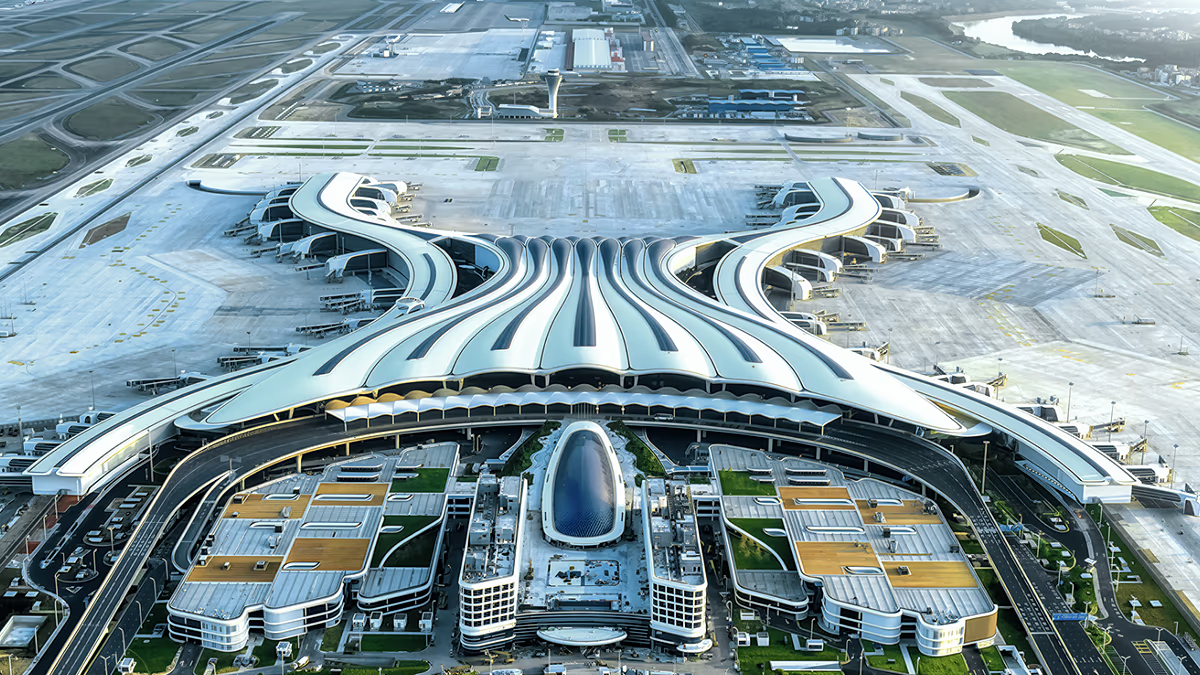
For decades, the frequent flyer has viewed the typical global airport as little more than a sterile, predictable waypoint—a functional but uninspiring necessity of modern transit. It is a liminal space historically defined by cold, artificial fluorescent lighting, monotonous duty-free corridors, and a frantic, anxiety-filled search for power outlets while waiting for a flight. For the average passenger, an airport is judged almost entirely on its pragmatism, with short security lines, clear signage, and baggage claim efficiency reigning supreme. Yet, a profound and beautiful shift is currently occurring in our global travel consciousness. Today, design aesthetics and architectural beauty are increasingly recognized not as superficial luxuries, but as fundamental human needs that can soothe the psychological stresses of travel. Terminal spaces are transforming from cold, industrial assembly lines for passengers into breathtaking architectural marvels that seamlessly blend state-of-the-art engineering with sweeping natural vistas, rich organic textures, and serene indoor gardens. Recognizing this monumental evolution in aviation design, the Prix Versailles—an esteemed international initiative that spotlights the world’s most outstanding contemporary architectural projects—has released its highly anticipated list of the World’s Most Beautiful Airports for 2026. This selection celebrates a grand artistic departure from the tired, uniform design templates of the past toward an empathetic and deeply human philosophy of architecture. By honoring these magnificent gateways, the Prix Versailles champions spaces that respect the traveler’s emotional journey, elevate the sensory experience of transition, and celebrate the entry point to a country as a profound narrative of cultural pride, architectural wonder, and warm hospitality. For the modern passenger, who is often suspended in a state of emotional vulnerability between the life they are leaving behind and the future that awaits them, a beautifully designed terminal serves as an essential psychological anchor, transforming an otherwise cold transition into a comforting, inspiring experience.
At the heart of this contemporary architectural renaissance is a deep, architectural and sociological reconsideration of what it means to spend time waiting in transit. Jérôme Gouadain, the Secretary General of the Prix Versailles, eloquently characterizes the newest generation of airports as “inescapable hallmarks” of our era, representing a critical, long-overdue bridge between human movement and regional identity. Historically, airports were engineered under the dual pressures of rapid postwar industrialization and soaring passenger volumes, a formula that prioritized clinical efficiency and speed, often creating alienating and disorienting spaces that stripped travel of its romance. Gouadain points out that modern terminals successfully resolve this apparent clash between the high-speed requirements of global aviation on the one hand, and the slow, reflective, and deeply personal nature of human travel on the other. By transforming these transitional zones into highly attractive, culturally engaging, and environmentally conscious environments, architects are actively validating the valuable time travelers spend within them. These majestic terminals can no longer be dismissed as mere “transfer spaces” or anonymous voids. Instead, they have become enduring monuments that leave a lasting mark on our collective history, our local ecosystems, and our societies. They act as vibrant, attractive settings and economic, cultural, and social emblems that will continue to shape, draw together, and unify the global societies of tomorrow. Ultimately, they serve as a testament to the idea that our transit infrastructure can be both highly functional and deeply poetic, proving that humanity does not need to sacrifice aesthetic grace or ecological responsibility in the pursuit of global connectivity and rapid technological progress.
The list of the World’s Most Beautiful Airports for 2026 highlights seven groundbreaking facilities that represent a global mosaic of architectural innovation and structural storytelling. This year’s laureates span several continents, showcasing a rich variety of styles that reject the sterile “international style” in favor of customized designs that pay distinct homage to their local environments and indigenous heritages. Among the prestigious winners are Guangzhou Baiyun International Airport’s Terminal 3 in China, Lokapriya Gopinath Bardoloi International Airport’s Terminal 2 in Guwahati, India, and the highly anticipated, eco-centric Navi Mumbai International Airport’s Terminal 1, also in India. Joining them are Cambodia’s majestic Techo International Airport in Phnom Penh, alongside two pioneering North American projects: Pittsburgh International Airport, which embraces the natural green canopy of its surrounding region, and San Diego International Airport’s Terminal 1, which frames the breathtaking beauty of the Pacific coast. The sole European champion on this prestigious roster is Germany’s Frankfurt Airport Terminal 3. Each of these airports represents a unique, forward-thinking marriage of high-tech infrastructure and poetic artistry. Whether incorporating sweeping roofs that mimic the rolling topography of local mountain ranges, structures that channel the warmth of regional craftsmanship, or soaring glass facades that invite the natural world inside, these terminals ensure that travelers are embraced by a deep, authentic sense of place from the very moment their planes touch the ground. For instance, the designs in Guwahati and Navi Mumbai integrate local artistic heritage and sustainable materials, while Pittsburgh and San Diego utilize fluid, light-filled spaces that harmonize beautifully with their regional topographies, successfully localizing what was once a highly homogenized global experience.
Among these incredible global triumphs, Frankfurt Airport’s brand-new Terminal 3 stands out as a true masterclass in modern European engineering and human-centered design, earning warm praise from the Prix Versailles panel as the grand realization of one of the continent’s most ambitious civil infrastructure undertakings. Having welcomed its very first flyers in April, this monumental terminal occupies a staggering 1.3 square kilometers of land—a footprint roughly equivalent to the historic city center of Frankfurt itself. Designed to meet the complex demands of an increasingly interconnected global economy, Terminal 3 is projected to seamlessly manage a massive annual flow of 19 million passengers across its beautifully designed and spacious Piers G, H, and J. A planned second development phase featuring Pier K will eventually push this capacity to an incredible 25 million travelers. The physical and logistical birth of Terminal 3 coincided with the temporary closure of the airport’s aging Terminal 2 for its first comprehensive refurbishment in more than thirty years. This monumental shift has prompted a massive relocation of 57 major international airlines, including renowned carriers such as Emirates, Qatar Airways, Etihad Airways, Cathay Pacific, Singapore Airlines, Korean Air, and China Airlines, making Terminal 3 the new, vibrant, and highly efficient heart of European aviation, while maintaining an atmosphere of calm and organized tranquility. The sheer scale of this logistical and engineering marvel required years of meticulous planning and highly coordinated collaboration among master builders, urban planners, and aviation experts, proving that even the most massive corporate projects can be executed with a precision that never loses sight of the human experience.
To prevent this colossal infrastructure project from feeling like an intimidating, cold labyrinth of concrete and steel, the celebrated German architect Christoph Mäckler envisioned Terminal 3 with a deeply human-centered design philosophy, aiming to make it feel like a vibrant, welcoming city rather than a sterile, transactional airport. Mäckler’s design consciously breaks away from the industrial coldness of typical metal-and-glass structures by organizing boarding gates, lounges, and retail areas into a series of open streets and cozy, sun-drenched public squares where travelers can intuitively gather, socialize, or find quiet moments of respite before their long journeys. Recognizing that contemporary airports often receive a higher daily footfall than traditional historical town centers, Mäckler sought to introduce the reassuring, grounding elements of civic life into the terminal, employing warm, tactile, and natural materials such as jura limestone and travertine. These earthy stones beautifully catch and reflect the soft, golden hues of natural light streaming in through massive, floor-to-ceiling panoramic windows, helping to regulate the biological circadian rhythms of jet-lagged travelers. This organic play of sunlight and warm masonry creates an inviting, home-like ambiance that significantly softens the anxiety and rush of transit, transforming a potentially stressful travel experience into a peaceful, intuitive stroll through a grand, sunlit urban neighborhood. Indeed, this democratic design approach is built on the belief that high-quality, beautiful public architecture should not be reserved solely for premium lounges, but should be freely accessible to every single passenger, enriching the journey of first-class flyers and budget travelers alike.
Beyond its masterfully crafted physical layout and warm masonry, Frankfurt’s Terminal 3 elevates the travel experience to a poetic and transcendent level through its deliberate integration of thought-provoking public art that engages the mind and calms the spirit. The crown jewel of this aesthetic effort is a mesmerizing, site-specific aerial installation by acclaimed German artist Julius von Bismark, titled “The First, the Last, Eternity.” Suspended high above the bustling terminal hall, three massive, disc-shaped kinetic sculptures rotate in slow, hypnotic alignment, challenging travelers’ conventional perceptions of time, space, and the laws of physics. Painted in warm, radiant gradient tones of orange, red, and yellow, these discs mimic the shifting, comforting colors of a perpetual sunset or sunrise, catching the natural light and casting soft, playful shadows down upon the global travelers moving beneath them. For the weary flyer, von Bismark’s masterpiece offers a moment of profound mindfulness—a silent, floating sanctuary of slow, deliberate motion that contrasts beautifully with the hurried, chaotic pace of modern life. In celebrating such architectural and artistic innovations, the Prix Versailles reminds us that the best airports of tomorrow are not merely designed to help us leave on time, but to make us want to linger longer, transforming the humble act of waiting into an opportunity for human connection, artistic wonder, and quiet, restorative peace. As these glowing, kinetic structures turn overhead, they invite us to reflect on our own personal journeys, reminding us that in the grand tapestry of human existence, we are all travelers searching for beauty, connection, and a place to truly call home.