


Have you ever stood in the middle of a world-famous European capital, surrounded by the clamor of thousands of other tourists snapping the exact same photo, and felt a strange, quiet sense of emptiness? It is a modern travel paradox: the more popular a destination becomes, the more its unique spirit seems to slip away, replaced by standardized souvenir shops, global fast-food chains, and exhausting queues. Today’s travelers are experiencing a collective awakening, recognizing that the true essence of a culture is rarely found on a generic checklist of heavily commercialized landmarks. According to recent insights from WorldHotels—a prestigious collective of independent luxury and lifestyle properties—the global travel community is undergoing a profound behavioral shift. Tired of rigid, uninspired itineraries, people are turning their eyes toward the “underdogs,” the lesser-known regional capitals and secondary cities that have quietly preserved their authenticity. These underdog destinations offer something that crowded metropolises simply cannot buy: breathing room, spontaneous interactions, and an authentic glimpse into how locals actually live, work, and create. In these overlooked corners of the continent, history is not a museum exhibit cordoned off by velvet ropes; it is the stone beneath your shoes, the conversation over a morning espresso, and the unhurried rhythm of daily life. By stepping off the beaten path, travelers are rediscovering the pure, unadulterated joy of exploration—finding places that do not just fill up a camera roll, but deeply satisfy the soul. This summer, as the major capitals prepare for another season of overwhelming crowds, the smart move is to choose those hidden gems that offer a richer, more personal, and ultimately more rewarding journey.
Take, for example, the Netherlands. While Amsterdam continues to struggle with intense overtourism and crowded waterways, the historic city of Arnhem, nestled quietly on the country’s eastern flank near the German border, offers a breathtaking and peaceful counter-narrative. Arnhem is a destination where the boundaries between artistic expression and raw natural beauty are delightfully blurred, making it a perfect retreat for those who crave both culture and the great outdoors. For the nature lover, the city serves as a gateway to the spectacular Hoge Veluwe National Park. Here, instead of navigating crowded city trams or dodging aggressive cyclists, you can hop onto one of the park’s famous, free-to-use white bicycles and spend your day gliding through a dynamic tapestry of dense forests, sweeping heathlands, and dramatic, rolling sand dunes. Yet, just a short ride away from this pristine wilderness lies a vibrant urban oasis. Arnhem has evolved into a powerhouse of cutting-edge Dutch design and fashion. The heart of this creative renaissance beats loudest in the Modekwartier, or Fashion Quarter, located in the historic Klarendal neighborhood. Walking these charming streets is like stepping into a living, breathing gallery; over sixty independent boutiques, ateliers, and design studios line the avenues, where local artisans fabricate everything from avant-garde clothing to bespoke jewelry. It is an incredibly intimate shopping experience where you can chat directly with the designers, understand their creative processes, and purchase a truly unique piece of wearable art, entirely free from the mass-produced monotony of the high street.
When the sun begins to set over Arnhem’s leafy boulevards, the perfect place to rest your head is the historic Hotel Haarhuis. Originally establishing its roots in 1918, this 124-room iconic property has witnessed over a century of local history, yet it has gracefully evolved into a luxurious sanctuary that seamlessly blends its rich heritage with contemporary flair. Rather than feeling like a sterile corporate chain, Haarhuis envelops guests in an atmosphere of warmth and curated sophistication. The hotel features three distinct dining options designed to satisfy every culinary whim, whether you are seeking a meticulously crafted cocktail at the trendy rooftop bar, a rich espresso in their cozy café, or a fine dining experience that champions seasonal, locally sourced ingredients. After a day of cycling through the national park or exploring the design studios of Klarendal, the hotel’s serene city spa offers a peaceful retreat to soothe tired muscles and rejuvenate the spirit. Moreover, its prime location right next to the central transport hub means you can easily navigate the picturesque Dutch countryside. This includes making an effortless trip to neighboring Gouda, another of WorldHotels’ highly recommended Dutch treasures. Positioned gracefully between the major urban hubs of Rotterdam and Utrecht, Gouda is a masterclass in medieval charm, characterized by its labyrinth of cobblestone streets, tranquil canals, and wonderfully preserved historic trading houses.
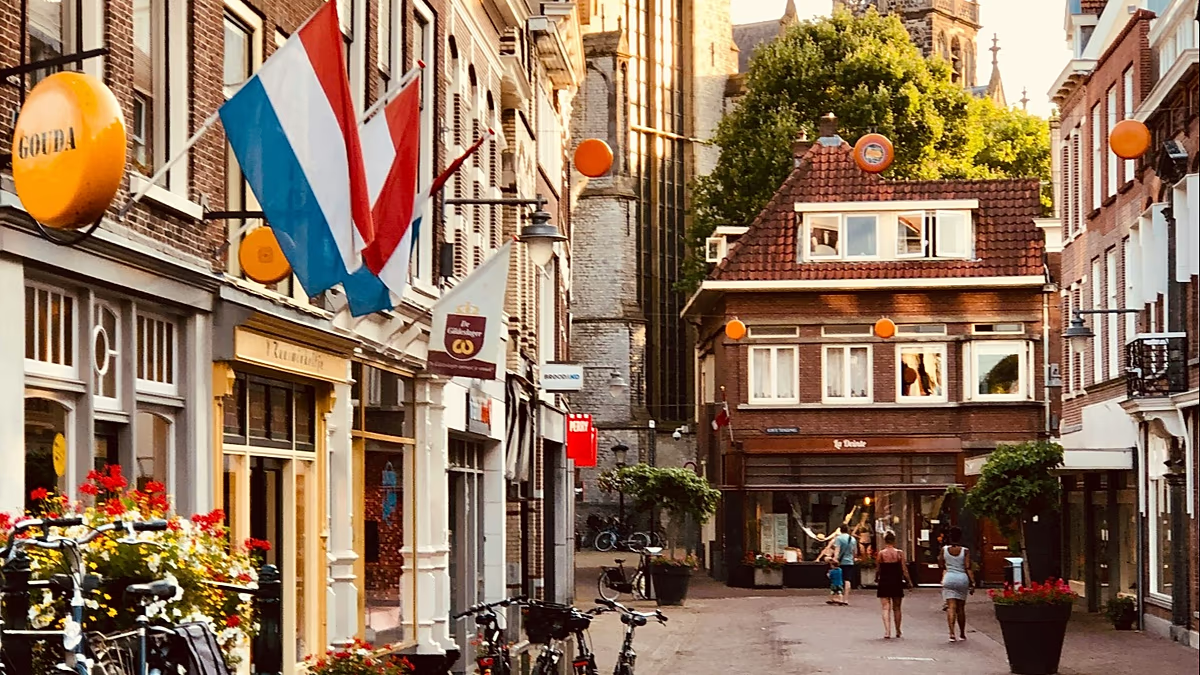
While the name Gouda is globally synonymous with its rich, creamy cheese, the town itself is an incredibly rewarding sensory journey that transcends its culinary fame. To truly understand its heartbeat, one must visit between the warm months of April and August, when the historic central square comes alive with the legendary Gouda Cheese Market. This is not a manufactured tourist show, but a living tradition that dates back centuries, where farmers and traders still gather to negotiate prices with theatrical hand-claps and lively, good-natured banter, surrounded by towering stacks of golden cheese wheels. Beyond the market, Gouda is delightfully walkable and refreshingly intimate; it is the kind of town where you can slowly wander without a map, discover hidden leafy courtyards, and admire the stunning stained glass of centuries-old churches. To fully immerse yourself in this tranquil atmosphere, WorldHotels recommends staying at the elegant City Hotel Gouda. Situated just a stone’s throw from the historic Gouwe River, this boutique property blends modern comfort with the architectural heritage of its historic surroundings. From here, you can spend your evenings watching the canal waters catch the amber glow of the gas lamps, or sit at a local tavern enjoying a plate of fresh stroopwafels and local cheeses, realizing that this quiet, authentic slice of Dutch life is infinitely more memorable than any crowded capital attraction.
Crossing the border into Belgium, the desire to escape the tourist herds leads us away from Brussels and straight into the charming arms of Kortrijk. Situated in the Flemish province of West Flanders, Kortrijk is a city that effortlessly possesses all the cultural amenities of a major metropolis while cradling the cozy, welcoming soul of a historic village. The city’s rich history is architectural poetry, epitomized by the iconic Broel Towers. Built out of limestone and sandstone starting in 1385, these twin towers stand as silent, majestic guardians over the Leie River—the historic waterway that once hummed with the trade ships traveling between Kortrijk and Ghent. Exploring these ancient fortifications alongside a knowledgeable local guide reveals fascinating layers of medieval warfare, trade, and resilience. But Kortrijk is not merely a monument to the past; it is also a playground for the senses, particularly for those with a sweet tooth. Belgium is legendary for its chocolate, but in Kortrijk, you can bypass the giant, commercialized tourist shops and experience the true artistry of Chocolatier Vandenbulcke. Crafting exquisite confectionery since 1949, this family-managed establishment offers travelers a literal “Chocolate Trail” that pulls back the curtain on their production process. Visitors are treated to a sensory journey from raw cacao beans to mouthwatering truffles, pralines, and biscuits, complete with an immersive 4D multimedia experience and, of course, plenty of delicious tasting opportunities along the way.
To wrap yourself completely in Kortrijk’s historic tapestry, there is no better address than Hotel Damier. This is not merely a place to sleep; it is a journey back in time, boasting a history that stretches all the way back to 1398, making it the oldest registered hotel in Belgium and the third oldest in all of Europe. Set majestically on the bustling Great Market Square, the hotel’s stunning 65-room boutique interior masterfully balances its deep-seated historical weight with five-star modern luxuries. Its unbeatable location places you within arm’s reach of the city’s finest dining, cultural venues, and the main railway station, allowing you to venture out into the wider region with ease. Staying in a place like Hotel Damier, much like choosing to visit Arnhem or Gouda, serves as a beautiful reminder of what travel should ultimately be about. It is a testament to the fact that when we step away from the predictable, overcrowded capital cities, we do not miss out; instead, we gain access to the true soul of a country. We trade the exhaustion of tourist traps for the warmth of genuine local hospitality, the beauty of untouched nature, and the rich flavor of centuries-old traditions. This summer, let go of the cookie-cutter itineraries and embrace the captivating allure of the underdog destinations, because the most profound travel stories are always found in the places we least expect.