






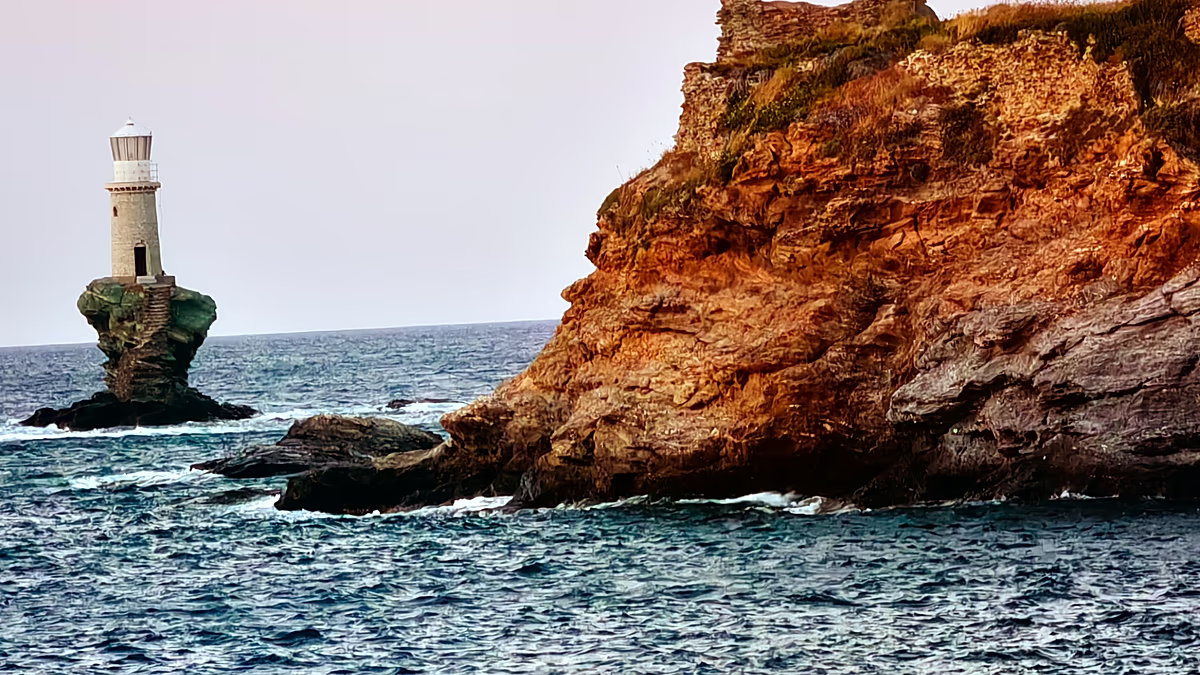
Perched elegantly in the northern waters of the Aegean Sea, Andros stands as a majestic anomaly among the sun-bleached islands of the Cyclades. While neighboring destinations are characterized by arid, windswept terrain, Andros unfolds as a lush paradise of flowing springs, rushing streams, and verdant valleys. This unique ecological tapestry serves as the backdrop to Chora, the island’s capital, where the physical scenery is dominated by towering neoclassical mansions that stand as silent, stone sentinels of a bygone golden era. Built roughly 130 to 140 years ago, during a period of unprecedented maritime prosperity, these majestic homes are much more than mere displays of historical wealth. They are physical manifestations of the island’s cultural evolution, blending local stone and world-renowned Andros marble into architectural masterpieces defined by symmetrical façades, elegant pediments, carved wooden doorways, and intricate balconies.
The transformation of Chora from a typical, modest Cycladic settlement into a grand neoclassical town was a deliberate act of cultural translation led by the island’s cosmopolitan shipping community. As architect and researcher Nikos Vasilopoulos notes, neoclassicism arrived on Andros at the tail end of the nineteenth century, sparked by shipowners and maritime professionals who sailed the world and returned home determined to recreate the grandeur they witnessed abroad. Inspired by the architectural revivals taking place in Athens, Syros, Piraeus, and major European ports, these seafaring families sought to anchor their global sophistication into the very soil of Andros. By choosing neoclassical designs over traditional island vernacular, they turned private wealth into public beauty, replacing simple whitewashed cubes with imposing structures that gave the island a distinct, urbane identity that bridged local Greek heritage with wider European artistic movements.
At the heart of this architectural renaissance were the island’s legendary shipping dynasties, most notably the Goulandris and Embirikos families, whose contributions permanently shaped the social and physical landscape of Chora. The Embirikos family, in particular, approached the development of the island with a deeply humanistic vision, believing that for Chora to truly become a thriving town, it required public spaces that fostered community welfare and unity. They purchased extensive plots of land, laid out the town’s majestic main square, and funded a combined hospital and care home designed with an incredibly progressive architectural philosophy. Rather than isolating the sick and elderly behind intimidating, tall stone walls, they insisted on installing open iron railings around the facility, allowing patients to look out at the daily life of the town and enabling passersby to wave back. This simple, empathetic design choice maintained a vital visual and emotional connection between the vulnerable and the active community, ensuring no one felt forgotten in their time of need.
Complementing this rich social history is the wild, untamed beauty of the island’s natural environment, which sets Andros apart as the second-largest and northernmost island of the Cycladic archipelago. Visitors stepping away from the marble-paved streets of Chora are greeted by a landscape teeming with life, featuring ancient stone pathways that wind through fertile agricultural valleys, citrus orchards, and mountainous ravines fed by natural mineral springs such as the famous Sariza spring. This abundant water supply breathes green life into the island, creating a sanctuary for hikers, nature lovers, and those seeking a deeper, more reflective connection with nature than the typical Greek beach holiday offers. The interplay between this lush wilderness and the structured, dignified elegance of Chora’s historic architecture creates a captivating atmosphere where the wildness of the Aegean Sea harmonizes with refined human artistry.
As Andros continues to welcome travelers who are eager to explore both its historic streets and its verdant trails, the island has embraced the future by introducing a revolutionary digital companion known as Andros AI. Developed by Ioannis Pitakidis, the founder of the travel portal andros-guide.gr and the innovative company Hype², this cuting-edge tool is the very first artificial intelligence travel assistant created for a specific destination in Greece. Designed to operate as a friendly, real-time chat service, Andros AI allows both curious newcomers and lifelong locals to instantly access reliable, localized information about the island. Whether a traveler is searching for a secluded beach accessible only by foot, trying to decipher local bus timetables, seeking out the best traditional tavernas, or looking up the historical backstory of a neoclassical mansion, this intuitive AI assistant eliminates the friction of endless search engine queries, replacing them with warm, immediate, and authoritative guidance.
The introduction of Andros AI represents a significant milestone in the evolution of global tourism, demonstrating how modern luxury and historical preservation can successfully coexist through smart technology. According to Pitakidis, artificial intelligence is poised to fundamentally reshape how the global travel industry operates, and Greece, as a country deeply reliant on welcoming world travelers, must actively pioneer these digital shifts to remain sustainable and competitive. By providing travelers with instant, accurate answers and reducing the cognitive clutter of trip planning, technology allows visitors to step away from their screens and immerse themselves more deeply in the actual physical beauty of their surroundings. In combining its century-old maritime legacy with twenty-first-century digital innovation, Andros is charting a visionary course for destinations worldwide, proving that the best way to honor a rich past is to meet the future with open arms.