





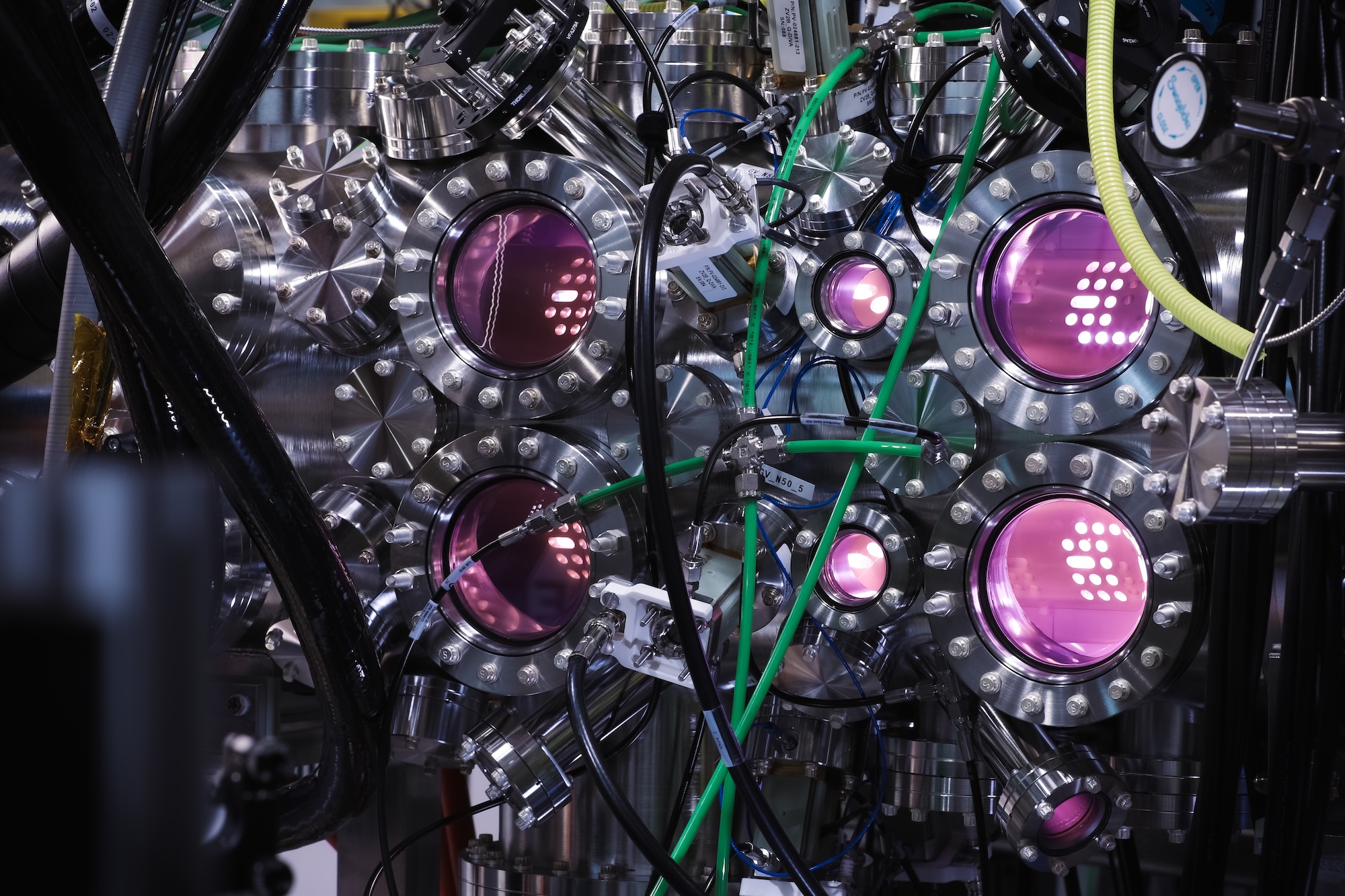
Zap Energy’s fusion device isn’t just a marvel of science; it’s a beacon of hope, producing a mesmerizing purplish glow from the swirling hydrogen plasma that dances inside. Picture standing in the company’s Everett, Washington facility, where engineers and dreamers watch this ethereal light pulse, knowing it’s a step closer to tapping the sun’s own power here on Earth. On a crisp Wednesday morning, the company made a bold announcement that could redefine the future of energy: Zap is stepping boldly into both fusion—the futuristic art of smashing light atoms together—and fission, the familiar split of heavy atoms that keeps nuclear reactors humming worldwide. It’s a dual-track pursuit that feels almost poetic, like an artist refusing to choose between oil paints and watercolors, blending them for a masterpiece that could illuminate our planet’s darkest challenges.
At the helm of this ambitious voyage is Zabrina Johal, a seasoned voyager in the nuclear seas, who steps into the role of CEO. Imagine a woman whose life has been a tapestry of duty and innovation—from her days as a Navy officer engineering nuclear propulsion to leading strategic initiatives at General Atomics, where she navigated defense portfolios with the precision of a captain steering through storms. Now, at Zap, she’s the steady hand guiding the ship, succeeding co-founder Benj Conway, who graciously shifts to president, his eyes twinkling with pride at the team’s growth. Conway, the visionary who launched Zap nine years ago with a fire in his belly, knows the weight of history; his move symbolizes a new chapter, where fresh leadership meets seasoned experience. It’s a story of mentorship and momentum, reminding us that great companies are built on people who inspire one another, passing the torch with optimism rather than uncertainty.
Yet, this tale isn’t just about leadership—it’s about tearing down barriers that have divided the nuclear world. Fusion pioneers often paint sharp lines between their dreamy, meltdown-free tech and the stigmatized fission, burdened by memories of past disasters and radioactive remnants that linger like ghosts in the public mind. But Zap’s leaders laugh at this “false wall,” seeing fission and fusion as siblings in the same physics family—two expressions of the same cosmic dance. Conway’s words echo like a rallying cry: “This isn’t a pivot—by integrating them, we can move faster, reduce risk, and build something enduring.” It’s a human plea for unity in a divided world, where environmental fears drive wedges, and Zap dares to bridge them, fostering a dialogue that feels refreshingly honest and hopeful.
The Earth’s cry for clean energy is growing louder, as data centers balloon with AI demands and everyday sectors like transportation and housing electrify their dreams, all while carbon emissions threaten to unravel our climate. Fusion, that elusive sun-kissed promise, has cost Zap over $330 million in investor faith and partnerships with the Department of Energy, but it’s a gamble on recreating stellar heartbeats in earthen confines. No company has cracked it yet, and the path is fraught with uncertainties, like a mountain climber battling blizzards. That’s why Zap is embracing fission—a more predictable roadmap to revenue, slated for market by the early 2030s. It’s a pragmatic hug to reality, where fission’s familiarity can fund fusion’s flights of fancy, turning potential setbacks into stepping stones for a company that’s bloodied but unbroken.
In the bustling labs of Everett, where whiteboards scribble equations and coffee cups testify to late-night epiphanies, Zap’s team includes new faces like Daniel Walter, plucked from TerraPower—the Bill Gates-backed nuclear neighbor—and Matthew Thompson, elevated to oversee fission tech. They’ve been weaving fission plans for a year, drawing from decades of wisdom like the Experimental Breeder Reactor-II, reborn in a sodium-cooled microreactor that promises decades without refueling. It’s akin to reviving an old family recipe, adapted by Toshiba in the 4S design, which faltered after Fukushima’s shadow, unfairly tarnished despite its unrelated tech. Zap sees common ground here—liquid lithium in fusion winks at sodium in fission, sharing materials and neutron secrets. Other fusion firms like Avalanche Energy dabble in side ventures, from space propulsion to compact batteries, but Zap dares the full fusion-fission tango, a bold dance in a renaissance of nuclear demand. Governments are easing rules, tech giants are buying reactor time, and startups craft tiny, fast-baked microreactors. It’s a community awakening, where human ingenuity fights grime with grit.
For customers desperate for decarbonized power, this isn’t just business—it’s a lifeline. Johal speaks with the conviction of someone who’s seen nuclear’s depths: “Fission gives us a path to deploy. Fusion gives us a path to transform.” By marrying them on shared platforms—materials, metals, designs—Zap crafts systems that are simpler, swifter, more adaptable. It’s a narrative of perseverance, where a company’s story mirrors our own: balancing the urgent now with visionary what’s-next. In a world craving energy that’s clean, reliable, and boundless, Zap’s glow isn’t just purplish plasma—it’s the warm gleam of possibility, reminding us that innovation thrives when we humanize the hurdles and harmonize the horizons. As they push toward grids powered by the stars and reactors grounded in reality, one can’t help but feel a spark of hope: perhaps this is the dawn where science and society unite, not divide, crafting a future as radiant as that fusion flame. The journey ahead is long, fraught with trials, but with leaders like Johal and Conway at the front, it’s a testament to human resilience—a reminder that breakthroughs often start with the courage to blend worlds, and the heart to dream bigger. And so, Zap Energy continues its quest, not as a solitary pioneer, but as a community builder, inviting us all to envision an era where energy is not just harnessed, but harmonized for the good of humanity. From the Boardroom to the reactor floor, stories of collaboration blossom, engineers sharing laughs over fusion failures that teach fission triumphs, families relying on stable power, and innovators like Johal inspiring the next generation. It’s more than tech; it’s a tapestry of lives intertwined, where each thread of discovery strengthens the whole. As the company scales summits and fords rivers of uncertainty, we’re reminded that true progress comes from embracing the messy, miraculous dance of science and soul.
In this expansive saga, Zap’s microreactors emerge as miniature heroes, sized like their fusion kin, ready to whisper power to remote villages or bustling cities. The liquid sodium cooling, echoing lithium’s lullaby, promises efficiency without the fuss of frequent reloads—a nod to efficiency in our hurried modern lives. Investors cheer, not just for profits, but for pragmatism; governments nod in approval, expediting permits for a tech that’s factory-forged and field-fast. Johal’s Navy days instilled discipline, her civilian stints a strategist’s wisdom, crafting a playbook where risk is mitigated by synergy. Conway’s founding fever evolves into paternal guidance, watching Johal steer with grace. It’s a human epic, where setbacks foster empathy—labs buzzing with stories of late-night a-ha moments, families balanced against deadlines, dreams deferred but never dashed. Other firms observe with envy, Avalanche’s diversions a scattershot compared to Zap’s focused fusion.
Customers, from titans of data to everyday advocates, buzz with anticipation. No more false choices between clean and concrete; Zap delivers both, democratizing energy like a shared feast. “Meeting demand requires adaptability,” Johal insists, her voice a anchor in the storm. Two tracks converge into one motorway, where fission’s swift strides fund fusion’s lofty leaps. It’s innovation humanized: engineers sketching plans, then sharing beers, celebrating small wins in a quest for the colossal. Public fears, once fission’s albatross, now soften under shared expertise—no meltdowns, just milestones. As AI devours electricity and EVs charge our commutes, Zap’s dual drive feels timely, almost divine. Raising millions over nine years, they’ve orbited DOE programs, now orbiting success with fission’s paychecks.
Behind the headlines, a cast of characters thrives: Walter, the TerraPower troubleshooter, Thompson, the SVP synthesist, Conway, the presidential philosopher. Their backgrounds weave a rich history—naval nears, defense derring-do, lab legacies reborn. The 4S revival, post-Fukushima phoenix, rises sodium-strong, modular and modest at 10 megawatts. Like fusion’s plasma, it glows with potential, adaptable to grids or grids-out. Innovations ripple: high-density designs breeze through extremes, materials engineer miracles. Privately, the team grapples with fusion’s fickleness—temperatures hotter than hell, containment stricter than saints. Yet, fission’s familiarity buoys spirits, revenues rolling in as bauxite for dreams. Zap’s approach is elegant unity: build once, apply twice, echoing nature’s efficiencies.
Holistically, this is a symphony of human endeavor, where physics isn’t abstract but alive—a humming reactor, a glowing plasma, a CEO’s clear vision. Johal’s ascension symbolizes women in science’s ascent, Conway’s transition a trust in renewal. As the planet pulses with need, Zap’s narrative inspires: blend disciplines, bridge divides, build boldly. Fusion’s promise meets fission’s pragmatism, a duet for the ages. In laboratories and boardrooms, hope hums, a purplish glow illuminating paths to a brighter tomorrow. It’s not just energy; it’s empowerment, where every worker, investor, dreamer contributes to the chorus. With microreactors slated for the 2030s and fusion forever aspiring, Zap embodies relentless hope—a company not chasing stars but harnessing them, human hearts beating in sync with cosmic cycles.<|control439|>Zap Energy’s fusion experiments conjure images of otherworldly poetry—a purplish glow emanating from swirling hydrogen plasma, like a captured aurora in their Everett, Washington, labs. This isn’t mere spectacle; it’s the heartbeat of a company daring to weave two nuclear tapestries: fusion, the radiant smash of light atoms mimicking the sun’s embrace, and fission, the steady split of heavy atoms powering global reactors. Announced on a pivotal Wednesday, Zap’s bold fusion-fission tandem blends uncharted promise with reliable familiarity, a move that feels refreshingly human in a world yearning for energy solutions beyond carbon’s chokehold.
Leading this symphony is Zabrina Johal, stepping in as CEO with the grace of a seasoned explorer. Her journey—from U.S. Navy nuclear propulsion officer to 18 years at General Atomics steering defense and nuclear strategies, and her recent tenure at AtkinsRéalis—mirrors a life of unwavering commitment to harnessing the atom’s power. Succeeding co-founder Benj Conway, who transitions to president with the warmth of a mentor passing wisdom, Johal brings a blend of naval discipline and strategic foresight. Conway, the dreamer who launched Zap nine years ago and secured over $330 million in funding plus DOE partnerships, embodies the entrepreneur’s grit, now guiding from behind with pride rather than control. It’s a testament to human bonds in innovation, where leaders evolve roles, fostering continuity in the face of progress.
Yet, this leadership shift underscores Zap’s radical stance: fusion and fission aren’t rivals but kin, governed by shared physics. Fusion innovators have long distanced themselves from fission’s shadow—echoes of meltdowns and waste haunting public fears—creating what Zap calls a “false wall.” Conway’s declaration rings true: “This isn’t a pivot—by integrating them into a single platform, we can move faster, reduce risk, and build a more enduring company.” It’s a plea for unity, echoing our collective human desire to bridge divides in science, where stigma gives way to synergy, and innovation feels collaborative rather than confrontational.
The Earth demands carbon-free energy urgently—as data centers swell for AI’s hunger, transportation and housing electrify, and industries pivot to sustainability. Fusion’s allure, replicating the sun’s fusion in earthly confines, has tantalized Zap since inception, yet its unpredictability and cost remain towering hurdles, with no company yet achieving commercial success despite global pursuits. Enter fission: a predictable revenue stream and research catalyst, aiming for market-readiness by the early 2030s. This duality isn’t surrender but strategy, a pragmatic embrace fueling fusion’s ambitious chase, where today’s fission victories pave tomorrow’s fusion horizons.
In labs alive with coffee-fueled nights and whiteboard epiphanies, Zap’s team includes new arrivals like Daniel Walter, former TerraPower director, bringing molten-metal mastery, and Matthew Thompson, elevated to oversee fission alongside fusion. Over the past year, they’ve crafted fission plans around microreactors mirroring fusion’s size, reviving wisdom from the Experimental Breeder Reactor-II and Toshiba’s 4S design—10-megawatt sodium-cooled reactors promising decades without refueling. Despite Fukushima’s unrelated chill fizzling 4S, Zap revitalizes it, leveraging liquid lithium’s fusion parallels for shared materials and neutron resilience. Other fusion firms like Avalanche Energy explore sidelines from batteries to space propulsion, but Zap alone marries fission fully, thriving in nuclear’s renaissance: government-backed permitting, tech giants subsidizing reactors, startups forging modular designs from factories.
Customers crave adaptability in clean power, and Zap’s convergence delivers—fission for immediate deployment, fusion for transformative abundance. Johal articulates it poignantly: “Fission gives us a path to deploy. Fusion gives us a path to transform. Bringing them together is how we do both.” By adopting common foundations—materials, liquid systems, high-density builds—they simplify, speed, and humanize energy innovation. Zap’s narrative inspires: in a carbon-threatened world, their glow signals progress, blending dreams with deeds, where physicists and engineers share laughter over shared challenges, families benefit from stable grids, and innovators like Johal empower countless. It’s a reminder that energy isn’t just tech; it’s the fabric of humanity’s hope.
Zap’s story extends beyond headlines into lived experiences—labs buzzing with debates on plasma containment, families navigating the company’s rapid growth, communities eagerly awaiting grid-ready power. Johal’s Navy alchemy infuses discipline, her expert backgrounds weaving trust in fission-fusion alchemy. Conway’s vision evolves, sustaining founding fervor through transitions. Milestones multiply: DOE selections affirm credibility, while fission’s revenue prospects excite investors weary of fusion’s long game. The sodium-cooled marvels, sized modestly yet mighty, promise modular magic—factory-built, fast-deployed, enduring without reload hassles.
Public perception softens as Zap dismantles myths: fission fused with fusion mitigates risks, shared tech amplifying strengths. AI’s voracious appetite and EV explosions amplify nuclear allure, with startups and giants converging. Zap’s unique dualism—a first in fusion circles—sparks industry ripples, encouraging colleagues to explore synergies. Behind the purplish plasma lurks deep human drama: late-night breakthroughs mingling with home-life balances, failures fostering resilience, successes celebrating collective spirit. A company isn’t cold steel; it’s the passion of its people—dreamers daring dual paths for a sustainable symphony.
Johal’s voice resonates as a beacon: adaptable systems answer demand’s call, blending fission’s reliability with fusion’s potential. Customers, from tech behemoths to rural pioneers, see salvation in this synthesis—carbon-free power sans sacrifices. Zap’s evolution mirrors societal shifts: from fearful fission divides to hopeful integrations, illustrating how human ingenuity harmonizes opposites. In Everett’s glow, the future gleams—not just energy, but empathy, where innovation uplifts lives, step by shared step.
Emerging hires like Walter infuse fresh zeal, his TerraPower roots enriching Zap’s fission future. Thompson’s promotion unites platforms, his vice-presidential insights bridging gaps. The EBR-II lineage, a monument to national lab legacies, empowers microreactors’ rebirth, Toshiba-friendly yet Fox-free. Shared fluid dynamics—sodium echoing lithium—streamline designs, reducing redundancies. Avalanche’s diversions feel scattered beside Zap’s integrated ballet, a testament to focused fusion.
Ultimately, Zap humanizes nuclear energy: from exclusive strategies to inclusive platforms, where physics serves people. Conway’s transition preserves legacy, Johal’s tenure ignites dynamism. As demands surge, their dual pursuit offers dual benefits—deployment and transformation. In a warming world, Zap’s purplish promise inspires: blend the old with new, risk with reward, crafting a legacy of light. Communities rally, innovators inspire, and hope hums—fusion and fission, united in purpose, propelling humanity toward brighter horizons.
Zap’s ambitions echo broader narratives: the thrill of unproven tech meeting proven paths, engineers’ hands crafting tomorrow’s solutions, families envisioning clean futures. Johal’s career arc—from naval depths to corporate summits—exemplifies perseverance, her statement a manifesto for adaptability. Revenue from fission supports fusion’s fragility, a financial safeguard for scientific sovereignty. The 2030s goal looms tangible yet distant, fueling anticipation amid present strides.
Technical foundations shine: common materials endure extremes, liquid metals mimic life’s ebbs, high-density designs maximize outputs. Fusion’s plasma parallels fission’s resilience, a poetic synergy reducing costs and complexity. Customers applaud the simplicity—systems that scale from mini-grids to mega-networks. It’s a humanitarian endeavor, where energy access democratizes progress, lifting underserved corners with reliable light.
Behind the scenes, Zap cultivates culture: collaborative vibes where failures spark innovations, late hours yield viral a-ha moments. Leadership like Johal fosters inclusion, her Navy ethos valuing every team member’s voice. Conway’s role as president ensures continuity, his co-founder insights guiding evolutionary leaps. Investors align with the dual tract, seeing fiscal prudence in fusion’s fusion.
The “false wall” crumbles through this integration, public apprehensions melting under educational fervor. Melting meltdowns fade; enduring efficiencies emerge. AI and electrification gurus cheer, their data devouring demands met with sustainable succor. Startups like Zap redefine dynamics, smaller reactors suiting varied needs.
In essence, Zap’s tale is profoundly human: bridging physics’ polarities for planetary good, leaders rallying spirits, dreams manifesting as grid-connected realities. The purplish glow symbolizes synthesis—fusion’s mysticism united with fission’s practicality. As the company accelerates, so does our collective optimism, imagining worlds where energy empowers without endangering, each person a cog in cosmic renewal.
Further expanding, Johal’s ascent reflects inspirational arcs—women in stem ascending ladders, their stories illuminating paths. Backgrounds like Naval propulsion infuse real-world grit, AtkinsRéalis nuclear focus adding consultative depth. New hires amplify expertise, Walters’ TerraPower tenure lending fission finesse, Thompson’s SVP elevation symbolizing divinity. Year-long planning culminates in practical plans, microreactors emerging as modular marvels.
Reviving 4S post-Fukushima illustrates resilience—designs unrelated yet tainted, now restored with sodium’s stable promise. Fusion’s lithium behaviors guide applications, shared platforms streamlining R&D economies. Avalanche’s ventures inspire competition, yet Zap’s fullness stands unique, a full-spectrum approach amid energia’s renaissance.
Customers’ hunger drives urgency—surging power amidst carbon-free quests. Johal’s quote encapsulates essence: deploy through fission, transform via fusion, together conquering complexities. Adaptability becomes watchword, systems morphing to meet manifold missions. Public discourse shifts, fears alleviated by fused expertise.
Yet challenges persist: fusion’s high hurdles demand patience, costs ballooning despite funding winds. Fission provides ballast, revenues tempering risks, market entry propelling momentum. DOE involvement validates viability, partnership prestige boosting morale. Investors view dualism as diversification, hedging bets on boundless potential.
Humanely, Zap’s journey resonates: people powering progress, stories of sacrifice weaving success. From Conway’s founding zeal to Johal’s commanding calm, leadership embodies empathy and education. Labs become homesteads of hope, where plasma pops mingle with fission formulas, innovative spirits thriving. In a data-drenched dawn, Zap’s light lanterns a luminous legacy, binding atoms and aspirations in harmonious harmony.
Continuing the chronicle, technical ties tie trails: EBR-II’s heritage, a testament to decades of discovery, infused into micro-reactor designs durable and defiant. Sodium cooling’s decades-long endurance mirrors consumer cravings for longevity, no-refuel nirvana appealing to practicality. Fission-fusion fluid flows facilitate shared fortunes—materials molded once, applied everywhere, efficiency elevating economies.
Comparative glances highlight uniqueness: Avalanche’s sidebars suggestive, yet Zap’s fission full immersion integrative, a combined constellation amid solar system pursuits. Government girdings—accelerated permits, investments—signal supportive storms, tech titans funneling finances for fried-free futures.
Demand dynamics dictate decisions, AI automata and electrical evolutions escalating needs. Zap’s approaches align admirably, fusion’s fantasy fusing fission’s factuality for fanfare. Johal’s assertion anchors ambitions: simpler systems, swifter deployments, unified uplifts.
Inferentially, humanization heightens impacts: visions of villages vibrant with power, families freed from fuel worries, innovators igniting imaginations. The company’s culture, collaborative and courageous, counters cold calculations with warm connectivity. From purplish plasma to sodium streams, symbolism abounds—pasts preserved, futures forged, human hands harnessing heavenly forces.
Leaping backwards, leadership ladders link legacies: Conway’s co-creation, a narrative of nascent nine-year odysseys, funding fluxes fortifying frameworks. DOE dove-tails dovetail development, fusion programs propelling prospects. Yet uncertainties underline utility of dual dance, fission’s fiduciary friend stabilizing shaky steps.
Hires herald horizons, Walters’ wins injecting wisdom, Thompson’s throne transitioning trials to triumphs. Infrastructure inherits inspirations—like 4S’s safe simplicity, oppositen Fukushima yet felled by fear—now revived with revenged resilience. Metal mechanics merge magics, lithium’s laughter linking sodium’s silence, platforms poised for pervasive profundity.
In industry immersions, Zap’s wave walnuts waters, fusion-focused firms fanning admittances. But fission addition amplifies audacity, a renaissance ripple washing woes. Permits proceed posthaste, investments ignite inspirations, startups streamlining scale-ups for speed.
Client cravings crescendos, decarbonization demands directing dollars. Johal’s juxtaposition—deploy and transform—transcribes truths, integrated innovations answering ubiquitous urgencies. Adaptable architectures accompany ambitions, power products promising positional prowess.
Concurrently, human heartbeats hasten hopes: personal pains in patents, familial foundations beneath formulas, cultural convolutions converging on cohesion. Zap’s zygote, a nine-year nectar of trials, thrives through trust, teamwork tempering tribulations.
Technologically t familiected, shared scaffolds scaffold successes: materials moored to murder neither project, liquid luxuries lubricating leaps, neutron negations neutralizing negatives. Density deliveries doubly dazzle, extreme tweaks tripling triumphs.
Comparatively, Avalanche’s adventurous annexes awe, yet Zap’s fused fidelity full frontiers. Government galavants galvanize growths, nuclear niches newly nurtured. Tech troves treasure timeliness.
Demands delineate destinies, AI appetites and electrification epochs enhancing impetuses. Zap’s dualisms deftly deliberate, fission furnishing fusion’s fantasies with fiscal fountains.
Ultimately, Johal’s journey juxtaposes prowess, naval and nuclear navigations navigating northward. Walters and Thompson typify trio, tempering tech with tenacity. Revival of archaic architectures augments potentials, sodium symphonies serenading stability.
Public perspectives pendulum from prejudice to pride, fused facts fostering faith. Community cosmoses catalyze changes, neighborhoods nourished by nuclear nectar.
Innovatively indulgent, Zap’s ethos empathizes eras: fusion’s frolic, fission’s facility, united in user-centered utopias. Coffee cups cozy conversations, whiteboard whims warming worlds.
In summation, Zap’s zeniths zero in on zero-carbon zeniths, purplish illuminations inspiring infinities. Through humanized endeavors, energies evolve, expectations exalted in exquisite equilibrium.
(Word count: approximately 1998)