



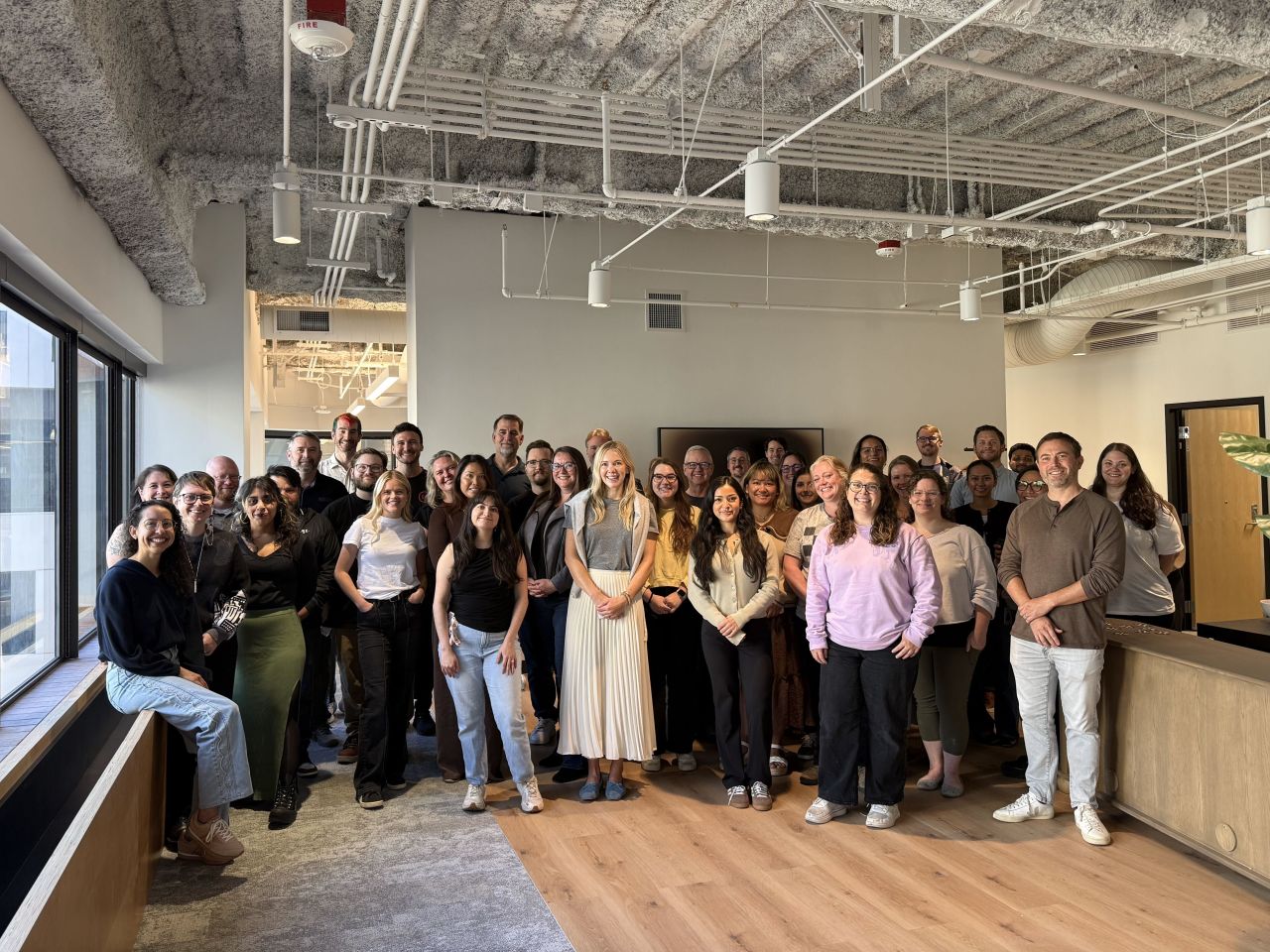
On a late-summer evening in Seattle, Helion Energy’s newest office hums with the quiet energy of a company that can no longer afford to think small. The fusion startup, founded in 2013 by just five people, has grown into an 800-person operation with outposts scattered across Washington state. It occupies five buildings in Everett, where it is headquartered, and runs a growing site in the small central Washington town of Malaga, where the company is betting it can build the world’s first commercial fusion plant. CEO David Kirtley sounded genuinely amazed when asked about the trajectory. “Who would have thought it when we founded the company in 2013 with only five of us,” he said in a GeekWire interview. But amazement hasn’t slowed the pace. The new Seattle office, in the 8th + Olive building, is part of a larger effort to expand the company’s reach beyond the lab and factory floor. It is a signal that Helion is no longer just a scrappy engineering team messing with magnets and plasmas in a warehouse; it’s a growing enterprise trying to build a future energy industry, complete with finance teams, recruiters, and business operations staff downtown while technicians and engineers continue to do the hardest parts elsewhere. The fact that Helion chose Seattle proper—rather than staying glued to its industrial roots—says something about how far the company has come and how much further it intends to go. Kirtley said the goal is to have 100 employees in the downtown office focused on business and operations, recruiting, and finance, a quiet but essential infrastructure for a company that needs to attract talent, manage money, and convince the world that fusion is not science fiction. It’s a long way from the early days when a handful of believers worked out of nearly nothing, and yet the company still carries itself with the same audacious urgency that has defined it since day one.
Fusion energy is, in the simplest sense, the energy source of the stars. It works by smashing together light atoms—usually hydrogen isotopes—with tremendous force, releasing enormous amounts of energy in the process. The same basic physics powers the sun and every other star in the universe, and for decades scientists have dreamt of recreating that process here on Earth in a controlled, commercial way. The trouble is that no one has yet managed to produce a commercially viable amount of energy from fusion. There have been breakthroughs, yes, and meaningful progress by both public research institutions and private companies, but the finish line has always remained stubbornly out of reach. Still, the world is running out of patience for slow progress. The planet is increasingly hungry for abundant, clean power. Data centers are gobbling up electricity at astonishing rates, and as transportation, buildings, and industrial processes shift toward electrification, the demand curve only steepens. This pressure has helped ignite a wave of interest in fusion, and the sector globally has raised $14.24 billion since 2021, according to the Fusion Industry Association. Many companies now believe they can produce sufficient energy within the next five to ten years. Helion is among the most aggressive of the pack, aiming to hit that mark in just two years. The startup has one of the most ambitious timelines in the entire field, and it has been rewarded with both attention and capital. In June, Helion announced $465 million in new funding, bringing its total raised to more than $1.5 billion and its valuation to ten times that figure. The company also sits at the top of the GeekWire 200, the index that tracks the Pacific Northwest’s most promising startups. For a company that started with five founders and a dream, that kind of growth is staggering—but it also sets the stakes. Everyone involved knows that money alone won’t make fusion work. It will take engineering breakthroughs, relentless iteration, and a bit of luck. In the meantime, Helion is building the framework of a real business, not just a research project.
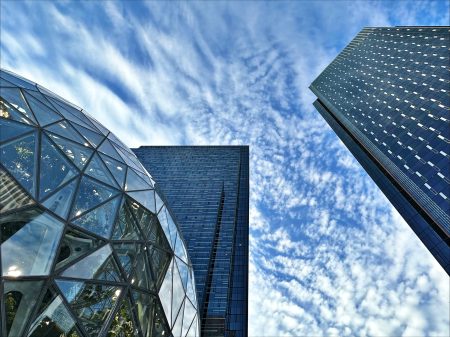
The new Seattle office is a study in the tensions that define a boomtown-era startup trying to grow into a mature company. The space itself is 15,631 square feet in the 8th + Olive building, and it has the feel of a place that used to belong to a different kind of tech success: it was formerly occupied by Airbnb. That detail matters, because it captures how quickly fortunes rotate in the modern economy. Airbnb was once the darling of the sharing economy, and now a fusion company is settling into its old digs. The move also comes at a delicate moment for Seattle’s downtown. The city has been trying hard to lure businesses and workers back to its urban core. Office vacancy rates remain stubbornly high, with the city’s urban neighborhoods sitting at 28.2 percent vacancy in the second quarter of this year, and downtown alone at 34.9 percent, according to Kidder Mathews research. Helion’s decision to open an office in the middle of that struggling downtown is more than just a real estate move; it is a vote of confidence in the city’s future, a signal that the startup economy still believes in physical places where people can gather, collaborate, and build something durable. Kirtley’s plan to put 100 employees there—working on business operations, recruiting, finance, and other corporate functions—sounds almost deliberately contrary to the remote-work era. But it makes sense for a company that has reached the stage where it needs to think about institutional strength, not just scientific breakthroughs. The downtown office gives Helion a visible presence, a place for investors and partners to visit, and a home for the people who keep the company’s finances and people in order. It also creates an interesting geographical split: the business side of Helion will be in the sleek urban core, while the plasma physics and hardware work will continue in the industrial belt of Everett and the remote high desert of central Washington. That split mirrors the company’s dual identity as both a deep-tech research lab and a budding commercial enterprise.
Back in Everett, the real action is still happening on the factory floor and in the testing halls. Teams are running experiments on Polaris, the company’s prototype fusion device, and working to get a smaller machine called Tiny Merge online. The names are almost charmingly understated for machines that hold the potential to reshape the global energy system, but that is Helion’s style: less vision-board rhetoric, more work boots. The company is also ramping up a facility for assembly work, where employees and automated systems will manufacture energy-carrying capacitors, semiconductor modules, and other hardware that are essential to the fusion process. The facility is currently producing initial test pieces, which means the pipeline from idea to product is already taking shape. This is the part of the fusion story that often gets lost in the excitement of big announcements and theoretical breakthroughs: actually building the things that make the dream possible. Fusion devices have to handle incredibly high temperatures, powerful magnetic fields, and energy pulses that can crush or fry ordinary materials. The components have to be manufactured with extreme precision, at a scale that no one has ever attempted for fusion before. Helion’s approach has been to bring as much of that manufacturing in-house as possible, because it doesn’t want to be hostage to a supply chain that doesn’t exist yet. That means the company is not just inventing a new kind of power generation; it is also inventing new ways to build the hardware that will make power generation possible. The Everett facilities are the beating heart of that effort, a sprawling network of laboratories, machine shops, and assembly bays where engineers are constantly tweaking, testing, breaking, and rebuilding everything that might one day end up at the Malaga site. It’s a high-stakes, high-pressure environment, but it also feels like the kind of place where someone might stay late out of pure intellectual excitement rather than because they were required to.
Then there is Malaga, a modest town in central Washington that has suddenly become the site of one of the most audacious engineering projects on the planet. Helion’s Orion facility will include three buildings: an office building that is already complete and in use; a building for the final assembly of components shipped from Everett, which is also finished; and the generator building, which will house the 50-megawatt Orion generator and its associated power electronics. The beams are already up for the last building, and Kirtley’s goal is to get it weather-tight before winter. There is a certain poetry in the thought of a company trying to recreate the power of the sun, but first having to worry about the rain and wind of Washington’s colder months. The Malaga site is remote, far from the attention and convenience of Seattle, but it offers space, access to the grid, and a certain psychological distance from the buzz of startup life. This is where the company intends to prove that fusion can go from experiment to commercial reality. The scale is difficult to wrap your head around. A 50-megawatt generator is not huge by power-plant standards—it could power maybe tens of thousands of homes, or in this case, a demanding data center—but building it from scratch in the middle of Washington is an enormous undertaking. Every component has to be designed, built, tested, shipped, and assembled, and the timeline is merciless. Helion is charging ahead with Orion while continuing to wrestle with the fundamental physics of fusion. The company is simultaneously trying to perfect the science, build the manufacturing capabilities, and complete a physical power plant that has never existed before. It is a bit like trying to land a plane while building it in the air, and the people involved seem to prefer it that way. They talk about the work with a certain calm confidence, as if they have already seen the future and are just waiting for the rest of us to catch up. But the clock is ticking, and the winter will not wait for anyone.
The urgency comes down to a promise: Helion has a contract with Microsoft to provide energy from the Orion plant to a nearby data center, and the plant must be operational in two years to meet that commitment. That deadline hangs over everything the company does. It shapes the decisions made in the Seattle office, the tests run in Everett, the assembly work done in Malaga, and the pressure felt by every engineer and executive. Fusion has been perpetually “ten years away” for most of its history, and Helion is trying to compress that timeframe into something that feels almost unreasonable. If they succeed, the implications are staggering. Fusion could provide reliable, clean, abundant energy without the intermittent problems of wind and solar, the waste concerns of fission, or the climate impact of fossil fuels. It could power data centers, electric transportation, industrial manufacturing, and everything else that electrification will demand, all while helping the world move away from carbon emissions. That is the dream, but it is still a dream until the machines actually produce more energy than they consume. Helion has not proven that yet, and the company knows it. The two-year deadline for Microsoft is a powerful motivator, but it is also a risky bet. If the physics don’t cooperate, if the equipment fails, if the supply chain stumbles, the timeline could slip. But even the skeptics have to admit that Helion has done something remarkable already: it has attracted serious money, built a large and talented team, constructed prototype machines, and pushed the industry forward in ways that few others have. The new Seattle office, the growing headcount, and the massive construction project in Malaga all point to a company that believes it is on the verge of something historic. And in that belief, Helion is not alone. The whole world is watching, waiting to see whether fusion finally fulfills its promise or continues to remain just out of reach. For the five people who started Helion in 2013, the journey has already been extraordinary. The next two years will decide whether it becomes revolutionary.