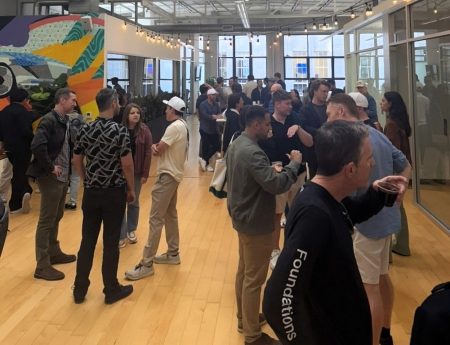






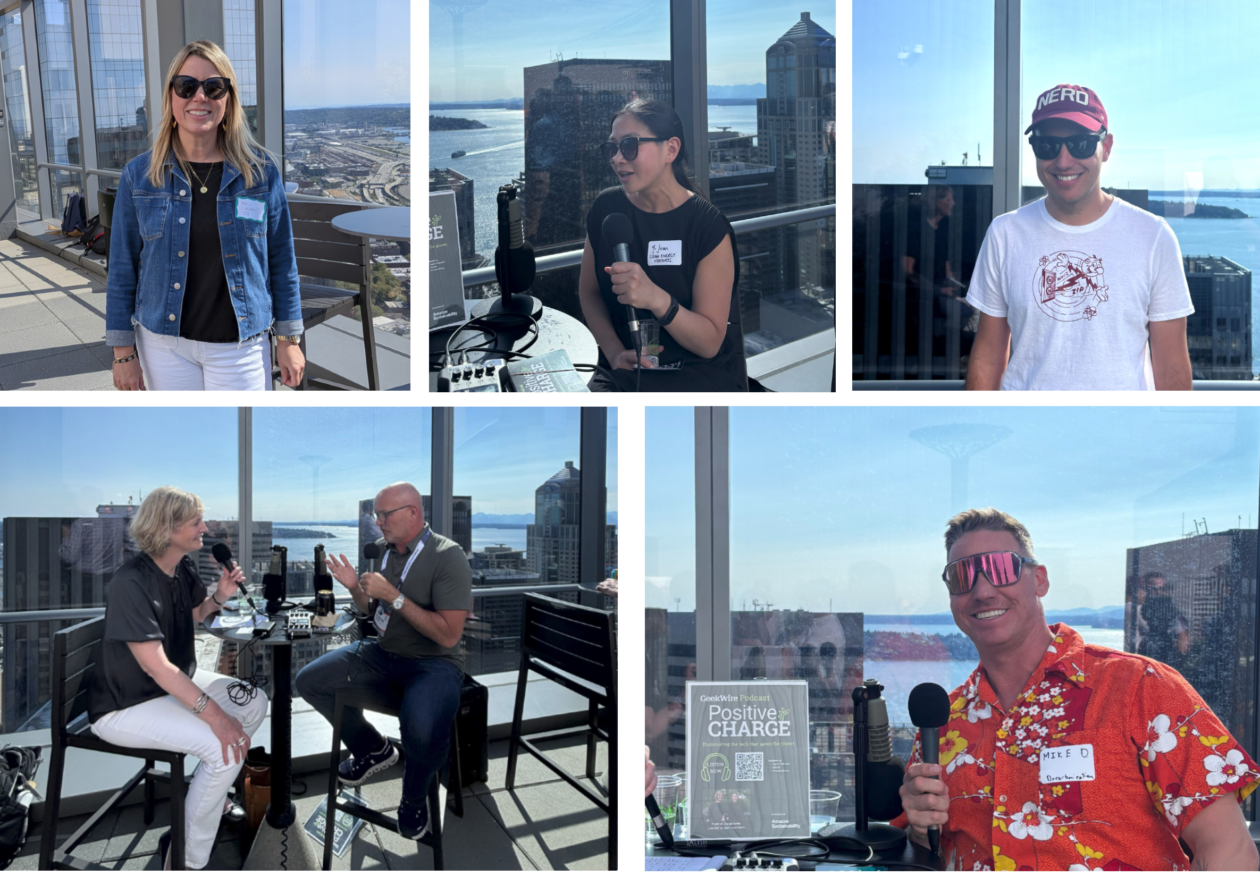
As the evening sun painted the Seattle skyline with warm hues during the kickoff of the Pacific Northwest Climate Week, the atmosphere atop a crowded rooftop happy hour was charged with an unexpected, electric sense of optimism. In an era where daily headlines about the environment are dominated by ecological collapse, rising global temperatures, and political inertia, one might have expected a gathering of climate professionals to be somber or purely defensive. Instead, the collective mood among the investors, founders, and policy advocates in attendance was remarkably upbeat, grounded not in naive wishful thinking or soft-hearted environmental altruism, but in the rigorous, calculating language of business fundamentals. There was a shared, palpable realization that the romantic era of climate activism has matured into a pragmatic era of deployment; as Mike Dieterich of Decarb Advisory put it, the global community already possesses the foundational tools and technologies required to successfully decarbonize our societies. The challenge is no longer a creative one confined to the laboratory, but an execution and scaling challenge, focused entirely on taking what already works and expanding it at an unprecedented pace. This pragmatism was mirrored in the sheer scale of the week’s events, which bridged geographical boundaries across Seattle, Portland, and the dual Vancouvers of Washington and British Columbia, drawing nearly seven thousand passionate participants across three hundred and thirteen distinct events. Despite the looming shadows of shifting federal priorities, volatile global geopolitics, and macroeconomic headwinds that have historically starved sustainability startups of capital, grassroots momentum is refusing to stall. As Karin Kidder of the climate-focused angel-investing group E8 observed, even when macro-level governmental support wavers, individual investors, local communities, and dedicated advocates are actively stepping up, filling the funding gaps with personal commitment and a collective belief that the green transition is not just necessary, but highly profitable. This grassroots resilience underscores a growing cultural shift where climate action is no longer viewed as a charity project, but as a robust and necessary engine of long-term wealth creation.
Yet, beneath this infectious enthusiasm lay a sharp, discerning skepticism regarding where capital is currently flowing, with seasoned climate tech insiders issuing stern warnings against a new wave of “tourist cash” that threatens to distort the market. The primary culprit of this distraction is the explosive, resource-hungry rise of artificial intelligence, which has sparked an investment frenzy around data center infrastructure and high-concept nuclear startups. Venture capitalists on the front lines, such as Jonathan Azoff of SNØCAP, pointedly characterized the current rush to fund data center solutions as a chaotic, speculative “cash grab” driven by founders eager to ride the coattails of the AI boom with poorly differentiated ideas. While there is no denying that hyperscale data centers require radical efficiency improvements to offset their massive energy consumption and carbon-heavy building materials, the concern is that unsustainable valuations are overshadowing more practical, immediate climate solutions. This speculative fever has also revitalized a romanticized interest in nuclear energy, which Susan Su of Toba Capital warned is often viewed by tech giants as an effortless, magic-bullet cure for their surging power demands. In reality, traditional nuclear fission and emerging fusion projects remain incredibly capital-intensive and slow to deploy, presenting timelines that mismatch the urgency of our current crisis. Even so, the allure of deep-tech breakthroughs remains powerful; Azoff himself admitted to backing LazeraH, a startup exploring the highly speculative realm of muon-catalyzed fusion, proving that even the most disciplined investors cannot resist the pull of a potentially world-changing, high-risk scientific gamble if it promises to leave an indelible mark on history. Yi Jean Chow of Clean Energy Ventures echoed this dual reality, noting that while the massive financial resources of tech giants create genuine investment opportunities in the data center space, the sector is undeniably fraught with overhyped valuations that distract from more urgent, foundational infrastructure needs. The challenge lies in separating true technological breakthroughs from clever marketing narratives designed to exploit the fear of missing out on the AI revolution.
The true driving force behind the genuine optimism at the gathering was not the promise of far-off sci-fi technologies, but the quietly revolutionary reality of modern sustainable economics: clean technology is winning because it is increasingly the superior product. For decades, green alternatives were marketed as moral obligations, requiring consumers and corporations to pay a premium or sacrifice performance for the sake of the planet. Today, as Yi Jean Chow pointed out, the paradigm has fundamentally shifted, and people are adopting climate-friendly options because they are simply cheaper, faster, and more efficient than their fossil-fuel-burning predecessors. This economic gravity is pulling entire industries toward decarbonization without the need for constant regulatory prodding. Nowhere is this market-driven shift more obvious than in the transportation sector, where electric vehicles (EVs) are transitioning from luxury novelties to dominant economic forces. Duncan Logan, the visionary co-founder and CEO of the climate innovation hub 9Zero, emphasized that EVs represent a fundamentally better way to move, offering lower operating costs, fewer moving parts, and superior performance compared to internal combustion engines. However, Logan also injected a healthy dose of geopolitical anxiety into the conversation, warning that the United States is at serious risk of falling behind global competitors like China, which has already commercialized and scaled electric semis, delivery buses, and scooters at price points Western markets struggle to match. This international race highlights that clean technology is no longer just a matter of environmental stewardship, but a fierce battlefield of global economic competitiveness, where nations that fail to rapidly adopt and manufacture efficient, electrified transport will find themselves left behind in the industrial landscape of the twenty-first century. Ultimately, the market is realizing that burning fossil fuels is an outdated, highly inefficient way to generate power and movement, and the capital is following the path of greatest efficiency.
While flashy new sectors capture the headlines, the seasoned investors on the rooftop were quick to remind everyone that some of the most profound, high-impact innovations are quietly occurring within longstanding, underappreciated climate-tech workhorses like solar power, agricultural technology, and green construction. These mature sectors might lack the futuristic sheen of fusion reactors, but their steady, incremental breakthroughs are rewriting the rules of global production. In the realm of solar energy, Susan Su highlighted a paradigm shift away from traditional, single-layer silicon photovoltaic panels, which are increasingly dominated by Chinese manufacturing. Instead, the industry is transitioning to silicon perovskite tandem cells, an ingenious technology that stacks a highly sensitive layer of perovskite crystals on top of a standard silicon base to capture vastly more sunlight and dramatically boost energy conversion rates. This scientific leap levels the geopolitical playing field, allowing domestic innovators to challenge entrenched monopolies with radically more efficient products. Similarly, the agriculture sector is experiencing a quiet revolution powered by automation, as robotic farming devices designed to autonomously zap weeds and clear rocks reduce the need for chemical pesticides and heavy, carbon-emitting machinery, improving soil health and yield. Meanwhile, in the built environment—one of the largest contributors to global emissions—AI is being deployed to revolutionize the architectural design phase. Mike Dieterich pointed out that with AI-driven optimization, developers can now design and construct zero-carbon buildings at the exact same price point as traditional, code-built structures. By proving that sustainable real estate does not require a premium, these practical innovations are systematically removing the financial barriers that have stalled green construction for decades, quietly transforming the standard, everyday corners of our economy into powerhouses of decarbonization that scale effortlessly because they make perfect sense on a balance sheet.
All of these advancements, however, ultimately converge on a single, critical bottleneck that has long been neglected: the electrical grid. To successfully electrify transport, heating, and heavy industry, experts agree that we must undergo an unprecedented expansion of our power infrastructure, tripling our grid capacity by the year 2050. Ben Shwab Eidelson of Stepchange Ventures described this historical moment as a “magic window” of opportunity, noting that for the first time in modern history, massive pools of capital are actively pursuing grid upgrades because industrial energy buyers, particularly those in the tech sector, are desperately searching for immediate, reliable power. This sudden influx of funding is breathing new life into a sector that was once considered too slow, bureaucratic, and heavily regulated to attract top-tier investment. Alongside grid expansion, the deployment of advanced battery systems is vital to managing the intermittent nature of renewable energy, though this progress is frequently slowed by public anxieties regarding battery safety. Darian Parrish, the founder of the portable clean power startup PwrOn, directly challenged these fears, arguing that the public and media often hold battery technologies to an impossibly high standard while ignoring the catastrophic, daily health and safety risks associated with fossil fuels. The real-world danger of inhaling toxic combustion exhaust, combined with the volatility of transporting liquid fuels, is far more certain and damaging than the minor, highly manageable risks associated with modern battery storage. Furthermore, creative entrepreneurs are finding ingenious ways to bypass grid bottlenecks entirely; Karin Kidder highlighted “It’s Electric,” an innovative startup that installs curbside EV chargers by connecting them directly to nearby buildings with spare electrical capacity, bypassing the years of red tape and infrastructure delays required to build new utility connections, and proving that resourcefulness can overcome systemic inertia.
As the conversations on the Seattle rooftop wound down, a deeper, sobering truth emerged from the collective insights of the Pacific Northwest Climate Week: as miraculous as these technological and financial breakthroughs are, technology alone is not a magic wand that will save us. Susan Su eloquently captured this sentiment, reminding the crowd that solving the climate crisis was never a purely engineering challenge; instead, it is a deeply human trial that requires systemic policy reform, collective mobilization, heightened public awareness, and fundamental behavioral change. In many ways, altering the daily habits of individuals, shifting stubborn corporate cultures, and breaking through political gridlock are infinitely harder tasks than achieving nuclear fusion or building a more efficient battery. The true promise of events like PNW Climate Week lies not just in the deals signed or the capital allocated, but in the bridges built between disparate communities, linking the visionary idealism of inventors with the pragmatic, hard-nosed execution of seasoned business operators. By grounding their optimism in strong business fundamentals, economic competitiveness, and scalable infrastructure, these climate leaders are constructing a roadmap that does not rely on moral purity, but on practical utility. They are proving that a sustainable future is not a compromise we must reluctantly accept, but a far better, healthier, and more prosperous world we have the privilege to build. The journey ahead will undoubtedly be fraught with regulatory hurdles, economic shifts, and the ongoing struggle to change human habits, but the energy in Seattle made one thing clear: the tools are in our hands, the money is moving, and the transition is no longer a distant, utopian dream, but an unstoppable, market-driven reality propelled by the very human desire to construct a cleaner, safer, and infinitely more resilient legacy for generations to come.