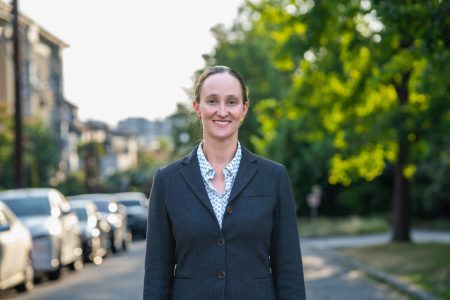




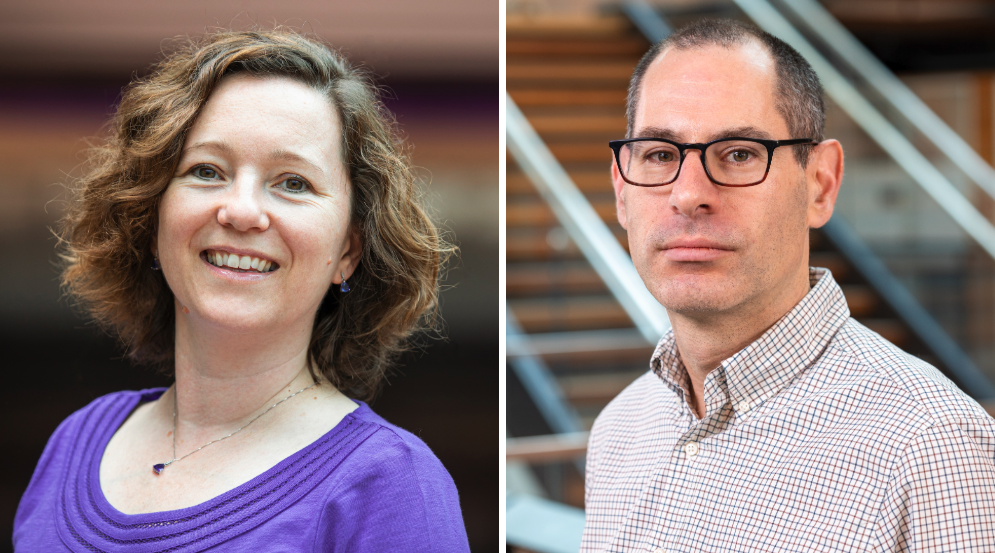
The transition of leadership at the prestigious Paul G. Allen School of Computer Science and Engineering at the University of Washington is not merely an administrative shuffle, but the passing of a torch between two close friends and colleagues who have walked the halls of academia together for over two decades. On August seventeenth, Dr. Magdalena Balazinska will conclude her exceptional nearly seven-year tenure as director to embark on a long-awaited sabbatical, hand-delivering the leadership reins to Dr. Dan Grossman, the school’s vice director and a beloved fixture of the department. This significant transition represents a deeply personal milestone for both professors, who first met when they joined the University of Washington as young, ambitious assistant professors in the mid-twos. Their close professional and personal working relationship, characterized by mutual respect, shared challenges, and humor, has formed the bedrock of the school’s administrative stability. In her incredibly warm, deeply reflective farewell letter to the Allen School community, Balazinska expressed her excitement for the simple human pleasures awaiting her: taking a brief but essential pause to see her daughter off to college, taking a breath after navigating some of the most turbulent years in academic history, and eventually returning to her primary passions of teaching, advising, and hands-on research. Grossman, in turn, sought to reassure students, staff, and faculty that the transition would feel natural, emphasizing that their decades of lockstep collaboration mean the school is poised for continuity rather than disruption. He paid glowing tribute to Balazinska’s tireless dedication, noting that she has poured an astronomical amount of time into the community, earning her sabbatical a thousand times over. This leadership evolution highlights a culture where professional excellence is deeply intertwined with personal empathy, proving that even at the forefront of global technological innovation, the heart of the institution remains its people and their enduring relationships. We wish her well on her journey ahead.
To understand the depth of Balazinska’s legacy, one must look at her remarkable trajectory and the monumental growth the Allen School experienced under her stewardship since she officially took the helm in January twenty-twenty. An esteemed expert in database management systems, scalable distributed data systems, cloud computing, and image analytics, Balazinska arrived at the University of Washington in two-thousand and six after earning her doctorate from the Massachusetts Institute of Technology. Before assuming the directorship, she demonstrated her passion for interdisciplinary innovation by serving as the director of the eScience Institute and as the university’s inaugural Associate Vice Provost for Data Science, where she championed the integration of data-intensive discovery into fields as diverse as oceanography and astronomy. Her tenure as the Gates Chair and director of the Allen School began just as the world was plunged into a global pandemic, forcing her to pilot the institution through unprecedented operational challenges. Despite these headwinds, her leadership catalyzed a breathtaking era of expansion, resulting in a fifty percent surge in graduate degrees awarded since twenty-nineteen and the strategic hiring of forty new faculty members to support this explosive demand. This year alone, the school celebrated the graduation of more than eight hundred students across its undergraduate, master’s, and doctoral programs. Balazinska’s ability to scale the department’s administrative processes while maintaining a world-class standard of research earned her prestigious accolades, including her selection as an Association for Computing Machinery Fellow and the receipt of the inaugural Women in Database Research Award. Yet, those who worked alongside her know that her true success lies not in the awards on her shelf, but in her constant advocacy for her colleagues, her active cultivation of new academic leaders, and her ability to build consensus during a period of rapid institutional and societal change. It was truly inspiring.
Under Balazinska’s visionary guidance, the physical growth of the Allen School was matched by a profound and forward-thinking overhaul of its academic curriculum, ensuring that students are prepared for a rapidly changing technological landscape. She recognized early on that computer science education could no longer remain static; it had to evolve alongside the rise of artificial intelligence, machine learning, and data science. To this end, she championed a comprehensive modernization of the school’s core curriculum, which included restructuring the intensive introductory programming sequences to make them more accessible and relevant to a modern student body. She oversaw the launch of a dedicated Undergraduate Research Program, giving younger students early hands-on exposure to cutting-edge discovery, and spearheaded the creation of a Graduate Certificate in Modern Artificial Intelligence Methods to equip advanced scholars with industry-relevant skills. Her commitment to interdisciplinary education was further realized through the co-creation of the popular university-wide Data Science minor, with a highly anticipated Artificial Intelligence minor currently in active development. Beyond the classroom, Balazinska worked tirelessly to expand the school’s research infrastructure and secure significant funding for new scholarships, fellowships, and professorships. She oversaw the launch of several groundbreaking collaborative research centers that address some of society’s most pressing issues, including the Center for Research and Education on Accessible Technology and Experiences, Computing for the Environment, and Globe.AI. By framing computer science not just as a technical discipline but as a powerful tool for environmental stewardship, accessibility, and global health, she fundamentally transformed how students and faculty view their societal responsibilities, leaving behind a modernized, socially conscious institution designed to thrive for decades to come. She achieved all this while fostering a deeply supportive community that celebrated everyone’s diverse ideas, accomplishments, and distinct impact.
As Dan Grossman steps into the role of interim director, he brings a deep, lifelong commitment to the Allen School that extends far beyond the typical responsibilities of an academic administrator. Having served as vice director for the past nine years and as Balazinska’s primary strategic partner throughout her directorship, Grossman is uniquely equipped to maintain the school’s upward trajectory. For Grossman, the Allen School is not simply one of the premier computing programs in the world; it is his true professional home, a place he has cherished ever since he arrived as a newly minted doctoral graduate twenty-three years ago. In his heartfelt message to the community, he warmly referred to the directorship as his dream job both then and now, reflecting an enduring passion for the university and its inhabitants. An expert in programming languages and computing education, Grossman has maintained a vibrant and highly visible presence in the classroom, teaching courses in software design, programming concepts, and computer ethics. He has also been a pioneer in digital education, creating a wildly popular online programming course on Coursera that has reached and inspired tens of thousands of self-directed learners around the globe over the past decade. He also leads the school’s direct-admit seminar, welcoming and mentoring first-year majors as they begin their academic journeys. In his communications, Grossman’s approachable and authentic personality shines through, whether he is jokingly sharing his quirky aversion to tea or pointing out that the school is not some faceless corporate entity, but a living, breathing community composed of diverse individuals, each with their own unique perspectives, aspirations, and preferred beverage orders. This human-centric philosophy ensures that under his leadership, the school will remain a nurturing, inclusive environment where every single voice is truly valued and heard.
One of the most critical challenges Grossman and Balazinska have navigated together in recent years is the profound anxiety gripping the student body regarding the rise of generative artificial intelligence and its potential to disrupt tech careers. Rather than ignoring these concerns or succumbing to alarmism, the duo collaborated on public-facing initiatives to address these industry shifts head-on, engaging in open dialogues with students about the future of work. They advocated for agile curriculum updates that integrate modern artificial intelligence tools into the classroom, teaching students how to leverage these technologies responsibly while simultaneously reinforcing rock-solid fundamentals in software engineering and computational logic. This balanced approach ensures that graduates are not merely passive users of artificial intelligence, but the highly skilled, ethical engineers who will design and regulate the next generation of technologies. Grossman’s teaching of computer ethics highlights his belief that technical capability must always be paired with moral responsibility, a philosophy that will guide his interim directorship as artificial intelligence continues to reshape daily life. Faculty and university leaders have expressed immense gratitude for Grossman’s willingness to step into the breach during this critical period. Dean Nancy Allbritton of the College of Engineering praised his appointment, noting that his deep understanding of every corner of the Allen School will provide invaluable continuity and strong leadership. Balazinska echoed this sentiment, describing Grossman as a thoughtful leader who cares deeply about the well-being of faculty, staff, and students alike. Their collaborative effort to steer the school through the artificial intelligence revolution stands as a testament to their shared belief that education must adapt to the future without losing sight of the timeless human values of integrity, empathy, and critical thinking. They have proven that change is not something to be feared, but a powerful catalyst for collective growth and innovation.
The decision to establish an interim leadership structure for the upcoming year is a highly strategic one, designed to give the University of Washington’s top leadership the necessary time to deliberate on the future of computing across the entire institution. Grossman recently served on the university’s Provost Task Force on Computing and Data Science, which completed a comprehensive report evaluating how the university should organize its rapidly growing initiatives in computing, data science, and artificial intelligence. The task force was charged with examining the limitations of the current academic model—where computer science resides within the College of Engineering—and exploring alternative organizational structures, such as independent colleges or cross-university institutes, to enhance research leadership, external partnerships, and student pathways. Because implementing these sweeping recommendations will take time, Grossman’s steady hand as interim director provides the perfect bridge while President Ana Mari Cauce and Provost Tricia Serio chart the university’s long-term course. Rather than viewing this period of structural evaluation as a time of uncertainty, both Grossman and Balazinska view it as an era of immense opportunity for the Allen School to cement its role as a global leader in ethical technology. Grossman’s forward-looking vision emphasizes expanding partnerships with external collaborators and other academic units to create innovative technologies that improve human lives and protect the planet, while training a socially responsible generation of computer scientists. As the Allen School embarks on this exciting new chapter, it does so with a profound sense of gratitude for Balazinska’s transformative legacy, complete confidence in Grossman’s leadership, and a shared dedication to fostering a collaborative community where technology always serves the greater human good. The future is indeed bright, and the entire community stands ready to meet it hand in hand.