





Imagine waking up in the morning and realizing the healthcare world is on the verge of a massive shift, where the vast ocean of patient data that’s been sitting in databases for years can finally be accessed in a snap. That’s the promise of Truveta Intelligence, a groundbreaking AI tool announced by the Bellevue, Washington-based company earlier this year. Picture this: researchers who’ve spent months sifting through endless reports and studies can now simply type a question in plain English and get answers pulled from real-world clinical data almost instantly. No more waiting for data to be aggregated or published—it’s like having a direct chat with millions of patient records. Founded in 2020, Truveta has been building a network of health system partners, and now they’ve unleashed this tool to tackle one of healthcare’s biggest frustrations: the gap between raw data and actionable insights. It’s exciting to think about how this could transform lives, making medical decisions faster, smarter, and more responsive to what’s actually happening in doctor’s offices and hospitals across the country. As someone who’s always been fascinated by how technology can bridge human needs, I find this particularly thrilling—it’s not just about data; it’s about real people and the care they receive. Truveta calls this system an evolution in healthcare intelligence, drawing from a treasure trove of de-identified records that span over 130 million patients. And the magic? It’s updated continuously, so the information stays fresh and relevant. I remember hearing stories from healthcare professionals about how tricky it is to get timely data—was it always the case? Yes, historically, getting insights into patient populations meant tedious processes, like manual reviews or outdated studies that lagged behind real-time events. Truveta Intelligence flips the script by letting users query live clinical data directly, without relying on summarized research. Think of it as a search engine but for medical realities: ask about trends in drug uptake or variability in treatments, and get precise answers drawn from everyday care. This isn’t just a niche tool for data geeks; it’s designed for healthcare leaders, researchers, and even drug companies who need to adapt quickly to new findings. The implications feel profound—imagine spotting a rising trend in illnesses way before it hits the headlines, or a pharmaceutical company tweaking a drug’s rollout based on instant feedback from patients. It’s humanizing the data world, turning cold numbers into a warmer, more empathetic conversation about health. By focusing on de-identified data—not individual names, but patterns and trends—Truveta ensures privacy while maximizing utility.
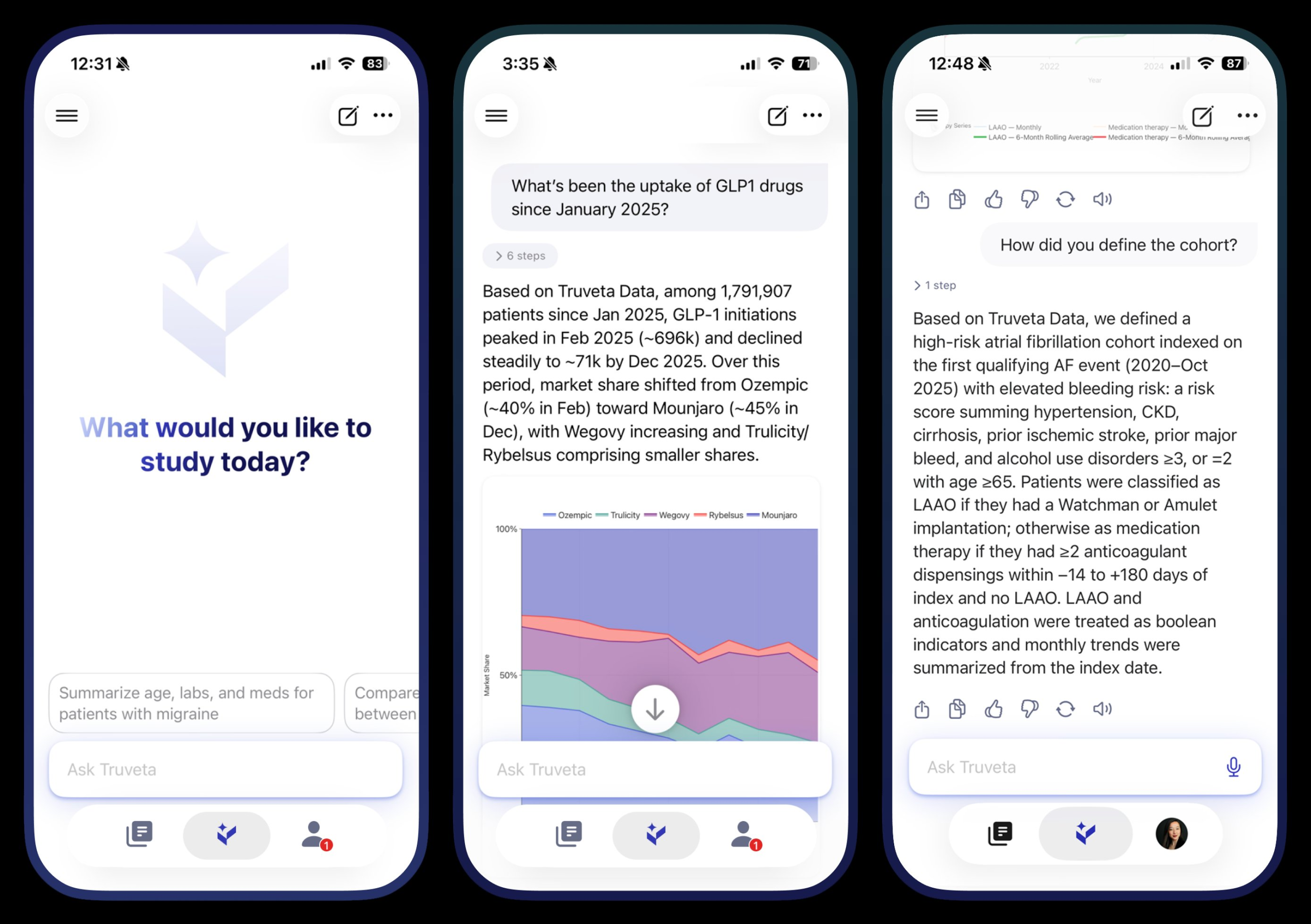
Diving deeper into how Truveta Intelligence works, it’s built around natural language queries, which makes it feel incredibly user-friendly. You don’t need to be a tech wizard with coding skills; just phrase your question like you would to a colleague. For instance, if a researcher wonders, “How has the uptake of GLP-1 drugs changed in diabetes patients over the last year?” the tool dives into the data from over 30 health system partners, covering more than 18% of daily clinical care in the U.S. That’s a huge slice of the pie—hospitals, clinics, and specialists feeding in information from their routines. What sets this apart from other AI tools in healthcare, Truveta emphasizes, is its focus on “live” data rather than static summaries of published papers. Those other systems are great for reviewing what’s already known, but they don’t capture the pulse of ongoing care. Truveta Intelligence, however, taps into a continuously updated pool, meaning answers reflect the most current realities. This immediacy is key; in a field where time-sensitive decisions can save lives, waiting months for data isn’t an option. From a human perspective, it’s relatable—much like how social media algorithms pull in real-time trends from our daily posts, this tool aggregates clinical notes, lab results, and treatment outcomes on the fly. It reminds me of how we’ve all adapted to instant searches online; now, that’s coming to medicine. The team at Truveta has poured heart into ensuring the AI is both powerful and ethical—de-identification means no one can trace back to specific individuals, maintaining trust in a sensitive sector. As the healthcare landscape evolves with AI, tools like this could democratize access to insights, empowering smaller research teams who previously couldn’t afford expensive data projects. It’s a step toward inclusivity, where big ideas aren’t just for big budgets. Imagine the potential for customization too; perhaps tailoring queries to specific demographics or regions, uncovering nuances in how diseases play out differently across communities. This isn’t just about efficiency—it’s about bringing humanity back into data-driven decisions, where every query feels like a conversation with the patients’ collective story.
The real-world applications of Truveta Intelligence are what make it shine, especially when you consider the diverse users it serves. For drug makers, this tool offers a faster lane to understanding how new therapies perform in the real world. Traditionally, companies relied on clinical trials and post-market studies that could take years to yield results. Now, with rapid insights into uptake trends, like the GLP-1 drugs mentioned in the announcement, they can spot successes or issues sooner. Picture a scenario where a pharma team notices a slight dip in effectiveness in certain populations—perhaps due to demographics or comorbidities—and adjusts swiftly. It humanizes innovation, reducing the trial-and-error burden on patients who depend on these medications. Health systems, on the other hand, can use it to identify variations in patient outcomes, ensuring fair and effective care across facilities. A hospital might query why one location sees higher readmission rates post-surgery, then tweak protocols accordingly. This feels personal, like fixing a leaky faucet in a house—small adjustments can prevent bigger problems downstream. Public health researchers stand to gain immensely too, detecting emerging trends earlier with data that’s practically real-time. Think about spotting a subtle increase in certain conditions during flu season, allowing for preemptive public health campaigns. In a post-pandemic world, where we’ve seen the value of quick responses first-hand, this tool could be a game-changer for pandemic preparedness. It’s not hard to envision how it could influence policy, guiding governments on vaccine strategies or resource allocation. For the average person, these benefits translate to better healthcare overall—fewer surprises, more proactive care. Stories of patients benefiting from rapid research advancements aren’t just anecdotes; they’re how we build trust in medicine. Truveta’s approach encourages a holistic view, where data isn’t siloed but shared to serve broader human needs. It’s inspiring to consider how a simple query could lead to breakthroughs, like improving treatments for chronic illnesses that affect millions. Ultimately, Truveta Intelligence positions itself as a bridge between technology and empathy, making abstract data tangible and actionable for those on the front lines of health.
Behind the scenes, Truveta’s story is one of impressive growth and visionary leadership, led by CEO Terry Myerson, a familiar name from tech. Having previously served as executive vice president for Windows and Devices at Microsoft, Myerson brought a wealth of experience in scaling innovative products to the healthcare space. His background in user-centric tech makes sense for a tool that’s all about natural interactions with data. Founded in 2020 with roots in Providence, a major Washington state health system, Truveta started as a response to the fragmented nature of healthcare data. Myerson’s leadership has been pivotal, steering the company through rapid expansion amidst a buzzing startup scene. It’s humanizing to think of him as someone who left the comfort of giant tech firms to dive into the complexities of medicine—probably driven by a passion for solving problems that affect everyone. The team has grown to over 400 employees, a mix of data scientists, ethicists, and healthcare experts, all collaborating to make this tool a reality. Culturally, Truveta seems to prioritize integrity and innovation, ensuring that AI doesn’t just process data but does so responsibly. Myerson has shared in interviews how his journey from software to healthcare was about applying tech’s agility to a sector that’s often slow to change. This personal touch resonates; it’s not just about business, but about improving lives. Funding milestones underscore the confidence in this vision, with Truveta climbing the ranks—recently ranked No. 3 on the GeekWire 200, a testament to its momentum. For enthusiasts of tech crossover stories, Myerson’s pivot is a reminder that skills from one industry can ignite change in another, fostering hope for more interdisciplinary breakthroughs.
Of course, no story of innovation is complete without the financial backbone that supports it. Truveta crossed a significant threshold in January 2025 with a $320 million funding round, involving high-profile investors like Regeneron, Illumina, and partnerships with 17 health systems. This influx not only fueled development but also shot the company’s valuation above $1 billion, a milestone that many startups dream of. To date, Truveta has raised over $515 million, reflecting strong market interest in AI-driven healthcare solutions. This isn’t just numbers—it’s a vote of confidence from the industry, signaling that investors see real potential in unlocking patient data’s value. For Truveta, the funding has enabled scaling: more partners, deeper data integrations, and a workforce expansion that now includes over 400 staff members. It’s tangible progress, morphing an idea from 2020 into a powerhouse today. Each dollar raised feels earmarked for human-centered goals, like enhancing data privacy or expanding access for underserved research communities. From a broader view, this growth mirrors the booming AI sector, where healthcare splits stand out due to their life-impacting nature. It’s exciting to ponder what drives such investments—perhaps the promise of ROI through better treatments and efficiencies. Truveta’s trajectory suggests they’re not slowing down; each round builds on the last, cultivating an ecosystem where innovation thrives. Personally, hearing about these funding achievements reminds me of the collaborative spirit in tech, where companies, investors, and health partners unite for a common cause. It’s a positive cycle, transforming capital into compassionate care. As the company matures, this financial stability could extend its reach, potentially influencing global health dialogues.
With Truveta Intelligence now available to existing Data subscribers—including life sciences companies and health systems—the horizon looks bright for widespread adoption. Launched in April 2026, it’s poised to integrate seamlessly into workflows, thanks to its accessibility for querying vast troves of data. Subscribers can start experimenting with queries right away, tapping into that rich, real-time reservoir. The excitement isn’t just internal; industry experts predict this could catalyze a shift toward more data-informed healthcare, where decisions are grounded in actuality rather than assumptions. Imagine the ripple effects: faster drug development cycles, equitable health outcomes, and proactive public health measures. Yet, with great power comes responsibility—Truveta has emphasized de-identification and ethical safeguards to address privacy concerns, ensuring trust. From a human standpoint, this rollout feels democratizing, leveling the playing field for researchers without endless resources. It’s not fantasy to envision future enhancements, like predictive analytics or integration with wearable devices, further personalizing care. Stories shared by early users might soon surface, highlighting how a single query saved time or uncovered a critical insight. Truveta’s place at No. 3 on the GeekWire 200 list hints at its growing influence in the tech-health nexus. As we look ahead, tools like this could redefine what attentive healthcare means, blending human intuition with machine precision. It’s a hopeful message: technology that listens to the whispers of patient data, amplifying voices that matter most. For anyone invested in health’s future, Truveta Intelligence isn’t just a tool—it’s a beacon of progress, promising faster, more humane solutions in an ever-evolving world.