





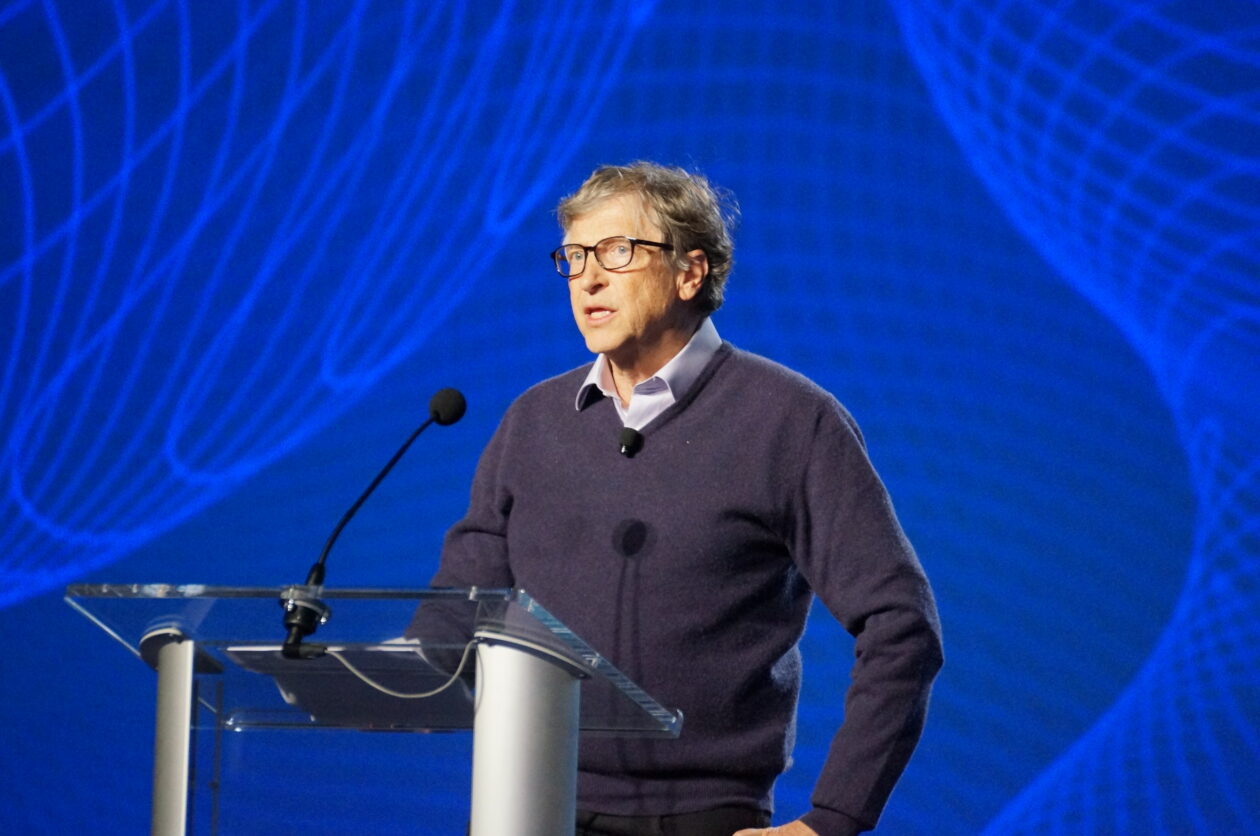
In early 2020, Bill Gates stood before a crowd in Seattle as an emblem of technological triumph and global philanthropy, yet behind the scenes, a quiet, distressing storm was gathering over past associations that would eventually demand public reckoning. Years later, that storm culminated in a highly anticipated, voluntary six-hour closed-door interview with the U.S. House Oversight Committee, the full transcript of which has now been made public. For Gates, this session was not merely a formal political inquiry, but a deeply humbling opportunity to address what he has openly conceded to be one of the greatest errors of his life: his association with the late, convicted sex offender Jeffrey Epstein. Through a spokesperson, the Microsoft co-founder expressed his gratitude for the opportunity to answer every question put to him, underscoring his support for full transparency and his sincere hope that the committee’s work brings long-awaited justice to Epstein’s victims. By examining the transcript, we see a humanized portrait of a man driven by an institutional obsession to solve global crises, who nevertheless allowed himself to be enticed by a master builder of false impressions. Gates’ candid testimony reveals the vulnerability of admitting to a massive lapse in judgment, explaining that his desperate hope to leverage Epstein’s promises of billions in funding for global health was, in reality, a “complete dead end” that left a lasting stain on his own life. This revealing look inside the halls of Congress serves as a powerful reminder of how even the most brilliant and data-driven minds of our generation can be blinded by their own grand ambitions, making them susceptible to manipulation by those with dark, hidden agendas.
The relationship, which lasted from 2011 to 2014, was characterized by Gates as strictly transactional and professional rather than a genuine friendship, though the frequency of their contacts painted a picture of a persistent connection. Gates detailed a timeline of their meetings, recalling three interactions in 2011, two in 2012, and upwards of five or six in both 2013 and 2014, some of which were conducted via Skype calls. What remains most striking to observers is the profound cognitive dissonance Gates exhibited during this period; he admitted to knowing at the time of their 2011 introduction that Epstein had been convicted of a sex-related crime, yet he chose not to look into the horrifying specifics of those offenses. It was not until the Miami Herald published its groundbreaking, detailed exposé in 2018 that Gates fully grasped the horrific scale of Epstein’s predatory network and realized that the man had been registered as a sex offender. Gates maintained that he continually declined Epstein’s numerous social invitations, including offers to visit his private Caribbean island, his ranch in New Mexico, or his estate in Florida. However, the shadow of proximity is hard to shake, and Gates did acknowledge that he might have unwittingly stood in the presence of Epstein’s young victims, noting that he flew with Epstein once from New York to Palm Beach, during which two of Epstein’s female assistants sat in the front cabin. By recounting these uncomfortable details, Gates sought to draw a sharp line between his own administrative presence and the dark, abusive reality of Epstein’s world, asserting under oath that he never witnessed any misconduct nor was he ever offered any young women.
To understand how Gates found himself in this position, one must look at the complex web of enablers, advisers, and elite institutions that bridged the gap between the tech titan and the convicted felon. The initial connection was forged by Boris Nikolic, Gates’ former science adviser, whose deep, parallel relationship with Epstein—including being surprisingly named in Epstein’s will—left Gates deeply shocked when the details eventually came to light. The transactional nature of these circles became even more apparent when Gates admitted to facilitating a $2 million donation to the Massachusetts Institute of Technology (MIT), a gesture he hoped would finally appease Epstein and stop his relentless pestering for Gates to donate money in his name. It was a classic case of trying to quiet a nuisance, only to find oneself further entangled in a web of elite complicity where names like LinkedIn co-founder Reid Hoffman, former Microsoft executive Steven Sinofsky, and Intellectual Ventures founder Nathan Myhrvold frequently surfaced. Gates explained that while some of these figures had their own independent interactions with Epstein at conferences or academic dinners, their shared social orbit created an environment where warning signs were easily ignored under the guise of intellectual collaboration and philanthropic fundraising. This collective blind spot on the part of some of the tech industry’s most powerful leaders highlights a culture where the pursuit of scientific progress and charitable capital occasionally bypassed basic moral vetting, leaving institutions and individuals alike scrambling to untangle their reputations from Epstein’s toxic legacy.
Perhaps the most human and emotionally raw aspect of the transcript involves Gates’ forced journey through his own personal vulnerabilities, as lawmakers pressed him on aspects of his private life that became leverage for Epstein. Gates courageously acknowledged three past extramarital affairs—with a competitive bridge player, a nuclear scientist, and a physician—revealing that Epstein had become aware of at least two of these relationships, likely through shared channels like Nikolic. The revelation of these affairs sheds light on a highly personal vulnerability that Epstein, a master of coercion, seemed prepared to exploit. The Department of Justice’s release of files included notes and draft emails written by Epstein to himself, which Gates described as “brainstorming” sessions that heavily resembled the groundwork for blackmail. Although Gates insisted to the committee that he was never actually blackmailed or threatened directly by Epstein, and that he only saw these unsettling documents long after Epstein’s death, the mere existence of these drafts illustrates the terrifying quiet danger that hovered over his life. This segment of the testimony strips away the sterile, corporate image of Bill Gates as a flawless global statesman, presenting instead a flawed human being whose personal missteps made him a target for a predator who weaponized information to control the rich and powerful. Facing these disclosures in a congressional setting, with the eyes of the public watching, underscores the painful reality of public reckoning, where the separation between private shortcomings and public duties completely dissolves.
The congressional hearing also served as a stage for intense political theater, with lawmakers like Representative Lauren Boebert pushing Gates on highly controversial and speculative topics, including Epstein’s rumored interests in eugenics, transhumanism, and population engineering. Boebert questioned whether Epstein had ever attempted to influence the Bill & Melinda Gates Foundation’s extensive work on genetics, CRISPR technology, or reproductive health, seeking to link the foundation’s global initiatives to Epstein’s bizarre personal ideologies. Gates steadfastly dismissed these assertions, clarifying that Epstein had absolutely zero influence on any foundation programs and that such fringe topics never arose during their discussions. Amidst this hostile line of questioning, Gates also confronted pressing socio-economic debates, particularly regarding the responsibilities of the global elite and the ethics of extreme wealth aggregation. When asked directly about whether he believed billionaires should face higher tax rates to combat wealth inequality, Gates responded with remarkable candor, noting that he has personally paid over $14 billion in taxes and firmly believes that the United States must establish systems to tax wealthy individuals, including himself, at a much higher level. This moment transformed the hearing from a narrow cross-examination about a toxic association into a broader dialogue about systemic responsibility, showing Gates trying to balance the defense of his personal character with a progressive vision for economic justice.
Ultimately, the release of this exhaustive transcript represents a pivotal chapter of self-reflection and redemption for Bill Gates as he seeks to untangle his legacy from the darkest mistake of his career. He did not attempt to shield himself from the discomfort of his choices, choosing instead to cooperate fully, advocate for the unredacted release of all relevant files, and champion the voices of Epstein’s survivors who continue to seek justice. Looking ahead, Gates made it clear to the committee that the remaining chapters of his life will be single-mindedly dedicated to the humanitarian mission that brought him into this mess in the first place: eradicating disease and poverty. He passionately defended the life-saving work of his foundation and partners like GAVI, pointing out that their coordinated vaccine procurement campaigns are the primary reason global childhood mortality has plummeted from over ten million deaths annually to under five million. In confronting his past lapses in judgment so publicly, Gates has accepted the heavy burden of his mistakes while reaffirming his commitment to the global community. His journey serves as a powerful testament to the complexity of human nature, demonstrating that a person can be capable of extraordinary global good while still falling victim to profound personal errors, and that true accountability lies in facing those errors openly to ensure the focus remains on saving lives.