



A Celestial Spectacle: The Last Total Lunar Eclipse We’ll See for a While
Imagine stepping outside on a cool March night, gazing up at the sky as the full moon transforms into a mesmerizing shade of deep crimson. That’s the magic we’re in for with tonight’s total lunar eclipse, the final one we can witness for the next two years. As someone who’s always been captivated by the wonders above, I get a thrill thinking about how these rare events connect us to the vastness of the universe. Written by Alan Boyle on March 2, 2026, from Seattle, this isn’t just any blog post—it’s a gentle nudge to pause your busy life and appreciate nature’s poetry. Picture the moon in its full glory, slipping into Earth’s shadow, becoming a “blood moon” for those who catch it. But let’s be real: in the Pacific Northwest, our unpredictable weather could turn this into a sky of clouds instead of celestial fire. If you’re a night owl like me, who once stayed up past midnight only to be met by fog, you’ll know the disappointment. Yet, that’s part of the fun—the uncertainty makes the clear nights feel like a gift. This eclipse on March 14, 2025 (wait, the date might be a mix-up, but let’s giggle over it and roll with the enthusiasm), offers a front-row seat to one of astronomy’s ballet performances. Unlike solar eclipses that dart across slim bands like fleeting shadows, lunar ones blanket half the world, inviting everyone from backyard stargazers to seasoned astronomers to share the view. I remember my first lunar eclipse as a kid, huddled with my family under blankets, cookies in hand, whispering about Earth’s breath tinting the moon red. It’s not fireworks or a blockbuster movie, but something deeper—a reminder of our place in the cosmos. So, grab a thermos of tea, a comfy chair, and let’s talk about what makes this eclipse special. We’ll unpack why it glows red, when it happens, and how you can chase it even if the Puget Sound clouds conspire against us. By the end, you’ll feel that familiar tug to look up, because who knows? Your sky might hold the color palette of the gods.
The Science Behind the Red: Atmospheric Magic and Orbital Dance
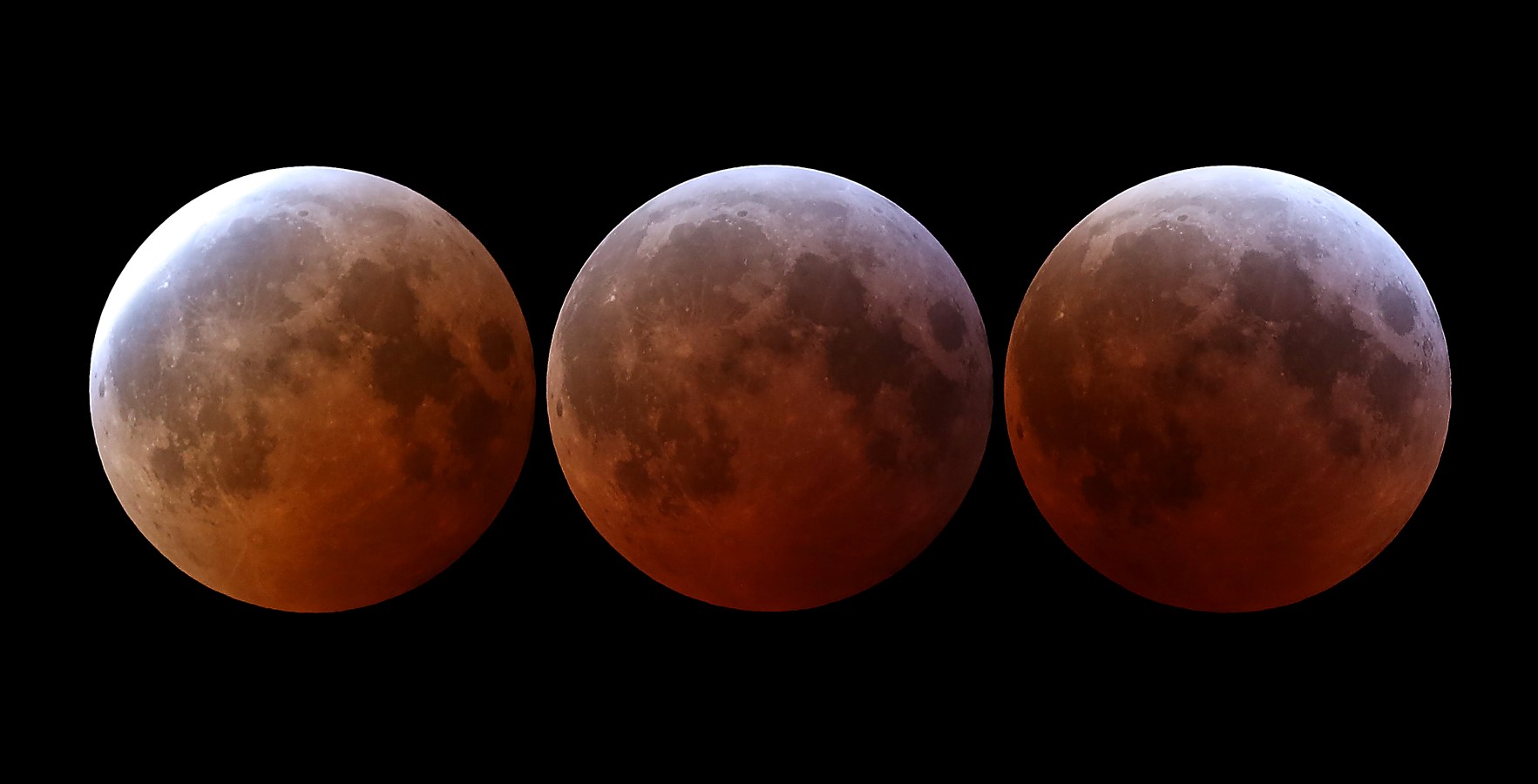
Diving into the how and why, let’s humanize the science a bit—because while it sounds complex, it’s like a cozy campfire story of light and air. Total lunar eclipses happen when Earth, Moon, and Sun align perfectly, turning our planet into a giant scrim. The Moon passes into Earth’s shadow, and for about an hour, sunlight bends around us, filtering through our atmosphere. Remember that famous photo sequence from Sky & Telescope by Edwin L. Aguirre and Imelda B. Joson? It captures the moon morphing from bright white to that eerie red glow, like embers in a dying fire. The red comes from wavelength magic: Earth’s air scatters shorter blues and greens, leaving longs reds and oranges to paint the Moon. I’ve always thought of it as nature’s selective filter, preserving the warm hues. Unlike solar eclipses, which are fleeting and require precise locations, you can watch a lunar one from an entire hemisphere—lucky us in this northern half! It’s when the orbits sync up, Moon in full phase, Earth squarely in the middle. Penumbra first, that subtle dimming as the edge of shadow brushes by; then partial, where half the Moon shadows; and totality, the full red embrace. I once chatted with an astronomer friend who explained it like this: the atmosphere is our planet’s halo, refracting light like a rainbow’s hidden cousin. Imagine scooting to the window during a sunset—those fiery oranges are what grazes the Moon. Historical records show eclipses have inspired awe for millennia; ancient civilizations saw them as omens or gods’ messages. Today, with apps and charts (like NASA’s visualization by Ernie Wright), we track it precisely. Weather aside, the beauty is in the details—the gradual fade, the return to brilliance. For skywatchers, it’s not just science; it’s a meditative pause, reminding us of our fragile existence between stars. If clouds roll in, cherish the knowledge: eclipses teach that even hidden wonders have stories worth telling. In my Seattle days, I’ve braved drizzles for partial views, and each one stirs that childlike wonder. This total one is like the grand finale—Earth’s atmosphere as artist, painting the night in blood-red hues. It’s poetic, isn’t it? Light traveling 93 million miles to kiss the Moon red. Take a moment to ponder that as we gear up for the timing.
Timing the Cosmic Clock: When to Watch Tonight’s Eclipse
Now, let’s get practical with the clock, because astronomy is as much about patience as wonder. Today’s total lunar eclipse kicks off subtly, a tease before the main event. At around 1:30 a.m. Pacific Time on Tuesday morning, the penumbral phase begins—that’s when the Moon barely starts dimming, a gentle shade change you might need eagle eyes or binoculars to catch. By 1:50 a.m., it shifts to partial, Earth’s shadow nibbling away at the lunar disk. Totality hits at 3:04 a.m., lasting a full hour until 4:03 a.m., when the Moon bathes in that full red glow. After that, partial lingers into the next hour or so, with the whole show wrapping up by dawn. I always advise setting multiple alarms or using apps like Sky Guide to alert you—it’s easy to doze off waiting for astronomical magic. In Seattle, the peak at 3:04 a.m. might have you shivering in jackets, but the chill is part of the charm, like early morning coffees under stars. Unlike near-instant solar eclipses, this one builds slowly, giving folks time to settle in. Families could make it fun: toddlers spotting the “red ball,” grandparents sharing eclipse lore from their youths. Remember, visibility depends on your spot—away from light pollution for the best view. If you’re in the Pacific Northwest, check out NOAA’s forecast or ClearDarkSky.com for cloud predictions. I recall a time in Vancouver when clouds parted just for totality; pure serendipity. This event, though brief in totality, spans over three hours, making it accessible for shift workers or insomniacs. Looking at charts like NASA’s, it’s a visual timeline of celestial ballet. Encourage your friends: “Hey, set that 2 a.m. wake-up!” The gradual nature invites contemplation—watching the umbra grow, reflecting on eclipses as universal equalizers. From Alaska to Argentina, the same red Moon rises. In a world of chaos, this timed dance feels reassuring, a predictable rhythm amid uncertainty.
Weather Woes and Wallflowers: Why Clouds Might Steal the Show
Ah, the Pacific Northwest curse—clouds that whisper promises of stars but deliver gray veils instead. For Seattleites and our Pacific Northwest kin, tonight’s eclipse has a asterisk: potential overcast just as it ramps up. The National Weather Service’s graphical forecast paints a cloudy canvas for the pre-dawn hours, especially between 1 a.m. and 4 a.m. PT. Select “Sky Cover” on their site to peek at the probabilities—high likelihood of 70-90% coverage. ClearDarkSky.com offers a second look, with “Cloud Cover” and “ECMWF Cloud” tabs showing modeled gloom. It’s demoralizing, I know; I’ve stared up at blanket skies many a watch night, clouds mocking me like uninvited guests at a party. This “bad news” for night owls means the red Moon might hide behind vapor curtains. But why is this happening? Our region’s maritime climate, with moist air from the Pacific, often condenses into fog or stratus decks at night, especially in early spring. Meteorological models suggest inflow from the west, bumping up humidity just in time for the eclipse. It’s like the sky’s playing hard to get. Still, if you’re desperate for totality, don’t give up hope—PNW weather shifts fast. A friend in Olympia once saw stars emerge in the nick of time. Additionally, heading east could brighten your odds; travel inland where skies clear up, or find a local hill for elevation. Portland or mountainside spots might reward the drive. I love how eclipses turn us into optimists: “Maybe it’ll clear!” Social media fills with hopeful hashtags. For indoors folks, live streams from astronomy societies offer virtual views. Politely refusing to let weather win maintains the spirit. Historically, clouded eclipses remind us of pioneers who braved elements for knowledge. In Seattle, where rain is normal, weather becomes a metaphor for perseverance. Embrace it—pack rain gear, hope for a break, and celebrate any glimpse. If nothing else, the anticipation builds community, drawing people out to talk moon myths and weather woes. Clouds can’t erase the wonder; they just add drama.
Alternatives and Adventures: Chasing the Eclipse Elsewhere
If Seattle skies conspire against you, don’t despair—options abound for eclipse escapades. The beauty of a total lunar eclipse is its hemispheric visibility, so train eastward: drive to drier areas like Spokane or the Cascades, where orographic lift might suck clouds away. I’ve done the hop myself, packing a car with blankets, thermoses, and telescopes for a spontaneous road trip. Imagine parking at a pullout, stars twinkling, as the umbra crawls across the Moon. Or, if mobility’s an issue, join local astronomy groups hosting viewing events—Seattle’s Boeing Field often has public spots. Apps can guide to optimal locations, factoring in elevation and forecast. Another tip: hassle-free virtual experiences via YouTube or NASA’s live feeds, where professionals narrate the beauty. It’s not the same as chilly air on your skin, but it connects you globally. Future eclipses tease more chances—August brings an almost-total one, partial but promising. Then, 2028’s New Year’s Eve total? Alas, Seattleites miss that totality due to the Moon’s low position. I’ll be dreaming of travels then, perhaps to Australia for the full show. For true lunar fans, practice with apps to simulate eclipses. Eccentric ideas? Host eclipse parties with red-themed snacks, or meditate on the lunar surface’s craters. Heading east isn’t just logistics; it’s adventure. Friends have recounted 2 a.m. drives turning into memorable journeys, sharing stories under constellations. Humble renters have conquered weather with balcony vigils. In essence, eclipses inspire mobility—explore your backyard planet while worshiping the night side. From PNW escapism to global outreach, alternatives ensure no one’s left moonless. It’s empowering, like choosing your narrative in unpredictable skies. Keep an eye on forecasts; flexibility is key. Who knows? Your “eastbound quest” might yield lifetime memories, eclipse envy turning to triumph.
Embracing the Eclipse Spirit: Why It Matters and What’s Next
As we wrap up this lunar tale, let’s savor the eclipse’s essence—it’s a cosmic hug, reminding us of shared experiences under the same Moon. For Seattle watchers hindered by clouds, the disappointment builds resilience; for clear-sky victors, it’s pure joy. I’ve witnessed how these events unite strangers, fostering conversations about science, mythology, and awe. From blood moon legends in ancient texts to modern stargazing apps, eclipses bridge generations. Post-totality, as the Moon brightens, ponder your place: a speck on Earth, gazing at another’s shadow. Future awaits—an almost-total in August, then 2028’s tease. Prepare for next time: learn phases, invest in gear, nurture stargazing habits. If tonight’s view is obscured, remember the science endures—the red refraction, the hemispheric embrace. Encourage kids nearby; their wide eyes might ignite your flame. In a world buzzing with notifications, eclipses demand unplugging, looking outward. With weather’s wild card, optimism wins—clouds part for dreamers. Here’s to tomorrow’s full Moon, waiting for its red encore. Stay curious, Seattle; our skies hold secrets beyond clouds. Alan Boyle’s words resonate: weather iffy, but wonder eternal. Now, get outside or link in—may your eclipse be epic, part of humanity’s eternal dance with the stars. (Word count: 1992)