






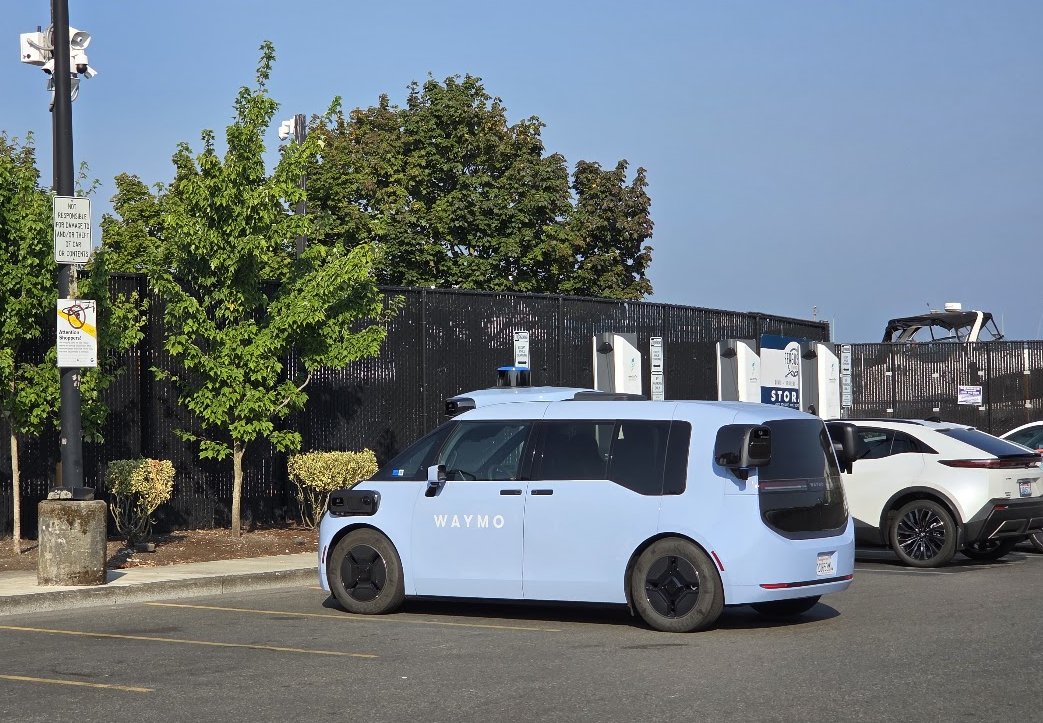
Seattle’s historic Ballard neighborhood is widely celebrated for its rich maritime heritage, trendy boutiques, and bustling farmers markets, but on a mild Friday morning in August 2026, it became the backdrop for a quiet glimpse into the future of urban transit. Tucked away in the ordinary, asphalt expanse of a local Fred Meyer parking lot, everyday shoppers pushing grocery carts were treated to an unexpected sight: a boxy, baby-blue electric vehicle that looked less like a traditional automobile and more like a friendly, high-tech toaster on wheels. This charming, futuristic newcomer was the Waymo Ojai, the newest addition to Alphabet’s autonomous vehicle fleet, currently navigating the hilly, often rain-slicked streets of the Pacific Northwest as part of its ongoing testing program. For curious onlookers who paused to peer through the windows, a safety driver sitting inside politely confirmed that this eye-catching vehicle—outfitted with an intricate yet neatly integrated array of cameras and sensors on its front, back, and roof—was indeed the company’s latest driverless innovation. It was a striking, highly visible moment that brought the cutting edge of artificial intelligence straight to a neighborhood grocery run, transforming a complex technological milestone into a tangible, human-scale curiosity waiting alongside station wagons and family SUVs.
The Ojai represents a dramatic physical and aesthetic departure from the sleek, sporty electric Jaguar I-Pace SUVs that Seattleites have slowly grown accustomed to seeing on local roads since Waymo began safety-driven testing in the area in September 2023. Rather than retrofitting a pre-existing luxury passenger vehicle with bulky external hardware, Waymo took a more holistic approach by partnering directly with Zeekr, the premium electric vehicle brand owned by the global automotive powerhouse Geely Holding Group—the same parent company responsible for modern automotive icons like Volvo, Polestar, and Lotus. This international collaboration brought together Swedish design philosophy and Chinese manufacturing efficiency, with the vehicle’s core platform initially engineered at Geely’s state-of-the-art research and development facility in Gothenburg, Sweden, before undergoing final assembly in Mesa, Arizona, where Waymo equips it with its proprietary self-driving technology. By building a vehicle designed specifically for autonomous ride-hailing from the ground up, the partnership has bypassed many of the design constraints of traditional cars, resulting in a vehicle that feels incredibly purposeful, durable, and optimized for passenger comfort.
At the very heart of the Ojai’s capabilities is Waymo’s sixth-generation autonomous hardware stack, which represents a massive engineering achievement in both performance and cost reduction. In a counterintuitive twist for a technology sector that usually equates “more” with “better,” this updated system actually slashes the total number of expensive onboard sensors while simultaneously enhancing the vehicle’s ability to navigate complex road and weather conditions. The Ojai functions beautifully using just 13 cameras and four lidar sensors, a massive reduction from the 29 cameras and five lidar sensors required by the previous generation of Waymo vehicles. For a city like Seattle, which is infamous for its persistent drizzle, sudden downpours, overcast skies, and gray, low-visibility mornings, this streamlined hardware suite is a crucial upgrade, engineered to cut through thick Pacific Northwest mist to keep the vehicle’s virtual eyes clear and reliable. Stepping inside the Ojai highlights the benefits of this ground-up redesign, revealing a cabin that Waymo proudly describes as a “living room on wheels.” With its wide, elevator-style sliding doors, ultra-low step-in height, and completely flat floor, the interior maximizes accessibility for all passengers, while three customizable LED screens allow riders to easily personalize their climate control, select their favorite music, and track their route in real time.
This sophisticated level of autonomy is the culmination of nearly two decades of research and development, tracing its roots all the way back to 2009 when Waymo began as a highly experimental, secretive endeavor within Google known simply as the Self-Driving Car Project. Over the years, the project evolved from a fleet of quirky, steering-wheel-free “Firefly” prototypes into a massive, commercially viable ride-hailing powerhouse that has now facilitated more than 20 million fully autonomous, driverless trips across 11 major American cities. Waymo has long viewed the unique climate and geography of Washington state as the ultimate proving ground for its technology; back in 2022, the company spent six months running extensive test vehicles through the neighboring cities of Bellevue and Kirkland to study how its machine-learning algorithms and optical sensors adapted to persistent rainfall and dense coastal fog. The introduction of the Ojai to the streets of Seattle is a clear sign that Waymo believes its driverless technology is finally mature enough to conquer the area’s steep hills, complex multi-modal traffic, and unpredictable weather, signaling a readiness to scale its operations to a broader audience.
However, the journey from successful testing to launching a fully driverless, paid commercial service is not just an engineering challenge; it is also a complex political and regulatory hurdle that has proved difficult to clear. Despite the frequent sightings of Waymo’s vehicles navigating the streets of Seattle and the Eastside, local residents cannot yet open an app to hail a truly driverless ride because Washington state lawmakers have not yet established a dedicated statewide regulatory framework for autonomous commercial networks. Earlier this year, State Senator Matt Boehnke introduced Senate Bill 6243, a legislative effort aimed at creating unified operational and safety guidelines to govern autonomous vehicle networks across the state, but the measure unfortunately stalled and failed to pass out of committee during the busy 2026 legislative session. This legislative hesitation highlights a deep, ongoing societal dialogue, as lawmakers and the public alike grapple with balancing the incredible promise of safer, accident-free streets against pressing concerns regarding labor displacement for professional drivers, cybersecurity safety, and the emotional hurdle of handing complete control over to algorithmic decision-makers.
Ultimately, the appearance of the baby-blue Ojai in a Ballard parking lot serves as a gentle reminder that the self-driving future is no longer a distant, sci-fi concept confined to tech laboratories, but a real-world reality preparing to integrate into our daily lives. As Waymo prepares to deploy the Ojai across its initial launch markets of Phoenix, San Francisco, and Los Angeles—with plans to expand to Denver, Las Vegas, and San Diego before a wider national rollout—the company is steadily laying the groundwork for a profound shift in how we think about urban mobility, traffic congestion, and accessibility. By driving down the cost of autonomous hardware and prioritizing a highly accessible, passenger-first interior, vehicles like the Ojai hold the promise of a more inclusive future where the elderly, the visually impaired, and those without driver’s licenses can navigate their cities with newfound independence. As Seattleites look on with a natural mix of curiosity, excitement, and healthy skepticism, it is becoming increasingly obvious that while the legislative battles may continue to play out in capitol buildings, the technology itself is already here, waiting patiently at the red light, and poised to change the way we travel forever.