






The emerald canopy of Seattle, long celebrated as the global cradle of cloud computing, has officially hit the pause button on the physical infrastructure that powers our digital lives. In an extraordinary and unanimous display of civic caution, the Seattle City Council voted on June 9, 2026, to impose a one-year emergency moratorium on the construction of new large-scale data centers within the city limits. This landmark decision marks a dramatic shift in how metropolitan areas look at the technological revolution, signaling a growing anxiety over how the artificial intelligence gold rush is impacting human lives, local ecosystems, and community resources. Far from being a mere administrative block, the temporary ban was passed amidst intense emotional testimonies from residents who fear that the unbridled consumption of power, water, and public utilities by these specialized facilities will come at the direct expense of working-class families and the environment. By enacting this embargo, Seattle is asserting that the digital future cannot be built by sacrificing the basic, physical needs of the local communities who reside in the shadow of the cloud. The moratorium will take full effect as soon as Mayor Katie Wilson signs the legislation, halting a wave of speculative industrial proposals that had already begun knocking heavily on the city’s door. Ultimately, the vote represents a profound moment of reflection for a region that has made unimaginable fortunes from the virtual world, forcing its leaders to ask what is truly lost when physical reality is converted into raw, digital processing capacity.
At the core of the council’s decision is the sheer, overwhelming material footprint required to keep artificial intelligence platforms running. Though we often think of the internet as an ethereal, weightless cloud, it actually resides in massive, energy-devouring concrete warehouses stuffed with humming servers that run hot twenty-four hours a day. The physical demands of these structures are staggering; the data center projects recently proposed to Seattle City Light possessed a combined peak electrical demand that equaled roughly one-third of the entire city’s average daily power consumption. To make matters worse, these server farms require millions of gallons of clean water every day just to prevent their processors from overheating, a resource strain that many local climate advocates argue is unsustainable as our planet warms. In response to these growing threats, the city council authorized a two-pronged legislative approach: an immediate temporary ordinance targeting any and all new data center projects with an electrical capacity of over 20 megavolt-amperes—an amount of power that could easily sustain thousands of average American homes—and a separate resolution committing the city’s various municipal offices to deeply study the long-term environmental and social impacts of these centers before drafting permanent zoning regulations. Councilmember Debora Juarez, the primary sponsor of the resolution, became a lightning rod for the evening’s public sentiment when she admitted she would entirely halt artificial intelligence development in the region if she possessed the unilateral authority to do so, drawing thunderous applause from the crowded gallery.
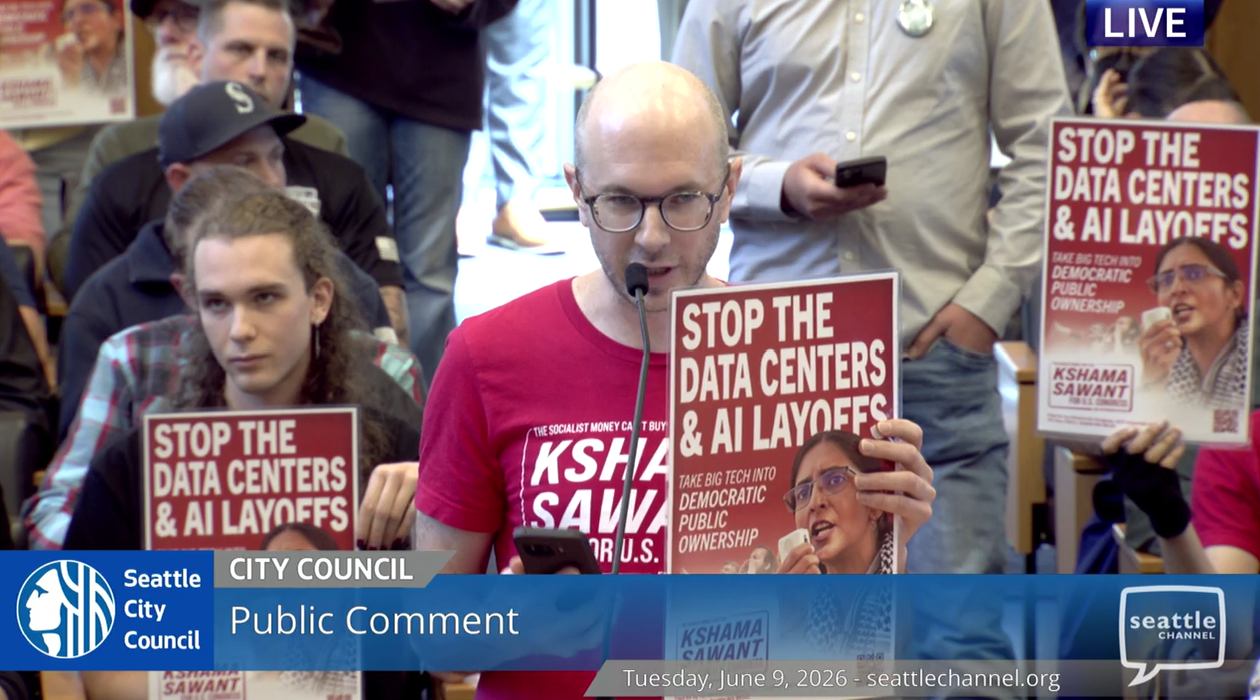
The political atmosphere leading up to the council’s vote was electric, defined by a massive surge of grassroots environmental activism and labor anxiety that has been boiling over for months. Members of Kshama Sawant’s congressional campaign and other progressive community organizers filled the council chambers, holding up bold signs that read “Stop the Data Centers & AI Layoffs” to make sure their message was impossible to ignore. This local rebellion was supported by a monumental digital write-in campaign, with council members revealing they had received more than 98,000 emails from concerned citizens over the preceding weeks pleading with them to protect the city’s resources from technological exploitation. During the public comment section of Tuesday’s meeting, over fifty passionate residents stood up to testify against the unchecked expansion of data centers, with not a single corporate representative or industry advocate stepping forward to defend the facilities. For many of the speakers, a simple one-year moratorium was not nearly enough; they desperately urged the city leaders to enact a permanent, unconditional ban on these projects to ensure that Seattle’s electrical grid and water supplies would never be compromised for corporate data harvesting. This public outcry highlights a growing, palpable disconnect between the tech companies driving municipal development and the average working-class citizens who are worried that their own utility bills will skyrocket to pay for the infrastructure upgrades needed to feed the tech sector’s insatiable hunger for electricity.
Perhaps the most poignant and surprising testimony of the night came from deep within the technology sector itself, as corporate software engineers and tech laborers chose to break ranks with their employers to express solidarity with the local community. Activists from the group Amazon Employees for Climate Justice (AECJ) testified passionately, urging the city council to demand strict renewable energy mandates, union labor guarantees, and robust environmental protections before allowing any further data center permits to be processed. These tech workers painted a bleak picture of an industry consumed by sheer corporate greed, describes as a frantic, lawless race to build out as much raw computing capacity as humanly possible before local governments and regulatory agencies can catch up to protect the public interest. Srija Nagireddy, a prominent member of AECJ, pointed out the painful irony of large tech giants spending hundreds of billions of dollars globally on physical AI hardware while simultaneously laying off tens of thousands of skilled human employees in their pursuit of record profit margins. This dramatic intersection of labor rights and environmental advocacy reveals a shifting consciousness among technology workers who refuse to sit idly by while their labor is weaponized to accelerate climate degradation and economic inequality. By standing before the city council, these tech employees humanized the struggle, demonstrating that opposition to unregulated tech expansion is not born of a fear of progress, but rather from a deep, moral concern for our shared ecological and social future.
In an effort to bring balance and nuance to the rapidly escalating debate, Councilmember Bob Kettle worked to distinguish between modern, highly specialized artificial intelligence “hyperscale” data centers and the older, traditional digital infrastructure that already serves as the quiet backbone of the city’s vital public services. Kettle successfully introduced a unanimous amendment to the council’s resolution, emphasizing that the city’s forthcoming research must acknowledge the critical role that existing, local data centers play in supporting essential public systems like regional healthcare, public education, and emergency first responders. He reminded his colleagues that one existing facility in the heart of downtown Seattle actually captures its excess thermal heat to comfortably warm a half-dozen nearby buildings, showcasing how thoughtful, well-integrated digital infrastructure can actively benefit a local community. Additionally, the geography of cloud computing in the Pacific Northwest adds an interesting layer of irony to the current ban: neither Amazon Web Services nor Microsoft Azure actually operates their mammoth, resource-intensive hyperscale data centers inside Seattle’s city limits. Amazon’s largest server farms are clustered in the state of Oregon, while Microsoft’s primary regional server presence is located across the Cascade Mountains in Quincy, Washington—a small, rural town that was completely transformed by the promise of cheap, abundant hydropower from the Columbia River. Because of this geographic reality, the immediate impact of Seattle’s emergency moratorium will fall not on the tech giants themselves, but rather on commercial commercial real estate developers who buy up urban land to build speculative server warehouses.
As the city looks toward the immediate future, all eyes are on Mayor Katie Wilson, who is widely expected to sign the newly passed moratorium into law, having originally floated the visionary concept of a temporary freeze back in early April. Once her signature is secured, Seattle’s various planning and utility departments will begin the arduous, year-long task of researching the true environmental toll of server farms, with the goal of presenting comprehensive, permanent zoning laws to the council by the winter of early 2027. However, the temporary ban is already staring down its first major real-world test in the form of a massive, controversial project proposed by Digital Realty at 301 Virginia Street, which was filed just eleven days before the council’s historic vote took place. The ultimate fate of this particular project remains deeply uncertain, as local permitting officials, developers, and potentially the judicial courts will have to battle over whether an emergency moratorium can legally retroactively apply to developers who managed to slip their applications in right under the wire. By taking this incredibly bold stand, Seattle has officially joined a historic and rapidly growing coalition of major American municipalities—including Minneapolis, Denver, Baltimore, and Indianapolis—that are actively reclaiming control over their local resources from the aggressive, unchecked expansion of global technology interests. In doing so, this vibrant Pacific Northwest metropolis has sent an unmistakable message to the world: our collective digital future must never be built at the expense of our real, physical humanity.