

In June of 2026, standing before a sea of eager young minds at the University of Washington’s Paul G. Allen School of Computer Science & Engineering commencement, AI pioneer Jeff Dean shared a deeply personal memory that would soon reveal itself to be a prophetic foreshadowing. He spoke of the summer of 1999, a time when the internet was still in its infancy and Silicon Valley was a landscape of raw, unfettered imagination. Dean recalled how he suddenly “got the itch to join a startup,” a restless curiosity that led him to a tiny, obscure company named Google. At the time, the nascent search engine was housed in a cramped office directly above a T-Mobile store in Palo Alto, boasting a grand total of just twenty employees. For nearly three decades, Dean remained at Google, helping to transform that humble office into a global technological empire and rising to become its celebrated Chief Scientist. Yet, at fifty-eight years old, with a career defined by monumental achievements that have shaped the very fabric of modern computing, Dean felt that familiar, electrifying itch return. In a stunning announcement that sent shockwaves through the tech industry, Google revealed that Dean is stepping down from his executive role to return to his entrepreneurial roots, embarking on a bold new venture with three of his closest and most brilliant colleagues to launch a startup called Discovery Loop.
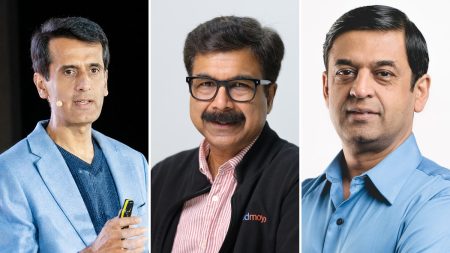
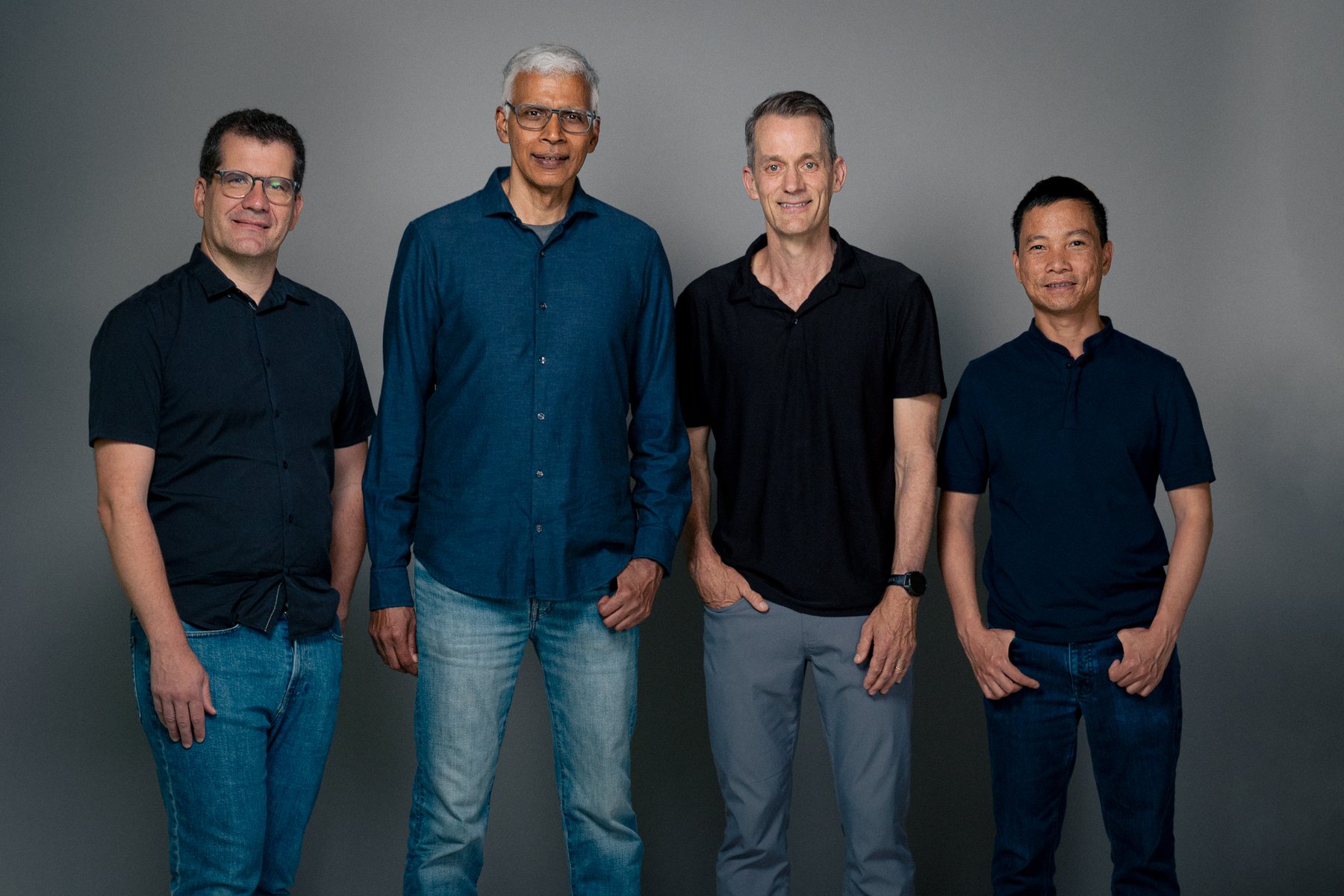
This dramatic departure represents a historic migration of talent, as Dean is not embarking on this journey alone. Joining him in this new endeavor is Sanjay Ghemawat, Google’s Senior Fellow and Dean’s legendary collaborator of over twenty-four years. To computer scientists, the partnership of Dean and Ghemawat is akin to the legendary creative chemistry of Lennon and McCartney; together, they built the foundational infrastructure of the modern internet, designing revolutionary systems like MapReduce and BigTable that allowed Google to scale and index the entire world’s information. Rounding out this formidable founding quartet are Oriol Vinyals, the brilliant Vice President of Research at Google DeepMind who has been instrumental in the development of cutting-edge deep learning models, and Quoc Le, a world-renowned pioneer of self-supervised learning and a co-founder of the historic Google Brain team. These four individuals do not merely represent a collection of impressive resumes; they are the intellectual architects who designed the neural networks, systems architectures, and machine learning frameworks that define the current era of artificial intelligence. Their deep-seated camaraderie, forged through decades of late-night debugging sessions, shared breakthroughs, and a mutual passion for pushing the boundaries of what computers can do, serves as the emotional and intellectual heartbeat of Discovery Loop.
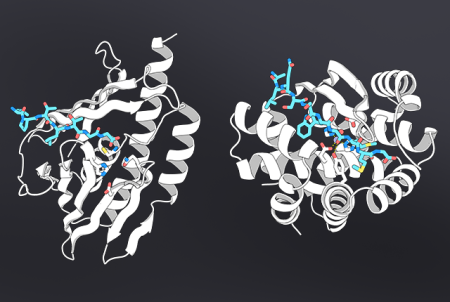
At its core, Discovery Loop is driven by a profound and highly humanistic vision: to fundamentally reinvent the way humanity conducts scientific research. The traditional scientific method is a beautiful, deeply human endeavor, yet it is agonizingly slow, limited by the physical constraints, cognitive bandwidth, and lifespan of human researchers who must painstakingly design experiments, gather data, write papers, and wait months or years for peer validation. Discovery Loop aims to break this bottleneck by constructing a sophisticated, autonomous, closed-loop AI system capable of managing the entire lifecycle of research. This platform will propose novel hypotheses, design virtual or robotic experiments, execute them at scale, evaluate the resulting data, and immediately iterate the process, repeating this cycle thousands of times a day. As the founders articulate on their website, they imagine a future where a handful of visionary individuals can conduct scientific research and engineering tasks much more rapidly, and with far higher quality, than massive, bureaucratic teams of scientists and engineers can achieve today. By automating the tedious, repetitive elements of the scientific process, Discovery Loop hopes to liberate human intellect, allowing researchers to focus on high-level conceptual breakthroughs and accelerating the discovery of life-saving medicines, novel clean energy materials, and revolutionary engineering solutions.
The ripple effects of this announcement were felt immediately across the corporate ecosystem of Alphabet and the broader financial markets. In a detailed, bittersweet memo to employees, Google CEO Sundar Pichai expressed deep gratitude for Jeff Dean’s extraordinary twenty-seven-year contribution to the company, writing that Google is excited to support him as he steps out to try something new. To facilitate this transition, Google has restructured its AI leadership, with DeepMind co-founder Demis Hassabis stepping away from day-to-day operations to become Alphabet’s Chief Scientist and DeepMind’s chair, while CTO Koray Kavukcuoglu steps up as Senior Vice President overseeing the critical development of the Gemini models. Despite the market’s nervous reaction—which saw Alphabet shares slide by approximately four percent following the news—Google is demonstrating its belief in Discovery Loop’s mission by acting as a founding investor, promising to supply the massive computational infrastructure necessary to fuel the startup’s hungry AI models for at least its first year. Furthermore, reflecting the founders’ ethical commitments, Discovery Loop has been structured as a Public Benefit Corporation, securing significant financial backing from prominent venture capital firms including Radical Ventures and Khosla Ventures, the latter led by Vinod Khosla, a prominent figure familiar to sports fans as part of the incoming ownership group of the Seattle Seahawks.
This shift toward a smaller, leaner operational model highlights a crucial philosophy that Jeff Dean has championed throughout his life: the disproportionate impact of small, highly focused teams. During his commencement speech to the University of Washington graduates, Dean spent considerable time listing the massive global challenges facing their generation, urging them to develop software tools capable of accelerating scientific discovery and engineering. He passionately reminded the students that one of the greatest beauties of software engineering is that tiny groups of dedicated, passionate people can build systems that have a colossal, positive impact on the world. By leaving behind the comfortable, heavily resourced, but ultimately bureaucratic confines of a trillion-dollar tech giant to launch a lean startup in Palo Alto, Dean and his co-founders are practicing exactly what they preach. They are demonstrating that true innovation often requires stepping away from corporate inertia and returning to a space of creative vulnerability, where a small team of close friends can move with agility, think without boundaries, and pursue pure scientific curiosity for the collective benefit of humanity.
Ultimately, the birth of Discovery Loop signals the dawn of a new era in the relationship between humanity, science, and artificial intelligence. Rather than viewing AI merely as a tool for generating text, creating art, or optimizing corporate advertising algorithms, Dean, Ghemawat, Vinyals, and Le are redirecting the technology toward the ultimate frontier of human knowledge. By establishing the startup as a public benefit corporation, they are legally binding their mission to the betterment of society, ensuring that their automated scientific loops are utilized to solve existential global crises, from climate change and resource scarcity to complex diseases. As these four visionaries step out of Google’s protective shadow and into the unpredictable world of entrepreneurship, they carry with them the hopes of a scientific community eager for a revolution. Their journey is a powerful reminder that the true measure of technological progress is not found in the size of a corporate balance sheet, but in our willingness to constantly disrupt ourselves, embrace the unknown, and use our collective ingenuity to unlock the secrets of the universe for the generation that follows.