



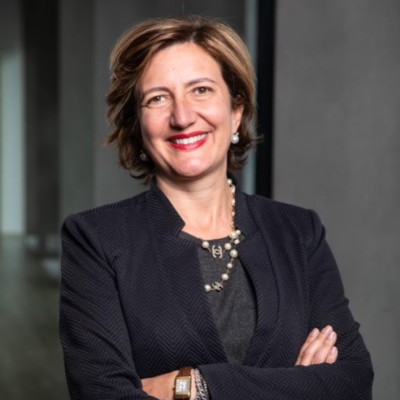
In the dynamic landscape of technology and innovation, leadership changes often signal a company’s strategic direction. Recently, Microsoft has been making significant moves to solidify its position in the rapidly evolving world of artificial intelligence. One of the most prominent appointments is that of Silvia Candiani, who has been named the corporate vice president of Worldwide Telco & Media within the Microsoft Frontier Company. This new venture, a substantial $2.5 billion initiative, is designed to embed engineers directly within client organizations to build and manage bespoke AI systems. Candiani, who is based in Milan, will now be at the forefront of Microsoft’s engagement with the world’s largest telecommunications operators and media conglomerates. Her enthusiasm for the role is palpable, as she notes the extraordinary momentum across the industry and expresses a firm belief that we are only beginning to scratch the surface of what AI can achieve. With a career that includes a long tenure as a marketing director at Vodafone in Italy before joining Microsoft in 2010, Candiani brings a wealth of industry-specific knowledge and a deep understanding of the sector’s unique challenges and opportunities to her new position.
In a parallel move that underscores Microsoft’s commitment to social responsibility, Kevin Frey has been appointed as the vice president and chief impact officer of Microsoft Elevate. This philanthropic arm of the company is dedicated to providing technology support, financial donations, sales expertise, and crucial AI training to educational organizations and nonprofits. Frey’s background is impressive; he joins from UNICEF, where he served as the first CEO of Generation Unlimited, the organization’s flagship skills and employment initiative. His motivation for joining the tech giant is rooted in a desire to shape the future for the better. He articulated that Microsoft is one of the only organizations in the world with the scale, scope, and influence to steer the course of our AI-powered future. He has pledged his time and energy to ensuring that the benefits of AI are shared broadly and safely across all of society, touching every teacher, student, and worker, regardless of their location. Adding to the company’s momentum, Anne Linge has been promoted to director of communications for commercial and consumer experiences after nearly a decade at Microsoft, bringing with her a rich background from agencies like Weber Shandwick and Waggener Edstrom Worldwide. These appointments collectively paint a picture of a company that is not only leading in AI development but is also acutely aware of its broader societal implications.
The ripple effects of the AI revolution are being felt across the corporate world, extending far beyond the halls of Microsoft. In the realm of cloud computing and sustainability, Alexis Bateman has been promoted to director of global sustainability at Amazon Web Services (AWS) after more than five years with the company. Her path to this influential role includes 14 years as the director of the MIT Center for Transportation & Logistics, a position that gave her a profound understanding of global supply chains and their environmental impact. Bateman views her work at AWS as an opportunity to help shape sustainability on an enormous scale, acknowledging that AI and cloud technologies are transforming society at an unprecedented pace. This transformation, she notes, brings both considerable challenges and incredible opportunities for the field of sustainability. Meanwhile, the Seattle startup ecosystem is buzzing with activity. Gradial, an agentic AI platform that automates enterprise marketing, has appointed Lynn Girotto as its new chief marketing officer. This move comes on the heels of a substantial $65 million funding round in June, signaling strong investor confidence in the company’s vision. Girotto, who previously served as CMO at Qualtrics and has led marketing teams at Vimeo, Tableau, and Getty Images, is excited by the platform’s potential. She captures the core value proposition of the company by stating that the best marketers want to build ideas and customer relationships, not manage processes, and that Gradial is the first company she has seen built to give them that precious time back.
The spirit of innovation is not confined to software and enterprise solutions; it is also reaching for the stars. A Seattle-area nonprofit known as the Fermi Explorer Mission has announced that Kam Ghaffarian, a billionaire entrepreneur who helped launch companies like X-energy, Axiom, and Intuitive Machines, has joined as co-founder. The organization has set an ambitious goal: to send a spacecraft on an 80,000-year journey to our nearest alien star system, Alpha Centauri. Ghaffarian sees this mission as more than just a technological feat; it is an inspiration for future generations to look up and dream of interstellar exploration. The mission’s co-founder and CEO, Philip Johnston, who also leads Redmond-based Starcloud, is aiming to launch up to 88,000 satellites to serve as AI data centers, further blurring the lines between terrestrial computing and space exploration. Back on Earth, the talent market is also thriving. Yoodli, a Seattle-based AI roleplay platform for enterprise training, has brought on Rachel Cougan as its new vice president of human resources. Cougan, who previously ran her own HR consultancy called Possible HR and held VP roles at Logixboard, Hiya, and Textio, joins a company that has grown to over 100 employees since its launch in 2021. Her experience in scaling people operations will be invaluable as Yoodli continues its impressive trajectory.
Beyond the software and service sectors, leadership is also changing in the worlds of medical technology and public health. Kestra Medical Technologies, a Kirkland, Wash.-based company that develops cardiac monitoring and therapeutic devices, has promoted Daniel Finney to vice president of research and development. Finney, who has been with Kestra since 2019, played a crucial role in developing the company’s FDA-approved monitoring device. His promotion comes at an exciting time for the company, which recently raised $202 million in its IPO in March 2025. CEO Brian Webster praised Finney’s technical depth, product experience, and leadership, positioning him to guide the company’s next phase of innovation. Finney succeeds Phillip Foshee, Jr., who retired after nearly a decade of leading Kestra’s R&D organization. On a global scale, PATH, a leading global health nonprofit, has named Dr. Jeremy Farrar as the chief of its Asia, Middle East, and Europe regional division. Farrar, who will be based in Geneva, brings an incredible wealth of experience to the role, having previously served as an assistant director-general at the World Health Organization and as the director of the Wellcome Trust. PATH’s CEO, Nikolaj Gilbert, praised the appointment, highlighting Farrar’s deep knowledge of the realities that prevent access to healthcare and his understanding of the people who make healthcare possible, as well as his commitment to PATH’s mission of ensuring breakthrough innovations reach those who need them most.
Finally, the world of academia and community leadership is also seeing significant transitions. The American Astronomical Society (AAS) has announced that Emily Levesque, a scientist from the University of Washington, will become the next editor-in-chief of its prestigious journals. Levesque, who will succeed Ethan Vishniac after his 12-year tenure, brings a thoughtful perspective on the challenges of modern science communication. She astutely observes that while sharing information has never been easier, trusting information has never been harder, making the AAS journals’ combination of rigorous peer review and accessible science more valuable than ever. Levesque, who leads a research group studying the evolution and death of massive stars, is a perfect fit to guide the journals into the future. On a more local level, the Seattle Metropolitan Chamber has added eight new members to its board of trustees, reflecting the diverse business and community landscape of the region. The new members include Deniz Anders from Nordstrom, Reuven Carlyle from Earth Finance, Carl Gipson from Comcast, Trevor Gooby from the Seattle Mariners, Daniel Huber from BNBuilders, Karen Lee from Plymouth Housing, Holli Martinez from T-Mobile, and Rajat Puri from Premera Blue Cross. This diverse group of leaders from retail, finance, telecommunications, sports, construction, housing, and healthcare will help guide the chamber’s efforts to support the economic vitality and community well-being of the Seattle metropolitan area. Together, these appointments across various sectors highlight a dynamic period of change and leadership, driven by innovation, a commitment to social good, and a collective push toward a more advanced and equitable future.