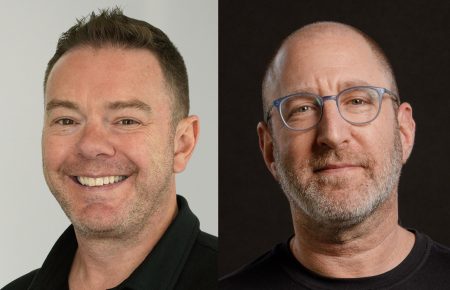







In a late-September roundup of Seattle-area people moves, the news from Niantic Spatial landed with a distinctly cosmic feel. The San Francisco-based company, born from the team that created Pokémon Go, announced that Dave Citron would join as chief product officer—a hire that reaches across the highest altitudes of the AI world. Citron arrived directly from Microsoft AI, where he had been corporate vice president of product on the Superintelligence team, helping build and launch Microsoft’s first frontier foundation models. Before that, he served as senior director of product for the Gemini app at Google DeepMind, and his résumé also includes stints on Google Meet, Google Duo, and,a bit gloriously, a career at Microsoft that began in 2005, when he helped take OneDrive from its first release to more than 200 million monthly users. But this wasn’t simply another executive swapping one tech giant for another. It was a bet on a very particular idea: that artificial intelligence has spent years learning to read and write, but still hasn’t learned how to safely act in a messy, unpredictable physical world. As Citron himself put it in the announcement, “AI is remarkably good at reading and writing, but it still doesn’t understand the physical world well enough to act in it safely.” Niantic Spatial’s whole bet is that the crowdsourced visual data gathered from millions of people wandering real streets while chasing fictional creatures can become a training ground for exactly that kind of embodied, spatial understanding. Its visual positioning system, trained in part on images contributed by Pokémon Go players, is designed to help machines know where they are, what they’re looking at, and how to navigate around them. Though the company calls San Francisco home, it also has an engineering team in Bellevue, Washington, which makes this a home-state story for the Pacific Northwest. For Citron, a leader who has lived through the arc of cloud storage, video communications, frontier models, and now spatial AI, this is another chapter in a career spent chasing the point where software meets real life—and helping define what that interface should feel like.
Across Lake Washington, a different sort of stewardship was being handed to a woman who had spent the better part of a decade managing one of America’s great university endowments. The Fund for Science and Technology, a Seattle-based foundation created to give away a substantial slice of late Microsoft co-founder Paul Allen’s fortune, announced that Jane Dietze would become its first chief investment officer, starting Jan. 4, 2027. Dietze will finish out the year at Brown University, where she has served as chief investment officer since 2018—and where, the university says, the endowment grew from $3.2 billion to $8 billion over the 10 years through fiscal 2025. That kind of long-term, compounded growth is exactly the quiet, unglamorous work that makes ambitious philanthropy possible. Her deputy at Brown, Joshua Kennedy, will succeed her there, while Dietze will bring her institutional investing instincts to an organization trying to turn the proceeds of one of the Seattle area’s most consequential fortunes into measurable good. The Fund for Science and Technology launched publicly inAugust 2025 with a striking mandate: deploy at least$500 million over four years across three broad arenas—bioscience, the environment, and AI for good. It also funds the Allen Institute and Ai2, the Allen Institute for AI. Dietze’s background includes investment roles at Bowdoin College, Fortress Investment Group, and Columbia Capital, giving her both the nonprofit and private-market fluency such a role demands. But her appointment carries a weight that goes beyond portfolio math. The foundation started with a$3.1 billion endowment from Allen’s estate, and is expected to oversee a large portion of the proceeds from the sale of Allen’s sports teams, which means Dietrich will help decide how a fortune built in the Pacific Northwest—and built partly on personal computing, aerospace, frac, whatever—gets converted into a permanent engine for scientific discovery. She joins an organization still finding its footing after its first CEO, Lynda Stuart, stepped down in May. In that context, her job isn’t just investing. It’s helping a young, ambitious foundation learn how to steward enormous resources with patience, discipline, and a sense of consequence.
In the faster-moving lanes of AI-driven commerce, two Seattle-area hires told a story about where the money is going. Nicholas Stevens, fresh off a decade at Zillow, has joined Stripe, the global payments giant, as head of product for agentic commerce—and, importantly, he’ll be working from Seattle. At Zillow, Stevens had most recently been vice president of product for AI and data, overseeing product strategy for the company’s AI products and its data platform. His LinkedIn profile notes that he drove the partnership that made Zillow one of seven global launch partners for OpenAI’s ChatGPT apps platform, a small but revealing sign of how seriously he takes embedding frontier AI into mainstream consumer and enterprise experiences. Before Zillow, he worked in product at Prismatic, a Bellevue-based integration company. Stripe betting on “agentic commerce” is another way of saying that software will soon not just process payments, but make buying-and-selling decisions on behalf of people. As Stevens himself wrote, “I believe AI buying & selling on your behalf can be magical.” It’s a phrase that captures both enormous promise and a bit of audacity—entrusting AI with money, preferences, and judgment. A few miles away, in Kirkland, a startup named Scowtt was also making a leadership move that reflects the same broader shift. Scowtt uses AI to predict which sales prospects will eventually become customers, and it has named Ben Trendda chief revenue officer. Trendda is an ad-tech veteran who worked at Overture/Yahoo, AOL, and Rubicon Project, and co-founded iSocket—a background, in other words, in the messy, high-stakes arena of matching inventory with demand before anyone else does. Scowtt says it is already approaching$10 million in annual recurring revenue, and hiring a revenue chief with Trendda’s scars suggests it believes the product now needs someone who understands how to sell what AI already knows how to predict. Together, Stevens and Trendda illustrate how the region’s AI talent is moving from pure model-building toward what economists might call “application layer”—putting AI to work on commerce, on sales pipelines, on the painfully human problem of deciding who deserves a salesperson’s time.
For all the attention being paid to startups and frontier labs, some of the most resonant leadership changes this week involved institutions that answer to the public, to science, or to the climate. The American Astronomical Society named University of Washington astronomy professor Emily Levesque the next editor in chief of its journals, including The Astrophysical Journal, with a starting date of August2027. She will succeed Ethan Vishniac, inheriting responsibility for one of the most storied publications in astrophysics—a journal that has shaped how humanity understands everything from distant galaxies to the fate of the universe. Levesque is a working astronomer, not just an administrator, and her appointment signals a desire to keep the field’s flagship journals deeply connected to actual discovery. Around the same time, Seattle’s ThriftBooks, the online used-book seller founded in2003, named Carla Anderson Skogland chief financial officer, elevating someone who had been interim CFO since April. Anderson Skogland, based in the Seattle area, has a résumé that reads like a tour through consumer-and-financial heavyweights: CFO of Sono Bello, 11 years at Amazon, stints at T-Mobile, and more than15 years at Starbucks. For a company that earns its living selling recycled paperbacks and hardcovers—a business that turns on volume, logistics, and razor-thin margins—hiring a finance chief with that kind of operational experience is a quiet declaration that “used books” is not a sentimental side hustle but a serious, data-driven business. And in the world of climate policy, Michael Mann is stepping down as executive director of Clean & Prosperous, the climate policy group that helped back Washington’s Climate Commitment Act. Mann, a consultant who founded Cyan Strategies and previously led the City of Seattle’s Office of Sustainability and Environment, had taken over on an interim basis from the late founder David Giuliani and ended up leading the group for five years. Under his watch, clean energy advocacy grew from a small nonprofit niche into a force that helped Washington adopt one of the most ambitious carbon-pricing laws in the country. His departure, once a successor is chosen, will close a distinct chapter in the state’s clean-energy movement, but the coalition he helped sustain will remain as his most tangible legacy.
Several other moves fit a pattern of seasoned operators gravitating toward companies at an inflection point, or preparing for their own next acts. Lani Ramos joined Yoodli, a Seattle startup that uses AI roleplays for communications training, specifically to build its renewals function. Ramos spent 13 years at Tableau and Salesforce, most recently as director of renewal for North America—a role that, practically speaking, involves turning customers into long-term believers rather than one-time buyers. For Yoodli, a company whose entire product is about helping people communicate better, hiring someone who has spent more than a decade figuring out how to make software stick in organizations is a sign it is maturing from experiment to essential service. Rachel Ruggeri, meanwhile, is taking her experience from one of Seattle’s most recognizable companies onto the board of a San Diego fast-food icon. Ruggeri, the former Starbucks CFO, spent more than two decades at the coffee giant and served as its CFO from2021 to March2025. She also sits on the board of Stryker. Now she’ll join Jack in the Box’s board, where her financial discipline and understanding of how to run a complex, distributed consumer business will be valuable as the quick-service restaurant chain looks for stability and growth. Then there’s Victor Fetter, who is stepping down at the end of the year as chief technology and business systems officer at Everett, Wash.-based Fortive after nearly seven years. Fortive, a diversified industrial technology conglomerate, will see Rich Noonan, its chief information security and technology operations officer, become CIO. Fetter, who is based in Mississippi, plans to expand his board work and angel investing—meaning he’ll likely remain a quiet but useful presence in the Pacific Northwest’s technology ecosystem, backing the kinds of founders who used to report to him. These three moves, in different sectors, all share a through-line: people who have spent years learning how organizations work are now pointing themselves at the places where they can have the most leverage—whether that’s renewing software contracts, steering a burger chain’s finances, or betting on early-stage companies.
Taken together, this week’s people moves draw a map of the modern Seattle-area economy—and of the values that animate it. On one hand, there’s the familiar pull of big tech and AI, imported from Microsoft and Google and soldered onto local institutions like Niantic Spatial’s Bellevue engineering office and Stripe’s Seattle outpost. On the other, there’s the region’s deep commitment to public goods, from Paul Allen’s fortune being directed toward bioscience and climate research, to the stewardship of a great astronomy journal, to the quiet work of state climate policy. And all around, there are athletes of the second act: finance chiefs, product leaders, engineers, and operators moving from one challenge to the next, carrying with them the accumulated wisdom of companies like Amazon, Starbucks, Zillow, Tableau, Microsoft, and Google. A list of appointments and departures can seem like mere deck-shuffling—a CFO here, a chief product officer there. But looked at more closely, each decision is a bet on a different possible future: that AI must learn to move through the physical world; that software agents will soon be trusted to spend money; that used-bookstores can be managed like modern retailers; that scientific journals need leaders who still gaze at the stars; that a carbon-pricing law can survive the departure of the people who built it; and that communication skills, finally, are important enough to be taught by artificial intelligence. In an industry so often described in terms of models, training data, and valuations, it’s easy to forget that technology is still built by humans making consequential choices about where to spend their time, their credibility, and their care. The late-September news is a reminder that the Pacific Northwest’s true connective tissue is not its cloud infrastructure or its unicorns, but the people who move among them—carrying skills from one mission to the next, and quietly shaping the future with each carefully considered move.