





On a quiet stretch of Dravus Street in Seattle’s Queen Anne neighborhood, just a short chip shot from the Lake Washington Ship Canal, an old industrial building is being transformed into something the city hasn’t quite seen before. Inside the sprawling former metal fabrication studio—once the workshop of the late artist David Gulassa—tech veteran Shankar Sundaram and his longtime friend Ryan Schaffer are building East West Club, a golf, social, and wellness sanctuary designed to fill a gap in modern Seattle’s social landscape. Sundaram, a former Boeing engineer and enterprise sales leader, and Schaffer, a University of Washington grad who also worked at Boeing, are reimagining the traditional country club for a generation that no longer has six hours to spare or a six-figure initiation fee to spend. The name East West is deeply personal: it nods to the multi-generational Indian household Sundaram grew up in, with its emphasis on family, community, and hospitality, and fuses that with the modern, laid-back Pacific Northwest lifestyle he now calls home. The vision is to create what urban sociologists call a “third place”—a warm, welcoming space beyond work and home where people can genuinely connect, bring their kids, and feel like they belong. Sundaram’s own words capture the frustration: “A lot of the clubs in Seattle are a little bit older and maybe just built for a different time, for a different demographic, and we’ve changed. We don’t have six hours to go spend at a country club. We also don’t have $100,000 to go join.” East West Club is his answer—a place built around genuine connection rather than status or corporate networking.
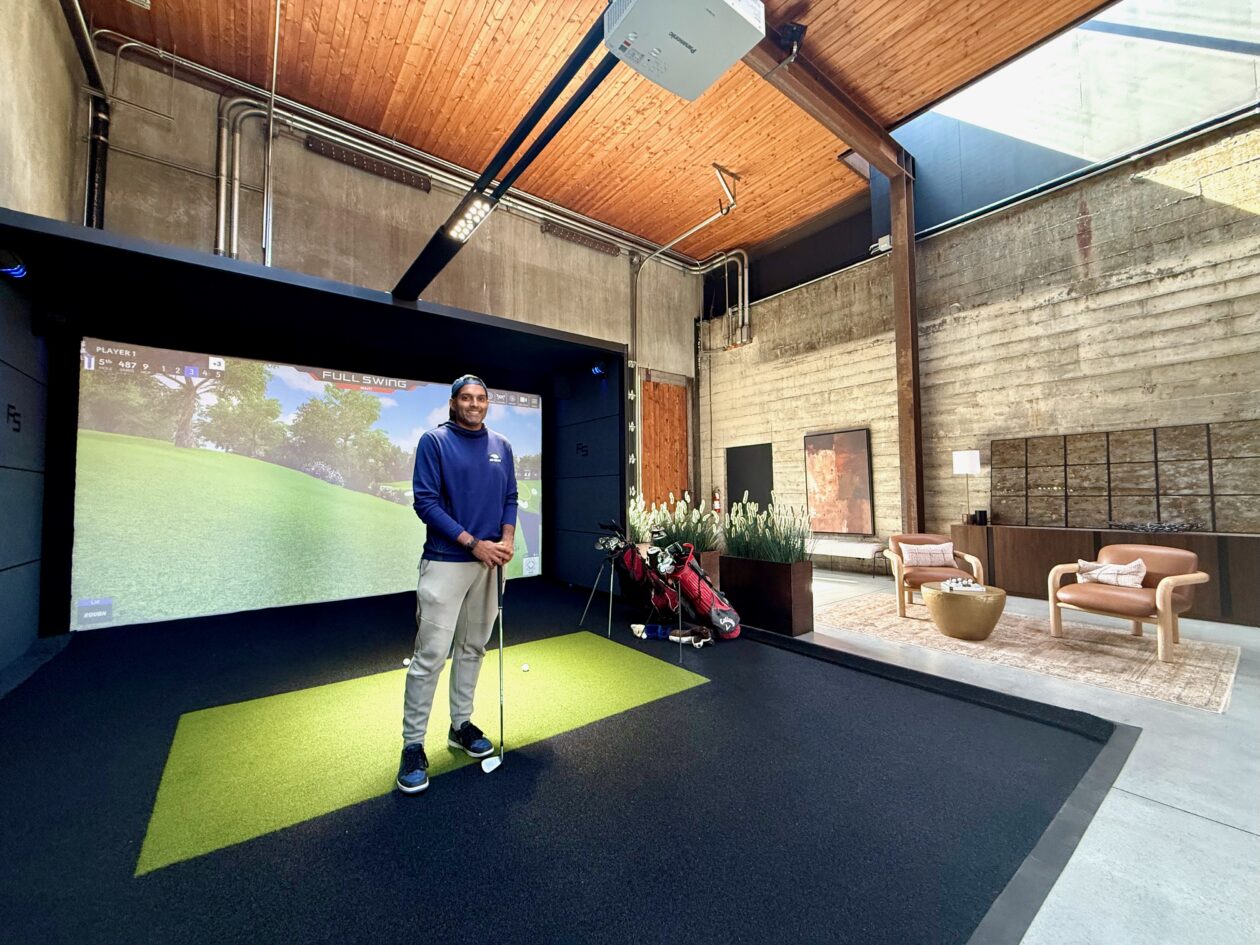
Spread across nearly 8,000 square feet between two connected buildings, the space retains its industrial soul with exposed timber beams, rich wood accents, and soaring concrete walls. The main building is still awaiting final permits, so heavy construction hasn’t started, but the plans are already vivid. At the heart of the club will be a “golf lab” featuring wide indoor simulator bays and 500 square feet of digital putting space, anchored by a private 19-foot immersive simulator bay for a more cinematic golf experience. Beyond the tech-forward golf components, the designers are layering in a surprisingly cozy set of amenities: a quiet library lounge where members can read or work, a pour-your-own-beer wall for casual tastings, a café area for coffee and conversation, and a back-alley wellness nook with dry saunas and red-light therapy. The design feels less like a sterile country club and more like a beloved neighborhood haunt where industrial ruggedness meets intentional hospitality. Sundaram wants members to feel like East West is a convenient, family-friendly extension of their own homes—a place where you can drop in for an hour after work, let your kids run around, or just sit with a book and a cup of coffee. He is married to Ambika Singh, the founder and CEO of Armoire, and his approach to the club reflects a modern working-parent reality: it should be easy, welcoming, and part of everyday life, not an exclusive retreat for a few weekend hours. “We want you to bring as many people as you want,” Sundaram says. “We want you to host meetings here. We want you to actually come here and do your work here.” That openness extends to the programming, which will include curated gatherings, tastings, music nights, workshops, and speaker events—a calendar designed to give members constant reasons to return.
The food-and-beverage concept is deliberately uncomplicated, staying true to the club’s neighborhood-first ethos. Rather than building out a full commercial restaurant with a huge kitchen and a heavy permanent staff, East West Club plans to lean on local partnerships with nearby restaurants, chefs, wineries, and breweries. Sundaram is already leaning on friends for advice about the café and coffee setup, and he has been talking to neighborhood spots about providing daily fare. The club will also host monthly curated dinners led by guest chefs, giving members a rotating culinary experience that feels fresh and collaborative. “A big part of the vision for East West is to use the club as a platform to bring together some of the best of Seattle—partnering with great local restaurants, chefs, wineries, breweries, golf and fitness professionals, and other people doing interesting things around the city,” Sundaram says. “We want the experience to constantly evolve and give members new reasons to come together.” This philosophy of collaboration over competition is woven throughout the project: rather than trying to be everything to everyone, East West wants to be the connective tissue between the city’s best creative, culinary, and athletic talent and the people who live and work nearby. It’s a refreshingly grounded approach in an era when many private clubs are all about exclusivity and luxury. Here, the focus is on community, warmth, and shared experiences—a place where the barista knows your name and the chef might come out to talk about the menu.
One of the most distinctive aspects of East West Club is how it is being funded. Sundaram and Schaffer have chosen a community-driven bootstrap model, deliberately avoiding heavy debt or institutional equity. They are capping their initial “founder” cohort at 100 members, inviting early adopters to buy in upfront and take a genuine stake in the club’s success. For the first tier of 25 founding members, a $25,000 buy-in covers four years of all-inclusive family membership, plus a $450 quarterly food and beverage credit. It’s a bold ask, but the early response suggests that the vision resonates. After launching a simple waitlist on LinkedIn three months ago that quickly drew 120 sign-ups, Sundaram invited the first 14 people to tour the unfinished space three weeks ago. Thirteen of them committed on the spot. “These early folks are taking the biggest risk,” Sundaram says. “Prepaying for something is not very common… but we’re funding this through getting 75 to 100 founders. The total club capacity is 250 people, so the idea is, if every founder goes and gets two people, that’s the club.” Subsequent founder tiers will gradually increase in price, and once the club officially opens—targeted for March 2027—the model will shift to more traditional initiation fees and monthly dues. This bootstrap approach not only keeps the founders independent, but it also creates a founding community that is genuinely invested in the club’s culture, not just passive customers. These are the people who will shape the vibe, host the first events, and bring in their friends and families.
Founding members won’t have to wait until 2027 to start feeling the club’s energy. The team plans to open a temporary “Founders Clubhouse” to early members by the end of September, kicking off a full calendar of social programming, tastings, and events throughout October—including an Oct. 11 open house—while construction continues on the other spaces. This phased rollout is smart and very much in keeping with the club’s community-first philosophy: it builds momentum, deepens relationships, and lets the early members help shape the final experience before the heavy buildout is complete. It also makes the club immediately accessible in a way that most country clubs are not. And perhaps the most refreshing detail is that golf is not a prerequisite for membership. Of the initial 14 founding members, roughly half do not even play golf. They signed up because they see value in having a neighborhood spot to host friends, throw parties, or watch sports in a comfortable, stylish setting. For those who do want to work on their swing, East West plans to partner with local instructors for lessons and youth programs. But the broader design is as much about casual socializing as it is about perfecting a nine-iron. When asked about competition, Sundaram is quick to clarify that East West isn’t trying to compete with commercial entertainment venues like Five Iron Golf or high-end, pure-play training centers like Evergreen Golf Club. “If you just want to go hit up a sim and go have a burger and fries, there’s lots of spaces for that,” he says. “In the city, there’s nothing that’s like this. Golf is the glue, but nobody else is really bringing in this modern aesthetic.”
If the Queen Anne location reaches its 250-member capacity, Sundaram and Schaffer already have their eyes on scaling the concept, perhaps with an Eastside location that could serve the broader Seattle metropolitan area. But for now, the focus is on getting the flagship right and proving that a new kind of club can thrive in a city that has changed dramatically in recent years. The industrial bones of the old fabrication studio—its high ceilings, exposed timber, and raw concrete walls—offer the perfect canvas for a space that feels both grounded and forward-looking. Artist renderings show an upstairs hangout area with soft lighting, a rooftop space with sweeping views, a fitness area, and a café concept that looks like a stylish neighborhood coffee shop rather than a five-star hotel lobby. There is something deeply human about the whole project: it’s built on friendship, personal history, and a genuine desire to bring people together in a world that often feels more fractured than connected. Sundaram grew up in a multi-generational household where doors were always open and food was always shared; East West Club is his attempt to recreate that spirit for a city that sometimes feels like it has lost its communal heart. “We want you to bring as many people as you want,” he says, and you get the sense he means it—not as a marketing slogan, but as a genuine invitation. In a city that is constantly reinventing itself, East West Club feels like a bridge between the old and the new, the East and the West, the golfer and the non-golfer, the founder and the family. It’s a third place for a modern Seattle, built by people who clearly understand that the best clubs aren’t about closing doors—they’re about opening them.