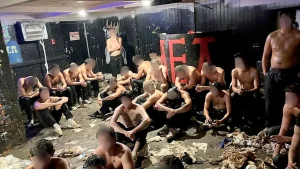






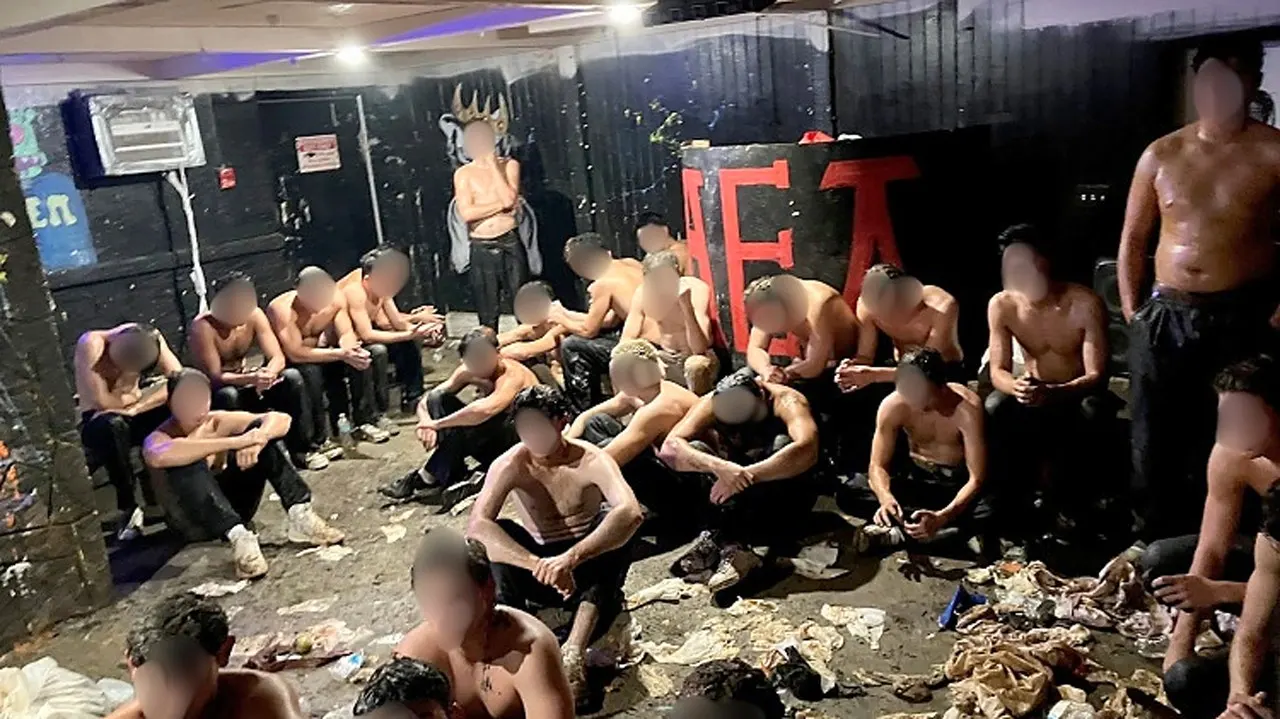
It began with an anonymous tip, the kind that often goes nowhere in a busy college town. But by the time Madison police officers made their way into the basement of the Alpha Epsilon Pi fraternity house on Langdon Street, they knew this was not a routine call. It was just after 8:20 on a Wednesday evening, and the basement felt like a pressure cooker. The thermostat had been set to 81 degrees, and the air was thick, humid, and heavy with the smell of sweat, cheap food, and spilled condiments. There, packed into a cramped, dimly lit space, were roughly thirty young men—many of them just eighteen years old, barely months into their college lives. Some were partially clothed. Others were covered in food, sticky liquids, and other substances. A few showed fresh redness and marks on their bodies, injuries consistent with being struck. It was a scene that looked less like a fraternity ritual and more like a prolonged, degrading ordeal. Officers immediately declared the gathering unlawful and moved quickly to get everyone outside, away from the suffocating heat, and into the open air. But the image of those frightened, disoriented young men would linger—not just for police, but for anyone who wonders how a promise of brotherhood could turn into something so close to cruelty.
The response from law enforcement was careful and compassionate, but the details they shared painted a troubling picture. Officers checked each young man for injuries and incapacitation. One police captain, Kipp Hartman, said he saw what appeared to be fresh redness and marks that could have come from being hit, though he saw no open wounds. No one was taken to the hospital, at least not that night. But the absence of physical wounds does not mean the absence of harm. The psychological weight of being trapped in a hot basement, dressed down, covered in food, and told to endure while others watched—or participated—likely left marks that do not show up in a police report. When officers began interviewing the pledges, they met a wall of silence. Hartman said investigators had limited cooperation from the group. Statements were taken, but some did not line up with what others said. There were inconsistencies, contradictions, and probably more than a few young men trying to convince themselves that what had happened was normal, expected, or even deserved. That is the insidious thing about hazing: it teaches its victims that this is what it takes to belong. The anonymous tip had come from somewhere, though. Someone inside that basement—or watching from outside—had seen enough to know that this was not okay.
It is especially unsettling that this happened at a chapter that has no official connection to the University of Wisconsin-Madison. University officials terminated their recognition of the Madison chapter more than a decade ago, meaning the Alpha Epsilon Pi chapter there has been living on the margins of campus life. It is not accredited by the school, not bound by university rules, and not subject to the same oversight as registered student organizations. And yet, when police arrived, they found everyone inside appeared to be university students. This is a dangerous gap in campus safety. Parents send their children off to college with the hope that they will find community, friendship, and mentors. They hear Greek letters like Alpha Epsilon Pi and assume that the organization is vetted, supervised, and steeped in tradition. But in this case, the national organization still recognizes the Madison chapter as its Pi Chapter. So there is a strange, unresolved in-between space: a fraternity that is real to its national headquarters but invisible to the university. That allowed it to operate under the radar until an anonymous call reminded everyone that these houses do not simply disappear just because a university cuts ties. During rush week, when young men are eager to impress older members and secure a spot in a brotherhood, that vulnerability is at its highest.
The legal consequences are now starting to unfold. Police arrested the fraternity’s president, Brayden J. Klein, and vice president, Samuel N. Vane, both twenty years old. They were taken to the Dane County Jail on allegations of hazing and disorderly conduct. Both offenses are misdemeanors, and the Dane County District Attorney’s Office will decide whether to file formal charges. For two young men who likely considered themselves leaders of a proud chapter, the arrest is a sudden and humbling fall. They may have thought they were carrying on traditions, keeping their house strong, or maybe just pushing pledges to their limit in a way that they, too, once endured. But the law does not see tradition as a defense when people are put at risk. And the aftermath will follow them far beyond the courtroom. A criminal record, even for a misdemeanor, can affect a student’s academic standing, housing options, internship opportunities, and future career. The word “hazing” carries a stigma that is hard to shake. Meanwhile, the young men who were pledges are left to make sense of what happened to them. Some may feel ashamed, even though they did nothing wrong. Others may blame themselves for signing up, for not walking out, for enduring. They might wonder if they are too weak, too sensitive, or too naive. The truth is that no one should have to prove their worth by being degraded in a basement. And the fact that no one was hospitalized does not mean this was a harmless mistake.
The national organization, Alpha Epsilon Pi, has responded with strong words. Jonathan Pierce, the fraternity’s chief communications officer, confirmed to Fox News Digital that the national organization still recognizes the Madison chapter and that its members are subject to national health and safety policies. He said the allegations are being taken extremely seriously and that the fraternity will cooperate fully with investigators. The statement reads, in part: “Hazing is a betrayal of everything our fraternity stands for. There is no place for it in AEPi. No exceptions. No excuses. We educate our members about their responsibility to ‘Be Your Brothers’ Keeper.’ This is not an optional value.” He went on to say that anyone found responsible for criminal conduct would be expelled from the fraternity and that AEPi would support prosecution. Those are powerful words, and they need to be more than a press release. If the national organization truly believes in the values it preaches, this incident should become a moment of real reflection for every chapter across the country. Being a brother’s keeper does not mean keeping the secret. It means stepping in when someone is being hurt. It means refusing to turn a blind eye when a pledge is covered in condiments and struck in the dark. It means recognizing that a fraternity’s greatest strength lies not in how much a pledge can endure, but in how deeply members care for one another. The Jewish tradition that Alpha Epsilon Pi claims as its foundation is rooted in community responsibility, compassion, and the idea that every person is made in the image of God. Hazing is an ugly contradiction of that entire worldview.
This was not an isolated incident, even if it happened in a single basement on one Wisconsin street. Stories of hazing have surfaced on college campuses across the country, from Miami to Penn State, and each one leaves behind a trail of broken spirits, injured bodies, and shattered trust. The facts of this case are still being investigated, and there is much we do not know—what exactly happened in that room, who struck whom, how long the ritual lasted, and why no one spoke up sooner. But what is clear is that young people are still being hurt in the name of belonging. They are being told that suffering is a prerequisite for friendship, that silence is loyalty, and that the scars of initiation are part of the journey. It is a dangerous and deeply sad way to build community. Every parent sending a child off to college deserves to know that the answer is not to ban fraternities or to shame all Greek life, but to demand a culture of accountability, transparency, and genuine care. That means national organizations must act decisively, universities must hold off-campus chapters accountable even when they are not officially recognized, and students must be empowered to walk away—or better yet, to speak up. The anonymous caller in Madison may have given frightened pledges a voice they could not find for themselves. That call was an act of brotherly love in the truest sense. The rest of us can only hope that the young men involved learn not just that hazing is illegal, but that there are far better ways to build a family. True brotherhood is not measured by what you survive, but by who stands beside you when you refuse to hurt another soul. If Alpha Epsilon Pi truly means what it says about being its brother’s keeper, then this is the moment to prove it—not with words, but with action, and with the courage to protect every person who walks through its doors.