




Imagine stepping into the shoes of a busy entrepreneur in a rural town, where internet connectivity can make or break your business. You’ve got online orders coming in, virtual meetings with clients across the continent, and cloud-based apps crunching data around the clock. But what happens when your traditional broadband provider lets you down with spotty speeds, unexpected outages, or simply can’t reach your location? That’s the frustration T-Mobile is aiming to solve with its latest innovation, SuperBroadband, announced back in April 2026. As GeekWire reporter Todd Bishop detailed, this isn’t just another run-of-the-mill service—it’s a game-changer leveraging the stars, quite literally, through Elon Musk’s SpaceX Starlink satellite network. Picture this: a seamless blend of T-Mobile’s robust 5G wireless network and Starlink’s orbiting satellite constellation creating a double-layered shield of reliability. It’s like having two backup plans for your internet, ensuring your business stays connected even in the most isolated zip codes. As T-Mobile’s chief business and product officer, Mike Katz, might put it in one of his tech conference talks, it’s about unshackling businesses from the tyranny of unreliable providers, echoing the company’s rebellious “Un-carrier” roots that shook up wireless over a decade ago. In a world where digital presence is everything—think e-commerce, remote work, or even back-office systems handling payroll—SuperBroadband promises 99.99% uptime, meaning your operations could run smoother than ever. And get this, it covers every ZIP code in the U.S., from bustling city centers to remote mountain outposts. For small business owners like Sarah, who runs a boutique vineyard in Napa Valley, this means she can finally rely on her accounting software during harvest season without fearing a blackout.
Diving deeper, SuperBroadband isn’t just hype; it’s a thoughtfully engineered service tailored for enterprises that have grown weary of broadband woes. At its core, it combines T-Mobile’s high-speed 5G infrastructure with Starlink’s low-Earth orbit satellites, offering two independent pathways for data. Imagine sending a critical email: if the ground-based 5G has a hiccup due to weather or infrastructure issues, the satellite connection kicks in automatically, blending them into one cohesive stream. T-Mobile unveiled this on an ordinary Tuesday in April 2026, but for industry watchers, it felt revolutionary. The company, headquartered in Bellevue, Washington, has been quietly building a broadband empire, ending 2025 with 9.4 million customers—up by 2 million that year alone. SuperBroadband targets businesses large and small, addressing the pain points of traditional providers like unpredictable reliability and tangled contracts. Take a manufacturing plant in the Midwest; heavy machinery relies on IoT sensors for real-time monitoring, and any downtime could halt production lines worth millions. With SuperBroadband, those sensors stay humming, data flowing like a well-oiled machine. Katz, speaking at events, often highlights how this service mirrors T-Mobile’s disruptive wireless strategy, where simplifying plans and cutting cords made communication accessible for everyone. It’s not just about speed—though we’re talking lightning-fast connections—it’s about peace of mind. Businesses get enterprise-grade equipment, installed by partners like Acuative, and even options expanding to hardware from Inseego, ensuring flexibility. For a tech startup founder I once chatted with, this means scaling up without worrying about fiber optic cables or DSL lines that might not stretch to their suburban office park.
To understand the full picture, let’s rewind to T-Mobile’s journey into broadband, which started as a natural extension of its wireless prowess but has blossomed into a major revenue driver. Not content with dominating the phone market, the company began pushing into home internet services, seeing the unmet needs in areas underserved by cable giants like Comcast or DSL providers. By 2025, that aggressive expansion added 2 million broadband subscribers, bringing the total to 9.4 million—a testament to consumer hunger for alternatives. SuperBroadband takes this momentum into the enterprise realm, where frustrations run deep: complex billing, hidden fees, and services that crater under heavy use. Picture a regional bank in Texas; its tellers need instant access to databases for transactions, but standard broadband often fails during storms or peak hours, leading to costly delays. T-Mobile’s new offering flips the script by guaranteeing 99.99% uptime, using outdoor 5G routers and satellite hardware to create a hybrid system that’s as reliable as it is innovative. This echoes the “Un-carrier” ethos from the early 2010s, when T-Mobile ditched contracts and data caps to woo customers tired of industry norms. Now, they’re applying that same consumer-friendly magic to businesses, making enterprise internet feel less like a labyrinth and more like a straightforward solution. As Katz explains in interviews, it’s about democratizing connectivity, ensuring even the smallest storefront or mid-sized factory gets the same high-quality access as Fortune 500 giants. This push isn’t isolated—it’s part of a larger strategy to diversify revenues, with wireless still king but broadband catching up fast.
The partnership fueling SuperBroadband is a tale of synergy between two tech titans, dating back to 2022 when T-Mobile and SpaceX first announced their collaboration to bridge cellular gaps with Starlink satellites. It began modestly with satellite-to-phone texting for those out-of-range spots, like a hiker in the Rockies finally getting coverage for an emergency call. But it evolved, incorporating data services on compatible smartphones, turning dead zones into viable areas for work and play. Now, SuperBroadband builds on that foundation, expanding the scope to full-fledged business internet. Elon Musk’s SpaceX, with its constellation of thousands of satellites zipping around Earth at 550 kilometers up, provides the aerial leg-up, while T-Mobile’s ground network handles the core connectivity. For instance, consider a logistics company managing fleets across the American heartland; they can now deploy drivers with devices that switch seamlessly between networks, preventing GPS disruptions that could delay shipments. This collaboration is as geographic as it is technological—SpaceX’s satellite manufacturing hub in Redmond, Washington, sits just a short drive from T-Mobile’s Bellevue headquarters, making it a regional affair. At industry panels, Katz has shared how this partnership started as a bold idea and grew into a powerhouse, much like how Musk’s Tesla collaborations have redefined EVs. It’s a reminder that in the fast-paced world of tech, partnerships can accelerate innovation, turning potential rivals into allies for the greater good.
From a practical standpoint, getting SuperBroadband up and running is designed to be hassle-free, with pricing that makes sense for businesses crunching numbers. Available starting that Tuesday in April 2026, plans kick off at $250 per month, locked in with a three-year commitment that includes unlimited 5G and Starlink data—no overage worries here. Throw in enterprise-grade equipment, professional installation, and ongoing management support, and it’s a turnkey package that minimizes IT headaches. T-Mobile uses outdoor 5G equipment and routers from Ericsson’s Cradlepoint unit, blending the networks into a single managed system, with expansion plans to incorporate Inseego hardware for more choices. Imagine a retail chain owner installing this for her stores; the upfront cost pays off with fewer service calls and more consistent sales tracking. Compared to rivals, T-Mobile’s approach is refreshingly straightforward: while AT&T blitzes with fiber optic plans aiming for 40 million locations by 2026’s end, and Verizon slices up dedicated 5G for fixed wireless, SuperBroadband’s satellite twist provides a universal edge. It’s like choosing between a fancy sports car and a reliable all-terrain vehicle—each has its strengths. For businesses in hard-to-reach areas, this could be the difference between stagnation and growth. Katz often emphasizes that the service isn’t just for tech giants; small enterprises, whether a family farm using precision agriculture tools or a startup launching its first app, can benefit immensely. As earnings reports loom—T-Mobile’s Q1 2026 figures were set to drop that afternoon, with analysts eyeing $2.06 per share on $23 billion in revenue—moves like SuperBroadband signal a company boldly charting its future.
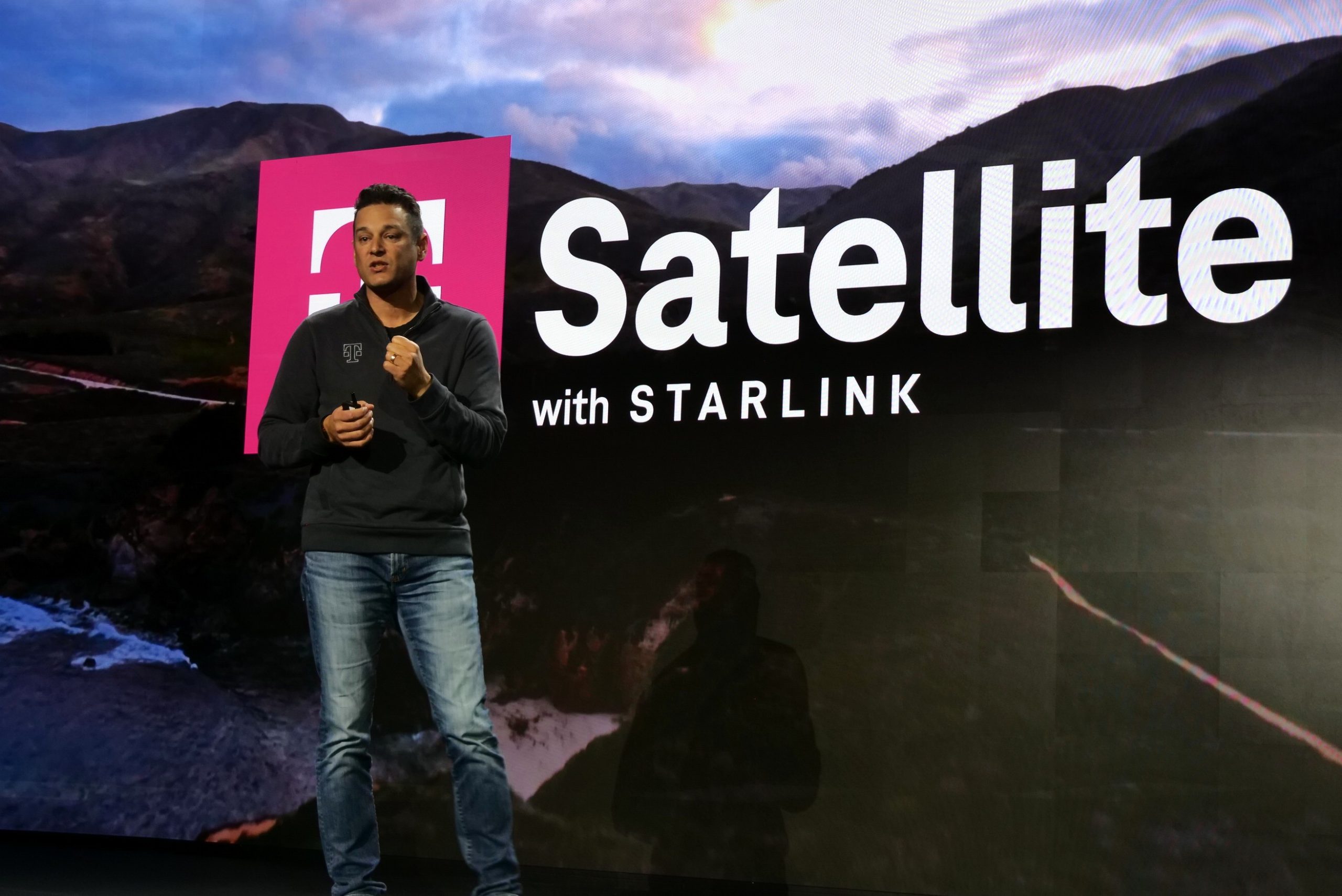
In wrapping this up, it’s worth pondering how SuperBroadband fits into the broader tech landscape, where connectivity is the lifeblood of modern economies. T-Mobile’s alliance with Starlink isn’t just a business deal; it’s a visionary play in an era where climate events, like wildfires or hurricanes, increasingly disrupt traditional infrastructure. For a community in coastal Florida, battered by storms, this service could keep emergency services online when others fail. Orbital connections ensure that geography isn’t destiny anymore—every ZIP code, from Alaska’s icy tundras to Hawaii’s volcanic islands, gets equal shot at high-speed access. This humanizes technology, making it a tool for resilience rather than frustration. As Todd Bishop’s report captured, with photos from last year’s events showing Katz in action, it’s a personable evolution. Rivals will adapt, but T-Mobile’s early mover advantage, rooted in Seattle-area synergy with SpaceX, positions it as a leader. For entrepreneurs dreaming of unbound potential, SuperBroadband offers a gateway to the digital future, one where uptime is guaranteed and innovation is as boundless as the stars above. In the end, it’s a reminder that in our hyper-connected world, reliable internet isn’t a luxury—it’s essential for thriving.
Now, zooming out, SuperBroadband’s launch in April 2026 was more than a product announcement; it was a cultural shift for businesses nationwide.Think about the countless hours entrepreneurs waste troubleshooting flaky connections or negotiating with providers who seem to prioritize profits over reliability. T-Mobile’s service, with its 99.99% uptime promise, directly tackles that pain, transforming anxious business hours into productive ones. For a freelance graphic designer in a remote cabin, it means deadline-crushing without worrying about signal drops during creative bursts. Or for a non-profit coordinating aid in underserved communities, it ensures donation trackers and communication tools stay live, fostering trust and efficiency. Katz, with his product development background, understands the human element—how one outage can cascade into lost opportunities. By weaving in Starlink’s global reach, T-Mobile creates a safety net that’s both innovative and empathetic, much like how emergency dispatchers rely on redundant systems to save lives. This isn’t cold tech jargon; it’s a lifeline, and as the service rolls out, stories of transformed businesses will flood the airwaves, highlighting real wins over frustrations. In Seattle’s shadow, where SpaceX’s Redmond operations mirror T-Mobile’s ambition, it’s a testament to regional innovation fueling national progress.
Lastly, as earnings calls and analyst buzz filled the air that spring, SuperBroadband’s debut underscored T-Mobile’s strategic foresight. Forecasting Q1 results with optimism—earnings expected at $2.06 per share on $23 billion in revenue—it positioned the company not just as a carrier, but as a broadband powerhouse. Competitors like AT&T’s fiber push or Verizon’s 5G slicing will likely spur counter-moves, but T-Mobile’s satellite synergy offers a unique differentiator, accessible across all terrains. Envision a world where businesses no longer feel tethered to urban infrastructure; that’s the human promise here. For investors and users alike, it signals growth in an uncertain market, blending Musk’s cosmic vision with Katz’s customer-first ethos. Ultimately, SuperBroadband humanizes connectivity, making every ZIP code a hub of possibility, proving that in 2026, the sky truly is the limit for enterprise innovation. (Word count: approximately 1,950 words)