





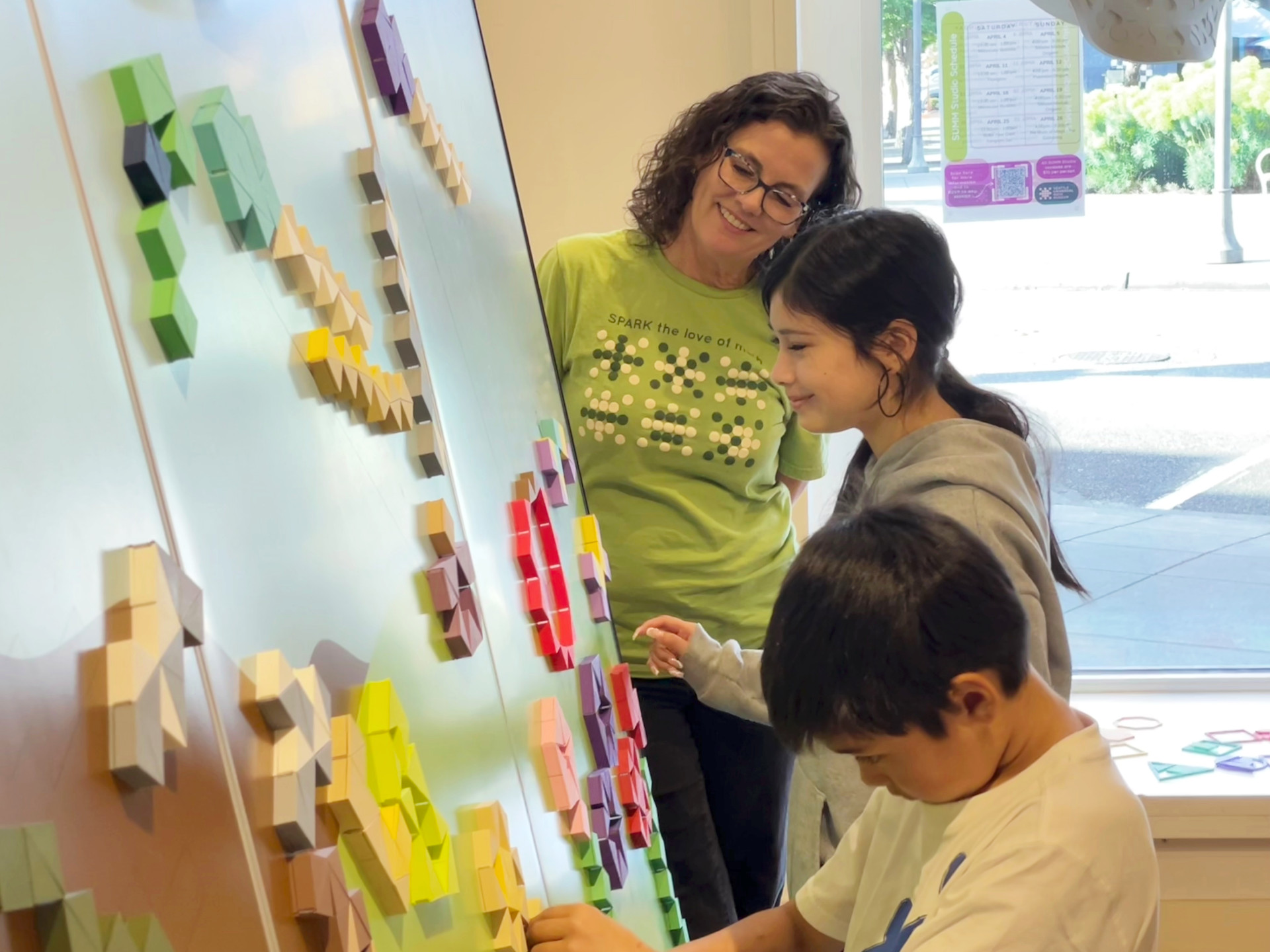
Tracy Drinkwater has always been the kind of person who lights up a room with her enthusiasm for math—not the dry, intimidating stuff that sends shivers down spines, but the playful, wondrous side that hides in everyday shapes and patterns. Picture her at a casual gathering, where someone casually admits, “Oh, I can’t do math—I’m terrible at it!” Instead of nodding politely, she bristles, her eyes flashing with a mix of frustration and determination. “You don’t hear people bragging about being bad at reading or history!” she’d retort, her voice warm yet insistent. For Tracy, this common confession isn’t just apathy; it’s a symptom of a broken system. Decades ago, math education was crafted to churn out engineers for NASA, prioritizing speed and perfection over curiosity. All-or-nothing grading and a rushed curriculum that dumps calculus on kids before high school leaves many feeling utterly defeated. “It makes people feel really stupid,” she says softly, remembering her own days as a middle and high school teacher when she’d watch students’ eyes dim with each poorly graded quiz. She dreamed of a different path—one where math felt inviting, like a game rather than a gauntlet. So, she channeled her passion into creating experiences that invite exploration without the pressure, turning abstract concepts into tangible joys that even the most math-phobic could appreciate. In quiet moments, Tracy reflects on how her own love for the subject blossomed not from textbooks, but from tinkering with puzzles and patterns in her childhood kitchen, where arrays of cookies or the symmetry of folded napkins sparked endless “what if” questions. This personal touch fuels her mission, making her story feel deeply human: a teacher-turned-entrepreneur who refuses to let anyone feel left behind in the world of numbers and shapes, all because she believes everyone has the spark—just waiting for the right sparkler to ignite it.
Embarking on her mission felt like a leap of faith for Tracy, a former educator who traded the chalk-dusted classrooms for something wilder and more vibrant. She knew firsthand the struggles of her students, many of whom approached math like a dreaded chore rather than a doorway to discovery. So, in 2019, she launched the Seattle Universal Math Museum, or SUMM—a clever acronym that rolls off the tongue and hints at the summits of understanding she hoped to conquer. It started humbly as a mobile program, a rolling caravan of wonder that visited schoolrooms buzzing with restless kids, bustling farmers’ markets where vendors paused to puzzle, and partnerships with giants like the Pacific Science Center and the Museum of Flight. Tracy’s vision was simple yet radical: make math feel like play, not punishment. Imagine her setting up interactive stations in a classroom corner, watching as skeptical teenagers approached with folded arms, only to unravel into laughter and curiosity over a shared puzzle. Her mobile setup wasn’t just a stopgap; it was a proof of concept, gathering testimonials from educators who saw kids’ eyes light up in ways report cards never captured. But beneath the fun veneer was steely resolve—Tracy had quit her teaching job to pursue this dream full-time, pouring savings and sleepless nights into sourcing materials and crafting demos. Early on, she’d face rejections, with some venues wary of a lone woman peddling math games. Yet, each small victory, like a farmer’s market visitor redesigning a puzzle, reinforced her belief that joy was the key. She recalls a rainy day at a school visit, where a shy boy who “hated math” stayed after to build a model constellation, whispering, “This is cool.” These stories humanize Tracy’s journey, painting her not as a distant innovator, but as a persistent trailblazer who swaps comfort for connection, driven by the echo of every child’s “aha” moment that her old classroom might have missed.
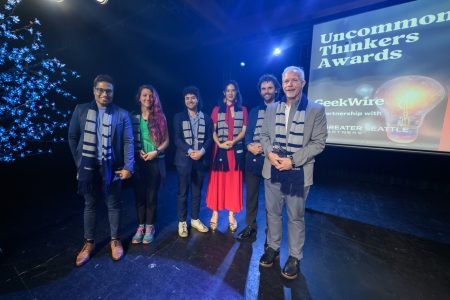
The culmination of Tracy’s efforts arrived on March 14, 2023—a date deliberately chosen as Pi Day, honoring the mathematical constant π and adding a poetic nod to her life’s work. That day, SUMM opened its very own physical facility in Kent, Washington, a compact but inviting space that transformed her mobile dreams into bricks and mortar. Visitors stepped into a world where math wasn’t confined to blackboards but painted across interactive galore. Tracy, beaming with a mix of exhaustion and exhilaration, greeted early guests with hugs and handshakes, her face flushed from years of hustle. The opening coincided with another honor: being named STEM Educator of the Year at the upcoming GeekWire Awards, sponsored by First Tech and shared with Fidel Ferrer of Portland’s Project LEDO. On May 7, she’d walk a red carpet of sorts at Seattle’s Showbox SoDo, where fellow tech luminaries would applaud her for reshaping STEM education. But for Tracy, the real celebration was the museum itself—already drawing over a thousand eager souls and gearing up for its maiden school field trip. With a waivable $5 donation at the door, SUMM ensured accessibility, reflecting Tracy’s egalitarian ethos. She imagined families wandering in, not just seeing math, but feeling it, much like how her childhood home doubled as a math playground. The building, leased rent-free for a year at Kent Station, buzzed with anticipation, its walls adorned with QR codes linking to stories behind the scenes. Tracy’s award moment felt surreal, a far cry from the underfunded startup days when she’d beg for scraps to print flyers. Yet, it underscored her human grit: a woman who, despite societal expectations, built a haven where math meet-ups sparked friendships, and every display whispered, “You belong here.” The GeekWire recognition wasn’t just for Tracy; it was for every quiet innovator challenging norms, making her story one of quiet triumphs repeated in the faces of visitors who left inspired, perhaps even donating a bit more to keep the magic alive.
At the heart of SUMM’s charm are exhibits that weave math into the fabric of everyday wonder, turning abstract theories into sensory adventures that anyone can dive into. Take the giant Etch A Sketch-like device, a hulking interactive beast straddling two axes of control. Tracy watched with glee as pairs of visitors—one gripping the X knob, the other the Y—collaborate to sketch Seattle streets and landmarks, their collaborative drawings echoing the city’s skyline. Beneath the silliness lies linear equations and the Cartesian plane, made vivid through teamwork that fosters banter and bond. “See how graphing isn’t just dots on paper?” Tracy might explain, her voice animated as she nudges a hesitant duo. Then there’s the motion-capture exhibit, where cameras transform guests into living fractal trees. As participants wave arms and wiggle fingers, their movements mirror and multiply into branching patterns resembling cherry blossoms or gnarled oaks—repetition embodying fractals with real-world bite, like charting coastline irregularities. Tracy remembers a father-son duet, their mirrored dance erupting in laughter, the son proclaiming, “Dad, this is better than video games!” These spaces humanize math by evoking emotion: the thrill of creation, the warmth of shared discovery. The origami station invites hands-on folding, crafting cups, octagons, cubes, or tetrahedrons that highlight 3D shapes’ vertices, edges, and faces. Colorful creations gleam aesthetically, a far cry from drab worksheets, encouraging pride in artisanship. Tracy’s favorite part is seeing visitors’ eyes widen at symmetries, perhaps recalling her own origami escapades as a kid, folding cranes from scrap paper during rainy afternoons. Each exhibit isn’t static; it’s alive with stories, pulling people from passive observers to active participants, and in Tracy’s view, hooking them on math’s magic.
Diving deeper into SUMM’s offerings, other displays amplify the joyous exploration, spotlighting math’s unsung heroes and repetitive wonders that mirror nature’s own patterns. Exhibits on lesser-known mathematicians aren’t just bios in glass cases but interactive timelines where visitors vote on favorites or solve mini-puzzles inspired by their discoveries, making history feel personal and empowering. Then come tessellations, those hypnotic patterns of repeating tiles that echo seashells or crystal formations, inviting hands-on arrangement like a grand puzzle. Tracy delights in explaining how these lead to ideas in architecture and art, her anecdotes of ancient Islamic designs adding cultural richness. The crown jewel might be the video game crafting Sierpiński triangles, where players manipulate shapes into infinitely nested pyramids, blurring lines between fun and fractal fascination. Every activity ties back to Tracy’s ethos: spark joy to fuel perseverance through school’s tougher terrains. She envisions a child hooked at SUMM carrying that excitement into algebra class, braving challenges with newfound grit. Visitors often linger, exchanging tips or sharing “eureka” moments, fostering a community vibe. Tracy herself is a fixture—narrating demos, her laughter infectious as she helps a puzzled guest—which adds a layer of mentorship. Funding hiccups sometimes loom, with a lean 15-person staff juggling exhibits, but grants from Washington state and King County, plus individual donations, keep the lights on. Events like a May 8 fundraiser in Seattle rally folks, turning Tracy’s quest into a collective celebration. It’s this blend of innovation and intimacy that humanizes SUMM, making it more than a museum—it’s a testament to one woman’s belief that math can warm hearts, not just minds.
In reflecting on SUMM’s trajectory, Tracy Drinkwater sees an “amazing journey” unfolding, one defined by growth, gratitude, and an unyielding call to support. Each visit reinforces why she started: to counter the stigma that math is an exclusive club. School outreach, with sliding-scale fees for underserved communities, ensures no one misses out, echoing Tracy’s roots in public education. “Funding is the only thing holding us back,” she admits frankly, yet with hopeful resolve, urging guests to donate if they love what they see. Imagine future expansions: more exhibits, outreach programs, perhaps even replications in other cities. For now, SUMM thrives on stories like a retired engineer rediscovering math’s beauty or a family bonding over fractals. Tracy’s humanity shines through her encouragement—attend the awards, tour the museum, spread the word. Her path, from bristling at “I can’t do math” confessions to founding a beacon of inclusivity, inspires emulation. If math education’s future hinges on passion like hers, it’s poised for transformation. So, as Tracy might say with a smile, visit SUMM, play with the puzzles, and let joy redefine your math story—because in her world, everyone can, and does, thrive.