


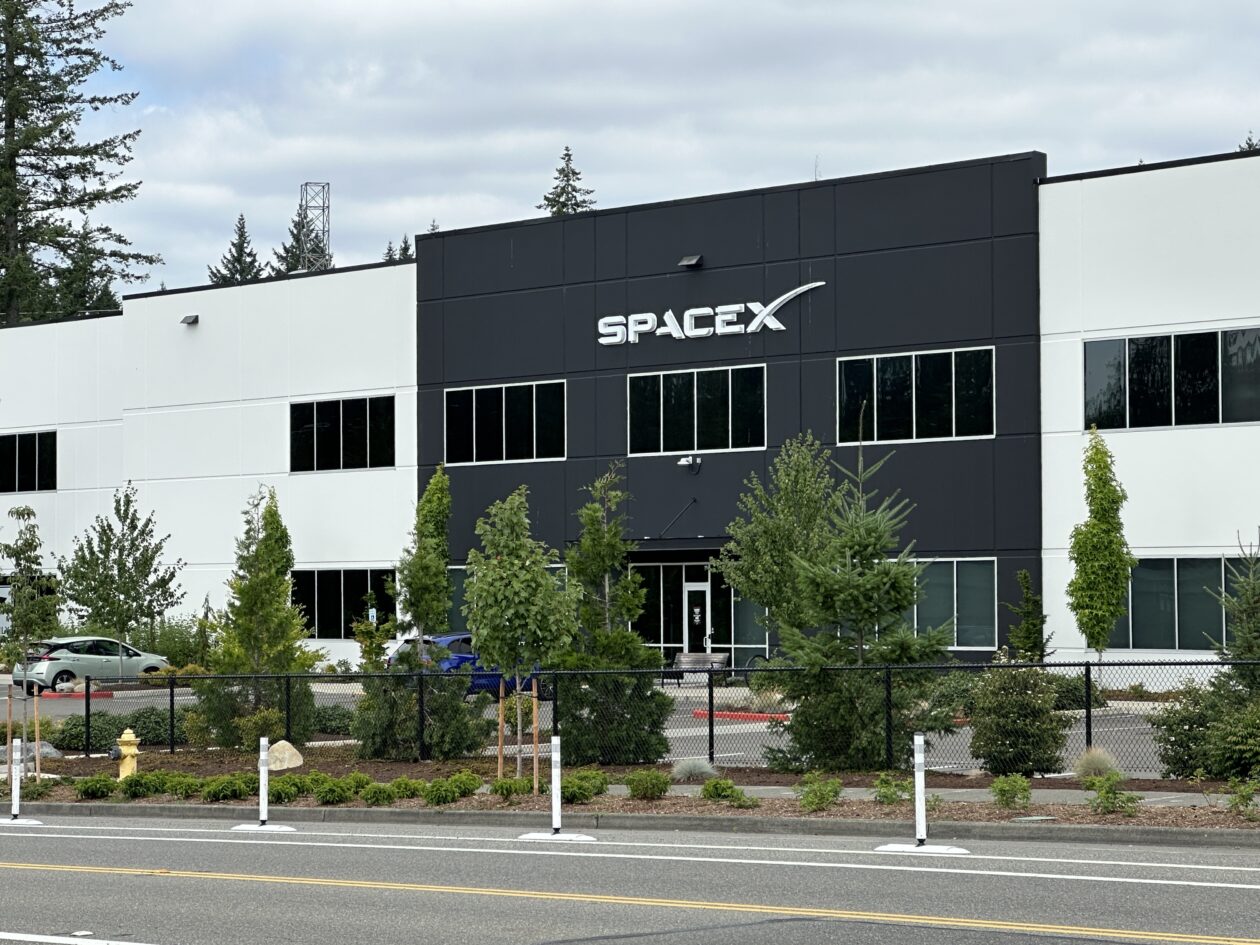
Redmond, Washington, has long been a place where the physical limitations of the world bend to the collective will of virtual code. For over forty years, this lush, evergreen corner of the Pacific Northwest has been characterized almost exclusively by Microsoft’s sprawling corporate campus—a quiet, leafy kingdom of glass offices, tree-lined walkways, and the digital systems that built the modern personal computing age. To say you were heading to “Redmond” was simply a shorthand way of saying you were entering the gravitational pull of the world’s premier software giant. However, a quiet but monumental shift has been unfolding along the city’s suburban industrial corridors, transforming Redmond from a symbol of purely digital innovation into the undisputed capital of cosmic mass-production. In a revelation that sent waves through both Wall Street and the global aerospace industry, SpaceX’s recently publicized initial public offering (IPO) paperwork revealed that its local state-of-the-art manufacturing facility in Redmond has reached a staggering milestone: churning out an average of approximately 70 Starlink satellites every single week between December 2025 and April 2026. This equates to an unprecedented annual run rate of roughly 3,640 spacecraft. What was once a tranquil tech suburb defined by desktop operating systems has quietly become the most productive satellite birthplace in human history, breathing physical life into a vast, complex infrastructure that floats hundreds of miles above our heads.
This frantic assembly rate in Redmond highlights a fierce, high-stakes battle for dominance in low Earth orbit, playing out in real-time right in Microsoft’s backyard. The primary challenger to Elon Musk’s orbital empire is none other than Jeff Bezos’s Amazon, whose adjacent satellite venture, Project Kuiper (referred to in filings as Amazon Leo), is located just a few miles away in the neighboring city of Kirkland, Washington. Speaking recently at a local Tech Alliance gathering, Amazon Vice President Rajeev Badyal sought to drum up excitement for his own company’s progress, revealing that their Kirkland facility has scaled up production from a meager one satellite per month just over a year ago to “tens of satellites a week” today. While Amazon’s acceleration is undeniably impressive and represents a triumph of engineering in its own right, the sheer scale of the competitive disparity remains breathtaking. Currently, Amazon Leo’s constellation consists of a little more than 300 active satellites navigating the dark vacuum of space, a modest fleet when contrasted against the massive grid of approximately 9,600 operational Starlink satellites that SpaceX has already deployed. This stark contrast underscores the massive, almost insurmountable head-start SpaceX has engineered, establishing a dominant orbital presence while its regional rivals are still laying the groundwork for their assembly lines.
This localized corporate rivalry is the crown jewel of a much broader, highly calculated economic development strategy sweeping through Washington State. Regional leaders and economic development organizations have spent years nurturing the area’s storied aerospace legacy—historically rooted in Boeing’s monumental commercial aviation presence—and steering it toward the lucrative, high-tech frontier of the commercial space industry. According to data unveiled at the Tech Alliance event, this strategic pivot has yielded extraordinary results: over 10,000 satellites have been meticulously engineered and constructed in Washington, representing an astonishing two-thirds of all active, operational satellites currently circling our planet. The region has become an absolute magnet for venture capital and aerospace investment, pulling in more than $1.6 billion for local space startups within just the last eighteen months. The human story behind these numbers is one of profound professional migration, as thousands of highly skilled software developers, structural engineers, and systems analysts transition their talents from optimizing enterprise cloud software or online retail databases to fabricating heat shields, testing solar arrays, and writing the guidance systems that prevent catastrophic orbital collisions.
Beyond the local jobs and regional prestige, the financial details disclosed in SpaceX’s landmark S-1 filing provide the first truly transparent look at the immense economic engine driving this cosmic expansion. The company’s “Connectivity” segment, which serves as the corporate home for the Starlink satellite internet network, has evolved from an ambitious, capital-intensive gamble into an absolute juggernaut, generating a whopping $11.4 billion in revenue and securing $4.4 billion in operating income over the course of 2025 alone. This means Starlink accounted for a massive 61 percent of SpaceX’s total consolidated revenue of $18.7 billion for the year, earning the distinction of being the only one of the company’s three main operating divisions to actually turn a profit. Seeking to leverage this financial momentum, the company has applied to list its Class A common stock on the Nasdaq exchange under the ticker symbol “SPCX.” While the initial registration paperwork leaves the exact share price and overall volume of stock to be offered blank, industry observers and financial insiders report that the company plans to raise a staggering $80 billion or more. If realized, this monumental offering would easily smash the historical record set by Saudi Aramco’s $29.4 billion listing in 2019, potentially placing SpaceX’s overall valuation at a mind-boggling $2 trillion.
To fully grasp how SpaceX arrived at this historic precipice, one must trace the narrative back to a chilly evening in Seattle in January 2015, when Elon Musk first gathered a select group of engineers and executives at a private event to pitch his vision of an interconnected satellite array floating in low Earth orbit. At the time, skeptics dismissed the concept as a high-risk vanity project, but Musk was explicit about the grand, existential purpose behind the network: Starlink was designed to generate the massive, steady cash flows required to fund his ultimate lifework of colonizing Mars. Today, that vision has manifested as a globe-spanning enterprise of 22,000 employees, but it has also pulled the company into direct, multi-front warfare with a diverse array of global tech giants. In the arena of rocket launches, SpaceX’s S-1 designates Blue Origin—Jeff Bezos’s Kent-based spaceflight firm—as its chief emerging commercial threat alongside legacy international heavyweights like Arianespace and United Launch Alliance. When it comes to satellite internet connectivity, the filing lists Amazon’s Leo and Blue Origin’s mysterious “TeraWave” project as primary competitors, along with other global constellations like Eutelsat OneWeb and Telesat Lightspeed. Furthermore, SpaceX has aggressively positioned itself at the vanguard of artificial intelligence; following its early 2026 acquisition of Musk’s xAI start-up—which brought physical ownership of the “Grok” conversational model and the vast social platform X under the SpaceX umbrella—the company now explicitly lists Redmond’s own Microsoft, OpenAI, Anthropic, and Google as direct competitors, weaving together the destinies of spaceflight and cognitive computing in a way never before seen in industrial history.
Ultimately, this colossal clash of corporate titans and technological frameworks boils down to a fundamentally human story about connection, opportunity, and the shrinking layout of our world. For the 10.3 million active Starlink subscribers scattered across the globe, the Redmond factory’s weekly output of 70 satellites translates directly into online education for children in isolated mountain villages, telemedicine access for remote island clinics, and dependable communication for disaster response teams in areas where ground-based infrastructure has been obliterated. The 300-plus pages of SpaceX’s SEC filing represent far more than a complex ledger of corporate profits, operational risks, and regulatory challenges; they serve as a physical roadmap for human integration with the cosmos, demonstrating how a suburban Seattle workspace can reinvent the global economy. As local tech workers continue to file into the Redmond and Kirkland facilities to build the machines that light up our night skies, the line between science fiction and everyday life continues to blur, proving that the true value of the technology being manufactured in the Pacific Northwest is not measured merely in billions of dollars or orbital metrics, but in its capacity to bring humanity closer together, both on Earth and among the distant stars.