





Behind the glossy glass facades of Seattle’s high-tech corridors and the picturesque, maritime charm of the Fremont neighborhood, a quiet and deeply personal transformation is unfolding. For fifty-nine professionals employed by the enterprise software behemoth Salesforce and its data visualization subsidiary, Tableau, the transition into the autumn season has been marked by sudden uncertainty rather than routine corporate rhythm. According to a Worker Adjustment and Retraining Notification (WARN) filed with Washington state’s Employment Security Department, these employees will see their roles officially terminated on October 5. This is not merely a sterile adjustment of corporate balance sheets, but a disruptive life event impacting a diverse spectrum of human talent. The cuts cut deep and wide, affecting seasoned software engineers who spent late nights debugging complex code, product management directors who steered strategic visions, incident commanders trained to handle high-stress digital crises, technical support engineers who served as the patient face of the company to frustrated clients, and dedicated leaders across the marketing and sustainability sectors. For these individuals, the loss of a job is accompanied by the daunting task of navigating an increasingly volatile job market, recalculating household budgets, and redefining professional identities that were once tied to one of the world’s most prestigious tech brands.
This latest round of workforce reductions is part of a broader, more systemic restructuring wave rolling through Salesforce’s global operations, serving as a sobering reminder of the shifting priorities in the tech industry. It represents the company’s third distinct cycle of layoffs this year alone, a trend that reflects a harsh transition from the hyper-growth era of the past decade to a lean, hyper-efficient operating model. At Salesforce’s San Francisco headquarters, an additional seventy-four employees are facing a similar fate, occurring alongside major C-suite reshuffling, including the promotion of Miguel Milano to Chief Operating Officer. This ongoing downsizing feels particularly poignant when contrasted with the corporate narrative championed by CEO Marc Benioff. Just last autumn, when Salesforce terminated ninety-three workers in Washington, Benioff was actively praising the monumental efficiency gains the company had achieved by integrating advanced artificial intelligence tools into its operations. To many rank-and-file employees, this juxtaposition creates a troubling paradox: as corporate leaders celebrate the rise of digital labor and automated workflows that boost profit margins, the human creators and custodians of these systems find themselves displaced by the very technologies they helped implement and support.
The pain of these layoffs is felt acutely within the offices of Tableau, the Seattle-born data visualization pioneer that Salesforce acquired in 2019 for a staggering $15.7 billion. At the time of the acquisition, Tableau was celebrated as a jewel in the crown of the Pacific Northwest’s native tech ecosystem, representing a vibrant community of data enthusiasts, creative thinkers, and collaborative problem-solvers. In the years since, however, the gradual integration into Salesforce’s massive corporate machinery has been punctuated by successive rounds of job cuts, leading to a palpable sense of cultural erosion. For former Tableau employees, each layoff announcement feels like a slow dismantling of the tight-knit, innovative culture that once defined their workspace. The transition from an independent, mission-driven startup to a localized cog in a multinational enterprise has created a complex emotional landscape for staff, who must constantly adapt to shifting corporate mandates while watching their colleagues, mentors, and friends walk out the door. The human cost of these mergers is often measured not in the billions of dollars traded on Wall Street, but in the quiet loss of institutional knowledge, shared history, and the unique camaraderie that once flourished in Tableau’s local offices.
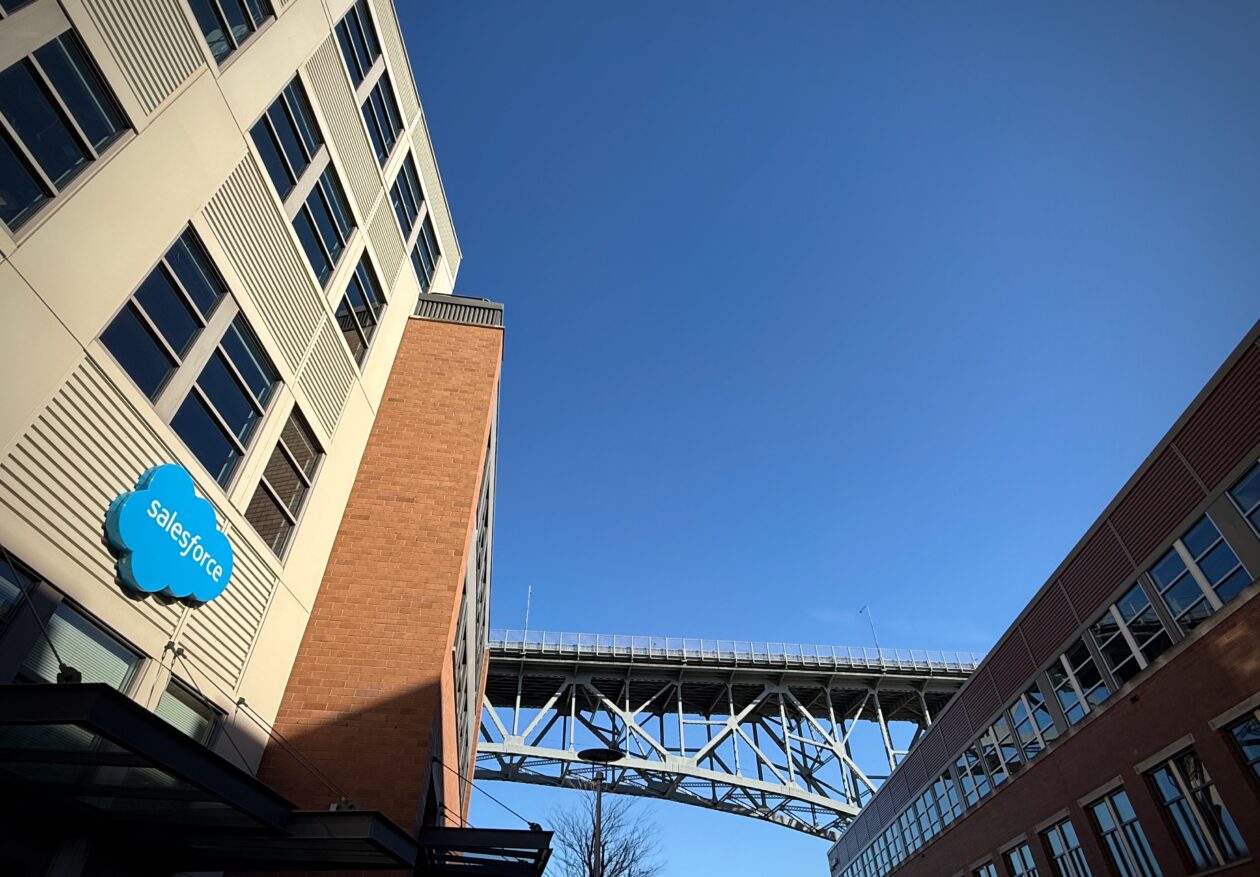
Despite the shrinking headcount, Salesforce is paradoxically anchoring its physical presence in the local landscape, highlighting a stark contrast between corporate real estate strategies and human resource management. The company recently renewed its lease for approximately 114,000 square feet of prime office space at the Data 1 building, a modern, environmentally conscious structure nestled in Seattle’s quirky and artistic Fremont neighborhood. This real estate commitment signals that Salesforce has no intention of abandoning its physical footprint in the region, viewing Seattle as a critical, long-term geographic hub. Yet, for the employees who remain, walking through these expansive, light-filled offices can feel bittersweet. The physical space remains grand and inviting, but the desks within them are increasingly empty, serving as quiet monuments to departed colleagues. This creates a challenging hybrid environment where the pressure to perform intensifies for the surviving staff, who must pick up the slack of eliminated roles while operating within a physical monument of corporate stability that feels increasingly disconnected from the reality of the human workforce inside.
At the same exact time that mid-level and specialized roles are being eliminated, Salesforce continues to aggressively court and invest in top-tier executive talent, illustrating the sharp stratification of the modern tech economy. Just last week, the company made headlines by recruiting Krishna Kumar Parthasarathy, a highly respected, long-time Microsoft cybersecurity executive, to join Salesforce as the executive vice president of engineering. This high-profile acquisition of executive talent highlights a persistent corporate strategy: even during periods of intense cost-cutting and workforce reduction, companies will spare no expense to secure elite leadership capable of steering their technological future, particularly in high-stakes fields like security and cloud infrastructure. For the software engineers and support staff who were laid off, this hiring dichotomy can feel incredibly demoralizing. It underscores a harsh industry reality where strategic pivots and executive recruitment are prioritized over the job security of the execution-level workers who build and maintain the foundational products, leaving many to wonder if their loyalty and technical contributions are ultimately viewed as disposable in the grander corporate game of chess.
Ultimately, Salesforce’s staff reductions are not happening in isolation; they are indicative of a larger, systemic cool-down affecting the entire Pacific Northwest technology ecosystem. In the very same week, Google announced it was cutting fifty-two positions in Washington state, while real estate tech giant Zillow revealed it was laying off ninety-one employees, sending a collective shudder through the local digital corridor. These simultaneous announcements paint a picture of a regional economy in transition, moving away from the era of unchecked hiring, lavish perks, and explosive expansion to one defined by austerity, strategic consolidation, and shareholder-driven caution. For tech professionals in Seattle and Bellevue, the golden era of effortless job-hopping and guaranteed stability has temporarily given way to a landscape of resilience and adaptation. As these fifty-nine individuals from Salesforce and Tableau begin the challenging process of updating their résumés and seeking new opportunities, they carry with them the invaluable skills and innovative spirit that built Seattle’s tech reputation. The resilience of the local community will undoubtedly shine through as these workers transition to new ventures, but this moment serves as a powerful reminder of the human lives, families, and aspirations behind every statistic in a state layoff report.