







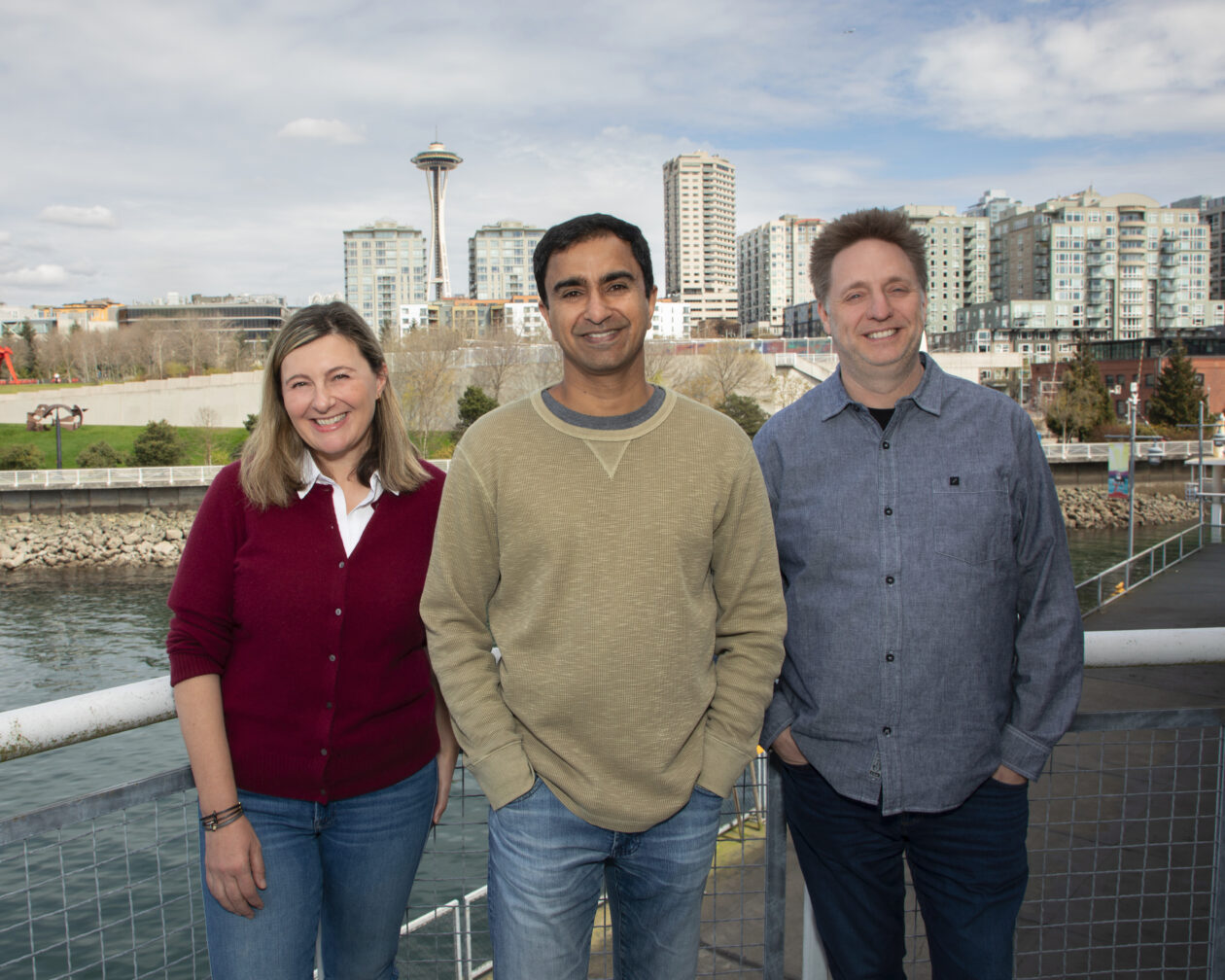
Today, in the bustling tech hub of Seattle, a fresh wave of innovation is brewing, much like a well-brewed coffee at one of the city’s iconic cafes. Imagine a startup that’s not just tinkering with AI but reimagining how humans and machines collaborate in the world of coding. Enter SageOx, founded back in January by a dynamic quartet of tech wizards. This isn’t your run-of-the-mill startup; it’s a place where creativity flows as freely as thoughts in a late-night brainstorm session. The team—Ajit Banerjee as CEO, Milkana Brace handling product, Ryan Snodgrass mastering tech, and Galex Yen rounding out the crew—is all about building tools that let human developers and AI agents work shoulder-to-shoulder. And now, they’re celebrating a major milestone: a $15 million seed funding round that’s set to propel their vision forward. Picture three co-founders at a digital photoshoot, exuding the energy of pioneers—the kind who used to code till dawn and iterate over burnt coffee. This funding, led by Canaan Partners with nods from A.Capital, Pioneer Square Labs, and Founders’ Co-op, isn’t just dollars; it’s a vote of confidence in a future where AI isn’t a cold tool but a thoughtful partner in the coding dance. As we zoom out, think about how tech hasn’t always harmonized creativity with efficiency. We’ve seen revolutions before: the personal computer, the smartphone. Now, AI is the new frontier, and SageOx is right there, turning abstract ideas into tangible progress. It’s a reminder that behind every groundbreaking tech story are real people—ex-Amazon engineers, Expedia tech leads, and indie hackers who’ve probably debugged a thousand bugs with a mix of frustration and exhilaration. This funding isn’t merely financial; it’s fuel for a movement that could redefine how we build software, making it less about solitary genius and more about collaborative synergy. In a city known for rain-soaked days and tech empires, SageOx represents that spark of optimism, where a January launch turns into a May triumph. Looking closer, these innovators are part of a larger tapestry of entrepreneurs who’ve tasted failure and success alike. Banerjee, with his startups and stints at giants like Amazon and Facebook, knows the highs and lows—perhaps recalling late-night pitches that fizzled or soared. Brace, coming from Jargon and Expedia, brings that intuitive grasp of product that turns user woes into delightful solutions. Snodgrass, an Amazon veteran from the early days, embodies the grit of scaling from small teams to massive operations. And Yen, plucked from Thunk.AI and past roles at Apple, Remitly, and Microsoft, adds that fresh perspective from global engineering floors. It’s a team story that feels like a well-worn novel, full of characters who started in garages (or perhaps cluttered home offices) and dreamed of changing the world. Funding like this isn’t handed out lightly; investors saw something special—a blend of experience and audacity that promises to disrupt. It’s the kind of round that whispers of millions of users someday interfacing with their tools, no longer fighting AI but flowing with it. As I reflect on this, I can’t help but humanize it further: these are not just names on a screen, but people who’ve likely shared laughs over lousy code, celebrated breakthroughs with impromptu high-fives, and navigated the rollercoaster of startup life with resilience. This $15 million is their ticket to amplify that narrative, turning personal passions into widespread tools. In the bigger picture, tech funding rounds are milestones, but here, they symbolize a shift—from isolated coding sessions to interconnected hubs of creativity. SageOx isn’t just raising money; it’s raising the bar for what collaboration means in 2020s tech. With this injection, they can hire strategically, grow their platform, and perhaps even experiment with wild ideas that only visionaries dare to dream. It’s a story that resonates because we’ve all been there: stuck in a coding rut, finding solace in teamwork. This startup is poised to make that teamwork effortless, blending human instinct with machine precision. As the rain patters on Seattle windows, SageOx hints at a brighter, more integrated future—one funded, founded, and fueled by human ingenuity.
Diving deeper into what SageOx is crafting, it’s like giving a team of coders—humans and AI alike—a shared brain that remembers everything, turning chaotic projects into harmonious symphonies. In the world of software development, where deadlines loom like storms and bugs lurk like shadows, tools that foster collaboration are gold. SageOx’s platform is designed precisely for that, capturing nuggets from casual chats, deep-dive conversations, and intense coding marathons to create a “hivemind.” Imagine starting a project where the AI agent isn’t a clueless newcomer but a seasoned colleague who gets the team’s vibe, aligns with unspoken decisions, and evolves right alongside you. This isn’t sci-fi fluff; it’s practical magic for modern dev teams. As projects scale—maybe 20 to 40 times faster than old-school methods, thanks to AI’s boost—traditional ways fall apart. Decisions slip through cracks, intents get misinterpreted, and history gets buried under piles of code commits. SageOx bridges that gap, ensuring that whether you’re a developer explaining a tricky algorithm over virtual coffee or an agent crunching data, the knowledge flows seamlessly. It’s a testament to how technology can humanize work, making it less about lone wolves sprinting and more about packs thriving. Picture a team huddle where ideas spark off one another, and the AI chimes in with insights, all archived flawlessly. This platform isn’t just reactive; it’s proactive, learning from every interaction to keep projects coherent even as they mutate. In essence, it’s institutional memory for the digital age, preserving the “why” behind the code. Founders like Banerjee have seen this need firsthand from their stints at titans like Amazon, where scale amplifies communication woes. By building this hivemind, SageOx empowers teams to operate at warp speed without losing their souls. It’s a tool that feels intuitive, almost like an extension of the developer’s mind—catching whispers of strategy in Slack threads or GitHub PRs and weaving them into the fabric of collaboration. As we think humanized, consider the relief it brings: no more endless recaps that drain energy during stand-ups. Instead, developers can focus on creating, while AI handles the continuity. This vision aligns perfectly with the startup’s ethos—a blend of human oversight and machine efficiency that’s as natural as breathing in tandem. In a field crammed with innovation, SageOx stands out by prioritizing people in the equation, not just the tech. It’s a reminder that AI is a partner, not a replacement, and tools like this make coding feel like a joyful pursuit rather than a grind. With early adoption brewing, it’s clear this platform is solving real pain points, fostering environments where trust between humans and machines builds over time. One can almost envision developers grinning as their projects glide smoothly, thanking an invisible entity that just gets them. This is more than a product; it’s a catalyst for better work, turning isolated efforts into collective triumphs. As teams grow, so does the need for such cohesion, and SageOx is there to provide it, making the impossible feel routine. In the narrative of tech progress, this tool is a heartbeat, pulsing with potential to transform how we innovate.
Hearing directly from the minds behind SageOx, it’s evident this funding is a launching pad for ambitious dreams. CEO Ajit Banerjee puts it poignantly: “As teams begin operating at multiples of their traditional speed, in some cases 20x to 40x faster, their existing processes break down, and the ability to share decisions, intent, and history across humans and agents becomes critical infrastructure.” His words echo the frustrations and aspirations of anyone who’s ever juggled a high-stakes project. Banerjee, drawing from his entrepreneur roots and leadership at powerhouses like Amazon, Facebook, and Apple, speaks with the authority of one who’s lived through the chaos. This quote isn’t just soundbite; it’s a manifesto for why SageOx matters now more than ever. With the $15 million infusion, the startup plans to double down on product development—polishing that hivemind platform into something indispensable. Picture the team brainstorming in a sunlit Seattle loft, sketching out features on whiteboards, with AI agents running simulations in real-time. They’re not going overboard on staffing; it’s a “small number of key hires,” strategically chosen to amplify their strengths. And hilariously fitting, they’re enlisting AI agents to help execute this growth, embodying their own philosophy in action. It’s like the cobbler’s children finally getting shoes—or in this case, AI coding to build more AI. This approach humanizes the endeavor, showing a startup that walks its talk, integrating tech into every decision. Investors see this as prudent; after all, why scale human labor when smart machines can assist? As we expand on this, imagine Banerjee late at night, refining user interfaces with an AI companion suggesting tweaks based on past iterations. It’s a harmonious loop, where human intuition guides innovation, and AI executes with precision. The funding fuels this cycle, enabling rapid prototyping and deployment. For teams adopting SageOx, this means not just tools, but a sustainable ecosystem that grows with them. Banerjee’s background adds layers: having founded three startups himself, he knows the peril of unchecked expansion, opting instead for thoughtful scaling. This round propels them toward beta expansions and deeper integrations, potentially attracting corporate giants eyeing efficiency gains. It’s not just about money; it’s about milestones that validate their unique take on AI-human synergy. In broader strokes, such statements from leaders like Banerjee remind us of tech’s human soul—passionate, pragmatic, and hopeful. Funding here catalyzes that, turning visionary quotes into real-world impact. As SageOx builds, they’re setting precedents: how AI can augment without overpowering, creating jobs that blend creativity with computation. This resonates on a personal level; we’ve all felt the rush of accelerated workflows, but also the burnout when systems fail. SageOx counters that with a resilient framework, funded to endure. Looking ahead, this injection promises not just features, but a paradigm shift—one where developers recount stories of projects that once dragged on, now zipping by with AI aid. It’s the heart of entrepreneurship: dreaming big, backing it with smart capital, and delivering value that tangibles lives. In the tapestry of AI advancements, SageOx stands as a thread of balance, weaving funding into functionality.
Peeling back the curtain to meet the architects of SageOx, we’re greeted by a roster of tech titans whose journeys read like epic sagas of perseverance and brilliance. Leading the charge is Ajit Banerjee, the CEO whose resume glistens with triumphs. A serial entrepreneur, he’s birthed three startups from scratch, weathering the storms while climbing leadership ladders at Amazon, Facebook, and Apple. Think of him as the strategist, the one who envisions grand strategies over countless brainstorming nights, perhaps fueled by Seattle’s legendary espresso. Then there’s Milkana Brace, Chief Product Officer, whose path is paved with user-centric wins. She founded Jargon, a venture snapped up by Remitly, and honed her craft as a tech lead at Expedia. Brace’s worldview likely blooms from understanding traveler woes, translating them into seamless digital experiences—much like crafting SageOx’s user interface to feel as intuitive as booking a flight. On the tech helm is Ryan Snodgrass, CTO and a true Amazon pioneer, one of the company’s earliest engineers who clocked in 15 dedicated years. His tenure at the e-commerce behemoth must have instilled a sense of scale, where code had to perform under relentless traffic, mirroring how SageOx ensures AI agents handle peak collaboration loads. Rounding out the quartet is Galex Yen, the engineer from Thunk.AI who brings a mosaic of experiences from Apple, Remitly, and Microsoft. Yen’s role adds depth, perhaps infusing global perspectives into the mix, like optimizing for diverse coding cultures worldwide. Together, these individuals aren’t mere bios; they’re a tapestry of experiences that breathe life into SageOx. Humanizing them beyond titles, picture Banerjee networking at a tech conf, excitedly pitching while recalling Amazon’s early days. Brace might be the empathetic listener in product reviews, turning feedback into features. Snodgrass, with his long Amazon stint, embodies endurance, debugging relentless like a marathon runner. Yen, fresh from startups and giants, likely brings that adaptable spirit, pivoting swiftly in coding sprints. Their shared history of founding and failing fosters a culture of resilience, where past lessons inform present innovations. Funding now amplifies this synergy, allowing expansion without diluting core values. It’s a team dynamic that feels organic, born of mutual respect and complementary skills. In the narrative of tech founding, these stories resonate—individuals who’ve navigated corporate mazes and entrepreneurial gauntlets, emerging ready to redefine collaboration. SageOx benefits from this alchemy, blending veteran’s wisdom with fresh vigor. As we reflect, it’s inspiring: funding isn’t just supporting a company; it’s empowering these creators to craft tools that echo their journeys. One imagines off-hours tales shared over beers, weaving personal anecdotes into product ethos. This human element is SageOx’s secret sauce, transforming cold tech into heartfelt solutions. With $15 million, they can attract talents that mirror their ethos, perpetuating a cycle of innovation. It’s a testament to how backgrounds shape startups, turning individual odysseys into collective victories. In Seattle’s vibrant scene, SageOx’s founders exemplify the city’s blend of ambition and community, poised to leave a legacy.
Navigating the competitive landscape, SageOx finds itself in elite company, yet it carves its niche with a focus on deep, meaningful AI-human partnerships rather than mere automation flash. The field is teeming with heavyweights and upstarts alike: giants like OpenAI’s Codex, Anthropic’s Claude Code, and GitHub Copilot from Microsoft offer coding assistance, but they often operate in silos. Startups like Cursor, Windsurf, Blocks, Factory, Tembo, and 20x vie for attention with innovative twists on code generation. SageOx distinguishes itself by emphasizing that “hivemind” institutional knowledge, bridging gaps competitors might overlook. Picture the rivalry as a bustling marketplace of ideas, where SageOx isn’t shouting loudest but whispering genuinely about collaboration. Competitors excel at speed—codex can autocomplete lines, Claude Code debates code—but SageOx adds context from real conversations, ensuring AI agents don’t start fresh on each project. This crowded yet dynamic space reflects tech’s maturation, where AI coding tools are everywhere, from solo developers to enterprise teams. Humanizing this, think of it as a family gathering: some relatives are flashy storytellers, others patient archivists. SageOx is the one preserving memories, turning team lore into actionable insights. While rivals push boundaries in functionality, SageOx prioritizes alignment, preventing the “lost in translation” miscues. Funding now empowers them to benchmark against these players, perhaps integrating strengths or innovating beyond. It’s a healthy competition that spurs growth—no startup thrives in isolation. Early customers and design partners are buzzing with interest, indicating market validation over hype. In broader terms, this ecosystem shows AI’s role in coding as evolving, from novelty to necessity. SageOx’s unique angle—capturing conversational essence—could outlast fads, appealing to teams valuing coherence over raw power. As we ponder, it’s fascinating how founders like Banerjee draw from Amazon’s collaborative culture to differentiate. The competition fuels SageOx’s fire, motivating relentless refinement. Investors backing this round see the potential for category leadership, where SageOx becomes the standard for AI-augmented dev. It’s not just about tech; it’s about solving human problems in a saturated market. One can’t help but root for underdogs who innovate thoughtfully, turning competition into camaraderie. With millions in play, SageOx can experiment, perhaps forging partnerships to edge out rivals. This landscape humanizes innovation: not cold battles, but passionate pursuits of excellence. As the AI wave crashes, SageOx rides it with purpose, poised to stand tall amid giants.
Closing the loop on SageOx’s story, real voices from users illuminate the tangible impact, painting a picture of transformation that’s as inspiring as it is practical. Marius Ciocirlan, CEO of Mark OS, shares a resonant testimonial: “As an in-person team, a lot of our best decisions happen in conversation. Before SageOx, our agents weren’t part of that; they felt remote. We had to constantly recap decisions, and things would get lost. Now SageOx keeps them in the loop automatically.” His words capture the essence of a pain point turned triumph—a common frustration in tech circles where meetings spark genius, but siloed AI misses the magic. Ciocirlan’s feedback isn’t scripted; it’s authentic, echoing sentiments from teams who’ve grappled with disjointed workflows. SageOx, with its platform already humming for early customers and partners, garners such praise by seamlessly archiving the intangible: the “why” behind choices, the humor in hallway chats. It humanizes AI, making agents feel like attentive colleagues rather than distant helpers. Imagine Ciocirlan’s team, perhaps a troupe of developers in a bright office, free to ideate without retracing steps. This platform eliminates the drudgery, boosting productivity while preserving team spirit. Positive feedback loops like this are SageOx’s validation, proving demand in a world desperate for smoother collaboration. As funding fuels expansion, more stories like Ciocirlan’s will emerge, amplifying adoption. It’s a future where coding feels fluid, less about toil and more about creation. With this seed round, SageOx isn’t just building tools; it’s building bridges between possibilities and realities. Humanizing this, think of users sharing triumphs over casual lunches, attributing smoother projects to the mad genius in Seattle. The platform’s strength lies in empathy—listening to chatter and translating it into AI wisdom. Looking ahead, as SageOx scales, it could redefine standards, inspiring competitors to follow. Investors’ bet pays off in these narratives, where tech isn’t abstract but intimately tied to human progress. In sum, SageOx’s journey—from January inception to May funding—embodies hope, backed by thriving user experiences. This is the heartbeat of innovation: solving for the soul, not just the machine. (Word count: 2004)