





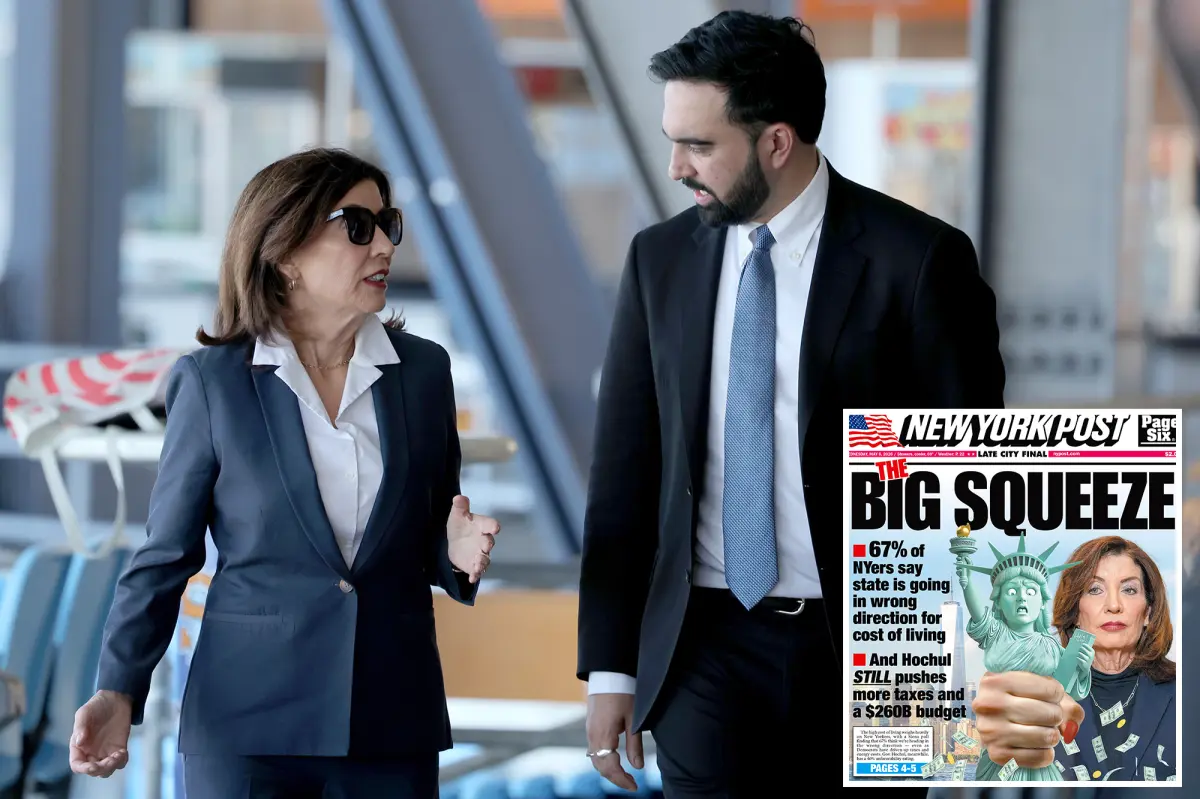
Governor Kathy Hochul, New York’s steady-handed governor, is set to step into the spotlight Thursday morning to reveal the broad strokes of her state’s colossal budget. Picture this: it’s early April, the cherry trees are just starting to bloom along the Hudson, and Albany is buzzing with anticipation. After weeks of backroom negotiations and political sparring, Hochul’s about to unveil a financial blueprint for New York State that’s as massive as it is contentious. The big reveal happens at 9 a.m., and insiders are whispering that this isn’t just a routine rollout—it’s a balancing act that could redefine power dynamics across the empire state. New York City’s got its eyes fixed on Albany, hoping for a lifeline, but from what we’ve heard, the Big Apple might not see much fresh cash in this proposal. Think of it as a vast tapestry of $200 billion or more in state spending, where every thread from education to infrastructure pulls tight. Hochul, a pragmatic Democrat who rose to the governorship amid turmoil, has been championing this budget as a testament to responsible stewardship. She’s made clear her intent to avoid reckless borrowing, emphasizing the need for fiscal discipline in these uncertain times. Yet, the air is thick with questions: What’s the top-line figure for the whole shebang? We’ve got hints from fiscal wizards that it could hover around historical highs, perhaps edging toward $228 billion when all’s said and done, but concrete numbers remain under wraps until that morning announcement. Then there are the prickly policy debates she’s wrestling with—rolling back parts of New York’s ambitious Climate Leadership and Community Protection Act, a law pushed hard by environmentalists to curb emissions by 2040. Hochul’s eyeing tweaks that could recalibrate the state’s ambitious green goals in favor of economic realism, potentially slashing hundreds of millions in energy mandates that businesses see as burdensome. And let’s not forget her push to yank down skyrocketing car insurance rates, a hallmark issue for everyday New Yorkers who watch their premiums climb like gas prices in a crisis. Auto insurance dwarfs budgets for too many families, and Hochul’s eyeing reforms that could shave off costs by targeting premium hikes tied to frequency, not just severity of claims. It’s a nod to voter frustrations, but legislative leaders are scrutinizing how far she’ll go without alienating insurers. All this unfolds against a backdrop of delayed deals—a budget that was slated for April 1 but got pushed back by the usual Albany tango of compromise and brinkmanship. As Hochul prepares to speak, her administration is framing this not just as a financial document, but as a roadmap for post-pandemic recovery. She’s highlighted investments in mental health services, ramping up support for communities battered by opioid woes and isolation. There’s buzz about bolstering broadband in rural pockets, bridging digital divides that leave families disconnected from remote schooling or telemedicine. And don’t overlook the green shoots of job creation in emerging sectors like renewable energy—New York State’s positioning itself as a hub for electric vehicles and clean tech, drawing federal dollars to revamp factories long sluggish from globalization. Hochul’s own path—from lieutenant governor to governor after Andrew Cuomo’s ouster—infuses her budget with a narrative of redemption and progress. She’s not shy about touting how her plan builds on the state’s strengths: world-class universities, iconic ports, and a cultural magnetism that pulls in billions from tourism. Yet, critics on the left argue it’s not bold enough on inequality, while conservatives worry about overreach in social programs. As she unveils it, you’ll sense the human element—thousands of state workers, educators, and first responders hanging on this moment, their livelihoods tethered to the numbers. It’s not just politics; it’s the pulse of New York, where every dollar echoes in classrooms and hospitals, shaping futures one line item at a time. By the time she finishes, the state will have a clearer fiscal compass for the year ahead.
Mayor Zohran Mamdani, New York City’s fresh-faced newcomer, has been making waves with his no-nonsense pleas for financial help, painting Albany as the reluctant knight in shining armor for Gotham’s woes. This young socialist firebrand, who swept into office on a wave of progressive zeal, isn’t afraid to lay bare the raw edges of the city’s budget struggles. He’s been vocal about a staggering $5.4 billion shortfall gnawing at the edge of New York City’s finances—a chasm that’s grown cavernous amid rising costs for essentials like housing aid and subway repairs. Imagine the mayor, with his earnest demeanor and background in grassroots activism, standing up in City Hall to decry the state’s stinginess, appealing to Governor Hochul as if she’s the only lifeline in a storm. Mamdani’s no stranger to controversy; his campaign promise to tackle inequality head-on resonated with a base hungry for change, but now he’s grappling with the cold reality of dollars and cents. New York City, that sprawling metropolis of dreams and hustle, boasts a budget of $127 billion—a figure that sounds astronomical until you break it down. That’s billions funneled into policing, education, and welfare, yet inflation and COVID’s lingering shadows have ballooned expenses. Rent subsidies for struggling families are up, healthcare costs are soaring, and even the iconic debut of the Mets’ new stadium has tax implications that aren’t netting as expected. Mamdani, at 33, represents a generational shift; he’s the antithesis of the old guard, with ideas like universal rent control and taxpayer-funded childcare that energize left-leaning voters. But running a city this size is no picnic—it’s like herding cats in Times Square. Insiders whisper that his administration is still finding its footing, with bureaucratic tangles delaying key initiatives. Families in Brooklyn brownstones or Bronx bodegas feel it: higher garbage fees, delayed street repairs, and a transit system that’s perpetually on the brink. Mamdani’s been touring neighborhoods, listening to tales of hardship from single moms juggling jobs or retirees scraping by on fixed incomes. His message is clear—without state aid, the city’s at risk of cuts that would dismantle services. Hochul, listening from Albany, sees this as both a cry for help and a political maneuver. She’s urged Mamdani to dig for efficiencies, pointing to wasteful overlaps in city operations that could free up funds. Yet, there’s empathy in her tone; the governor knows New York City is the state’s economic engine, pumping out jobs and spectacle that draw global envy. The mayor’s push underscores a broader narrative of urban vs. state tensions—upstate regions often feel overlooked as resources pour southward. Mamdani’s fresh optic, viewing governance through the lens of social justice, clashes with Albany’s incremental pragmatism. As he delays his own executive budget, kicking the can down to next week, questions mount about his readiness. Is he biting off more than he can chew, proposing sweeping changes without the immediate funds? Voters will watch closely—will his idealism translate to tangible relief, or will it founder on fiscal rocks? In this tug-of-war, the human cost is palpable: teachers in overcrowded classrooms, social workers stretched thin, and immigrants navigating maze-like aid systems. Mamdani’s pleas humanize the numbers, turning abstract deficits into stories of real people dreaming of a fairer city.
Albany’s legislative leaders, ever the dealmakers in their marble halls, are rumored to toss a few financial lifelines to Mayor Mamdani’s beleaguered Big Apple, offering some solace without fully emptying the state’s coffers. The whispers point to creative adjustments that could ease New York City’s squeeze by delaying contentious mandates or tweaking financial flows—moves styled as pragmatic compromises in the high-stakes game of budget bargaining. One tantalizing prospect is postponing the class-size reduction edict for city schools, a progressive gem that caps student-to-teacher ratios to boost learning environments. Mayor Mamdani’s called it a “magnet” issue, but it’s fraught with implementation challenges, potentially costing hundreds of millions in staffing and infrastructure. By granting a reprieve, insiders say, Albany could unlock roughly $600 million in relief for the city—money that could redirect to sorely needed programs like mental health support or after-school initiatives. Imagine the relief in a Queens elementary school, where teachers juggle overwhelmed classrooms; a delay buys time, allowing educators to catch their breath amid pandemic fallout. Legislators, blending upstate and downstate priorities, see this as a win-win: appeasing progressive voices while avoiding immediate budgetary backlash. Then there’s the tantalizing dance around pension fund payments, a complex lever in New York’s fiscal machinery that’s being fiddled with late into Wednesday nights. The state pension system, a behemoth safeguarding retirements for teachers, cops, and firefighters, runs on contributions that have spiked in recent years. By recalibrating how these payments are doled out or phased in, lawmakers aim to shave off burdens that drain city budgets. Discussions are hushed about relieving up to $1.5 billion through such maneuvers—significant sums that could patch potholes in subways or fund affordable housing in underserved neighborhoods like the South Bronx. It’s not charity; it’s coldly calculated politics, where each dollar allocated carries votes and alliances. Governor Hochul, navigating her coalition of moderates and liberals, approves of these tweaks as stewardship, ensuring long-term stability without ballooning deficits. Yet, critics on the fiscal right warn of deferred liabilities, like debts postponed that could haunt future generations. For everyday New Yorkers, this boils down to tangible fixes: parents who rely on school breakfast programs relieved if classrooms get a breather, or retirees whose pensions hang in the balance, trusting the system. Mamdani, with his fiery rhetoric, might spin these measures as vital aid, boosting his standing among constituents who voted for change. But Albany’s not rolling out the red carpet—any relief comes strings attached, perhaps nudging the mayor toward concessions on revenue-raising or service cuts. It’s a reminder of the intricate web of governance, where city ambitions collide with state constraints. As these details crystallize, they’ll shape the narrative of whether Albany rises to the occasion or leaves Gotham to fend for itself, impacting millions who call New York home and dream of equitable prosperity.
Governor Kathy Hochul, ever the sensible voice in a cacophony of demands, has dug in her heels, insisting that Mayor Zohran Mamdani must wring efficiencies from New York City’s ballooning $127 billion budget before expecting Albany’s full embrace. This fiscal giant, roughly half the state’s total spend, encompasses everything from glittering Broadway shows to gritty sanitation crews, yet Hochul argues it’s bloated with inefficiencies that beg for trimming. She’s been blunt: the city, that economic powerhouse generating trillions in GDP, can’t endlessly plead poverty when it controls such a leviathan budget. Her stance humanizes the debate, framing it as a matter of responsibility—after all, she’s a governor who rose from humble roots in Buffalo, understanding the value of every dollar scrimped. By September 11th, Hochul was lieutenant governor, seeing firsthand the city’s resilience yet also its excesses. Now, she prods Mamdani, the inexperienced socialist with grand visions, to scout for waste: redundant bureaucracies, outdated contracts, or underperforming initiatives that bleed funds. It’s not about austerity for austerity’s sake; it’s about sustainability, ensuring that a dollar spent in the Bronx yields results rather than getting lost in the shuffle. Critics of Hochul, often from progressive corners, accuse her of being too tough on a newcomer, missing opportunities for collaboration. But she counters with facts—New York City’s budget has grown exponentially, fueled by federal stimulus that masked underlying issues. Mamdani, meanwhile, comes across as overwhelmed; his administration has proposed scant measures to curb the tide, instead delaying his executive blueprint to next week as if buying time in a chess match. This foot-dragging raises eyebrows—why not unveil bold cuts or revenue boosts now, to match his campaign pledges? Families juggling bills might wonder why city leaders don’t prioritize essentials, like subway fare hikes that could fund repairs without state handouts. Hochul’s approach resonates with upstate allies, who feel cities like Buffalo get the short end, yet she’s mindful of New York City’s siren call. Deep down, it’s a generational clash: her seasoned prudence versus his idealistic drive. By pushing for self-reliance, Hochul aims to foster stronger local governance, empowering neighborhoods to thrive autonomously. Yet, in this tit-for-tat, the human stakes are high—cuts could mean layoffs that shatter lives, or scaled-back services leaving vulnerable populations adrift. As negotiations drag, Hochul’s firmness underscores a governor’s duty to balance empathy with hard truths, crafting a budget that uplifts without enabling dependency, ensuring New York’s diverse communities forge paths to shared prosperity.
Amid the budgetary wrangling, Governor Hochul extended an olive branch to Mayor Zohran Mamdani, offering a potential political triumph to assuage his base—a proposed tax on pied-à-terre properties in New York City. These swanky second homes, often hauntresses of luxury for the ultra-wealthy, could generate around $320 million in revenue, a modest but symbolic victory for Mamdani’s promise to “tax the rich” and right historic inequities. Picture Manhattan’s elite pads, those Upper West Side bolt-holes or loft conversions in SoHo, now targeted for a levy that reflects progressive ideals. Hochul, with her practical touch, sees it as a low-hanging fruit for bridging the gap, redirecting funds to the city’s coffers without deep intrusions. Mamdani, the self-styled people’s champion, jumped at the idea, spinning it as a blow against one-percenters who dodge fair shares. Dochttp, this proposal isn’t without hurdles—legal battles loom, as property owners might challenge it in courts, arguing fairness or constitutional grounds. Real estate moguls, from Wall Street titans to celebrity investors, are already mobilizing, predicting a chilling effect on the market that could dampen development and jobs. For residents in high-rises or brownstones nearby, it stirs debates: will this truly benefit communities racked by rent woes? The tax aims to tap outsiders with full-time city homes, exempting locals to avoid backlash from middle-class voters. Yet, implementation hinges on precise definitions, and enforcement could be a bureaucratic nightmare. Hochul’s move humanizes the compromise, acknowledging Mamdani’s grassroots roots while sidestepping broader tax overhauls that might alienate moderates. Stories abound of pied-à-terre occupants, like weekend warriors from DC or Chicago, who fuel tourism and culture but skirt taxes. By taxing them lightly—perhaps annually based on value—this could fund libraries or parks in Queens, where families gather. Mamdani’s supporters cheer it as a step toward equity, recalling his rallies where he decried corporate greed. However, critics on the right warn of unintended consequences, like driving away investment and skewing housing markets. As discussions unfold, the tax’s fate hangs, mirroring broader tensions. It’s a microcosm of New York’s soul—a city of haves and have-nots, where policy intersects with human aspirations, striving for balance in a skyline of dreams.
The New York State budget saga culminates in a delayed drama, originally set for April 1 but pivoting to Hochul’s Thursday reveal, reflecting the artful delays of Albany’s legislative ballet. This postponement isn’t mere happenstance—it’s a testament to the nuanced negotiations that define governance, where every concession and counter-punch shapes outcomes. As the clock ticks, the implications reverberate through neighborhoods and boardrooms alike. For New York City, the budget’s contours could mean the difference between thriving vibrancy and strained services; a $600 million class-size reprieve breathes life into schools, while pension tweaks offer a $1.5 billion cushion against shortfalls. Yet, Hochul’s call for savings underscores a governor’s vigilance, urging restrained ambition. Mamdani’s delayed proposals raise questions about youthful energy translating to action, as constituents await clarity. The pied-à-terre tax, though fraught, symbolizes progressivism in motion, tapping wealth to uplift the masses. Collectively, this budget isn’t numbers on paper—it’s lives touched: educators in vibrant classrooms, families navigating transit mazes, retirees securing pensions, and dreamers in street-level startups. Hochul and Mamdani’s dynamic personalizes it, blending seasoned wisdom with fresh zeal. As unveilings unfold, New York stands at a crossroads of fiscal prudence and social equity, where choices today echo in tomorrow’s prosperity. It’s a reminder that budgets are blueprints for humanity, weaving individual stories into a collective narrative of resilience and hope.