





The Storm Strikes: A Night of Fury in Mississippi
On a harrowing Wednesday night, Mississippi was battered by powerful tornadoes and severe thunderstorms that left a trail of destruction across the state’s southwest. For residents already weathered by unpredictable weather, this outbreak felt intensely personal—as if nature itself was unleashing its wrath with no regard for homes, livelihoods, or safety. The National Weather Service had sounded urgent warnings for several cities and counties, even labeling it a “particularly dangerous situation” for Franklin and Adams counties, signaling the potential for the deadliest kind of twisters. People clung to their smartphones for real-time alerts, while families huddled in storms rooms, their hearts pounding as winds howled outside. By morning, the toll was clear: over 1,000 buildings damaged, trees uprooted like matchsticks, and power lines strewn across roads, turning quaint neighborhoods into scenes of chaos.
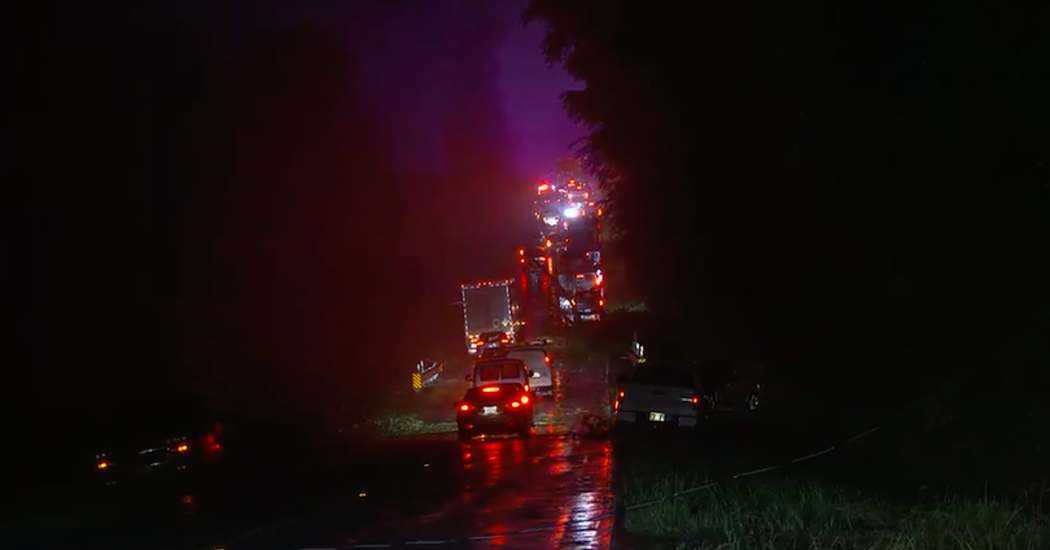
In Franklin and Lincoln counties, the devastation was widespread, with officials reporting damage to as many as 815 buildings. Scott Simmons from the Mississippi Emergency Management Agency described a landscape littered with debris and tangled power lines blocking roads, making travel perilous. Imagine waking up to a world where your home is unrecognizable—roof shingles peeled away, windows shattered, and appliances knocked over as if by an angry giant. In Lincoln County, the aftermath prompted state transportation officials to close southbound lanes on part of Interstate 55 for hours, stranding drivers and turning a routine commute into an ordeal. For locals, this wasn’t just statistics; it was the reality of evacuated homes and emergency responders sifting through rubble, their flashing lights piercing the darkness.
Around 100 miles southeast of Mississippi’s capital, Jackson, in Lamar County, a tornado ravaged about 250 buildings, sparing no structure—not even a beloved local church, whose spire now lay crumpled on the ground. County director James Smith recounted the human side of the disaster: four people injured, with one needing stitches at the hospital, though thankfully, all wounds were minor. Several frightened souls called for help after trees crashed onto their homes, trapping them in debris, but in acts of resilience, they freed themselves before aid arrived—a testament to human grit amid the storm’s fury. Smith’s voice carried the weight of relief, noting the tornado’s worst seemed past, but for those affected, it was a night that blurred the line between surviving and rebuilding.
Across the state, at least 21,000 customers, concentrated in the southwest, faced power outages into the early hours of Thursday, plunging communities into darkness. Websites like PowerOutage.com became lifelines, tracking flickering grid maps that mirrored the storm’s path. As the storm system barreled eastward at 40 miles per hour, hail the size of nickels pummeled Perry and Greene counties, shattering car windshields and denting roofs. For everyday Mississippians, this meant canceled school days, disrupted work, and a communal ripple effect—neighbors sharing generators and stories by flashlight, turning isolation into unexpected bonds. The outages underscored how interconnected lives are, where a fallen line in one yard could black out an entire block, reminding everyone of their vulnerability to forces beyond control.
The tempest didn’t stop at Mississippi’s border; overnight, it raged into neighboring Alabama, where the state’s Emergency Management Agency warned of heavy rainfall, large hail, and possible tornadoes through early Thursday. This extension amplified the dread, as a tornado watch—a lower but still ominous alert—hung over counties in both Mississippi and Alabama until 6 a.m. Families in Birmingham and Mobile braced for their own version of the night, checking apps and hunkering down, the shared experience fostering a regional solidarity. Meteorologists urged caution, predicting more bands of storms, and for many, it evoked memories of past outbreaks, like the infamous 2023 Twisters, but also hope that preparation—like securing loose objects or having an escape plan—could soften the blow.
As dawn broke on Thursday, Mississippi began the arduous task of cleanup, with volunteers, emergency crews, and local heroes stepping up to clear debris and assess the full extent of the damage. The night had tested the resilience of a state known for its warm hospitality and deep roots in community, proving once again that storms like these don’t just tear down buildings—they reveal the unbreakable spirit of those who rebuild them. Officials promised swift support, but for survivors, the path forward meant not just repairing structures, but healing emotional scars, ensuring next time, when the skies darken, they’ll be even stronger. In the end, this wasn’t merely a weather event; it was a shared chapter in the story of human endurance, written in the wind and whispers of survival.