


The Dawn of Limitless Flight: A Breakthrough in Drone Power
Imagine a world where military drones don’t have to touch down for fuel breaks, soaring endlessly like birds on an invisible energy stream. That’s the exciting reality PowerLight Technologies has brought closer with their laser power beaming system. Based in Kent, Washington, this innovative company just wrapped up groundbreaking tests for the Department of Defense, providing sustained power to a heavy-duty, fixed-wing drone for hours on end. Picture this: A KHA K1000ULE drone, a military-grade beast under a $270 million contract, flying high and free without ever needing to refuel. This wasn’t just a quick demo; it was a full showdown at the Poinsett Electronic Combat Range in South Carolina, sponsored by U.S. Central Command and the Pentagon’s Operational Energy – Innovation Directorate. The test proved that wireless power beaming could keep big drones airborne indefinitely, a game-changer for warfare and beyond. Back in 2010, when PowerLight started as LaserMotive, they were powering tiny quadcopters with lasers—think of it as beaming sunshine directly into a device’s battery. Now, they’ve scaled up to kilowatt-level power for full-size aircraft, tracking and delivering energy via infrared lasers at altitudes up to 5,000 feet. It’s like having a futuristic fuel station in the sky, steering beams with precision to avoid obstacles and ensure safety. The technology involves a ground-based transmitter that locks onto the drone, adjusts in real-time, and pumps power wirelessly. In this human-centric view, it’s about giving our machines a lifeline, much like how we recharge our phones wirelessly at home but on a battlefield scale. The implications are huge: No more awkward landings in hostile zones, no more vulnerable moments swapping batteries under fire. It’s empowering pilots and strategists to focus on missions without the burden of logistics, potentially revolutionizing how drones support soldiers on the ground.
Diving into the Test Details: What’s Really Happening Up There
Let’s get up close and personal with these tests, which happened right here and now in the real world, not just in some sci-fi lab. The demonstrations at Shaw Air Force Base’s Poinsett Range were a meticulous affair, teaming up PowerLight with Kraus Hamdani Aerospace to showcase end-to-end wireless power. The drone, that KHA K1000ULE, is no toy—it’s a serious piece of hardware designed for tough environments, capable of operating in contested airspace. During the flights, which concluded this month, the system seamlessly handled everything from spotting the drone in the sky to firing a precise infrared laser beam to deliver kilowatts of power. Imagine you’re a pilot watching your drone glide autonomously; instead of watching the fuel gauge plummet, you’re seeing a constant glow from the beam’s intersection, keeping it aloft for extended periods. This wasn’t a one-off stunt—the tests went beyond basic functionality, demonstrating real-world tracking at high altitudes, swift beam steering to compensate for wind or maneuvers, and built-in safety nets to prevent any mishaps. The laser packs enough punch to sustain the drone’s operations, bridging the gap between concept and deployment. Humanizing this, think of it as teaching a bird to drink from a magical fountain mid-flight; the beam is that fountain, responsive and intelligent. PowerLight’s setup included a wireless power transmitter on the ground, acting like a lighthouse guiding energy home. It’s reassuring to know this tech comes with safeguards, ensuring the beam doesn’t stray and cause harm—much like how we trust autopilot systems in planes. The tests under the PTROL-UAS program (Power Transmitted Over Laser to Uncrewed Aircraft Systems) showed it’s ready for prime time, potentially shifting how we view drone endurance. For everyday folks not knee-deep in military tech, this means safer, more reliable unmanned aerial vehicles that could one day support everything from disaster relief to delivery services without battery anxiety.
Under the Hood: How Laser Power Beaming Actually Works
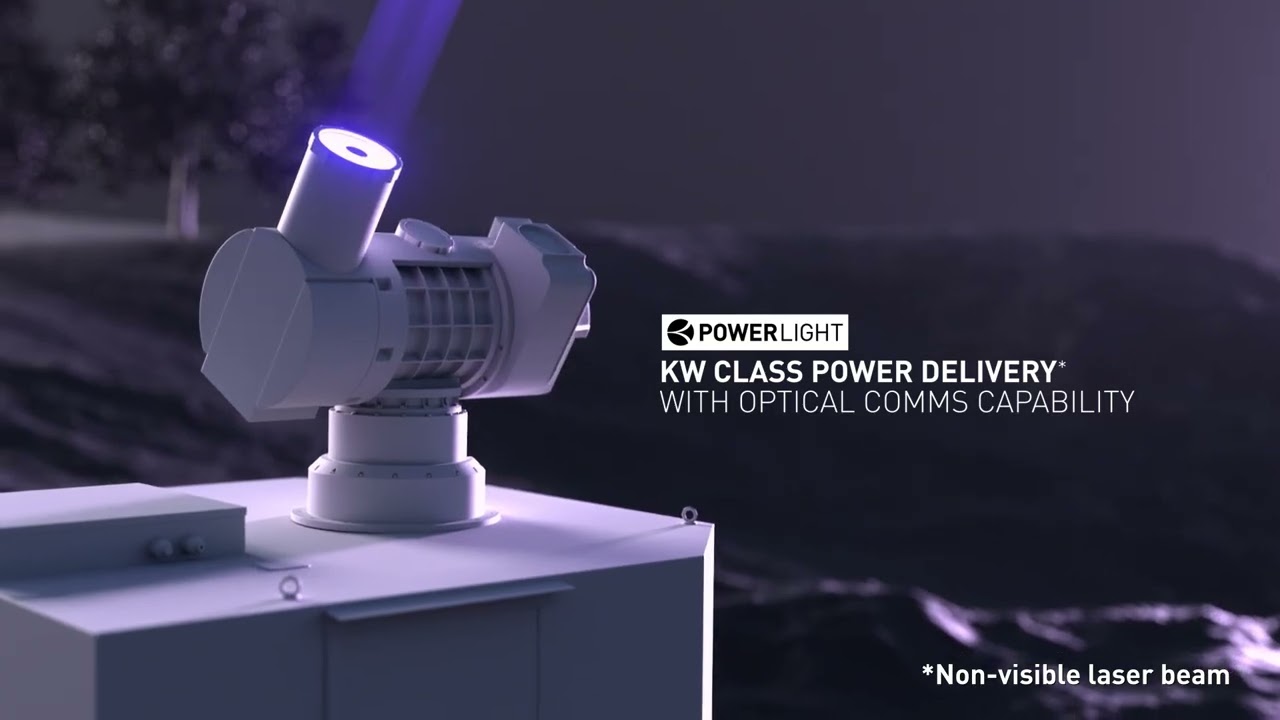
To truly appreciate this breakthrough, let’s break down the tech in a way that feels accessible, like chatting about your smartphone’s guts. At its core, PowerLight’s system is about wireless electricity delivery using lasers—specifically, infrared ones that carry power without wires or plugs. The ground transmitter acts as a spotlight, first acquiring the drone’s location using precision tracking, much like how a smartwatch follows your running path. Once locked on, it fires a focused beam, steering it in real-time to stay on target, even if the drone shifts direction or faces crosswinds. This isn’t crude zap-it energy; it’s a controlled transfer where the drone’s onboard receiver converts the laser into usable power, feeding its engines and systems. Picture sunlight hitting a solar panel, but amplified and directed: the laser beam is invisible to the eye but carries enough kilowatts to keep a large drone flying without interruption. Safety is baked in with features that automatically shut down if the beam deviates or encounters issues, preventing collateral damage. From a human perspective, it’s like giving your car a fuel hose that stretches to infinity, always connected yet untethered. The system handles scaling too—right now for a single drone, but designed to ramp up to networks powering fleets. This builds on centuries-old optics principles, but modernized with AI for autonomous operation. It’s not about fantasy; it’s practical engineering that could eliminate the downtime we all hate with gadgets. By removing refueling stops, drones become more versatile, like explorers who never need pit stops. The tech’s elegance lies in its simplicity for users—set it up, let it beam, and watch the drone soar free. For us laypeople, it sparks wonder: What if our homes could beam power to devices wirelessly, energy flowing as effortlessly as Wi-Fi data?
The Evolution of PowerLight: From Quadcopters to Skyward Giants
PowerLight’s story is one of persistence and imagination, starting small and dreaming big, much like many of us chasing lifelong hobbies. Originally called LaserMotive, the company kicked off over 15 years ago with experiments to keep tiny quadcopters airborne using laser power. Think of those early drone hobbyists buzzing around backyards—they powered their toys with beams that allowed non-stop flight, defying the usual battery limits. It was innovative but scaled for toys; now, fast-forward to these 2026 tests, and they’ve evolved into a force for military giants. The journey involved refining laser tech, partnering with defense entities, and proving reliability at “operationally relevant” levels—meaning real battlefields, not just labs. Tim Jenks, the CEO, reflects this growth in his words: “The Poinsett Range demos prove what we built, and set the stage for the roadmap for this capability.” It’s like watching a kid’s lemonade stand turn into a thriving business. Humanizing this, envision the engineers as passionate tinkerers, iterating over years—late nights adjusting beams, celebrating small wins like longer quad flights, and pushing toward drones that never land. The company, rooted in Kent, Wash., symbolizes American ingenuity, blending private-sector hustle with government funding. This history isn’t dry timelines; it’s about people innovating to solve real needs, like the frustration of a drone mission cut short by low power. From quadcopters to the K1000ULE, PowerLight embodies the human drive to innovate, making impossible concepts tangible. Their old name, LaserMotive, hints at motivation through laser power—a poetic nod to pure energy. Today, it’s a testament to vision, showing how humble beginnings can fuel global impact. For us, it’s inspiring: Just as they scaled ideas, we can dream bigger in our own lives.
Benefits and Battles: Powering Friendlies and Neutralizing Foes
The real magic of this laser system shines in its dual-edged potential—the same tech that extends drone lifespans could turn the tide against enemies. PowerLight’s CEO, Jenks, highlights its defensive angle: “The same autonomous targeting, precision beam control and real-time system intelligence that keeps a friendly platform aloft has direct applicability to directed-energy counter-UAS strategies.” In plain terms, it’s like a high-tech shield; the smart beams that power our drones could be redirected to disable hostile ones, frying their systems without bullets. This level of versatility adds a layer of human strategy to warfare, potentially saving lives by keeping our assets in the air longer and neutralizing threats safely. Beyond defense, the civilian spin-offs are exciting: Imagine powering remote sensors for monitoring climate change or aiding humanitarian efforts in unreachable areas. The system could beam energy to underwater robots exploring oceans or even lunar rovers on the Moon, as PowerLight has explored. For everyday applications, think of it rejuvenating e-vehicles or charging devices in disaster zones without wires. Humanizing this, it’s about enhancing our lives—drones in agriculture beaming power to spray crops endlessly, reducing farmer fatigue. Or in medicine, unmanned vehicles delivering supplies to remote villages without resupply hassles. The beauty is in freeing machines from constraints, mirroring how electricity liberated us from reliance on manual labor. Yet, it’s not without challenges: Weather, enemy interference, or ethics around energy weapons. But the benefits tip the scale, promising a future where power flows invisibly, empowering us to explore further. It’s a reminder of technology’s humanity-serving side, turning sci-fi into everyday reality.
The Road Ahead: Scaling Power and Expanding Horizons
Looking forward, PowerLight’s vision is expansive, from single transmitters to networked power grids sustaining whole fleets. Jenks’s quote sets the tone: It scales up, boosting power, altitude, and range to cover battle theaters. This evolution means potentially powering multiple drones simultaneously, creating a web of energy like a sky-high utility grid. For humans, it’s exhilarating—envision squadrons of drones hovering indefinitely, providing overwatch, surveillance, or strikes without pauses. The tech’s development under PTROL-UAS ensures it’s battle-ready, with Central Command’s backing paving the way for broader adoption. But beyond military, applications like charging 5G base stations or robotics hint at civilian revolutions: Urban areas beaming power to devices, reducing cable clutter and outages. On the environmental front, it could cut drone carbon footprints by minimizing landings. Humanizing the future, picture a pilot’s relief—missions extended for days, families protected longer. Or innovators using this for space colonization, lasers powering Martian explorers. Of course, hurdles remain: Scaling costs, regulatory approvals, and safety integration. Yet, PowerLight’s track record suggests they’ll overcome, much like early aviation pioneers. This isn’t just tech progress; it’s a leap in empathy for the human condition, easing burdens in high-stakes fields. As we stand on the cusp, it’s worth pondering: How will this redefine our relationship with machines, making them true extensions of ourselves? PowerLight’s laser beaming embodies that promise, a beacon of endless possibilities lighting the path forward.