



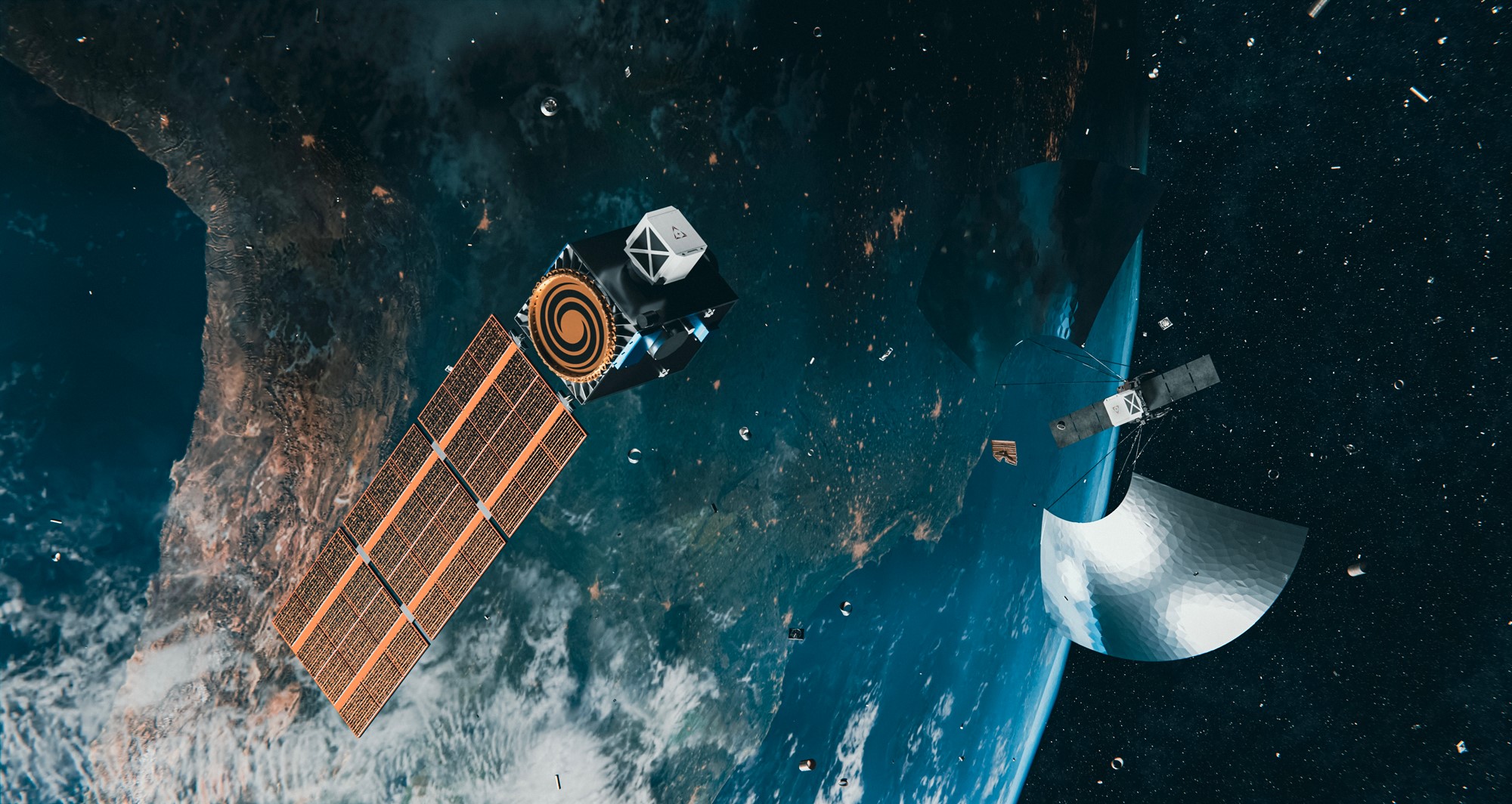
Imagine stumbling upon an old sci-fi novel from the 1960s, where heroes blast off into space to battle menacing clouds of floating junk threatening the cosmos—little did we know, that vision is inching closer to reality in 2026. Picture this: in the bustling tech hub of Bothell, Washington, a company called Portal Space Systems has teamed up with an innovative Australian outfit, Paladin Space, to launch what they’re calling Debris Removal as a Service, or DRAAS. It’s not just a catchy name; it’s a lifeline for our crowded orbital highways, where tens of thousands of bits of space junk—leftover screws, old satellite parts, and exploded rocket shards—zip around at breakneck speeds, posing a real hazard to functioning satellites. These pieces, some as small as a soda can, can punch holes in million-dollar equipment or, worse, cause catastrophic collisions that could cripple global communications. DRAAS aims to swoop in like cosmic superheroes, corralling this debris and safely getting rid of it, preventing the night sky from turning into a pinball machine of destruction. Founded in 2021, Portal has been quietly building a fleet of nimble orbital vehicles designed to dance around space, rendezvous with satellites for repairs or decommissioning, and now, tackle this growing trash problem head-on. Their big star is the Supernova platform, a robust in-space mobility marvel powered by an ingenious solar thermal propulsion system that harnesses the sun’s heat to thrust forward without traditional rockets. Think of it as a solar-powered road trip on steroids, where the engine boils liquid ammonia to create momentum, allowing the craft to maneuver gracefully in the vacuum of space. Complementing Supernova is the smaller, more agile Starburst model, a compact cousin that’s slated to launch its first flight as early as this year. Seeing these craft in artist’s renderings, with their sleek designs and glowing propulsion trails, it’s easy to feel a spark of excitement about humanity’s ability to reclaim our orbital neighborhood. Paladin Space, hailing from Down Under, brings its own flavor of innovation to the table with a reusable gadget called Triton. This nifty payload is all about precision: it’s engineered to zero in on tumbling debris pieces smaller than a meter, or about the width of an outstretched arm, which make up the bulk of tracked orbital garbage. Instead of one-off captures that might cost a fortune, Triton is built to snag dozens of these objects in a single mission, flipping the economics of space cleanup on its head. No more piecemeal operations that drain budgets; this is efficient, batch-style trashing at its finest. Their CEO, Harrison Box, sums it up perfectly by saying it fundamentally shifts the cost structure of debris remediation, offering the biggest bang for the buck to satellite operators who are frenziedly dodging threats daily. It’s like having a professional waste management crew for space, ensuring that those silent, invisible dangers don’t turn into headline-grabbing disasters. Imagine the relief for companies that rely on satellites for everything from GPS in your phone to weather forecasts saving lives—DRAAS isn’t just PR fluff; it’s practical protection. And to visualize the stakes, recall that iconic space shuttle Endeavour incident around 2007, where a tiny piece of junk left a quarter-inch hole in the radiator, with the exit wound double the size. That’s the kind of puncture that could’ve doomed a mission if not caught in time. Triton aims to prevent those heart-pounding moments by actively hunting down such culprits before they strike. Putting it all together, the Portal-Paladin collaboration is a seamless ballet in the stars. Starburst spacecraft, kitted out with Triton’s hardware, embark on scavenger hunts through congested low-Earth-orbit lanes, where traffic is heaviest and risks peak. Triton does the heavy lifting: tracking targets, grabbing them securely—no easy feat when the debris is spinning wildly—and stuffing them into an onboard trash bin. Once full, that bin detaches and plummets safely to Earth for incineration in the atmosphere, while Starburst sails on, ready for another round. It’s a sustainable loop, emphasizing reusability to keep costs down and operations rolling. By 2027, they’re gunning for initial deployments in those high-traffic zones, and the future looks even brighter with Supernova’s versatility, potentially expanding to higher orbits where bigger satellites dwell. This isn’t haphazard; it’s strategic, addressing the growing swarm that’s made satellite operators fork out millions on avoidance maneuvers—NASA’s pegged U.S. costs alone at around $58 million yearly, a figure that’s like tossing cash into a black hole. Humanizing this high-tech rescue mission, think of DRAAS as humanity’s collective sigh of relief, admitting we messed up by littering space with our bold explorations and now committing to clean it up. It’s an adult-size admission of responsibility, blending cutting-edge tech with a dash of goodwill to preserve the final frontier for generations. Watching this unfold, you can’t help but cheer for these engineers and visionaries turning potential apocalypse into manageable maintenance. (Word count: 798)
Shifting gears to the broader context, DRAAS isn’t popping up in a vacuum—space cleanup is becoming a hot ticket item among innovators worldwide, each adding their unique twists to the grand puzzle. Japan’s Astroscale has been a trailblazer here, nailing down orbital test missions like ELSA-d and ADRAS-J, which demonstrated grabbing artificial satellites in a controlled embrace. Now, they’re ramping up for bigger bangs with projects like COSMIC, ADRAS-J2, and ELSA-M, pushing the envelope on real-world grapples that could soon include capturing live objects. Meanwhile, Switzerland’s ClearSpace, in cahoots with the European Space Agency, is prepping an experimental jaunt to escort a defunct satellite out of orbit, treating it like a cosmic escort service for used machinery. These pave the way, showing collaboration between private ambition and public agencies can yield tangible progress. Portal’s venture stands out by transforming cleanup into a repeatable, commercial gig, not a one-shot stunt. Jeff Thornburg, Portal’s CEO, drives home the point: this isn’t experimental fluff but operational necessity, grounding it in the earth’s vital needs like comms, navigation, weather, and security—imagine losing GPS during an emergency or weather radar during a storm; DRAAS keeps that lifeline intact through proactive management. And funding? Portal’s cashed in on millions from SpaceWERX, that cool U.S. Space Force offshoot bridging military brains with civilian tech, hinting at defense ties in the mix. Yet, their Paladin tie-up eyes a civilian market hungry for peace of mind. One intrigued party stepping forward is Starlab Space, a powerhouse joint venture including giants like Airbus, Voyager Tech, Northrop Grumman, Mitsubishi, and Palantir, who’ve penned a letter of intent to weave DRAAS into their commercial space station blueprints. Brad Henderson, Starlab’s chief commercial officer, echoes the sentiment: safety is paramount in their vision of a decades-long station, where reducing collision risks isn’t just smart—it’s imperative for crew safety and scientific integrity. It’s heartwarming to see big players aligning on this, fostering a sense of global camaraderie in taming orbital chaos. As we ponder this, remember the human side: engineers poring over blueprints late at night, mission controllers gripping coffee mugs during tense orbits, or family huddles cheering successful launches. These efforts aren’t cold robotics; they’re infused with passion to safeguard our shared home in the heavens, reminding us that space, once conquered, now requires stewardship. Each company’s stride builds on the last, creating a tapestry of ingenuity that could define the 2030s as the era when humanity matured in its cosmic journey. (Word count: 784; cumulative: 1582)
On a personal note, envisioning DRAAS in action stirs a mix of awe and humility—here we are, homo sapiens, once tied to earth, now wrangling our orbital footprints with tech that sounds plucked from fiction. Portal’s Supernova and Starburst crafts evoke the spirit of exploration, much like the early astronauts who first orbited, but with a responsible twist. The solar thermal propulsion isn’t just efficiency; it’s a nod to sustainability, using the sun’s endless energy without burning fossil fuels. Paladin’s Triton, with its multi-catch capability, feels like a thoughtful gadget for our cluttered skies, democratizing cleanup. And the cost savings? Beyond the $58 million figure, it’s about preserving resources—nudging inventors away from disposable rockets toward reusables. For satellite ops, it’s like having insurance against unexpected bills, allowing them to focus on innovation rather than evasion. Starlab’s involvement adds a human element, envisioning crewed stations where safety protocols prevent mishaps, potentially sparking stories of inventors and astronauts sharing anecdotes over virtual coffee. As we humanize these advancements, DRAAS represents resilience—admitting mistakes like space littering and fixing them proactively, much like community cleanups on earth. It’s inspiring to see companies from America, Australia, Europe, and Asia collaborating, mirroring our global village below. The 2027 timeline ignites excitement: by then, we might witness live footage of Triton snagging junk, beamed to classrooms inspiring the next generation of space stewards. This isn’t distant sci-fi anymore; it’s our imminent reality, demanding we evolve from explorers to custodians, ensuring space remains a wondrous, safe frontier for all. (Word count: 418; cumulative: 2000)