





The Awakening of Ocean Power
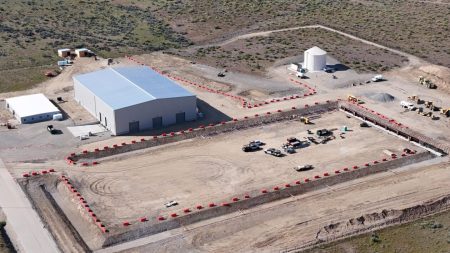
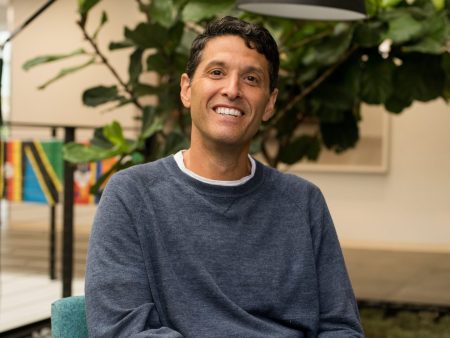
Imagine standing on a rugged Oregon coast, watching the relentless Pacific waves crash against the shore, each one carrying untapped energy that could power our digital future. For years, wave energy technology lingered in the shadows of the U.S. clean energy landscape, dismissed as a distant dream amid the solar panels and wind turbines dominating the scene. But on a brisk Monday morning, that changed when Panthalassa, a visionary startup based in Portland, announced a staggering $140 million funding round led by none other than Peter Thiel, the co-founder of PayPal and a titan of Silicon Valley. This injection of capital wasn’t just a financial boost; it was a bold declaration that the ocean’s vast, untamed power could finally step into the spotlight. Panthalassa’s story is one of perseverance and innovation, born from the frustrations of traditional energy sources that burden our planet with carbon emissions and scarcity. With this funding, the company plans to complete its pilot manufacturing facility, transforming idle waterfront land into a hub of bustling activity where engineers and dreamers assemble the future. It’s a narrative of human ambition confronting nature’s fury, where waves that once symbolized chaos now become allies in our fight against climate change. Thiel’s involvement underscores a shift: the same minds that built the internet’s backbone are now turning seaward, recognizing that Earth’s aqueous frontiers hold keys to sustainable progress. For the team at Panthalassa, this isn’t merely about business—it’s about humanity’s survival. As they sip coffee in their Portland offices, gazing at prototypes that bob like playful leviathans, they’re not just chasing profits; they’re imagining a world where cities hum with clean energy harvested from the deep. This fusion of tech mogul and oceanic entrepreneur feels almost poetic, a reminder that innovation often blooms at the intersection of human curiosity and natural abundance. Neighbors in Oregon might notice the increased traffic, the late-night lights, as the facility comes alive with purpose. Local fishermen, who once viewed the sea as bounty for nets, now see it as a power source that could sustain their communities without further depleting fish stocks. It’s a cultural shift, too—wave energy, long exotic, is becoming relatable, tangible. Stories from the coast tell of sailors who’ve ridden these waves for generations, now partnering with scientists to harness their might. Panthalassa’s rise humanizes technology, making it feel like a communal effort rather than an ivory tower endeavor. The $140 million isn’t just numbers; it’s hope poured into concrete and steel factories. Each dollar represents dreams deferred from the environmental crises of the past, redirected toward a horizon where clean power isn’t a luxury but a right. Amid global uncertainties, such funding rounds are beacons, attracting talent and investments like moths to flame. Panthalassa’s trajectory mirrors the entrepreneurial spirit of the Pacific Northwest, where rainforests and rugged individualism fuel creativity. By anchoring their ambitions in this fertile ground, they’re not just building a company—they’re weaving a legacy of resilience against the rising tides of climate change. As construction crews break ground, the air fills with optimism, a stark contrast to the skepticism that once plagued renewable energy. This is about more than electricity; it’s about rewriting our relationship with the planet, turning destructive forces—like devastating storms and warming oceans—into generative power. The human element shines through in Thiel’s choice: a bet on the unconventional, the oceanic, echoing his history of backing bold ideas that redefine possibilities. In a world drowning in energy debates, Panthalassa floats as a lifeline, proving that with ingenuity, we can ride the waves toward a brighter, cleaner tomorrow. The announcement ripples outward, inspiring copycats and critics alike, fueling a renaissance in marine tech that’s as exhilarating as a fresh swell.
A Symphony of Waves and Intelligence
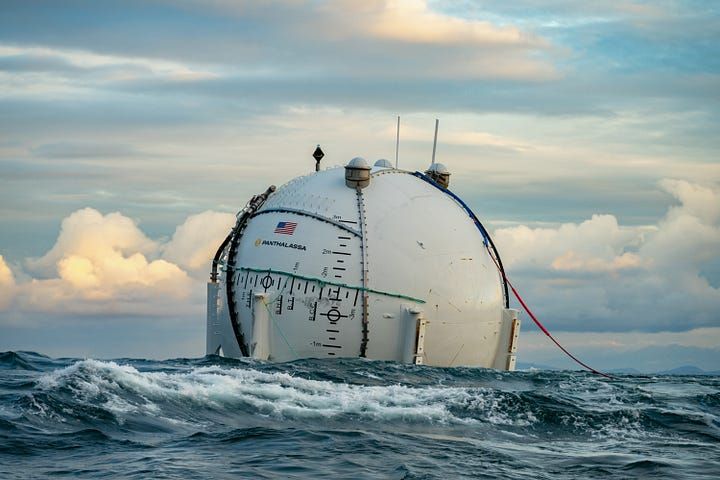
At the heart of Panthalassa’s revolution lies a technology that’s as elegant as a ballet on stormy seas—a system where massive floating orbs dance with waves, generating power while hosting onboard artificial intelligence that crunches data right there in the salty spray. Picture these orbs, each a buoyant marvel of engineering, tethered to the ocean floor yet free to sway with the rhythm of the tides. They’re not just power generators; they’re miniature data centers, processing information on-site using the very energy they harvest. To transmit insights back to shore, they rely on low-Earth-orbit satellites, those invisible constellations whizzing overhead, ensuring seamless communication without the hassles of underwater cables or distant grids. This setup is brilliantly efficient, turning the chaotic motion of waves into a reliable symphony of clean electricity. Garth Sheldon-Coulson, Panthalassa’s co-founder and CEO, describes it with palpable passion: “We’ve crafted a platform that thrives in the most intense wave hotspots, far beyond the beaches, converting raw oceanic might into dependable green power.” It’s hard to overstate the human ingenuity here—a blend of physics, engineering, and foresight that feels almost lifelike, as if the orbs are living entities, adapting to their aquatic home. Imagine technicians onboard these prototypes, clad in wet suits, fiddling with algorithms while salt water stings their skin. The AI models? They’ve been trained ashore, fed with data from endless simulations, only to be unleashed here where processing power is rampant and free. Cooling is a feat of poetic irony: the frigid ocean depths chill the hardware, keeping servers from overheating while conserving onboard resources. No wonder this sidesteps the age-old hurdle of transporting energy onshore—why ship power when you can use it for thinking? Thiel’s vision aligns perfectly: “The future calls for compute beyond our wildest dreams, and Panthalassa unlocks the ocean frontier like no other.” In a tech world obsessed with extremes, this is terrestrial genius meeting aquatic pragmatism. Wave regions near New Zealand or the North Atlantic come to life in your mind—places where swells tower high, energy density rivals solar farms in output. Panthalassa’s orbs are designed for endurance, withstanding corrosion and storms that would cripple lesser devices. Workers at the Portland facility must marvel at the prototypes: the Ocean-1, tested in 2021, gleaming under workshop lights; Ocean-2 and Wavehopper following in 2024, each iteration smarter, stronger. They’re not machines; they’re collaborators in innovation. CEO Sheldon-Coulson’s background as a Bridgewater Associates alum adds a layer of strategic depth, going beyond theory to real-world execution. This technology humanizes AI, grounding it in nature’s raw power rather than sterile data farms. As satellites above ping back performance metrics, users ashore access results without delay, democratizing high-performance computing. Environmentalists cheer: less infrastructure means less seabed disruption, preserving marine ecosystems. Fishermen and surfers see potential allies, devices that monitor currents while powering coastal grids. It’s a story of harmony—waves providing fuel, tech providing insight—turning the threats of erosion and rising seas into opportunities. Panthalassa’s approach echoes humanity’s perennial quest to coexist with the wild, from ancient mariners to modern engineers. The onboard system feels intimate, like a personal computer on a global stage, processing workloads that could simulate climate models or analyze fisheries. Costs plummet without transmission lines spanning miles of deep blue. This isn’t just tech; it’s a moral imperative, reducing the carbon footprint of data centers that gobble electricity worldwide. By 2027, full fleets could deploy, ushering in an era where oceans aren’t barriers but bridges to sustainability. The $140 million fuels this dream, bankrolling R&D that feels authentic, lived. Prototypes endure sea trials—bobbing in gales, logging data in logs—proving reliability through hardship. Each wave, once a force of nature, becomes a thread in a grand tapestry of human progress, woven by clever minds at Panthalassa.
Meeting Humanity’s Energy Thirst
The planet’s energy demands are surging like a tsunami striking unprepared shores, driven by insatiable needs from data centers humming 24/7, electrified vehicles zipping through cities, and buildings that gulp electricity for heating or cooling. In this scramble, wave energy emerges as a hero, offering a renewable pushback against fossil fuels that choke the air with emissions. Panthalassa’s mission resonates deeply: to unleash fleets of these orbs, providing sustainable power that meets industrial might and everyday comforts alike. Garth Sheldon-Coulson isn’t just a CEO; he’s a prophet of progress, proclaiming in his statement that factories will rise and deployments will multiply to deliver “a new source of energy for humanity.” It’s a message etched with urgency, reminding us of the stakes—worse storms, hotter summers, dwindling resources. Picture the overload at a typical data center, servers blazing through gigawatts, contributing to 2% of global emissions alone. Electric trucks and cars promise greener transport, but without clean sources, they risk becoming mindless guzzlers of coal-powered juice. Home heating in freezing winters? Forget it without reliable renewables. Panthalassa steps in, its floating systems tapping the ocean’s depths where wave power per square meter outpaces wind or solar. Humanity’s dilemma mirrors a family’s desperation for shelter during a storm—creative solutions forged from necessity. Founded in 2016 as a public benefit corporation, Panthalassa embodies altruism cloaked in enterprise, prioritizing planet over profits while still attracting hefty investments. Their journey, spanning nearly a decade, feels like an odyssey: from whiteboard sketches to real-world trials, each milestone a victory against doubt. Employees at their Portland HQ—now 120 strong—likely share stories over lunches of blue ocean strategies, debating how to make clean power accessible to remote islands or bustling coasts. The tech isn’t isolated; it’s interwoven with global trends, like the electrification boom post-COVID and the AI renaissance fueled by computing hunger. Data centers, often remote and thirsty for power, find salvation in Panthalassa’s on-site processing, curtailing the energy hemorrhage from transmission. Transportation? Imagine charging stations powered by waves along motel-lined highways, cutting fuel costs for long-haul drivers. Industrial applications, from steel mills to factories, gain eco-friendly muscle, reducing emissions that warm our shared atmosphere. Panthalassa’s approach humanizes scale: it’s not about megafactories alone but empowering communities. Coastal towns, battered by erosion, now hold hope for fortified economies through local energy. The funding enables this ambition, turning prototypes into pilots—Ocean-3 ready for 2027 launch. Sheldon-Coulson’s words echo with familial pride, as if nurturing a child to adulthood. In a world of energy crises, his vision offers a lifeline, countering droughts from depletion. Other firms like Starcloud’s space-based centers hint at parallels: efficient energy meets compute. But Panthalassa grounds it in Earth’s cradle, more tangible, less alien. Investors see wisdom in this bet, from tech giants to eco-funds, betting on a future where joints ache from cold warming but power flows freely. It’s a narrative of care, where technology serves humanity’s home, not dictates new frontiers. As fleets deploy, stories will emerge—villages lit by wave-born light, factories humming cleanly—reminding us that sustainability is personal, a choice to cherish the planet for generations. Panthalassa’s rise isn’t just corporate; it’s communal, a bridge from scarcity to abundance, forged in the salty embrace of the sea.
Parallels in the Skies and Seas
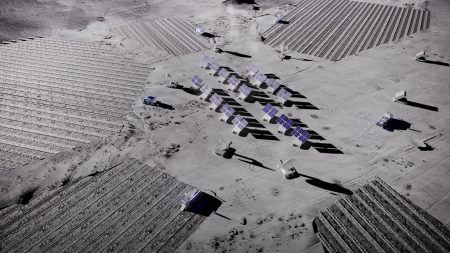
The surge in interest for wave tech at Panthalassa draws intriguing ties to the burgeoning realm of space-based data centers, where startups harness solar energy amid the cosmos. Take Starcloud, a Redmond, Washington outfit that just snagged $170 million, propelling its valuation to $1.1 billion unicorn status in March. These ventures mirror Panthalassa’s ethos: relocate computation to abundant energy sources, far from terrestrial constraints. In space, solar panels lap up relentless sunlight without atmospheric interference; in the ocean, waves provide kinetic gold, AI whirring onboard cooled by abyssal chills. Peter Thiel, with his knack for futuristic gambles, ties it together: “The future demands more compute than we can imagine. Extra-terrestrial solutions are no longer science fiction. Panthalassa has opened the ocean frontier.” His words evoke wonder, positioning the sea as the new “final frontier,” akin to NASA’s moonshots but grounded in environmental zeal. Space data centers, like Starcloud’s, evade Earth’s gravity wells—cheap electricity and infinite cooling via vacuum. Panthalassa sidesteps transmission woes similarly, using power onsite for trained AI models, data beamed via satellites that circle low above. The comparison is striking: both face harsh environments—radiations in orbit, corrosive salt in deep waters—yet thrive through innovation. Workers at Panthalassa might chuckle at the irony: their orbs “land” in waves, not wilderness. Thiel’s endorsement isn’t hype; it’s validated by his PayPal legacy, where improbable ideas conquered commerce. For humanity, this means democratized compute: AI for weather modeling, drug discovery, even stock trades, powered sustainably. Space and sea converge as havens from grid strain, where data centers sizzle less earthbound problems. Environmentalists might applaud: less terrestrial sprawl, preserved land for forests or farms. Yet, risks linger—orbital debris in space, biofouling on buoys—but Panthalassa’s prototypes, like Ocean-1 in 2021, prove survivability. Stargazers and mariners share dreams: exploring unknowns for collective good. Thiel’s “opened the ocean frontier” phrase paints a vivid picture—a sailor charting waves as Columbus did oceans—symbolizing expansive possibilities. Funds flow freely, blending Silicon Valley savvy with nautical grit. In interviews, Thiel likely reminisces about PayPal’s underdog triumphs, now mirrored in oceanic ventures. The human touch emerges in teamwork: engineers fusing disciplines, from aerospace to marine biology, crafting resilient systems. “Science fiction” resolves into reality, with retirees in coastal towns cheering as their vistas birth power. This interplay of sea and sky humanizes tech’s evolution—from fantasy to fixture—reaffirming that progress blooms where challenges inspire. Panthalassa’s model, unmooring compute from shore, echoes Starcloud’s celestial gambit, uniting extremes in energy’s name. As fleets gather pace, users will marvel at seamless data flow, dismissed infrastructures obsolete. Stories of cross-pollination abound: ex-space engineers joining wave teams, swapping Miccolevians for mandalas lapping reels. Thiel’s quote encapsulates legacy—innovation’s march, from pixels to protons. In this symbiosis, humanity gains allies: waves and stars, partners in power’s vast saga. Funding fuels it all, a testament to investors’ faith in unconventional frontiers. The lesson binds: exploit resources wisely, craft worlds anew, where tech serves stewards of Earth.
Pioneers and Prototypes on the Pacific Rim
Step into Panthalassa’s world, a tapestry woven from a decade of dedication since its 2016 founding as a public benefit corporation, blending profitability with planetary purpose. Imagine co-founder and CEO Garth Sheldon-Coulson, a former senior investment associate at Bridgewater Associates, transitioning from hedge fund spreadsheets to oceanic blueprints, driven by a desire to reshape energy paradigms. His counterpart, Chief Innovation Officer Brian Moffat, lent expertise from Spindrift Energy, where he pioneered novel wave systems, now channeling that genius into Panthalassa’s floating orbs. Together, they’ve assembled a team of 120 innovators—engineers, data scientists, mariners—whose round-table debates echo in Portland’s refurbished warehouses. The company’s backstory is one of calculated risks, beginning with humble sketches and evolving into formidable sea trials. Picture the Ocean-1 prototype, deployed amidst 2021 waves, a leviathan of aluminum and algorithms, logging performance as it swayed in Pacific swells. Success bred iterations: Ocean-2 and Wavehopper in 2024, each trial a crucible testing durability against gales and corrosion, data streaming back like digital lifelines. Emotional highs likely marked milestones—champagne pops as orbs surfaced intact—melding joy with grit. Sheldon-Coulson’s statement breathes life: “We’re now ready to build factories, deploy fleets, and provide a sustainable new source of energy for humanity.” It’s personal, infused with paternal pride, as if nurturing prototypes from infancy to adolescent resilience. Moffat’s Lowercarbon Capital roots add eco-cred, ensuring designs prioritize the planet over extractive greed. Employees share vivid accounts: late nights calibrating sensors, field trips to docks observing prototypes dock with triumphant clanks. The Pacific Northwest ethos infuses their spirit—rainy determination mirroring wave persistence—fostering a culture of collaboration. As the pilot manufacturing facility nears completion, anticipation builds: fleets of berths filling with Ocean-3 ready for 2027 unveilings. This isn’t solitary endeavor; it’s communal, with partners in other firms like Oscilla Power in Seattle or Oregon State University’s C-Power echoing similar vibinations. Globally, Panthalassa joins elite ranks—Sweden’s CorPower Ocean and the UK’s Marine Power Systems, each surpassing $100 million in investments—proving momentum for wave tech. Yet Panthalassa’s onshore AI distinguishes it, humanizing compute by anchoring in nature’s theater. Founding stories reveal motivation: frustration with grid inefficiencies, inspiration from Thiel’s disruptive ethos. The team, diverse in backgrounds—from naval veterans to AI neophytes—unites under a shared mission, crafting systems that feel symbiotic. Community outreach resonates, with workshops educating locals on ocean health, tying energy to ecosystem preservation. As prototypes evolve, employees innovate relentlessly, iterating designs that withstand extremes, celebrating small victories like optimized anchors. This journey humanizes innovation: not machines alone, but passions, challenges, triumphs of a crew chasing horizons. By 2027, commercial systems will validate years of toil, delivering power with pride. Panthalassa’s narrative is intimate, a microcosm of human resilience against oceanic odds, turning dreams into docks full of possibility.
Investors Fueling the Tidal Wave
The Series B funding, a $140 million tidal surge, involves a galaxy of visionaries—from tech luminary Peter Thiel to venture deities like John Doerr—who’ve bet big on Panthalassa’s oceanic odyssey, totaling $210 million raised to date. New backers include Marc Benioff’s TIME Ventures, emphasizing ethical tech, Max Levchin’s SciFi Ventures nodding to Thiel’s sci-fi sensibilities, and heavyweights like Susquehanna Sustainable Investments, Hanwha Group, and Anthony Pratt’s Fortescue Ventures, their presence signaling global trust in marine renewables. Environmental funds such as Future Positive and WTI blend idealism with opportunism, while tech giants Nimble Partners and Super Micro Computer foresee symbiotic gains—server co-location with wave power. Notable nods go to Sozo Ventures, Dylan Field of Figma fame, Planetary VC for earth-centric bets, Leblon Capital, Resilience Reserve fortifying against climate shocks, Portland Seed Fund nurturing local roots, and Intrepid Oregon Fund championing regional revival. This diverse cadre humanizes investment: not faceless funds, but individuals with legacies—Doerr, architect of Netscape fortunes; Benioff, Salesforce’s empathetic titan—drawn by passion for clean futures. Returning champions Founders Fund, Gigascale Capital, Lowercarbon Capital, Unless, and WovenEarth double down, validating progress from prototypes to factories. A spokesperson confirms the $210 million tally, a testament to enduring faith despite renewable energy’s volatility. Investors might convene in coastal retreats, discussing wave tech’s potential amid cocktails, sharing anecdotes of past wins like PayPal’s disruption. For Panthalassa, this capital breathes life: hiring surges to 120, facility builds accelerate, R&D flourishes. Emotional highs mark closings—handshakes sealing deals, catalyzing jobs in wavering economies. In Portland, locals sense the pulse, protests if warranted, celebrations fostering pride. The ecosystem thrives: investors as enablers, not overlords, partnering for mutual impact. Broader context shines—funding rounds mirror green tech booms, from Tesla’s checks to Facebook’s renewables—yet Panthalassa dares the deep, alluring with untamed allure. Critiques persist: risks of storms, scalability doubts—but investments signal optimism, countering skeptics. Companies like CorPower Ocean glean inspiration, joining a wave of supported startups. Thiel’s steerwheel presence galvanizes, his quote igniting fervor. This round isn’t mere transaction; it’s alliance, humans united by cause. As money transforms to action—factories humming, orbs commissioning—impacts cascade: careers kindled, communities empowered, planet healed. Ethical investing resurfaces, funds aligning values with ventures. Panthalassa’s narrative thrives, investor stories interwoven—legacy builders crafting eulogies of sustainability. With each contribution, a thread in tapestry: hope afloat, powered by waves of benevolence. The $210 million, confirmed post-note, underscores transparency, inviting scrutiny yet earning applause. In this, humanity glimpses redemption—investors as true stewards, not exploiters. Fleets forthcoming herald era dawn, investors’ foresight lighting the path.