






In June 2008, Pixar released WALL-E, a film depicting a ruined Earth abandoned by a human population so physically and mentally deteriorated that they live entirely in hoverchairs, hopelessly glued to digital screens. Released just two weeks before Apple launched its revolutionary App Store, the film is no longer a distant sci-fi parody; it has become a strikingly accurate documentary of our modern era. Today, we live in a “WALL-E economy” powered by an endless array of apps that cater to convenience and human vice. While these services promise to make life easier, they extract a devastating toll on our physical, mental, and social well-being. With the rapid advent of artificial intelligence, we are on the verge of supercharging this digital womb, trading our agency, free will, and genuine human connection for a life of engineered comfort.
The Faustian bargain of our modern landscape is that we willingly surrender our autonomy for dopamine. This is painfully evident in our relationship with social media, where the average American teenager now spends up to five hours a day scrolling through algorithmic feeds. While this passive consumption feels free, it has stolen the time we once dedicated to physical movement, hobbies, and real-world relationships, fueling an unprecedented crisis of loneliness, depression, and teenage mental health struggles. Beyond our screens, platforms like DoorDash, Uber Eats, and Instacart have commercialized basic human tasks. Despite carrying steep markups, these delivery services are disproportionately used by those who can least afford them—often driving users into debt through “Buy Now, Pay Later” schemes. In bypassing the simple friction of cooking or dining out, we have slowly dismantled restaurant cultures and normalized the profound isolation of dining alone.
This hyper-convenience has merged naturally with profit-driven vice. Apps like DraftKings for sports betting, Kalshi for prediction markets, and Robinhood for retail options trading have successfully repackaged gambling into clean, acceptable, and highly addictive smartphone interfaces. By placing a casino in everyone’s pocket 24/7, we have ignored centuries of societal wisdom regarding the dangers of unchecked wagering, resulting in a devastating rise in personal bankruptcies and mental health crises. Now, artificial intelligence is poised to accelerate these toxic dynamics. Armed with sophisticated data analysis, AI can profile users with terrifying precision to manipulate behavior, target vulnerabilities, and keep audiences endlessly hooked. From virtual AI dating services that exploit lonely individuals to predatory algorithms that identify struggling gamblers and lure them back with custom credits, the technology is systematically replacing authentic, complex human interactions with sterile, simulated experiences.
The future of digital spaces under unchecked AI looks increasingly like an “AI-slop” ecosystem. Social media platforms, which historically relied on real humans to create content, are shifting toward endlessly generated, hyper-personalized synthetic content designed to maximize individual engagement. Yet, we cannot simply wish these technologies away; massive global capital is committed to deploying AI across every sector, and Silicon Valley often defends this trajectory as an inevitable march of human progress. However, this argument ignores the fact that technology is deeply bound to social and political choices, and humanity still possesses agency. Just as we did with the tobacco industry—which aggressively marketed a highly addictive, harmful product while hiding its long-term health risks—we must shift the public consciousness to recognize the digital hazards surrounding us, laying the groundwork for meaningful systemic change and legislative action.
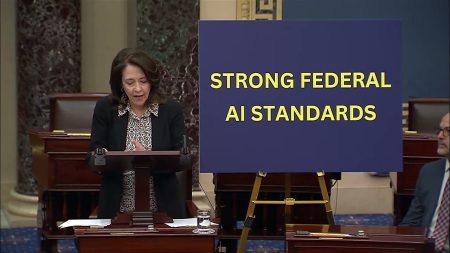
Governments around the world are beginning to push back against the unfettered expansion of the digital economy. In an effort to protect youth from systemic psychological harm, countries like Australia and the United Kingdom are pioneering legislative efforts to ban social media access for children and young teenagers. Similarly, states like Utah are taking decisive action against prediction marketplaces, classifying them correctly as predatory online gambling. While establishing these regulatory guardrails is a slow process that requires organized resistance against powerful, highly concentrated corporate lobbying, it remains a vital path forward. We must actively reject defeatist solutions, such as taxing AI profits simply to fund a “universal basic income” that pays for digital bread and circuses. This passive acceptance of a sedentary life is the ultimate realization of the WALL-E dystopia, rather than a future built on human empowerment.
Confronting this shift also requires us to reclaim our individual agency through daily, intentional choices. We can push back against the “friction-maxxing” lifestyle by deliberately welcoming healthy resistance back into our routines—disabling intrusive notifications, limiting social media consumption, and making space for deep, distraction-free reading. More importantly, we can foster real-world community by hosting dinners, gathering with friends, and engaging in local, physical activities that cannot be replicated by a screen. In the end, WALL-E is a dark story, but its robotic protagonist ultimately triumphs because he rejects his programming to fight for a living, breathing Earth. By rediscovering a sense of techno-optimism—where technology serves to elevate humanity rather than pacify it—we can resist the path of least resistance and work together to leave our physical world a little better than we found it.