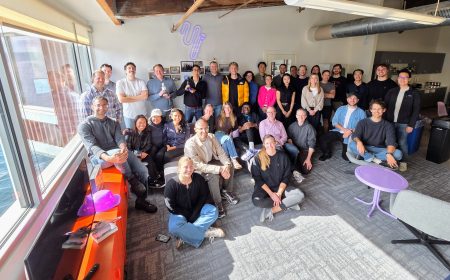





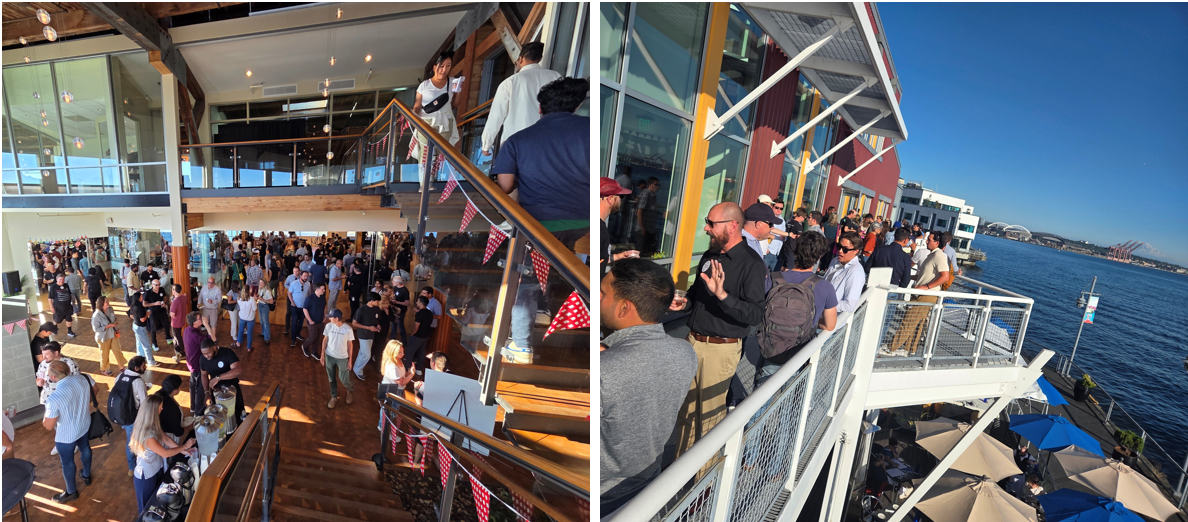
The crisp, salty air of Elliott Bay drifted across the deck of Pier 70, but inside the AI House, the atmosphere was thick with a different kind of energy—a potent mix of ambition, anxiety, and pure curiosity. Seattle Tech Week descended upon the Pacific Northwest not merely as a series of corporate presentations, but as a living, breathing ecosystem where the human realities of the modern tech landscape were laid bare. Walking through the packed rooms and navigating more than 250 events, one could not help but notice a striking contrast of characters: local engineers and developers searching for their next career chapters amidst a cooling job market, standing shoulder-to-shoulder with a massive influx of visitors and venture capitalists from the Bay Area. These out-of-town investors, lured by the region’s reputation as a quiet powerhouse of deep technical talent, wandered through the crowds trying to decode the unique DNA of the Seattle tech scene. Though the official, dedicated AI Week was still months away on the autumn calendar, artificial intelligence naturally served as the gravity wells around which every conversation, panel, and casual happy hour rotated. The sheer scale of the gathering, marked by endless waiting lists and packed-out venues, made it impossible for any single observer to grasp the entirety of the week, yet the overwhelming sense of collective engagement and enthusiasm was impossible to ignore.
Amidst the dizzying array of sessions, it was a panel early in the week titled “Foundation Models Go Vertical” that provided one of the most profound paradigm shifts of the entire event. Hosted by the pre-seed venture firm Ascend inside the sleek, modern architecture of the Washington 1000 building downtown, the event was so highly anticipated that founding general partner Kirby Winfield revealed to a packed room that over 600 hopeful attendees had tried to secure a ticket. The highlight of the panel came from Manos Koukoumidis, the CEO of Kirkland-based Oumi and a former Google Cloud AI engineering leader, who challenged the very foundation of the current startup gold rush. Koukoumidis pointed out a glaring truth that many founders in their haste have overlooked: companies scrambling to build applications on top of existing frontier models are essentially renting an intelligence that has almost no baseline connection to their actual businesses. He noted that these massive enterprise models are trained primarily on the five percent of the world’s data that happens to live publicly on the internet, completely ignoring the other ninety-five percent of highly valuable, proprietary data locked away inside private corporate archives. This systemic disconnect led him to pose an existential question that reverberated through the audience: if the intellectual core of your product belongs to an external provider, can you truly call yourself an artificial intelligence company, or are you simply a temporary application layer sitting precariously on top of someone else’s rented brain?
This tension between illusion and reality extended naturally into a discussion about how the region’s tech ecosystem is measured on the national stage. During a live recording of Madrona Venture Group’s Founded & Funded podcast, the conversation turned to the frustrating paradox of venture capital metrics, which frequently rank cities like Philadelphia, Austin, and New York ahead of Seattle in terms of funding volume. Nizar Tarhuni, the executive vice president for research and market intelligence at PitchBook, joined Madrona partner Sabrina Albert to dissect why these dry, statistical rankings often fail to capture the true economic and intellectual footprint of the Pacific Northwest. Albert astutely pointed out that traditional venture tracking methods are deeply flawed because they fail to account for the physical reality of where actual engineering work takes place. A startup might officially register its headquarters in San Francisco to appease its primary investors, yet its entire core engineering team—or even a key co-founder—might be quietly building the product from a desk in Seattle. Tarhuni validated this observation, highlighting that massive portions of the world-class talent driving today’s most valuable tech unicorns, including localized engineering outposts for industry titans like OpenAI and Anthropic, reside in the Puget Sound region, generating immense economic value that simply never registers on traditional venture capital spreadsheets.
Beyond the high-level debates on funding and regional prestige, the panel discussions offered a fascinating, pragmatic look at the day-to-day operational realities of building an AI-adjacent business in a volatile economic climate. Patrick Thompson, the CEO of Clarify, brought a dose of hard-nosed financial realism to the stage when he shared that his company’s Anthropic bill had suddenly tripled over a mere three-month span, forcing him to shift his infrastructure spending to AWS Bedrock to combat reliability issues while running smaller models locally on his own laptop for routine tasks. This shift toward resourcefulness and efficiency was echoed by Madrona’s Sabrina Albert, who described a fundamental evolution in how software companies must now monetize their offerings. Instead of relying on the traditional, predictable software-as-a-service model of charging a flat fee per user seat, modern startups are increasingly forced to sell concrete, verifiable business outcomes, asking clients to pay directly for the tangible value and efficiency delivered by the AI system rather than the mere access to the tool. Meanwhile, the human side of the productivity equation was addressed by Ben Gaffney, deputy general counsel at OpenAI, who debunked the popular, anxiety-inducing narrative that artificial intelligence is destined to rapidly eliminate human jobs, noting that even within his own highly automated legal department, the massive productivity gains have actually created a pressing need for more human professionals to supervise, refine, and guide these complex systems.
This pragmatic, deliberate approach to growth and problem-solving highlights a fundamental cultural divide between the hyper-accelerated, sometimes reckless burn rate of Silicon Valley and the more calculated, long-term philosophy of the Pacific Northwest. Ken Horenstein, the founder of Pack Ventures, which specifically backs startups emerging from the University of Washington, defended Seattle’s reputation for moving at a more measured pace by framing it as a distinct competitive advantage rather than a developmental drag. Horenstein argued that the region’s elite research institutions deliberately choose to tackle complex, systemic scientific and technological challenges that require ten, twenty, or even fifty years of sustained development to solve, a methodology that stands in stark contrast to markets that prioritize rapid, flashy valuations that often burn out just as quickly as they ignite. This philosophy of focusing on intrinsic, long-term value was reinforced by other seasoned veterans throughout the week, such as Ascend’s Kirby Winfield, who reminded founders that a VC’s investment is a vote of confidence in the entrepreneur’s market expertise rather than the investor’s own intelligence, warning that any founder looking to their backers for operational answers is already in serious trouble. This sentiment was echoed by Karl Siebrecht, the co-founder and CEO of Flexe, who delivered a refreshing piece of counter-cultural advice to a crowd of anxious entrepreneurs, urging them to stop wasting invaluable energy trying to market themselves to venture capitalists at endless networking mixers and instead focus entirely on building a fundamentally sound, highly valuable business, promising them that investors will inevitably seek out genuine substance.
Ultimately, the true magic of Seattle Tech Week did not reside in the slide decks, the theoretical debates over large language models, or the cold metrics of venture capital flow, but in the simple, irreplaceable power of face-to-face human interaction. Molly Klein, the founder and CEO of Perk Events and the creative force behind some of the region’s largest gatherings, perfectly articulated the underlying purpose of the entire week by describing live events as the single most powerful business development tool available to any professional. She observed that a crucial business relationship or partnership that might normally require six separate emails and three agonizing weeks of digital back-and-forth to establish online can be forged with absolute clarity in a mere ten minutes of real-life conversation, where people can look one another in the eye, read body language, and share authentic enthusiasm. As attendees finally dispersed from the decks of Pier 70, watching the sun dip below the horizon of Elliott Bay, the week’s true takeaway became clear: despite all our collective obsession with artificial minds, automated systems, and virtual spaces, the technological future is still being built, funded, and sustained by the timeless, analog art of human connection.