






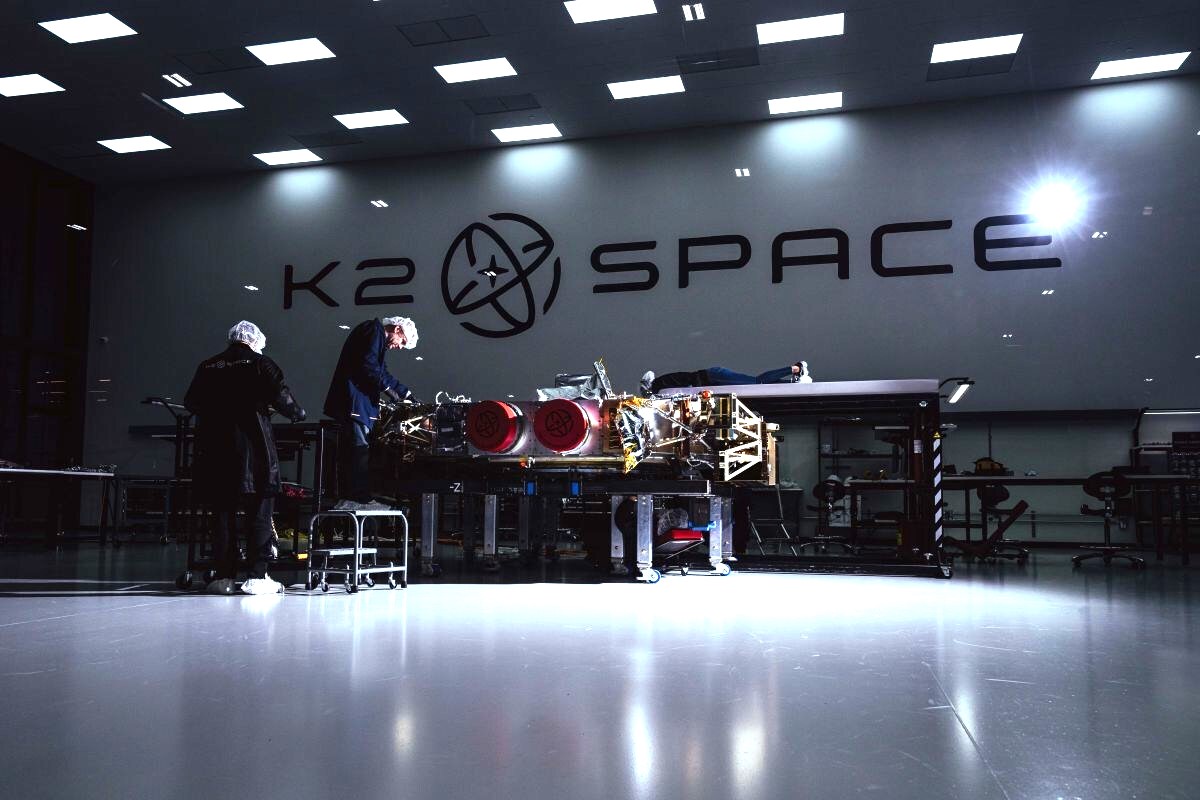
For the past two decades, the aerospace industry has been deeply under the spell of miniaturization. The overarching gospel of modern space exploration dictated that smaller was unequivocally better, leading to a massive rush toward “CubeSats” and shoe-box-sized micro-satellites that could be launched in cheap batches of dozens at a time. While this revolution successfully democratized access to low Earth orbit, it ultimately bumped up against the hard, unyielding laws of physics. Small satellites, for all their ingenuity, are structurally constrained by their lack of surface area, which severely limits their power generation, thermal dissipation, and cellular aperture size. Recognizing this fundamental bottleneck, brothers Karan and Neel Kunjur made a daring, highly contrarian bet when they founded K2 Space in 2022: they decided that the future of humanity’s expansion into orbit lay not in making things smaller, but in building them spectacularly large. On July 30, 2026, that bold gamble reached a monumental milestone as the California-based company announced a breathtaking $500 million Series D funding round, propelling its valuation to a staggering $6.8 billion. This massive influx of capital represents a seismic shift in investor sentiment, proving that the industry is ready to abandon its obsession with the microscopic and embrace an era of heavy, high-powered orbital infrastructure.
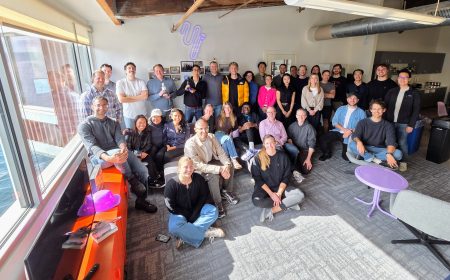
At the heart of K2 Space’s meteoric rise is a deeply human story of fraternal collaboration, relentless ambition, and intellectual courage. When Karan and Neel Kunjur set out to build K2 Space just four years ago, they were stepping into an arena dominated by slow-moving defense giants and speculative, venture-backed startups that often prioritized software over heavy hardware. The brothers recognized that a revolution in launch vehicles—spearheaded by companies like SpaceX and its heavy-lift workhorses—meant that the cost per kilogram of sending mass to orbit was plummeting. The old, expensive constraints that forced engineers to spend years and millions of dollars miniaturizing components were rapidly evaporating. Instead of struggling to pack delicate instruments into tiny frames, the Kunjurs envisioned a world where satellites were built like robust, heavy trucks: standard, sturdy, high-mass platforms capable of supporting enormous payloads. This paradigm-shifting insight has struck a massive chord with both investors and customers; in just four short years, K2 Space has successfully raised more than $1 billion in capital and locked in an equivalent amount in high-value contracts. To fuel this rapid growth and tap into one of the world’s premier aerospace talent pools, the company recently established a brand-new engineering hub in the Seattle area, positioning itself at the epicentre of a region famous for pioneering both the intellectual cloud and physical flight.
The physical proof of the brothers’ grand vision came alive in March 2026, when K2 Space successfully launched its first “mega-class” satellite, aptly named Gravitas, into orbit atop a SpaceX Falcon 9 rocket. Weighing a colossal two tons and generating an unprecedented 20 kilowatts of power, Gravitas is an engineering marvel that behaves less like a traditional fragile satellite and more like a high-functioning orbital factory. In the space industry, power is the ultimate currency; 20 kilowatts of electricity allows a satellite to host extremely demanding radar, run complex onboard artificial intelligence, and transmit massive quantities of data over vast distances without breaking a sweat. Gravitas acted as a versatile, heavy-duty bus during its debut, carrying a dozen distinct and highly secretive payload modules for multiple customers, including the United States Department of Defense. This launch was a defining, emotional moment for the K2 Space team, proving that their contrarian theories on structural scalability, high-voltage electrical distribution, and thermal management could not only survive the violent physics of a rocket launch but operate flawlessly in the unforgiving, extreme vacuum of space.
By eliminating the arduous technical and financial bottlenecks of custom satellite design, K2 Space has attracted an enviable roster of tier-one partners across the commercial, civilian, and national defense domains. The company is actively collaborating with commercial satellite titan SES to build heavy, high-performing spacecraft for its futuristic “meoSphere” network, which promises to deliver ultra-high-speed, low-latency broadband to every corner of the planet. On the military front, K2 has forged a deep alliance with Anduril Industries to design and manufacture customized satellites for the Golden Dome missile defense system, a critical component of modern national security infrastructure. Furthermore, the United States Space Force has tapped K2 Space for its Protected Tactical Satcom-Global program, relying on the mega-class satellites’ massive power reserves to secure resilient, jam-resistant military communications in highly contested tactical environments. These high-level partnerships clearly demonstrate that K2 Space is no longer just a high-concept aerospace startup; it has rapidly transformed into a cornerstone of national defense and global telecommunications infrastructure.
The sheer scale of K2 Space’s latest Series D funding round highlights a profound maturation of the venture-funded space economy, where serious, institutional capital is consolidating behind clear market leaders. The blockbuster $500 million round was co-led by the legendary venture firms Kleiner Perkins and ICONIQ, with widespread participation from powerhouse investors including CapitalG, Lightspeed Venture Partners, Altimeter Capital, Spark Capital, Sands Capital, ARK Invest, and T. Rowe Price Associates. In an economic environment where investors have grown increasingly skeptical of highly speculative “slide-deck” space companies, this massive financial endorsement shows a deep trust in K2’s physical, battle-tested hardware and substantial order backlog. By securing such a massive war chest, K2 Space is insulated from market volatility and given the unique financial freedom to scale its supply chains, buy raw materials in bulk, and expand its state-of-the-art manufacturing facilities without having to constantly hunt for operational capital.
Looking toward the horizon, the Kunjur brothers have their sights set on an incredibly ambitious goal: transitioning from artisanal, low-rate spacecraft manufacturing to true high-volume industrial mass production, with plans to build up to 100 of these massive satellites every single year. It is a scaling roadmap that would have been deemed impossible just a decade ago, but one that is absolutely vital for a future where humanity relies more heavily on orbital assets than ever before. As the company continues to recruit elite talent for its new Seattle engineering hub and expand its footprint, the narrative of K2 Space serves as an inspiring testament to the power of original thinking and intellectual defiance. By refusing to follow the crowd down the path of miniaturization and choosing instead to build bigger, bolder, and stronger, Karan and Neel Kunjur have not only built a $6.8 billion empire—they have cleared the way for a brand-new era of human capability in the stars.