





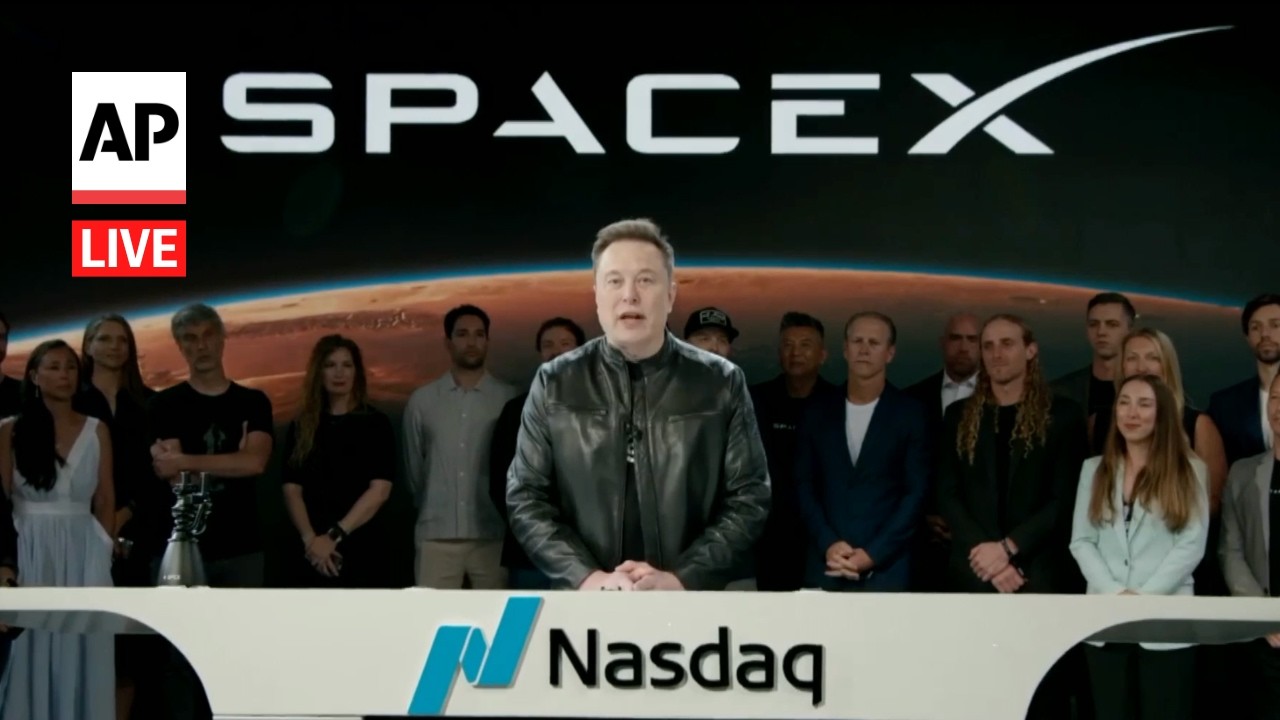
The memory of Tesla’s astronomical rise still burns brightly in the minds of millions of everyday investors who watched a volatile electric vehicle start-up scale into a trillion-dollar cultural and financial juggernaut. It is this exact sensory memory—a potent mixture of intense regret over missed opportunities and speculative hope for the future—that filled the air as Elon Musk rang the opening bell for the historic SpaceX (SPCX) initial public offering. For nearly a decade, the investing public has hungered for a piece of this aerospace giant, viewing it as the ultimate vehicle for generation-defining wealth, the logical sequel to the early-stage Tesla phenomenon that minted countless self-made millionaires. However, stepping back to dispassionately survey the landscape reveals that we are no longer playing the same game, let alone in the same stadium. When Tesla made its public debut in 2010, it did so at a valuation of a mere $1.7 billion—a figure so comparatively microscopic that early investors essentially received the legendary “Musk premium,” with all its volatile, market-moving energy, completely free of charge. Today, SpaceX arrives on the public stage carrying a staggering valuation of $1.75 trillion, a figure that is roughly one thousand times larger than Tesla’s starting point. At this incredible altitude, the explosive potential for a thousand-fold return is not just mathematically improbable; it is virtually impossible. The premium, the hype, and the future performance of three separate revolutionary industries have already been aggressively priced into the offering, leaving public investors to bear the immense structural risks of a mature, gargantuan enterprise while chasing the rapidly diminishing returns of a valuation that has already peaked before the opening bell even finished ringing.
To understand why so many people are eager to dive headfirst into this IPO despite the overwhelming financial gravity, we must examine the deep behavioral conditioning that has shaped an entire generation of modern market participants. Over the past decade, Tesla’s highly volatile and intensely criticized journey taught retail traders a simple, seemingly infallible rule: when a Musk-led stock suffers a brutal drawdown of thirty, forty, or even sixty percent, you do not panic; you buy. This heuristic worked spectacularly well in the past, rewarding the faithful with life-changing returns and turning paper losses into badges of honor. Yet, applying this small-cap, battle-tested discipline to a $1.75 trillion mega-cap is a classic cognitive error, a behavioral trap known as the lottery effect. As human beings, we are hardwired to chase the infinitesimally small probability of an astronomical payoff, willingly ignoring the massive, historically validated probability of mediocre or entirely negative returns. The sobering truth, compiled by finance researchers like the University of Florida’s Jay Ritter over four decades of public listings, is that unprofitable companies going public consistently underperform the broader market by an average of thirty percent over the subsequent three years. Given that SpaceX recorded a staggering net loss of $4.94 billion on $18.67 billion in revenue last year, the historical data is not waving a cautious yellow flag; it is flashing a bright red warning. Believing that the personal charisma of a singular founder can rewrite the laws of corporate finance at this scale is the ultimate expensive mistake, ignoring the reality that Tesla made its early backers rich because of its modest starting valuation, not simply because of the man at the helm.
Beyond administrative optimism, the mechanical architecture of the SpaceX IPO itself raises serious questions about whether the initial stock price represents true market consensus or a masterclass in financial choreography. By floating an incredibly tiny slice of the company—just four percent, representing roughly $75 billion of stock—against an ocean of insatiable global demand, the underwriters have engineered an artificial scarcity that virtually guarantees a volatile upward pop. This market theater is further highlighted by a highly unusual, tiered lockup structure rather than the traditional 180-day cliff, allowing insiders to begin selling off tranches immediately following the very first public earnings report while exempting Musk himself from several key restrictions. Furthermore, the retail allocation, which was originally targeted to be around thirty percent, was quietly cut down to the low twenties as institutional giants clamored for a piece of the book. When you combine this microscopic float with the mechanical, forced buying from massive passive index funds triggered by SpaceX’s rapid ten-day inclusion in the MSCI index, you see a system designed to manufacture demand rather than discover fair value. We have witnessed this exact playbook unfold before with devastating results for late-stage retail buyers. Saudi Aramco listed in 2019 on a minuscule 1.5 percent float at a $1.7 trillion valuation, experienced a brief, highly publicized surge, and today, more than six years later, trades well below its initial public offering price. Similarly, Snowflake’s explosive 2020 debut left opening-day buyers waiting half a decade just to break even, proving that the earliest weeks of highly engineered listings tell us absolutely nothing about what a business is actually worth, serving instead as a playground for scarcity dynamics and passive flow manipulation.
Looking closely at the fundamental economics of the business, the current valuation demands that investors underwrite a corporate output that is completely unprecedented in global economic history. At $135 per share, the stock trades at an eye-watering ninety-four times trailing revenue, a multiple that forces any traditional discounted cash flow model to assume SpaceX will eventually generate more than a trillion dollars in revenue and hundreds of billions in pure profit. To put that into perspective, Amazon, which occupies a massive physical and digital footprint globally, generates some $740 billion in revenue, while Alphabet, the undisputed king of digital advertising, nets about $130 billion in annual profits; SpaceX is priced to comfortably eclipse them both. Wall Street’s most optimistic bulls point to hyper-growth paths where Starlink evolves into a high-margin software-as-a-service monopoly, Starship achieves a routine weekly commercial flight cadence, and xAI—recently folded into the corporate structure—successfully dominates the orbital cloud computing market. Each of these assumptions represents a massive, highly risky technological leap that would be difficult to pull off individually, yet at the IPO price, you are paying a premium as if all three have already been flawlessly executed simultaneously. Many technology analysts remain deeply skeptical of xAI’s ability to compete with established giants like OpenAI and Google, especially when relying on untested space-based computing infrastructure. When objective independent analysts at firms like Morningstar peg the actual fair value of the business at closer to $780 billion—roughly $63 a share—it becomes clear that buying in today requires an act of faith that completely divorces itself from corporate reality.
This leap of faith is made even more precarious when you analyze the corporate governance framework of the newly public entity, a detail that many eager buyers have brushed aside in their excitement. SpaceX has structured its public listing so that Elon Musk retains an absolute eighty-five percent of the total voting power through super-voting Class B shares, meaning that public investors are essentially buying an economic interest with absolutely zero say in how the company is run. This is not like other tech giants where founder control is balanced by at least some degree of shareholder recourse; at SpaceX, there is no activist path, no potential for a proxy fight, and no realistic way to influence the board of directors. If you wake up one morning and disagree with how corporate capital is being redirected from satellite telecommunications to fund speculative artificial intelligence structures or orbital computing projects, your only voice is to sell your shares and walk away. Tying up large sums of capital in the seventh-largest enterprise on earth without any governance guardrails is a massive risk, particularly when the person holding absolute power is a famously mercurial leader who is simultaneously managing several other massive, high-profile multi-billion-dollar global enterprises. The governance discount that should logically be applied to such a highly concentrated power structure is ignored here, leaving public shareholders vulnerable to the sudden whim of a single individual who routinely balances his attention between SpaceX, Tesla, X, Neuralink, and xAI.
Ultimately, navigating the SpaceX IPO does not have to be a stressful binary choice between succumbing to debilitating FOMO or completely locking yourself out of the future of aerospace progress. Because of the massive scale of this listing, the moment SpaceX enters the primary global indices, anyone holding a standard S&P 500 fund or a total-market ETF will automatically gain diversified exposure to the company without having to take on concentrated, high-risk positions. The real strategic question is not whether you want to own a piece of the cosmos, but whether you should actively allocate your hard-earned capital to buy this highly engineered stock at a historic high. The most rational course of action for a long-term investor is to step back, let the initial theatrical dust settle, and wait for the cold, hard numbers of the first few earnings reports to emerge. Let the insider lockups expire, observe how the market digests the influx of secondary shares, and wait for actual operational data on Starship’s flight cadence rather than relying on promotional projections and hand-waving presentations. A stock’s short-term upward trajectory does not validate a flawed starting price, and at $1.75 trillion, you are no longer investing in a business poised to deliver exponential growth to its early believers; instead, you are merely subsidizing a grand dream at the absolute peak of its valuation.