





Humanity has always gazed at the night sky with an innate, poetic sense of curiosity, dreaming of what might lie beyond the fragile blue envelope of our home planet. For decades, the monumental task of exploring that vast cosmic ocean was spearheaded exclusively by massive government organizations with deep pockets and geopolitical motivations, driven by a high-stakes race to conquer the unknown during the height of the Cold War. However, as we venture deeper into the twenty-first century, a profound and heartening paradigm shift is unfolding—one where the dream of reaching the stars is no longer the sole domain of state superpowers, but rather a vibrant, cooperative tapestry woven by public visionaries and private pioneers alike. NASA’s recent selection of proposals from thirty-seven diverse commercial companies under its Announcement of Collaboration Opportunity (ACO) stands as a shining testament to this majestic evolution in human spaceflight. By fostering these vital alliances, the American space agency is not merely hiring contractors to build hardware; it is actively co-authoring the next great saga of human exploration alongside a passionate legion of inventors, dreamers, and builders. This collaborative framework is specifically designed to lay the foundational groundwork for a permanent, sustainable human presence on the lunar surface while forging the technological stepping stones that will eventually carry humanity to Mars. Under the inspiring leadership of figures like Greg Stover, the director of the Advanced Research and Technology Division within NASA’s Research and Technology Mission Directorate, the agency is empowering domestic industry to become active partners in these cosmic voyages. By tapping directly into the rapid-fire innovation of the commercial sector, NASA can accelerate the development of critical space capabilities, transforming the daunting challenges of space transportation, planetary surface operations, and infrastructure into practical realities while simultaneously nurturing a robust, highly competitive space economy that keeps the spirit of discovery alive for generations to come.
At the heart of the Announcement of Collaboration Opportunity lies a remarkably unique and mutually beneficial economic model that redefines how public and private sectors interact. Unlike traditional government procurement processes that involve massive corporate handouts and taxpayers bearing the brunt of the financial risk, these specific ACO agreements do not involve any direct exchange of funds. Instead of cash, NASA is offering a currency that is far more valuable to a growing aerospace company: open-door access to the agency’s crown jewels. Selected companies are granted the unprecedented opportunity to work alongside NASA’s world-class subject-matter experts, utilizing their state-of-the-art testing facilities, sophisticated proprietary software, and specialized hardware that would otherwise be entirely cost-prohibitive for private enterprises to build or acquire. This brilliant exchange of intellectual capital acts as a force multiplier, allowing agile startups and seasoned aerospace giants alike to mature their cutting-edge technologies at a fraction of the usual cost and time. Over individual negotiation periods spanning twelve to twenty-four months, these companies will rigorously test and refine their systems, transforming raw concepts into space-hardened realities suitable for both commercial viability and government deployment. By lowering the barriers to entry and sharing the immense wealth of NASA’s historic knowledge base, the initiative ensures that the risk of development is shared, the pace of innovation is vastly accelerated, and the resulting technologies are built on a bedrock of proven scientific excellence. In doing so, NASA is establishing a blueprint for future public-private partnerships that will define the modern space age, fostering a sustainable loop of innovation where breakthroughs in orbit directly feed back into economic prosperity on Earth.
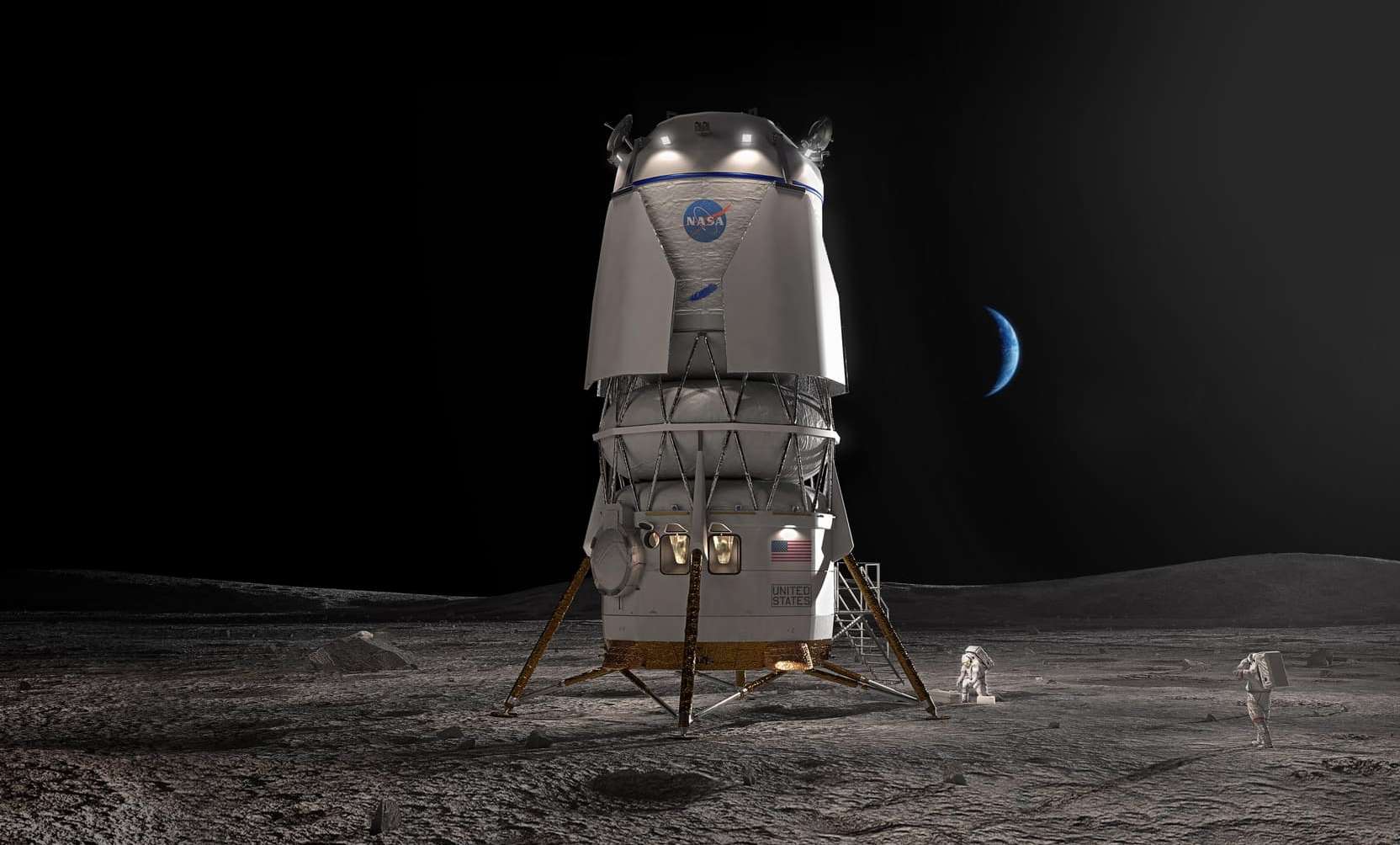
Nowhere is this vibrant spirit of cosmic innovation more tangible than in the Pacific Northwest, a region historically heralded as a titan of aviation and now rapidly reinventing itself as a premier global hub for the space economy. Among the thirty-seven companies handpicked by NASA, five standout innovators are proudly based in the Seattle area, illustrating the rich concentration of talent and ambition residing in the rainy corners of Washington state. In Kent, the legendary aerospace venture Blue Origin—founded by tech visionary Jeff Bezos—continues to spearhead humanity’s return to the moon. Under this new partnership, Blue Origin is refining its highly anticipated Blue Moon Mark 2 lander, a towering vessel designed to transport astronauts and crucial cargo safely to the rugged lunar south pole. Yet, the company’s vision extends far beyond transportation; they are also developing revolutionary techniques to extract vital oxygen and silicon from the lunar regolith itself, theoretically allowing future astronauts to manufacture solar cells and life-support systems directly on the moon’s surface. Just down the road in Redmond, the seasoned propulsion experts at Aerojet Rocketdyne, now operating under the L3Harris umbrella, are channeling their decades of engineering experience into crafting the precise chemical thrusters needed to guide modern spacecraft through the delicate maneuvers of deep-space navigation. The unique geographic ecosystem of the Puget Sound, with its convergence of software engineering prowess from the tech sector and mechanical precision from legacy aviation, has created a fertile breeding ground where the next generation of space pioneers can thrive, setting the stage for even more disruptive ideas to take flight.
While industry giants lay the heavy infrastructure, a trio of scrappy, ultra-innovative startups in the Seattle area are proving that disruptive ideas can fundamentally reshape our approach to the heavens. Stoke Space, an ambitious outfit based in Kent and founded by passionate veterans of Blue Origin, is tackling the holy grail of rocketry: building a completely reusable, medium-lift rocket designed to fly, land, and fly again with the rapid turnaround times of a commercial airliner. By eliminating the staggering waste of expendable rockets, Stoke Space aims to dramatically slash the cost of launching payloads, bringing us closer to a future where space is accessible to everyday innovators. Meanwhile, in Redmond, a forward-looking startup named Starcloud is boldly reimagining where our digital world lives by designing massive constellations of orbital, in-space data centers. As our reliance on satellite data, planetary imaging, and deep-space communications skyrockets, Starcloud’s vision to process data directly in the vacuum of space could relieve terrestrial networks and provide unprecedented computing power right where the action is. Supporting this digital frontier requires reliable power, which is where Zeno Power Systems comes in. Operating from offices in Seattle and Washington, D.C., Zeno is developing a revolutionary type of lightweight, highly efficient nuclear battery powered by radioisotopes. These resilient power units are designed to withstand the brutal, fortnight-long lunar nights where surface temperatures plummet to unimaginable depths, ensuring that critical scientific instruments and habitats remain warm and functional. These engineers spend countless sleepless nights staring at computer models and physical prototypes, knowing that the code they write and the welds they inspect today will eventually protect human lives in the hostile, airless voids of outer space.
The technological tapestry woven by the ACO list extends far beyond the borders of Washington state, reflecting a diverse, nationwide coalition of thirty-two other trailblazing enterprises that are each contributing unique pieces to the grand cosmic puzzle. From legacy defense juggernauts like Lockheed Martin to highly specialized, niche innovators like Varda Space Industries—which is perfecting the art of manufacturing pharmaceutical drugs and advanced materials in the gravity-free environment of low Earth orbit—this roster captures the full spectrum of American ingenuity. Scrappy outfits like Astrobotic Technology and Lunar Outpost are hard at work designing the next generation of agile lunar rovers and robotic landers, while companies like Axiom Space are busy constructing the commercial modules that will eventually replace the aging International Space Station. Meanwhile, specialized firms such as Venturi Astrolab are building robust, versatile utility vehicles capable of traversing the harsh, dust-choked terrain of the moon, and Max Space is pushing the boundaries of expandable habitat technology to give astronauts room to breathe. Each of these thirty-seven companies represents a crucial node in a sprawling, decentralized cosmic construction crew, working on everything from automated manufacturing in microgravity to the complex science of planetary dust mitigation and thermal management. By drawing on such a broad demographic and geographic spectrum of talent, NASA is ensuring that the economic and scientific fruits of the space program are distributed across the entire nation, fostering localized high-tech job growth and inspiring students in every corner of the country to pursue careers in science, technology, engineering, and mathematics.
As these newly minted partnerships embark on their intensive twelve-to-twenty-four-month developmental journeys, the near-term progress we witness will lay the very bricks of our multi-planetary future. This is not just a story about technical specifications, fuel formulations, or corporate strategy; it is a profoundly human story about our shared commitment to expansion, discovery, and resilience. The technologies developed in these coming months will pave the way for real people—astronauts, scientists, and eventually everyday citizens—to live, work, and thrive on foreign celestial bodies for months or years at a time. When the Blue Moon lander finally touches down on the ancient, gray dust of the lunar south pole, or when a Zeno nuclear battery quietly keeps a scientific base alive through a freezing lunar dark, it will represent the culmination of thousands of hours of human collaboration, passion, and stubborn refusal to accept the limits of our physical reality. We are living through the dawn of a golden era of space exploration, one where the cold, metallic machines we send into the void are carrying the warm, enduring hopes of all humanity. By bridging the present-day pragmatism of commercial enterprise with the eternal, romantic dream of exploring the stars, NASA and its thirty-seven corporate partners are ensuring that when we look up at the moon in the years to come, we will no longer see a distant, hostile desert, but a bright, welcoming beacon of what humanity can achieve when we dare to build together. This endeavor serves as a powerful reminder that our greatest triumphs are achieved not in isolation, but through cooperation, uniting our finest minds to secure a permanent, prosperous place for our species among the stars.