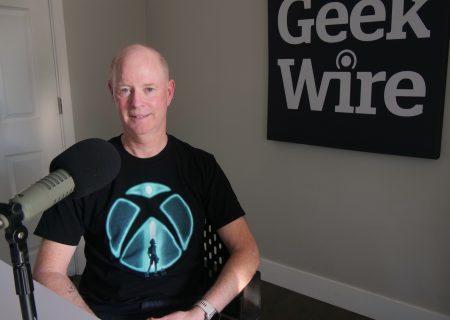





Jeff Henshaw, a seasoned tech veteran whose name evokes the early days of personal computing, has taken a bold leap into the quantum frontier. After dedicating over three decades at Microsoft—from crafting Internet Explorer to pioneering gaming with Xbox and eventually overseeing the creation of the Quantum Development Kit—Henshaw isn’t just clocking out; he’s pivoting to IonQ as senior vice president of quantum compute products. In a heartfelt LinkedIn post, he reflects on advising “dozens of quantum companies,” from scrappy startups to giants, and credits IonQ’s rapid growth and pragmatic approach as his magnetic pull. It’s a fascinating turn for someone who, amid his tech mogul lifestyle, even co-owns the Seattle Seawolves rugby team, blending high-tech innovation with the raw energy of athletic pursuits. Maryland-based IonQ, at the forefront of quantum computing, offers scalable systems that promise to solve real-world problems, far beyond theoretical hype. Henshaw’s journey, including a brief detour in the mid-2000s as CTO of music tech venture DeepRockDrive, underscores a life of calculated risks and unyielding curiosity. At IonQ, he’s poised to drive quantum advancements that could reshape computing, AI, and beyond. One imagines him nestled in a collaboration space, surrounded by qubits and quantum simulators, drawing parallels between a well-executed rugby play and a flawless quantum algorithm. This move signals not just a career shift but a personal renaissance, where a man who helped build empires now bets on the next wave. Colleagues and admirers flock to his posts, celebrating a trailblazer who’s as adept at navigating corporate ladders as he is at cheering on a rugby scrum. As quantum tech edges closer to mainstream, Henshaw’s expertise could be the key to unlocking unprecedented breakthroughs, bridging the gap between visionary ideas and tangible outcomes.
Joe Beda, a name synonymous with container orchestration revolutions, has emerged from a well-deserved hiatus to lead Stacklok as CTO, injecting fresh energy into a Seattle startup forging AI assistants, agents, and models. Teaming up once more with co-founder Craig McLuckie, the duo’s history is legendary—they built Heptio, which VMware snapped up for a hefty $550 million in 2018. Post-acquisition, Beda spent over three years as a principal engineer at VMware before stepping back in 2022 to recover from burnout, embracing a slower pace of life. But the allure of Stacklok was irresistible, pulling him back into the fray with promises of connecting AI safely to our world. In his LinkedIn musings, Beda admits it took “a lot” to exit semi-retirement, yet the opportunity felt too pivotal to ignore. Their shared past at Google, where they co-created Kubernetes—that indispensable open-source tool simplifying software deployment for developers worldwide—speaks to a brotherhood forged in code and coffee-fueled late nights. Now, at Stacklok, Beda is poised to architect AI integrations that prioritize safety amid the AI explosion, ensuring technologies enhance human life without veering into dystopian territory. Picture him navigating Seattle’s tech scene, perhaps strolling Pike Place Market, reflecting on how Kubernetes democratized cloud computing. This reunion isn’t just professional; it’s personal, a testament to enduring partnerships that drive innovation. As burnouts heal and visions renew, Beda’s return symbolizes hope for the AI community, where seasoned engineers like him guide the field with wisdom and caution.
Harshit Shah, a multilingual maestro of engineering and product management, has settled into his role as CTO at LVT (LiveView Technologies), a Utah-based innovator in physical security. With a resume spanning over a decade at Microsoft—where he managed products like Bing Search SaaS and Microsoft Edge—as well as leadership stints at Amazon Web Services and health-tech firms Kyruus and Spring Health, Shah brings a treasure trove of expertise in GenAI and machine learning. LVT’s LinkedIn announcement highlights his immediate dive into building “the future of edge intelligence,” leveraging his skills to enhance real-time security solutions. It’s a natural fit for someone whose career arcs from the vast silos of big tech to specialized startups, always pushing the envelope on intelligent systems. Imagine Shah, perhaps with a chai latte in hand, brainstorming ways to blend AI’s predictive powers with on-site security, transforming passive surveillance into proactive guardians. His journey from Microsoft’s corridors to AWS’s global infrastructure, and now to edge computing at LVT, mirrors the evolving tech landscape where intelligence moves closer to the action. Colleagues rave about his humble yet insightful approach, often sharing anecdotes of his collaborative problem-solving sessions that turn complex challenges into elegant solutions. In a world hungry for smarter security, Shah’s role could redefine how we protect spaces, blending human intuition with machine precision.
Kevin Malgesini steps into the spotlight as the new CEO and president of Pacific Science Center, a Seattle nonprofit dedicated to sparking curiosity and fostering scientific passion. Taking over from Will Daugherty, who guided the center through over a decade of transformative challenges—including financial strains from COVID-reduced admissions and the need for long-overdue facility upgrades—Malgesini brings a wealth of fundraising acumen from his eight-plus years at Seattle Children’s Theatre, where he’s served as managing director. His prior roles, from development director at Town Hall Seattle to leading campaigns for arts and education, position him uniquely to navigate PacSci’s roadmap, which has sharpened its focus on hands-on innovation amid deals to monetize real estate from the 1962 World’s Fair era. In her praise, board chair Jembaa Mai hails Malgesini as the ideal steward for this mission, while expressing gratitude to Daugherty for laying such a sturdy foundation. Daugherty, a versatile executive with stints at Amazon, Expedia, and AT&T, once featured as a “GeekWire Working Geek,” leaves behind a legacy of bridging tech prowess with educational outreach. As the June 1 transition unfolds, Malgesini might be envisioning interactive exhibits that mesmerize families, echoing his own theater background where storytelling drives connection. This shift isn’t merely administrative; it’s a beacon for nonprofits reckoning with post-pandemic realities, proving that passion and strategy can revive institutions. Community members buzz with anticipation, hopeful for renewed energy in science education that inspires the next generation of innovators.
Stefan Karisch, a pillar of Amazon’s Air Science & Tech organization, is stepping away from the company at the end of April after five years as executive director. In a touching LinkedIn farewell, he describes the role as a “privilege,” lauding his colleagues for making “all the difference” in tackling aerospace challenges. His Amazon tenure followed influential work at Boeing, where he served as chief engineer in digital solutions and analysis for the aerospace giant’s global services in the Seattle area. While he hasn’t disclosed his next chapter, Karisch’s reflections paint a picture of camaraderie in high-stakes tech environments, where collaborative problem-solving turns ambitious goals into reality. One can almost hear the echoes of hangar conversations in Seattle’s rainy skies, blending tech innovation with aviation’s historic allure. Meanwhile, John Doyle, Microsoft’s global CTO for Healthcare & Life Sciences, has broadened his impact by joining Helio Genomics’ board, supporting the California-based company’s groundbreaking blood-based tool for early cancer detection. Together, these moves highlight the fluidity of tech leadership, where leaving one empire opens doors to new horizons. Doyle’s expertise in Microsoft’s health tech sphere likely equips him to guide Helio in deploying AI for lifesaving diagnostics, potentially saving countless lives through proactive healthcare. As Karisch embarks on uncharted territory, his legacy endures in the tools and strategies he helped forge.
Kevin Varadian, now chief revenue officer at avante, a Seattle startup redefining HR administration with AI-driven tools, brings a New York City hustle to simplify benefits guidance for employees and companies alike. In his LinkedIn declaration, Varadian emphasizes the messy reality of benefits data and how emerging tech finally enables true two-way communication, empowering workers with AI assistants that demystify complex realms like healthcare and retirement plans. His background is a masterclass in adaptive leadership: from CRO at HiredScore until its 2024 acquisition by Workday, where he transitioned to head of go-to-market for Workday’s HiredScore AI, to previous roles at LinkedIn, WeWork, and CoachHub. This trajectory showcases a knack for scaling platforms that humanize corporate processes, turning bureaucratic headaches into intuitive experiences. Imagine Varadian, perhaps from a bustling NYC coffee shop, strategizing ways to weave AI into daily workflows, drawing from his diverse network of tech innovators. At avante, he’s set to amplify revenue by championing solutions that not only reduce workloads but foster employee satisfaction and loyalty. Colleagues and peers commend his visionary approach, often sharing stories of his insightful customer engagements that bridge gaps between tech capabilities and human needs. In an era where work-life balance hinges on efficient systems, Varadian’s move could revolutionize HR, proving that smart tech enhances fairness and access. As he settles into this role, the tech community watches with keen interest, anticipating ripples in how businesses nurture their talent.