






Paragraph 1: The Stark Night and a Shocking Announcement
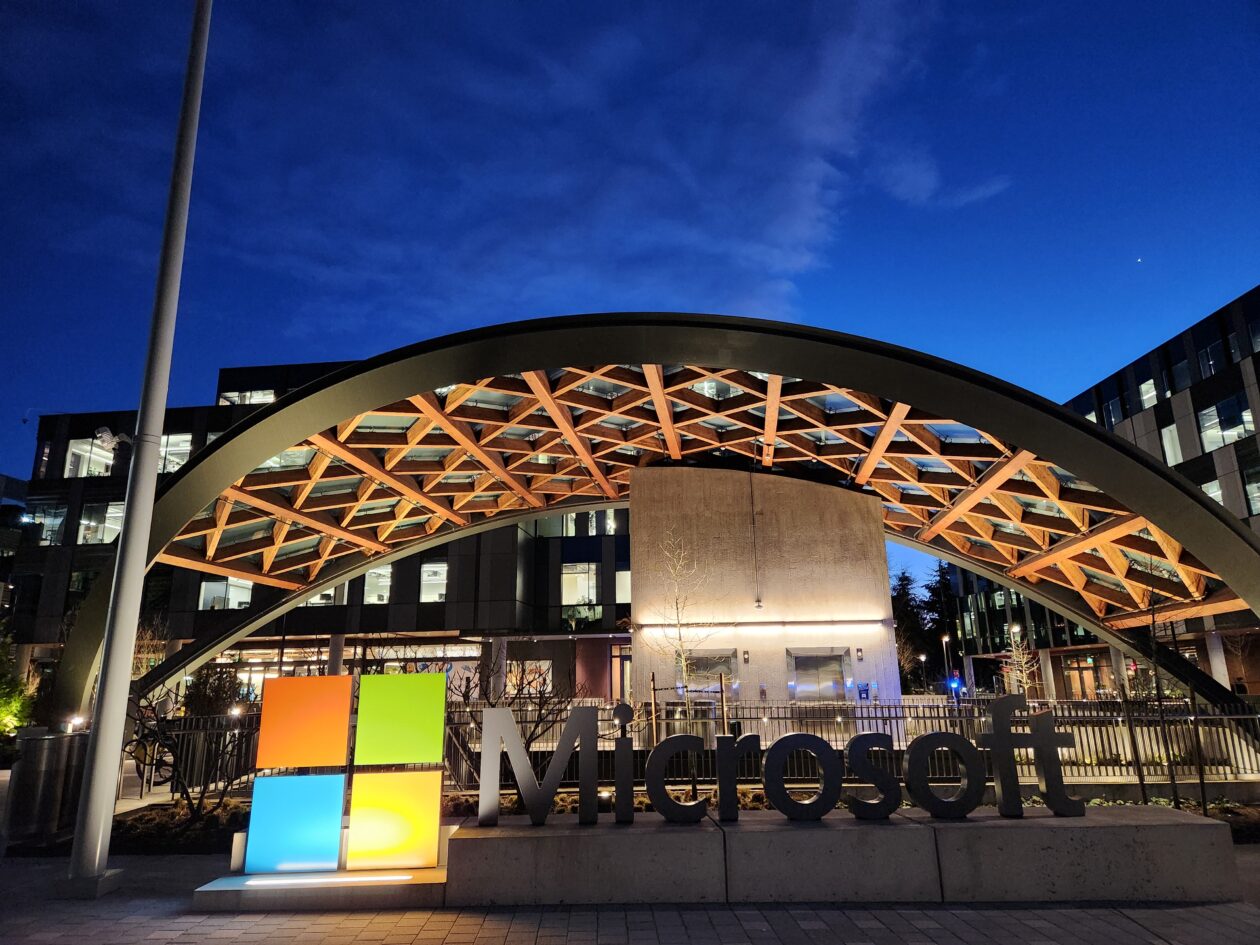
Imagine, if you will, a cool Wednesday evening in April 2026, as the sun dips below the horizon over Redmond, Washington, casting a surreal purple glow on the sprawling Microsoft campus where sleek glass buildings stand like silent sentinels of innovation. Beyond the high-tech facades, Todd Bishop of GeekWire captures the essence of the company’s latest move in a file photo that evokes both the vastness of the tech world and its intimate human impacts. It’s against this backdrop that Microsoft drops a bombshell in its earnings report: a staggering $900 million charge for a voluntary retirement program. It’s not just a number—it’s a wake-up call to the thousands who have poured their lives into building software empires. Picture a veteran engineer, sitting in their corner office after a long day debugging code, opening the report only to learn that their years of loyalty are now quantified in financial terms equal to roughly one day’s worth of Microsoft’s quarterly revenue. That quarter, ending March 31, the company raked in an impressive $82.9 billion, a testament to the relentless pace of tech giants. But this charge? It’s a stark reminder that behind every innovation, there are real people—fathers, mothers, dreamers—who may soon face a crossroads.
In the quiet of their homes that night, employees across the U.S. might have paused their evening routines, perhaps a game of catch with kids or a late-night scroll through reports, pondering what this means. The $900 million isn’t chump change; it’s a slice of the company’s profits diverted to ease transitions, signaling that even behemoths like Microsoft are reevaluating the human equation in their grand quests for agility. For context, this expense breaks down to fuel a program that offers a choice to eligible staff: retire with dignity or soldier on in a rapidly evolving landscape. It’s a humane gesture, they say, but one that stirs emotions—excitement for some nearing their golden years, dread for others who feel their contributions undervalued. As the news reverberates through email chains and watercooler talks (virtual or otherwise), it humanizes the quarterly earnings beyond charts and graphs, weaving in the stories of individuals like Sarah, a senior developer in her late 40s who’s spent decades crafting algorithms that power global tools, now grappling with whether “retirement” feels like a reward or a subtle nudge.
Paragraph 2: A Workforce in Flux Amid Broader Changes
Delving deeper, this retirement initiative is just one thread in Microsoft’s larger tapestry of workforce reshaping, a narrative of adaptation in a digital age where AI and cloud services demand swift, nimble teams. As of mid-2025, Microsoft boasted a global headcount of 228,000 employees, a diverse army spanning engineers, marketers, and executives united by a shared mission to innovate. But the company, known for its ability to pivot—from Windows dominance to cloud leaders through Azure—is now signaling a deliberate contraction. Without spilling exact figures, the earnings call revealed that headcount dipped year-over-year in the recent quarter, with more declines slated for fiscal 2027 starting in July. CFO Amy Hood’s words ring clear on the conference call: “We’re building high-performing teams that operate with pace and agility.” It’s a mantra that might resonate with the ambitious young hires dreaming of disrupting industries, but for the seasoned vets, it evokes a pang of uncertainty—am I part of this agile future, or an artifact of the past?
Humanizing this, consider Raj, a mid-level manager with 25 years under his belt, who joined Microsoft right out of grad school, fueled by the thrill of coding the impossible. He’s watched the company evolve from floppy disks to quantum computing, mentoring countless juniors along the way. Now, as headcount shifts, he wonders if his expertise in legacy systems still holds value in a world obsessed with AI-driven efficiency. The voluntary program emerges as a lifeline, a way to bow out gracefully without the trauma of layoffs that have scarred other tech firms. Yet, it’s not without personal cost—leaving behind the camaraderie of team lunches, the rush of solving intractable problems, and yes, the stability that once defined a career at Microsoft. This reshaping isn’t cold corporate calculus; it’s a reflection of the human need to evolve, balancing loyalty to employees with the imperatives of innovation in a cutthroat industry where standing still means falling behind.
Paragraph 3: The Mechanics of a Life-Altering Choice
At the heart of this bold move is a voluntary retirement program unveiled just last week, tailored for U.S. employees at the senior director level and below, targeting those whose combined age and years of service equal 70 or more. Picture the flurry of emails and psychologically prepared communications landing in inboxes on May 7, 2026—formal letters outlining a transformative option for eligible staff. They’re given a generous 30 days to decide: walk away with a financial cushion and continued healthcare, or stay and prove they belong in this new agile paradigm. It’s a decision point that could redefine family vacations, retirement savings, and even identities for those who identify deeply with their roles at Microsoft. For instance, envision Linda, a project manager in her early 50s who’s devoted her career to launching products that connect people worldwide, now calculating not just dollars but dreams—perhaps finally traveling to places postponed for product launches or pursuing a passion project free from corporate deadlines.
The program underscores Microsoft’s commitment to employee well-being, framing it as empowering rather than punitive. Eligible participants aren’t coerced; they’re invited to reflect on their life’s journey, weighing the lure of freedom against the pull of ongoing contributions. This human touch—respecting individual narratives—contrasts with the impersonal logistics of other workforce reductions. Yet, beneath the benevolence lies practicality: Microsoft anticipates voluntary exits to streamline operations, creating space for fresh talent aligned with AI-centric goals. For many, receiving this eligibility notice isn’t merely administrative; it’s an emotional reckoning. John, a software engineer in his mid-40s, might laugh bitterly at qualifying for “retirement” so early, viewing it as a euphemism for obsolescence in a youth-obsessed field. Others, like Maria, a graphic designer nearing 60, see it as a long-deserved reprieve, a chance to reclaim time stolen by all-nighters and weekend emergencies.
Paragraph 4: Scales and Shadows of a Costly Initiative
Peering into the numbers, Microsoft estimates around 7% of its roughly 125,000 U.S. employees qualify, translating to about 8,750 potential participants in what could be a watershed event for the company’s demographic makeup. The $900 million charge encapsulates the program’s expected toll, ingeniously split: $350 million earmarked as cost of revenue and $550 million in operating expenses. This allocation accounts for visionary projections on acceptance rates, payouts, and healthcare extensions—details still shrouded in secrecy but teased to be comprehensive. It’s a gamble on human behavior, betting that enticing benefits will prompt buy-ins, while fostering goodwill to avoid legal entanglements or morale crashes common in forced layoffs. But for those eligible, the ambiguity fuels anxiety; what if the payout isn’t enough to offset the void of losing a purpose-built role?
Humanizing this fiscal gamble, think of the ripple effects on families who depend on these salaries. David, a single parent in his late 50s, juggles child support and mortgage payments, his Microsoft income a lifeline in the high-cost Seattle area. The program’s “voluntary” nature offers choice, yet the underlying pressure to “do the right thing” for the company whispers in his ear, clashing with personal realities. On the flip side, Ellen, a retiree-to-be with substantial savings, views the extra benefits as a cherry on top, easing her into philanthropy or consulting ventures. This diversity in reactions highlights the program’s egalitarian appeal—it’s not one-size-fits-all, but a mosaic of perils and promises. Microsoft’s financial foresight aims to soften landings, but the shadows loom: decreased headcount might strain remaining teams, amplifying workloads and burn-out risks, all while the company invests elsewhere.
Paragraph 5: Voices Rising in a Digital Echo Chamber
As the news explodes on LinkedIn and other social platforms, it ignites a cacophony of voices, transforming what might seem like dry corporate news into a vibrant tapestry of human experiences. Some laud the program as a compassionate alternative to the brutal layoffs that have ravaged Silicon Valley, applauding Microsoft for honoring long-term contributors with choice over chaos. HR enthusiasts and employees alike celebrate it as progressive, a model for empathy in tech where lifetimes of dedication aren’t discarded like outdated code. “This is the way to do it,” one commenter raves, imagining the relief of escaping layoff lottery. It’s a sentiment that resonates deeply, portraying Microsoft not as a monolith, but as a community valuing humanity amid profit-driven shifts.
Yet, interspersed with praise are warnings of unintended consequences, painting a picture of vulnerability for the company and its people. Critics argue that Microsoft risks hemorrhaging irreplaceable talent—experienced engineers and leaders whose deep institutional knowledge forms the bedrock of its successes. “Retiring” in one’s late 40s feels hollow, some eligible employees confide online, sparking memes and threads that humanize rejection and alienation. A viral post from a Seattle-based alum laments losing colleagues who’ve “built the systems we lean on today,” echoing fears that agility might come at the expense of wisdom accrued over decades. These reactions underscore the program’s double-edged nature: a humane exit for some, a potential brain drain for all, weaving in the emotional fabric of betrayal and pragmatism.
Paragraph 6: A Record Gamble and Future Horizons
Meanwhile, Microsoft’s ambitions extend beyond retirements, with plans to pump over $40 billion into capital expenditures this quarter—a record high devoted chiefly to data centers and AI infrastructure. This juxtaposition highlights a paradox: shedding human capital to fortify technological foundations, all in pursuit of “pace and agility.” Hood’s conference call emphasis on high-performing teams paints a vision of streamlined efficiency, where fewer, sharper minds accelerate innovations that redefine industries. Yet, it begs the question: can any organization sustain innovation without the diverse perspectives provided by a broad workforce?
Humanizing this overarching strategy, reflect on the legacy it builds. For stakeholders, it’s exhilarating—a bet on AI dominance that could yield fortunes. For employees, it’s a mixed blessing, blending opportunities for growth with the weight of change. As the program unfolds, stories of transitions will emerge: retirees launching startups, successors inheriting mantles, and the company evolving into a leaner entity. In the end, this chapter in Microsoft’s saga isn’t just about dollars and headcounts; it’s about the human spirit adapting to tech’s relentless march, where every decision carries echoes of individual dreams and corporate destiny. As night falls again over Redmond, illuminated by untold futures, one thing is clear: in the world of giants, it’s the people who lend life to the legends.