






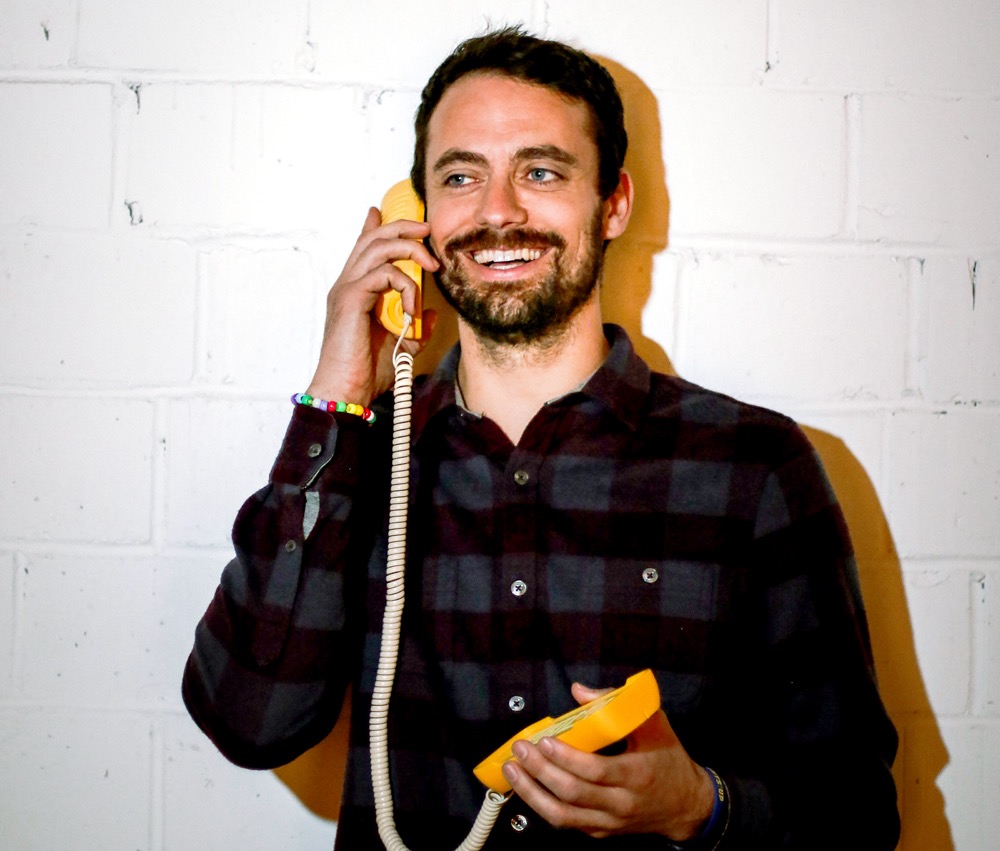
In the bustling world of late-night comedy, where punchlines fly as fast as political barbs, Jimmy Kimmel managed to sling a zinger that hit home—or should we say, hit the landline—for a Seattle startup called Tin Can. Last week, during his monologue, Kimmel riffed on President Trump’s social media escapades, suggesting he might benefit from “one of those Tin Can phones like the kids have that are not on the internet.” The gag wasn’t scripted, but for Tin Can, it felt like the ultimate seal of approval. Imagine the thrill for CEO Chet Kittleson, who, fresh from a glowing Wirecutter review in the New York Times, saw his company’s product leap from parental safeguard to pop culture meme. “Jimmy Kimmel organically dropping Tin Can in his monologue like it’s a product that everybody is obviously familiar with,” Kittleson posted on LinkedIn, his excitement palpable even through text. “What a week!” It was a moment that captured the zeitgeist, blending humor with a nod to a growing parental panic over screens and smartphones. For a company that’s all about unplugging, this viral shoutout was pure validation, proving that Tin Can had evolved from a niche gadget into something every family could chuckle about—or actually use. Parents across the country, tired of mediating their kids’ social lives via texts and apps, likely nodded along, thinking, “Hey, why not give the old rotary phone a modern twist?” It humanized the product, making it less about tech and more about reclaiming childhood simplicity. Kittleson, reflecting on it later, might have thought back to those chaotic school pickups where the idea sparked—now, here it was, echoing in a studio audience. The beauty of it all was how organically it fit into a comedy routine; no ad buy could have bought that kind of cred. Tin Can wasn’t just a phone; it was a cultural touchstone, reminding everyone that sometimes, the best tech is the one that steps back from the screen. As the week buzzed on, orders spiked, and social media feeds filled with memes about “Trump’s Tin Can,” the company basked in the glow, knowing they’d struck a chord in an era craving connection without the constant glow.
Diving into the origins, Tin Can wasn’t born in a high-tech lab but in the everyday chaos of suburban life. Back in 2024, Chet Kittleson, standing in a school pickup line, hit upon the idea while juggling calls to arrange playdates for his own daughter. Frustrated by the middleman role that smartphones and apps forced on parents, he envisioned a device that gave kids independence without the pitfalls of endless scrolling. Kittleson teamed up with Max Blumen and Graeme Davies, his pals from the Seattle startup Far Homes, where they’d honed their entrepreneurial chops in real estate. It was a natural pivot, blending their experience in building communities with a desire to foster real-world ones. Starting small, the trio prototyped a phone that harkened back to simpler times—a landline, but smarter. No screens, no distractions, just pure, old-school communication. They poured their passion into it, drawing from personal frustrations: evenings spent begging kids to put down devices, mornings wasted on tech glitches. Kittleson’s own story added a human layer; as a dad, he wanted tools that built trust, not walls. Raising a $3.5 million seed round from investors like PSL Ventures and Newfund Capital fueled their dreams, but it was the grit of iteration that defined them. By 2025, they launched the flagship product, and soon enough, revenues flowed as parents embraced it. Kittleson often recounts how a casual conversation at a PTA meeting turned into a business plan, reminding us that innovation often starts with relatable gripes. The team, now 30 strong, credits their success to authenticity— they’re not faceless corporates but parents themselves, echoing every family’s wish for tech that supports, not supplants, human interaction.Awards and accolades poured in, like GeekWire naming Kittleson a 2025 Uncommon Thinker, validating their unconventional approach. Today, as they gear up for their sixth production run with June shipments, Tin Can stands as a testament to how personal stories can spark movements, transforming pickup-line grievances into a nationwide conversation about mindful parenting.
At its heart, the Tin Can phone is a delightful throwback designed to empower kids while keeping parents in control. Priced at $100, this Wi-Fi-enabled device does away with screens, apps, and the internet altogether—perfect for parents wary of digital overexposure. Instead, it focuses on what phones were made for: calling. Kids can dial up to 25 pre-approved contacts through a parent-managed app on a smartphone or computer, ensuring safety without surveillance. Calling between Tin Can units is free, a nod to building local communities, and for $9.99 a month, kids can ring any traditional number, bridging the gap to grandparents or emergency contacts. Four fun colors—”Landline Lemon,” “Later Alligator Lilac,” and more—turn it into a personalized toy, encouraging ownership and pride. No bells and whistles, just a simple keypad, speaker, and mic that make dropped calls a thing of the past. Parents love the companion app for its ease; approve a friend’s number at breakfast, and the playdate’s set for the afternoon. It’s humane, too—Kittleson shares stories of kids who’ve learned responsibility, like his own daughter organizing her own birthday parties. Critics might say it’s outdated, but that’s the point: in a world of hyper-connectivity, Tin Can champions quality over quantity. Picture a child beaming as they chat with a pal without forgetting to look up during recess. Or consider the relief for a busy mom who no longer fields constant requests; instead, she’s free to focus on life while knowing her kid’s safe in a bubble of trusted voices. Anecdotes from users flood social platforms—tales of siblings sharing secrets, or isolated kids in apartments making neighborhood friends without screens. It humanizes technology, reminding us that communication should foster presence, not distraction. Even the design feels hands-on; vets and tactile buttons evoke nostalgia, engaging young fingers in real-world skills. In essence, Tin Can isn’t just a phone—it’s a guardian of childhood, blending retro charm with modern safeguards to let kids connect authentically, one call at a time.
Tin Can’s journey from idea to sensation mirrors the explosive growth of anti-screen sentiment in American families. Sold in hundreds of thousands of units since 2025, the company has expanded to a team of 30, shipping their sixth batch in June—a far cry from those early pickup-line sketches. Backed by a robust $12 million seed round from Greylock Partners in December, they’ve invested in production and marketing, turning organic buzz into sales. Kittleson attributes the spike to cultural shifts; post-pandemic, parents are reevaluating tech’s role, seeking tools that promote independence without isolation. Wirecutter’s rave review as the top modern landline cemented that trust, positioning Tin Can ahead of competitors in a niche that’s heating up. User feedback shines: families report reduced anxiety, with kids gaining confidence in real conversations. Financially sound, they’ve weathered supply chain hiccups, prioritizing quality over speed. The 30 employees operate like a tight-knit crew, each bringing personal parenting insights to the table. Growth isn’t just numerical; it’s cultural, as Tin Can phones appear in articles, podcasts, and now comedy routines. Kittleson’s LinkedIn glee speaks to that momentum—each mention feels like a win in the fight against digital overload. Anecdotes from investors and users alike paint a picture of necessity-driven innovation; one parent shared how their shy son blossomed after ditching texts for calls, organizing impromptu bike rides. Another described Tin Can as a “lifeline” for rural kids without reliable cell service. The company tracks success through stories more than stats, humanizing sales figures with tales of reuniting families. As orders pour in, they’re refining logistics, but the core remains: empowering the next generation. In a landscape of billion-dollar apps, Tin Can’s modest scale is its charm, proving that heartfelt products can scale through word-of-mouth and shared struggles. By June’s shipments, they’ll have touched lives nationwide, a quiet revolution in how we connect.
This broader backlash against screen time has catapulted Tin Can into the spotlight, tapping into a societal yearning for balance. As studies flood in about tech addiction’s toll on young minds— from shortened attention spans to sleep disruptions—parents are uprising, trading smartphones for safer alternatives. Tin Can rides this wave, not as a fad, but as a practical solution born from real frustrations. Kittleson often speaks of the “screen time awakening,” where families realize that unplugging isn’t deprivation, it’s liberation. Think of playdates interrupted by notifications or kids zoning out instead of interacting; Tin Can counters that by making communication tactile and intentional. Cultural critics praise it: one educator noted how kids learn empathy through voice calls, unlike emoji-laden chats. In homes, it’s sparked family dinners without devices dominating, fostering stronger bonds. The backlash fuels trends; schools experiment with “device-free zones,” and playgrounds ban phones, echoing Tin Can’s ethos. Journalists are onto it, with features dissecting the product’s role in mitigating loneliness in a digital age. Users share transformative stories—a single mom recalled her daughter’s newfound adventure in neighborhood games, all initiated by Tin Can calls. Another family used it for bedtime stories across cities, preserving traditions. It’s humane, addressing mental health concerns without judgment, offering a bridge for diverse households. Amid debates on AI and virtual reality, Tin Can stands as analog rebellion, reminding us that human connection thrives offline. Broader impacts include reduced spam and cyber fears for kids, letting parents breathe easier. In workplaces, it’s inspiring; a teacher emailed Kittleson thanking the phone for classroom civility. As anti-screen movements gain traction—from app blockers to screenless toys—Tin Can symbolizes hope, a tool for parents crafting balanced childhoods in an overstimulated world. It’s not just a product; it’s a movement, humanizing the fight against digital excess by championing joy found in simple, screen-free chatter.
Looking ahead, Tin Can’s story is one of potential and promise, with Kittleson envisioning a future where screenless tech redeems childhoods everywhere. As they prepare for more production runs and global expansion, the company eyes partnerships with schools and communities, aiming to weave into everyday life. Kittleson reflects personally: “It’s not about profits; it’s about raising kids who value real talk.” With funding secured, they’re experimenting with accessories—like voice recorders for storytelling—keeping that personal touch. Challenges loom, like evolving regs or competitors, but user loyalty buoys them. Anecdotes from beta testers hint at next-gen plans, perhaps curriculum integrations. In a hopeful outlook, Tin Can could pioneer a shift, influencing a generation to cherish unplugging. Kittleson’s daughter, now adept at arranging her own fun via the phone, embodies progress—a human testament to success. As funds enable scaling, the team dreams big, perhaps rolling out to international markets where screen concerns mirror ours. Investors cheer, seeing it as ethical business; users advocate its virtues passionately. In closing, Tin Can humanizes tech evolution, proving that simplicity sparks the greatest change. Kimmel’s joke was a catalyst, but the real punchline is how a pickup-line idea has redefined parenting, one call at a time. As shipments ready in June, the future feels bright, filled with ringing phones and joyful voices, free from the screen’s relentless stare.
(Word count: 2004)