





In an era where humanity’s gaze is increasingly fixed on the stars, the physical hubs where those celestial dreams are manufactured have become just as vital as the launchpads themselves. Seattle, long celebrated for its mist-shrouded evergreen forests and pioneering tech landscape, has officially solidified its status as the beating heart of the modern space age with the arrival of K2 Space. This California-born disruptor has chosen the Pacific Northwest to establish its new satellite engineering hub, weaving itself into a rich regional tapestry that is redefining global aerospace. The decision represents far more than a simple corporate expansion; it is a calculated migration to a geographical sanctuary where the brightest minds in software, autonomy, and heavy systems engineering happen to live and work. By planting its flag in Seattle’s tech-dense ecosystem, K2 Space is uniting its state-of-the-art manufacturing facility in Torrance, California, and its strategic policy center in Washington, D.C., creating a multi-coastal trifecta designed to build, power, and deploy the next generation of orbital heavy machinery.
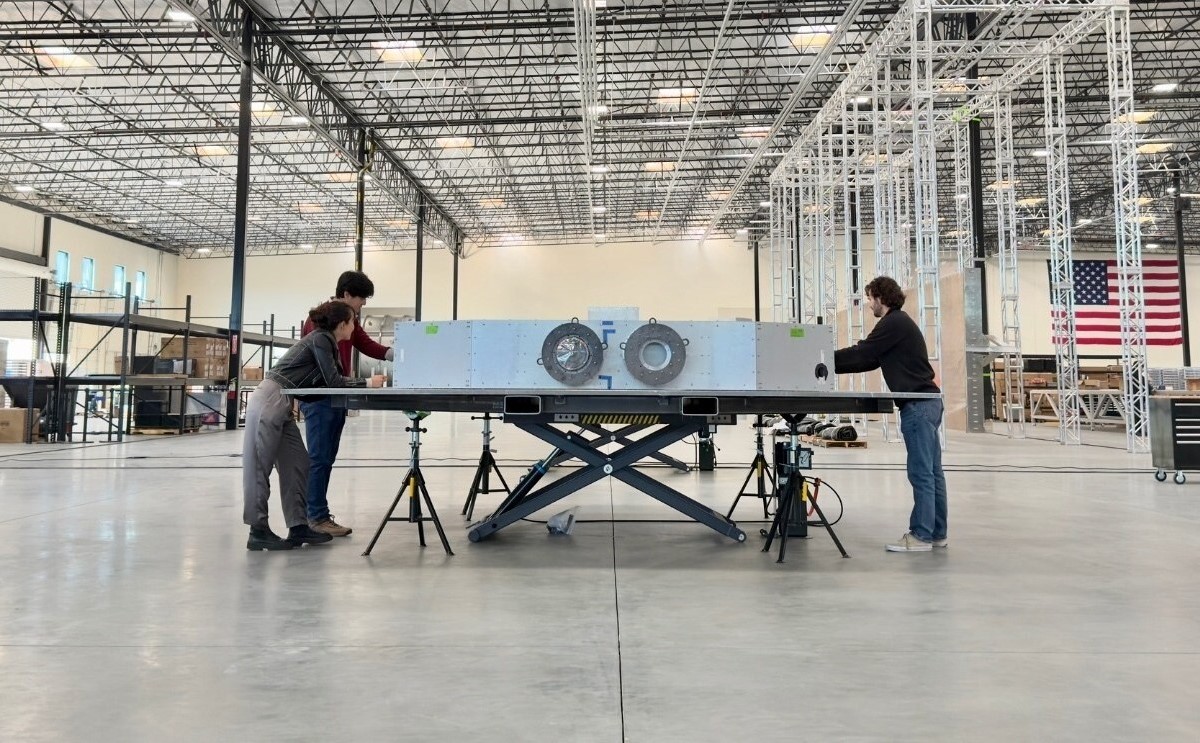
While the prevailing trend in satellite development over the past decade has hovered around miniaturization—with companies racing to cram sophisticated machinery into tiny, shoe-box-sized cubesats—K2 Space is boldly taking the opposite path. The company’s core philosophy is built on a “go-big” approach, recognizing that the demands of modern communications, national security, and high-performance computing in space require sheer mass and immense power. In March, they proved the viability of this contrarian vision with the successful launch of Gravitas, their pioneer “mega-class” satellite, propelled into orbit aboard a SpaceX Falcon 9 rocket. Weighing in at a colossal two metric tons and pulsing with 20 kilowatts of power, this orbiting giant carried a dozen undisclosed payload modules for a diverse portfolio of commercial and government clients, including the Department of Defense. Operating at this scale allows K2 Space to bypass the severe energy bottlenecks that limit smaller satellites, turning their platforms into robust, space-faring power grids capable of running the complex algorithms, heavy-duty sensors, and high-frequency communication relays that tomorrow’s digital infrastructure demands.
This audacious engineering philosophy is not just a theoretical triumph; it is a booming commercial success story backed by serious momentum. Since its inception in 2022, K2 Space has successfully secured more than $500 million in investment capital and logged an astounding $1 billion in contract backlogs. Prominent defense institutions have taken notice of this giant leap, with the United States Space Force recently confirming K2 Space as a key hardware supplier for its next-generation military communications network. To keep pace with this surging government and commercial demand, the company has set its sights on an aggressive production ramp-up, planning to manufacture and launch hundreds of these massive satellites annually by the year 2030. Achieving this cinematic scale of manufacturing requires a fundamental shift from slow, artisan-style spacecraft assembly to high-volume, standardized industrial production, a transition that requires the exact blend of software agility and manufacturing discipline that the new Seattle office is designed to cultivate.
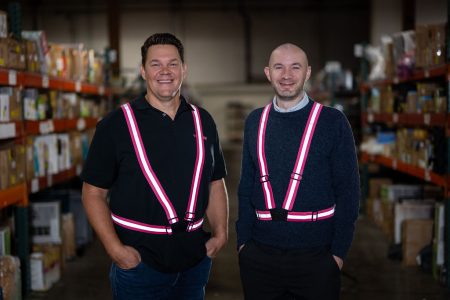
At the helm of this cosmic enterprise are co-founders Karan Kunjur, Chief Executive Officer, and Neel Kunjur, Chief Technology Officer, two visionary leaders who view talent acquisition as the ultimate battleground of the space race. As the company grows to nearly 300 employees nationwide, the Seattle branch is actively recruiting for key roles to spearhead the complex digital nervous systems of these massive machines. Karan Kunjur highlighted that Seattle was the natural, undeniable choice for their next phase of growth, pointing to the region’s unmatched reputation as an engineering powerhouse. The local team will be responsible for creating the ultra-reliable flight software, autonomous navigation frameworks, and low-level computing architectures that allow K2’s satellites to withstand the brutal environment of low Earth orbit while processing demanding, high-bandwidth workloads. For Neel Kunjur and his engineering teams, this means transforming raw silicon and code into a resilient, self-healing framework capable of keeping a multi-ton spacecraft functioning perfectly millions of miles away from human hands.
K2 Space joins an incredibly dense neighborhood, as Seattle has quietly earned the distinction of being America’s premier satellite manufacturing hub. Today, over half of the world’s active satellites trace their origin stories back to the Puget Sound region, a remarkable statistic driven largely by SpaceX’s massive Starlink production facility in Redmond. Just a short drive away in Kirkland, Amazon’s Project Kuiper is rapidly scaling its own satellite production facilities, aiming to blanket the globe in high-speed internet. The surrounding suburbs are teeming with a diverse array of cosmic pioneers, including Starcloud in Redmond, Xplore in Bellevue, and Portal Space Systems in Bothell. To the south in Tukwila, satellite operations run by BlackSky and Starfish Space are redefining orbital imagery and logistics. Even California transplants such as Sophia Space and Cowboy Space—a space-based data center developer formerly known as Aetherflux—have strategically established Seattle offices, drawn by the irresistible gravitational pull of the region’s deep pools of specialized tech talent.
Rounding out this local aerospace renaissance is Jeff Bezos’ Blue Origin, headquartered in Kent, Washington, which is rapidly intensifying its focus on orbital communications through ambitious ventures like Terawave and Project Sunrise, a proposed constellation of orbital data centers. With help-wanted signs going up across the region, Seattle represents more than just a place on a map; it is a community of rival geniuses and collaborative visionaries pushing the limits of human ingenuity. The engineers settling into K2 Space’s new Seattle hub are not just writing code or designing circuit boards; they are forging the infrastructure of a highly connected future. As these massive, high-power satellites are assembled in California, programmed in Washington state, and launched into the blackness of space, they carry with them the combined dreams of human hands and hearts working late into the night, determined to make the heavens a little more accessible, a little safer, and infinitely more connected for everyone back on Earth.