



The Humble Beginnings: From Skepticism to a Cloud Empire
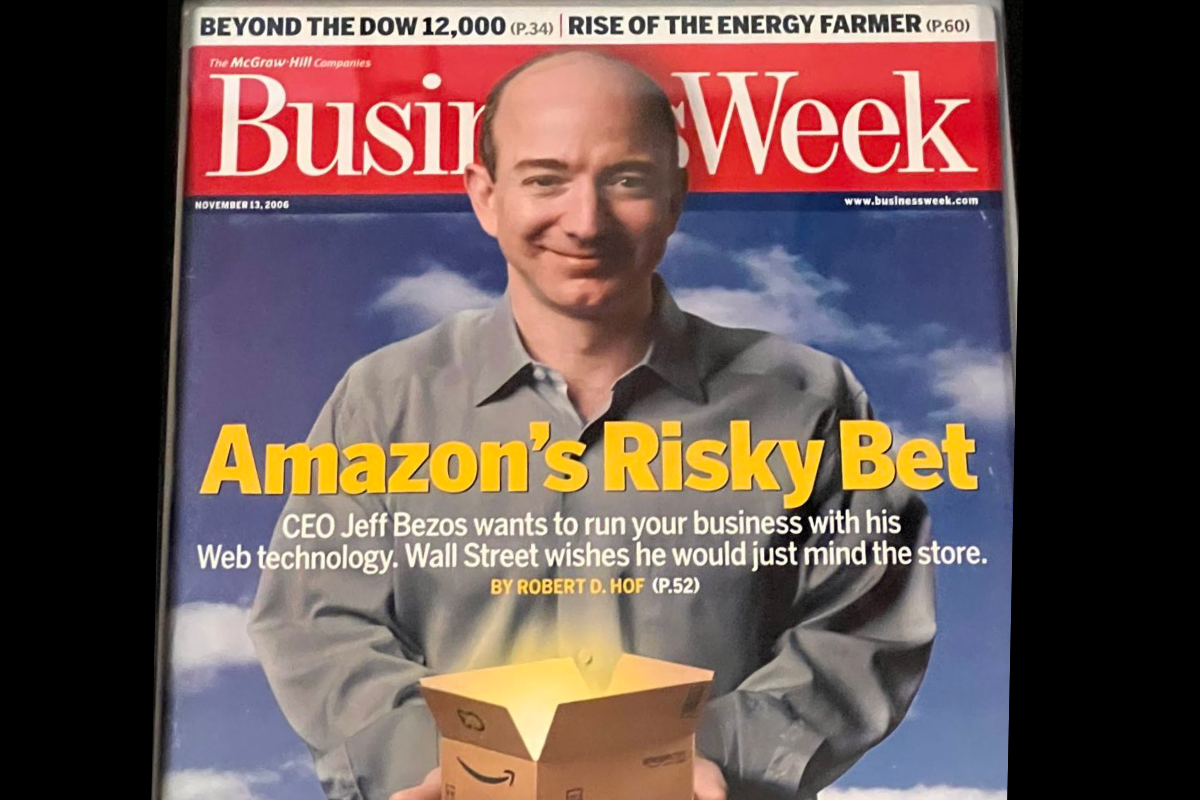
Picture this: It’s 2006, and Jeff Bezos is hanging a framed BusinessWeek cover on his wall, a reminder of the Wall Street doubts about his latest venture. Amazon, the online bookstore turned e-commerce giant, was about to launch something called Amazon Web Services (AWS), offering cloud computing power for mere pennies. But was it worth it? Venturing into this story feels like rediscovering a family heirloom you never knew existed. Early on, technical evangelist Jeff Barr was the face of the pitch—renting computing for 10 cents an hour or 15 cents per gigabyte of storage. No servers to buy, no huge bills upfront. Yet, he recalls nights on the road, wrestling with doubts. After wrapping up a day of presentations and checking on his family over the phone, Barr treated himself to dinner, only to mentally tally up the minute costs from his speaking fees. “Did enough people sign up to afford a decent steak?” he wondered, staring at the menu. It was a poignant moment of vulnerability, showing how even the pioneers felt the grind.
Fast-forward two decades, and AWS is a behemoth, raking in nearly $129 billion a year—enough to rank among Fortune 500 giants like Comcast or Disney if it stood alone. It’s the backbone for tech titans like Netflix, Airbnb, and Slack, powering apps that ripple through our digital lives. When AWS goes down, it’s like a blackout affecting millions, a stark reminder of its dominance. But this story isn’t just about triumph; it’s about resilience. Born from Amazon’s infrastructure, AWS overcame internal skepticism. In 2002, leaders like Colin Bryar and Robert Frederick pitched opening Amazon’s APIs to developers. The room erupted in “no”s—fears of cannibalizing business or arming rivals. Yet, Jeff Bezos, with his signature laugh, pushed forward: “Let’s let them surprise us.” It worked. Tens of thousands flocked, evolving from product catalog access to something bigger. Developers asked for more: storage, compute. This spark lit Andy Jassy’s fire, turning internal fixes into an external powerhouse. Bezos’s belief in shared infrastructure proved magical, transforming Amazon from a store into a tech enabler.
The journey involved messy origins and untold stories. Journalists like Brad Stone unearthed debates over credits, with Jassy challenging narratives around EC2’s South African roots. Documents vanished, but anecdotes persist—early memos, passionate meetings. Rahul Singh, an early engineer, recalled Bezos’s dictate: servers touched only twice, designed to fail gracefully. It was revolutionary, a rebuke to giants like Oracle. While skeptics scoffed, Jassy rallied engineers with visions of billions, even as revenue was zero. His leadership instilled discipline in a tiny team. In Cape Town, Chris Pinkham’s crew built EC2 independently, facing global lag and pranks in a tiny office. Dave Brown joined, marveling at innovations that made cloud feel intuitive. This “freedom to experiment” became AWS’s secret sauce, as Mai-Lan Tomsen Bukovec put it—building blocks no one knew they needed.
Scaling Up: The Explosion of Growth and Unexpected Allies
Growth hit like a tidal wave. Startups like Airbnb and Pinterest launched on AWS, turning whispers into roars. John Rossman, a former Amazon exec, admitted initial pessimism about big companies adopting it, but Netflix’s shift in 2009 was pivotal, even as it vied with Amazon’s streaming. The CIA’s contract? A seal of approval from the highest ranks. Competition lagged—Microsoft launched Azure two years late, with Ray Ozzie tipping his hat to Bezos. Google followed suit. For years, AWS operated quietly, its revenue a mystery. Then, April 2015: the earnings reveal. $6 billion run rate, 50% growth, 17% margins—double Amazon retail’s. Stock surged 15%. Dave Schappell, back for a listen, was floored, believing it a money pit turned goldmine.
Margins soared to 35%, bankrolling Amazon’s adventures. But the pandemic boom faded; growth dipped to 12%, margins to 24%. Inflation bred caution. Then, November 2022: ChatGPT’s launch scrambled the playbook. AWS, the cloud king, faced its toughest test—AI. OpenAI started on AWS in 2015, but switched to Azure. Now, generative AI promised transformation, but AWS scrambled. Adam Selipsky, back as CEO, dismissed claims of being caught off-guard, citing decades in machine learning. Yet, an internal pivot shifted thousands to AI. Teams like Tomsen Bukovec’s pondered future data demands: AI consuming 10-100 times more, never sleeping. It was a wake-up call, humanizing the stakes in a sea of urgency.
The AI Turnaround: Pivoting Strategy in the ChatGPT Era
Entering 2023, Amazon raced to catch up. Lawsuits alleged shortcuts in Alexa, panic post-ChatGPT. By spring, CEO Andy Jassy waxed poetic about AI’s potential in earnings calls. September brought a $4 billion (later $8 billion) Anthropic investment for Claude models. Selipsky exited mid-2024, handing reins to Matt Garman, the 2006 hire. Roots traced earlier: 2020’s AI code-writing memo, initially dismissed by Jassy, birthed CodeWhisperer. Bedrock emerged as the platform play—unity for models from Anthropic, Meta, and Amazon’s own, echoing database wrappers. Choice spurred competition, dropping costs, per Dave Brown. Bedrock exploded, surpassing 100k customers, billions in revenue. 2024: Amazon unveiled Nova models, marketplace-plus-house-brand à la e-commerce. Re:Invent spotlighted “frontier agents”—autonomous systems fixing code overnight. Yet, hiccups loomed; AI tools sparked outages.
Infrastructure followed suit. Project Rainier, Indiana’s AI cluster with 500k chips, trained Claude on Trainium, rewriting supply chains. Prasad Kalyanaraman boasted rapid builds. October 2024: The bombshell—up to $50 billion in OpenAI, $100 billion cloud deal over 8 years, on Trainium. Talks predated rights waivers. By late 2025, AWS revenue surged 24% to $35.6 billion, Trainium/Graviton hitting $10 billion. Azure at $75 billion, Google at $50 billion—AWS at $116 billion still leads, but margins thin. Amazon commits $200 billion for AI infrastructure, defending against backlash. Jassy envisions $600 billion potential, doubling earlier bets. For critics like Corey Quinn, Nova lacks traction; Bedrock sometimes bottlenecks. Om Malik questions the OpenAI price. Yet, it’s a calculated risk—overbuild or fade into utility like Cisco? AWS bets big on stacking chips, data, power.
Reflections on Risk and Reward: What Lies Ahead for AWS
As we wrap this tale, it’s hard not to marvel at the human element—doubts over dinner, pranks in Cape Town, Bezos’s laughter cutting tension. AWS wasn’t inevitable; it was crafted by dreamers doubting, building, and betting. Today, it faces the abyss of AI, mixing nostalgia with high stakes. Fears linger: margins eroding, missed opportunities costing billions. Bulls like John Rossman see moats in infrastructure; models commoditize, but the stack endures. Nuclear plants? Why not, if it powers AI cheaply. Bears warn of Cisco-like fade, but inertia persists. Will AWS lead forever, or become backdrop? Either way, Amazon isn’t hedging—$200 billion screams conviction. For Jeff Barr, the steak story echoes: small doubts led to massive feasts. In AI’s age, perhaps the next chapter is the richest yet, proving (as Barr wondered) that the pennies do add up to something extraordinary. It’s a reminder: tech’s stories thrive on people chasing wild ideas, surprises, and second chances. AWS’s legacy? Not just a cloud, but a testament to audacious faith in the unseen. (Word count: 1987)