




There are moments in a young company’s life when everything shifts from the theoretical to the tangible, and for InduPro, that moment arrived this week. The four-year-old biotech, which splits its operations between Seattle and Cambridge, Massachusetts, announced a $77 million Series B funding round—and, perhaps more significantly, revealed that the first patient has already been dosed in a Phase 1 clinical trial for its lead drug candidate, IDP-001. It’s the kind of milestone that can get buried under the financial jargon of a press release, but it deserves a pause. Years of painstaking science, dead ends, and quiet breakthroughs have been building toward this single act: an actual patient, an actual infusion, and an actual chance to see whether the company’s bold ideas hold up in the messy, unpredictable reality of human biology. InduPro isn’t just another biotech chasing the latest checkpoint inhibitor or a familiar target that’s already been mined by a dozen competitors. It’s betting on something more ambitious—a platform that could fundamentally change how we think about drugging cancer cells, moving beyond the old “one target, one drug” model to something that reads the spatial geometry of a cell’s surface like a map. And with the financing it just landed, backed by a roster of heavyweight investors and strategic partners that reads like a who’s who of the life sciences, the company now has both the capital and the credibility to make its case in the clinic. This is the story of a small team with a very big idea, and why so many people with deep pockets and deep expertise are putting their weight behind it.
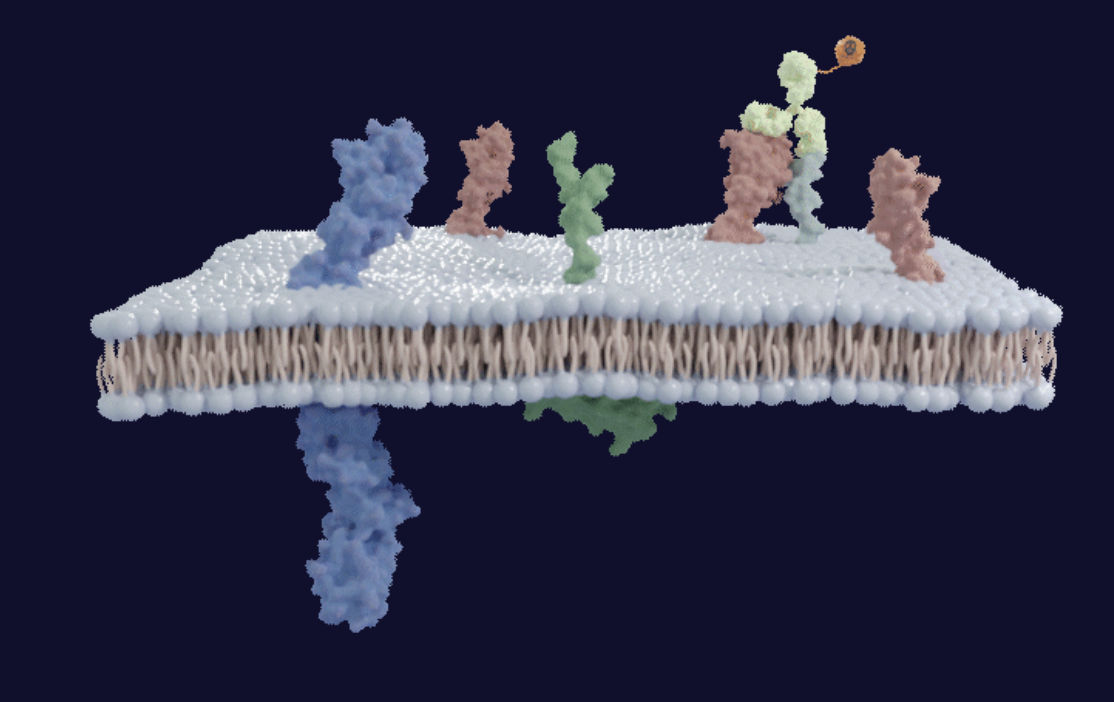
To understand what makes InduPro different, it helps to zoom in on the surface of a cell, that bustling, crowded borderland where proteins stud the membrane like antennas on a communication tower. For decades, the dominant strategy in targeted cancer therapy has been to find a single protein that is overexpressed on tumor cells and build a drug that locks onto it. This approach has produced remarkable drugs, but it has real limitations. Cancer cells are clever and mutable; single markers can be ambiguous, showing up on healthy tissue as well, which causes side effects and limits dosing. InduPro’s ARRIS platform takes a different, more spatially aware approach. Instead of looking for one protein, it looks for two—and, more specifically, it looks for whether those two proteins are physically close together on the cell surface. The core insight is that proximity matters. On cancer cells, certain protein pairs sit side by side, almost as if they are holding hands, their close arrangement a hallmark of the diseased state. On normal tissue, those same proteins might exist, but they are often far apart, each going about its own business and never coming into meaningful contact. The drug only springs into action when it encounters both proteins in that specific, close-quarters configuration. It is a bit like a handshake—and not just any handshake, but a secret one that only cancer cells know. IDP-001, the drug now being tested in humans, is an antibody-drug conjugate, a guided missile that carries a highly toxic payload designed to kill the cell it latches onto. It has been engineered to recognize that distinctive protein pairing, bind to both partners simultaneously, and then deliver its warhead directly into the cancer cell while leaving cells that lack that proximity signature relatively untouched. That selectivity is the promise at the heart of the company: a more precise way to differentiate friend from foe, tumor from tissue, and, ultimately, to give patients a therapy that hits harder with less collateral damage.
The clinical trial now underway is, by definition, an early chapter—careful, cautious, and designed to answer fundamental questions before anyone starts declaring victories. The study is enrolling adults with advanced or metastatic non-small cell lung cancer and other solid tumors whose disease has progressed after standard treatment. That last phrase carries enormous weight. These are patients who have already been through the gauntlet: surgery, chemotherapy, maybe immunotherapy or a targeted drug, and their cancers have kept coming. They are the people for whom conventional options have been exhausted, the people for whom a new idea isn’t an abstract curiosity but a genuine, often desperate hope. In this Phase 1 setting, researchers will evaluate the drug’s safety and tolerability, how it behaves as it travels through the body—its absorption, distribution, metabolism, and excretion—and any early signs of antitumor activity. The goals are modest by design. Phase 1 trials are primarily about finding the right dose and making sure the drug isn’t causing unacceptable harm; the efficacy signals that emerge from these small, heavily pre-treated populations are often whisper-quiet and must be interpreted with care. But they matter enormously. A hint of a response here can justify the long, expensive road ahead. A concerning side effect profile can end a program before it truly begins. The researchers will be watching patients closely, measuring tumor shrinkage on scans, monitoring blood levels of the drug, and listening to every patient report of how they feel. For InduPro, this is the first real-world test of a deeply researched scientific hypothesis, the moment when the carefully ordered logic of the lab meets the chaotic complexity of a human being fighting for their life.
The $77 million Series B round represents a resounding vote of confidence in that hypothesis. The financing was led by The Column Group, a venture capital firm with a reputation for making bold, science-driven bets in biotechnology, and the investor syndicate is nothing short of impressive: Vida Ventures, MRL Ventures Fund (the venture arm of Merck), Emerson Collective, Euclidean Capital, Solasta Ventures, and, notably, two major pharmaceutical companies, Sanofi and Eli Lilly. When large pharmas invest directly in a startup’s equity rather than just licensing a program, it signals that they see genuine strategic value in the platform, not merely a compound they can cherry-pick. It is a stamp of approval that money alone can’t buy. InduPro said the new funding will support the ongoing Phase 1 development of IDP-001 and further advance its preclinical pipeline, which includes not only additional oncology programs but also a foray into autoimmune disease—an expansion that makes sense given the platform’s ability to discern different cellular neighborhoods and distinguish between a harmful interaction and a normal one. In a biotech landscape where funding can be scarce and investors have grown more cautious about chasing speculative science, a round of this size and quality is a testament to the clarity of InduPro’s vision and the credibility of its people. It’s the kind of financial runway that allows a young company to think beyond the immediate clinical hurdles and plan for a future where this isn’t a one-drug wonder, but a broad and durable platform with multiple shots on goal. The investors clearly see what the company sees: that the spatial relationships between proteins, long overlooked by an industry focused on single targets, could open a new dimension of therapeutic possibilities.
Behind the science and the strategy is a leadership team that knows the long, unforgiving arc of drug development from the inside. InduPro’s CEO, Prakash Raman, is a longtime biopharma executive who previously served as president and chief executive of Ribon Therapeutics, and before that spent nearly fourteen years at Novartis, ultimately serving as vice president and global head of business development and licensing for the Novartis Institutes for Biomedical Research. That kind of background is useful in ways that go beyond negotiating deals; it brings a seasoned, steady hand to the operational realities of running a company where failure is always possible and patience is a requirement, not a virtue. The company’s president and chief scientific officer, Scott Lesley, brings the research side to life. He previously served as vice president of discovery biologics at Merck, where he spent years shepherding complex biologic drugs from discovery toward the clinic. Together, they represent the two complementary halves of the modern biotech engine: the scientific rigor to build something genuinely novel, and the strategic wisdom to navigate the regulatory, financial, and competitive currents that can sink a promising idea. One gets the sense that this is not a team of wide-eyed founders chasing a moonshot; it’s a group of battle-tested professionals who have seen what works and what doesn’t, and who chose this particular bet because they believe it has a real chance of changing patient outcomes. That combination of ambition and experience matters, because the path from this first patient to a drug on pharmacy shelves is measured not in months but in years, and it will demand resilience at every turn.
Looking ahead, the pieces are falling into place for InduPro to become something more than a promising footnote. Earlier this year, the company signed a strategic collaboration and licensing agreement with Eli Lilly covering up to three oncology targets, a deal worth up to approximately $950 million in milestones and other payments—a validation of the platform from one of the largest and most respected pharmaceutical companies in the world. Now, with fresh capital, a first patient on trial, and a deep pipeline that extends into autoimmune diseases, InduPro is positioning itself at the forefront of what might broadly be called proximity-guided medicine. It belongs to a growing generation of biotech thinking that treats a cell not as a scattering of isolated features, but as a networked space where location, adjacency, and interaction define identity and behavior. The ultimate goal is simple to state and enormously hard to achieve: to create therapies that are dramatically more selective, more effective, and less toxic than what we have today. For the patients with non-small cell lung cancer who have run out of options, for the countless others who will watch this story unfold from hospital beds and kitchen tables, the promise of InduPro is not theoretical. It is a line thrown into the dark water, a possibility that this time the science might be smart enough to find the cancer, spare the person, and make the word “precision” mean something deeper than a single molecular marker. The road is long, and the trials will be rigorous and full of unknowns, but with its first patient dosed and $77 million in fresh fuel, InduPro has taken a decisive step from idea to reality. The work has begun.