


-
On a bright September morning, Helion Energy made a quiet but significant announcement that speaks volumes about where the world of clean energy is heading. The Everett, Washington-based fusion company revealed that it had added $35 million to a funding round that was first announced back in June, bringing the total to an impressive $500 million. To put that in perspective, the original Series G round was already a hefty $465 million—one of the biggest private investments in the fusion space. But for Helion’s co-founder and CEO, David Kirtley, this wasn’t just about adding zeros to a spreadsheet. It was about the kind of investors who were now stepping forward. “After initially closing the round earlier this summer, we are excited to bring on several new investors and to have a round that includes crossover, pension, and sovereign wealth investors,” Kirtley wrote on LinkedIn. That’s not just Wall Street money. That’s institutional money—the kind of patient, deep-pocketed capital that usually doesn’t take wild risks unless it believes something is real. Fusion, after all, has long been called the “holy grail” of energy: it replicates the reactions that power the sun and stars, offering the promise of nearly limitless, carbon-free power. But for decades, that promise has seemed perpetually out of reach. Helion is trying to change that, and with more than $1.5 billion raised to date, it is positioning itself as one of the most ambitious companies in the field.
-
The new funding is more than a number—it’s a signal. When Helion first announced its Series G round in June, the company was already viewed as a leader in the race to commercialize fusion. But by adding $35 million with the backing of crossover investors, pension funds, and sovereign wealth funds, Helion is being handed something just as valuable as cash: credibility. These investors don’t typically pour money into speculative science projects. They represent some of the world’s most cautious financial institutions, the kind that need to justify every dollar to boards, trustees, and taxpayers. Their participation suggests that fusion is no longer being viewed as a far-off dream, but as an investable industry with real timelines and real business models. Helion’s mission is bold: to be the first company in the world to deliver commercial fusion energy. That means replicating the same physical processes that light up the sun—forcing atoms to merge and release enormous amounts of energy—and turning that energy into electricity people can actually use. It’s a task that has stumped scientists and engineers for generations. But Helion’s approach, which involves a pulsed, magnetically driven fusion system, has attracted supporters who believe it can be done sooner than many think. The company has now raised north of $1.5 billion in total, a staggering sum that reflects both the promise of the technology and the growing sense that the era of fusion energy may finally be approaching.
-
The money is funding more than just laboratory experiments. It’s funding a real, growing company with all the trappings of a serious industrial player. Last week, Helion celebrated the opening of its first office in downtown Seattle, a symbolic milestone that marks the company’s transition from a scrappy research operation into a major employer and corporate citizen in the Pacific Northwest. With its headcount now topping 800 employees, Helion is no longer a small team of physicists tinkering in a warehouse. It’s an organization that needs office space, HR departments, project managers, and communications teams. The expansion into Seattle is a sign that Helion is thinking about the future, not just in terms of reactors and magnets, but in terms of the people and infrastructure needed to build a lasting industry. It’s also a reflection of the company’s confidence in its own trajectory. Helion isn’t waiting for fusion to become a reality before acting like a grown-up company. It’s building the culture, the talent pool, and the physical footprint now, so that when the technology is ready, the company will be too. For the region, the presence of a booming fusion company in the Seattle area is a reminder that Washington state has become a hub for climate tech innovation, and that the race to solve the world’s energy challenges is being run, in part, right here.
-
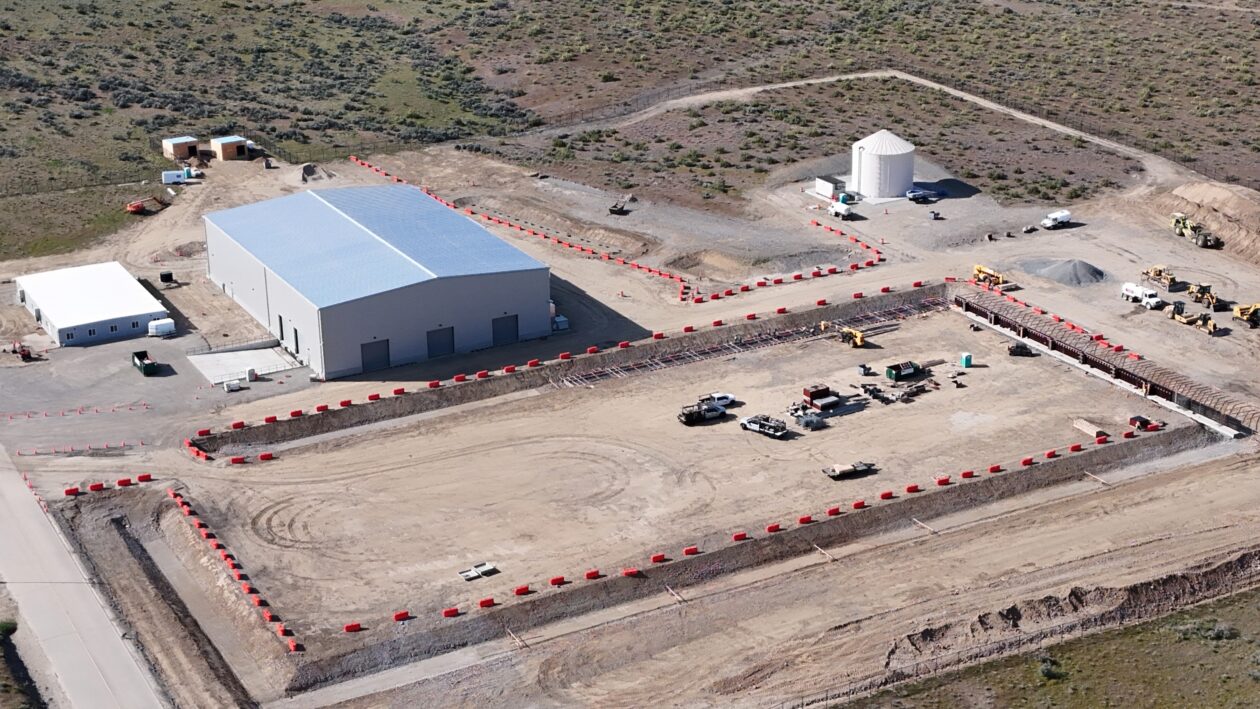
Of course, all that funding and hiring is aimed at one very concrete goal: delivering power to the grid. Three years ago, Helion signed a landmark deal with Microsoft to supply electricity to a data center in Central Washington by 2028. It was a historic agreement—the first time a major tech company had committed to buying power from a fusion company. The stakes are enormous. Data centers are voracious consumers of electricity, and Microsoft has made ambitious climate commitments. To fulfill its part of the bargain, Helion broke ground on a 50-megawatt fusion plant in Malaga, Washington, in July 2025. The facility, named Orion, is meant to be the first commercial fusion power plant in history. The plan, as laid out when the Microsoft deal was announced, was for Orion to come online by 2028 and to reach 50 megawatts or more after a one-year ramp-up period. That’s enough power to supply thousands of homes, or a very hungry data center. But fusion is notoriously difficult, and timelines in this industry tend to slip. Axios recently reported that, according to a Helion executive, full capacity might not be reached until 2030. That’s not necessarily a fatal blow—fusion companies routinely adjust timelines as they learn more—but it underscores the immense technical challenges still ahead. Building a fusion plant is not like building a wind farm. There are no off-the-shelf parts. Everything is custom, experimental, and relentlessly difficult.
-
With such big promises come big skeptics. The scientific community has begun to ask hard questions about whether Helion’s technology can actually produce enough energy to power the grid. Axios cited two scientific publications by plasma physicists that raised doubts about the company’s ability to generate sufficient energy from its devices. These are not casual criticisms; they come from people who have spent their careers studying the behavior of plasma and fusion reactions. They want proof, not promises. Helion, for its part, has responded to the concerns on its FAQ page, defending its approach and pushing back on the skeptics. But the questions are not going away, and they highlight the enormous gap between theoretical potential and real-world performance. Helion is well aware of this. In May, GeekWire reported on a small-scale testbed device called Tiny Merge that the company is building at its R&D facility. The goal of Tiny Merge is to answer questions that Helion’s larger, more expensive prototypes haven’t been able to answer—questions about stability, efficiency, and energy output that need to be resolved before the final design for Orion can be locked in. It’s a humble approach, and it shows that Helion understands the importance of testing assumptions on a small scale before committing to big, expensive hardware. In fusion, the difference between a successful design and a failed one is often measured in milliseconds and microscopic adjustments. Tiny Merge is Helion’s way of making sure it doesn’t stumble in the dark.
-
Throughout all of this, David Kirtley remains publicly optimistic. He acknowledges that technical milestones are the true measure of progress, but he also points to the new funding as evidence that the outside world is beginning to believe in Helion’s vision. “Technical milestones remain the most important to me and the company,” he said, “but this new funding demonstrates the growing demand for, and confidence in, fusion energy and Helion’s ability to deliver fusion energy to the grid.” That confidence is part of a broader shift. For decades, fusion has been called the energy of the future—and it always seemed destined to stay that way. But now, with private companies like Helion attracting serious investment, breaking ground on real power plants, and signing contracts with corporate giants like Microsoft, the future is starting to feel a lot closer. There is still a long way to go. The skeptics may turn out to be right. The timeline may slip further. The technological obstacles may prove even more stubborn than anyone expects. But Helion is no longer just a company with a theory. It has money, it has employees, it has a construction site, and it has a customer waiting for its power. Whether it delivers by 2028, 2030, or a little later, the journey is already changing the conversation about what’s possible. And in a world desperate for clean, abundant energy, that may be the most important thing of all.