


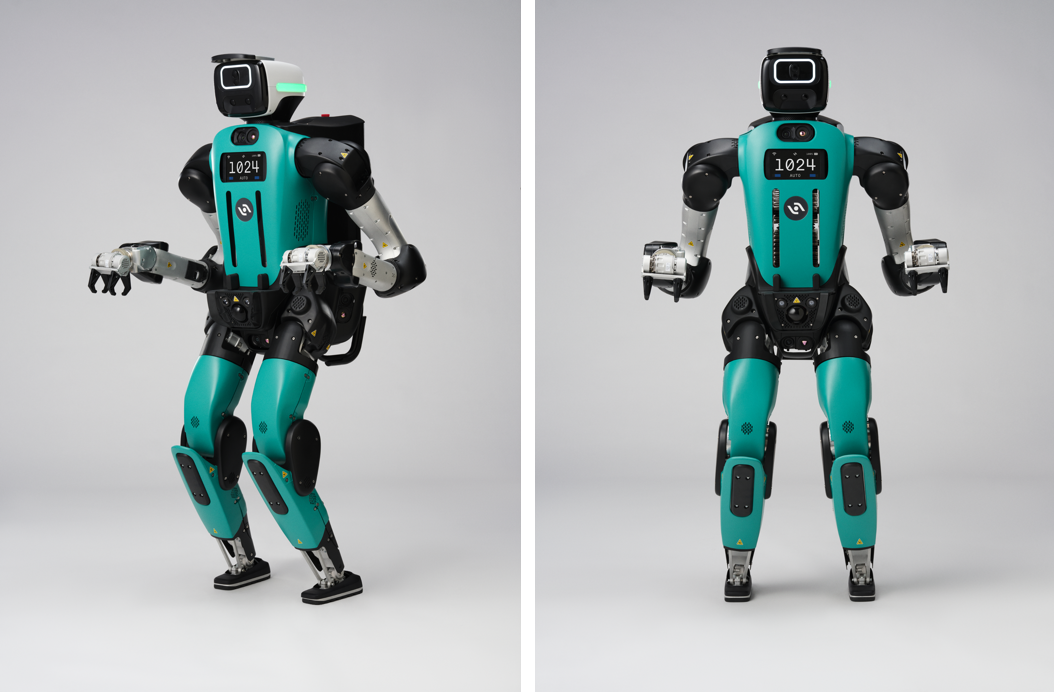
Imagine walking through a busy warehouse and seeing a robot that looks a bit like a person—torso, arms, legs, maybe even a head—moving boxes and doing chores right alongside you, with no fence, no cage, and no orange safety boundary painted on the floor. That’s the world Agility Robotics is trying to build, and it just took a big step toward making it real. The company, based in Salem, Oregon, recently unveiled Digit 5, the newest version of its humanoid robot, designed specifically to work safely with people in warehouses and factories. This isn’t just another incremental update. Agility says Digit 5 is its first humanoid built for what it calls “cooperatively safe” work at scale. In other words, it’s meant to be more than a machine that happens to avoid hitting you; it’s designed to be a genuine coworker, aware of the people around it and able to adjust its behavior in real time. The company is on the verge of going public through a $2.5 billion SPAC merger, and it has big ambitions for a robot that can unload pallets, tend machines, gather parts, and handle all sorts of repetitive physical labor that humans often don’t want to do. But the real story here isn’t just about a robot with a fancy new arm or a longer battery life. It’s about a fundamental shift in how machines and humans can share space, and what that means for the future of work.
The secret sauce of Digit 5 is its safety system. It uses artificial intelligence and a collection of sensors to constantly watch for nearby people. Depending on the situation, the robot will steer around a person, come to a full stop, or even sit down on the ground to make itself less threatening and give people plenty of room. It doesn’t do this silently, either. Digit 5 gives visual and audio cues that signal what it’s about to do next, almost like a turn signal on a car or a polite “excuse me” as it moves past. There’s also a separate safety controller that triggers these responses when someone gets too close, meaning the safety function isn’t just relying on the main AI brain to make the right call. This is a big deal because one of the biggest obstacles to using humanoid robots in real workplaces has always been the danger they can pose. Most industrial robots are either bolted down in cages or forced to operate in zones where humans aren’t allowed. By designing Digit 5 to be cooperative, Agility is trying to break down those barriers and create a robot that can genuinely work shoulder to shoulder with people. And it’s not just about being careful. The robot is also more capable than its predecessor. Digit 5 can lift up to 50 pounds, which is 40 percent more than the previous model, and it can reach objects as high as 7.2 feet off the ground, up from 5.5 feet. Its battery lasts 90 minutes and recharges in just nine minutes, which Agility says allows for more than 20 hours of work in a 24-hour day. The grippers can be swapped out for different jobs, so the same basic robot can be customized for handling boxes, parts, or other tasks.
Agility didn’t just dream up these specs in a lab. According to CEO Peggy Johnson, a former Microsoft executive and Magic Leap CEO, Digit 5 was built to match the exact requirements customers gave the company after three years of watching Digit 4 work on their production floors. That real-world experience matters. Digit 4, the current model, has mostly been used for moving totes, logging more than 65,000 hours at a range of customers including GXO, Schaeffler, Amazon, and Toyota’s Canadian manufacturing arm. Amazon, an early investor in Agility, has run multiple pilots of earlier Digit models, including one that GeekWire observed at a warehouse south of Seattle back in 2023. Amazon bought five Digit robots for $1.05 million, according to a regulatory filing. But Digit 5 is designed to take on much more of a facility’s work. Instead of just shuffling totes around, it can unload pallets, tend machines, gather parts, and inspect items before loading them back onto pallets for shipment. That’s a big jump in capability, and it reflects a broader trend in the robotics industry: moving from narrow, single-purpose tasks to broader, more flexible roles. The idea is that a humanoid robot can operate in spaces that were built for humans, using tools and navigating environments that don’t need to be specially redesigned. That’s the promise of humanoid robotics, and Agility is trying to prove it can actually deliver on that promise in a commercially viable way.
The business side of the story is just as dramatic as the technology. Agility says it had more than $300 million in multi-year orders for Digit 5 as of May, though those orders are contingent on hitting certain milestones. According to a filing with the Securities and Exchange Commission, those orders come from a single customer, which has committed to buying 1,000 robots over three years. The filing doesn’t name the customer, but it also describes a May deal for at least 1,000 robots with a “related party,” an accounting term for someone with close ties to the company, such as a major investor. This is a classic startup narrative: huge potential, big commitments, but also enormous risks and a lot of money burning. Agility had only $1.78 million in net sales in 2025, up from $310,000 the year before—tiny numbers compared to the scale of its ambitions. Meanwhile, its loss from operations doubled to $140.2 million. The company’s auditor, Grant Thornton, included a going-concern warning in its report, raising substantial doubt about Agility’s ability to keep operating. That sounds scary, but it’s important to put it in context. Agility said the cash forecasts behind that conclusion didn’t factor in the SPAC deal, which the companies said could provide more than $620 million in gross cash proceeds before any shareholder redemptions. In other words, the company is running on fumes right now, but it has a big fuel tank waiting to be filled if the merger goes through. That’s the reality of bringing a humanoid robot to market: the development costs are massive, and revenue is slow to come until the product actually works at scale.
Agility is far from the only company chasing this dream. In its filing, Agility names Boston Dynamics, Tesla, Apptronik, Figure AI, and 1X Technologies among its competitors, many of which it describes as well-funded. Tesla has been promising its Optimus robot for years, and Figure AI has partnered with BMW to test humanoid robots in automotive manufacturing. Boston Dynamics, meanwhile, has been pushing the boundaries of robotics for decades. The competition is intense, and the stakes are huge. But Agility has carved out a particular niche: it’s not trying to build a robot that can do everything. It’s focused on warehouse and factory work, and it has already demonstrated that its robots can do that work in real environments for thousands of hours. That operational experience is valuable. A robot that works reliably in a busy warehouse is a lot more convincing than one that works perfectly in a YouTube video. Agility also has a head start in safety, which is one of the hardest problems in humanoid robotics. Making a robot that can walk upright on two legs is hard enough. Making one that can do it safely around people, avoiding collisions and reacting to unpredictable human behavior, is an entirely different challenge. The fact that Digit 5 has a dedicated safety controller shows that Agility is taking this seriously, and that could be a key differentiator in the race to commercialize humanoid robots.
So what happens next? Early access to Digit 5 is expected to begin in the first half of 2027, with general availability by the end of the year. The robots are assembled at Agility’s RoboFab factory in Salem, which is designed to produce up to 10,000 robots a year. That’s an impressive capacity, but ramping up to that level is a massive undertaking. The company will need to prove that it can manufacture these robots reliably, keep costs down, and support them in the field. It will also need to navigate the inevitable questions that come with humanoid robots: What happens to workers who are displaced? How do you ensure safety across all kinds of environments? And what does it mean for society when robots that look like us start doing our physical jobs? These are big questions, and Agility doesn’t have all the answers. But the company’s approach is grounded in a simple idea: robots should work for us, alongside us, in spaces designed for us, rather than us having to adapt to them. The humanoid form factor isn’t just a gimmick. It’s a choice based on the reality that the world is built for human bodies. Stairs, doorknobs, shelving, tools—all of these are designed around our proportions and capabilities. A robot that can navigate that world has an enormous advantage over one that can only work in specially designed environments. Digit 5 is still not a household name, and it may be years before we see humanoid robots in every warehouse. But with its safety-first design, real customer pilots, and a factory ready to scale production, Agility Robotics has positioned itself to be a major player in that future. Whether it succeeds depends on execution, funding, and a little bit of luck. But one thing is clear: the age of robots working alongside people is no longer science fiction. It’s happening, and it’s happening now. The question isn’t whether humanoid robots will become part of our world. It’s how quickly they will, and how we choose to shape that world together.