


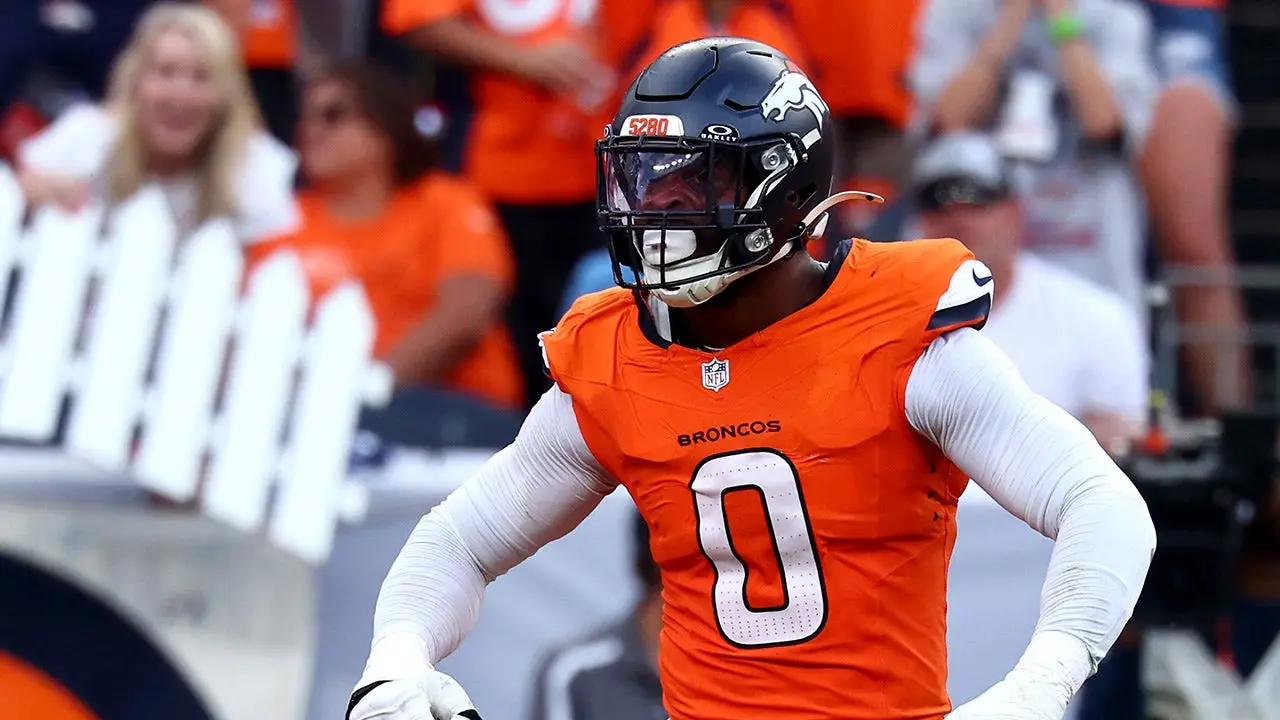
Justin Simmons is, by any reasonable measure, one of the good guys of the NFL. During nine seasons in the league, most of them spent with the Denver Broncos, he built a reputation as a smart, disciplined, high-character safety. Four times he was named second-team All-Pro. He was the kind of player who led by example, spoke thoughtfully in the locker room and rarely found himself in the kind of controversy that follows so many professional athletes. He was also the kind of player who showed up, prepared and made everyone around him better. His coaches trusted him. His teammates respected him. Fans admired him. It is not an exaggeration to say that Simmons was considered a model professional. But retirement does not automatically bring wisdom, and social media does not offer much patience. On Monday night, while watching his former Broncos team play the Kansas City Chiefs, Simmons stepped on an online landmine. What began as a complaint about ESPN’s coverage quickly turned into a lesson in how quickly public opinion can turn on a beloved athlete. It also became an uncomfortable reminder that loyalty to a former teammate can blur a person’s judgment, especially when the subject involves serious criminal charges and a woman who says she was harmed. Simmons is not a bad person. He is not a villain. He is a former player who reacted in the moment, and then kept reacting, until he had made a bad situation worse. The entire episode was a case study in why professional athletes, even retired ones, should think carefully before offering hot takes about stories that involve actual victims.
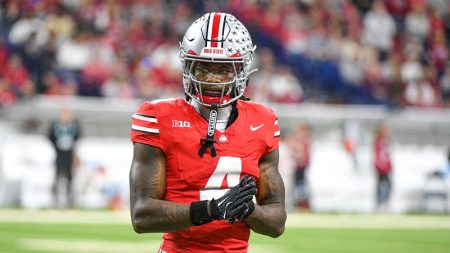
To understand why Simmons responded the way he did, it helps to know exactly what happened during the broadcast. The Broncos and Chiefs were playing on Monday Night Football, and ESPN’s Joe Buck made an observation that was both factual and newsworthy: Broncos linebacker Jonathon Cooper was not in the lineup. The reason was not a hamstring or a coach’s decision. Cooper is currently on the NFL’s exempt list, suspended while he awaits a trial scheduled for November 10 on four criminal charges, including felony second-degree assault by strangulation of his former girlfriend. Those are ugly words. They describe an accusation that, if true, represents a serious act of violence. It is exactly the kind of information that commentators are expected to mention when a player is missing from a game. It explains why a team is short-handed and it gives viewers important context. For Cooper, the charges are only allegations, and he has pleaded not guilty. But the fact that he was in legal trouble was already part of the public record, and the league had already taken action. Buck did not editorialize extensively. He simply told the audience why Cooper was absent. That is what sportscasters do. Simmons, however, heard something different. To him, it sounded like ESPN was piling on a former teammate, and perhaps more importantly, ignoring a different story he thought was being treated too delicately: the controversy around Patriots head coach Mike Vrabel and former reporter Dianna Russini. So he took to X, formerly known as Twitter, and let his frustration spill out. He did not just question the broadcast. He implied that ESPN was being unfair, that the network was willing to discuss one situation while burying another. It was a complaint that, at first glance, might have sounded plausible to some people. But it did not take long for the reality of the situation to catch up with him.
Simmons’ initial complaint was framed as a question of fairness. Why would ESPN mention Cooper’s legal troubles but never mention the Vrabel-Russini situation? On its face, it sounded like a reasonable challenge. But the internet immediately explained why the two situations are not comparable. Multiple people, many of them Patriots fans, told Simmons that even if Vrabel’s relationship with Russini was morally wrong—and even if it was more than many people assumed—it was not illegal. There were no criminal charges, no allegations of abuse, no court date. Vrabel had been judged in the court of public opinion for a personal scandal, but he had not been accused of assaulting anyone. The personal relationship, whatever it was, did not trigger a police investigation. It did not lead to an arrest. It did not place him on any kind of exempt list. Cooper, by contrast, was facing four criminal charges, one of them a felony. The law treats those things very differently, and so should reasonable people. Simmons had essentially compared a coach’s private life with a player’s alleged act of strangulation, and the flaws in that analogy were obvious to nearly everyone watching. The pushback was swift and sharp. If Simmons expected allies to rally around him, he was badly mistaken. He was told, in various ways, that an affair is not the same as an alleged crime. He was told that a network has every right to mention why a player is missing. He was told that his loyalty was admirable but his logic was not. And, perhaps most importantly, he was told that there is a big difference between a scandal that makes people uncomfortable and a criminal case that involves the safety of a woman. Even with the presumption of innocence, even with the fact that Cooper has not been convicted, the simple truth is that a player who has been arrested and suspended is not in the same category as a coach caught in a personal controversy.
Instead of walking it back, Simmons doubled down. “That’s absolute bs btw,” he wrote. “Shame on all of the production on Monday night football and the crew. You’re supposed to call the game. Coop isn’t playing the game and isn’t on the sidelines. The MNF crew is paid to cover THE GAME not the players who are not playing or even at the game.” There was something almost comical about the capital letters, as if typing “THE GAME” would make his argument more persuasive. But the argument itself was a strange one. By that logic, any player who is not on the field or sideline should be ignored by broadcasters. That would mean never mentioning an injured star, never discussing a player serving a suspension, never talking about a coach who is absent for personal reasons. It would make NFL broadcasts nearly impossible, because a huge part of the job is explaining why certain players are not participating. And more importantly, Cooper was not absent because of a random suspension. He was absent because he had been arrested and charged with violence against a woman. The network would have been derelict if it had pretended nothing was happening. Simmons later tried to clarify, writing that he had “hella people” in his comments, mainly Patriots fans, saying an affair is not the same as an alleged conviction. He admitted that was true, but then returned to his original point: “Last time I checked MNF or any network hosting a game is supposed to talk about just that THE GAME not players who aren’t there or even playing.” This was obviously wrong. Broadcasters have always covered off-field stories, from contract disputes to domestic violence to coaching scandals. The idea that a game broadcast should exist in a vacuum, untouched by real life, is not a rule or a tradition. It is a fantasy. A football game is not just the ball being snapped and tackled. It is the people playing it and the reasons they are there. A game is shaped by who is available and who is not. Context is not a distraction. Context is part of the broadcast.
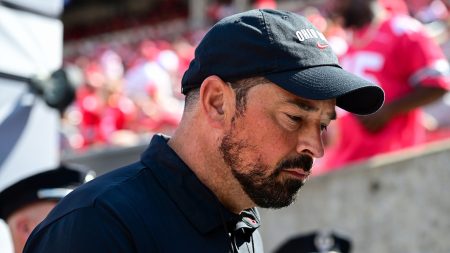
And here is where the entire foundation of Simmons’ complaint collapsed. The premise that nobody on television discussed the Vrabel-Russini situation was false. When the New England Patriots opened their season against the Seattle Seahawks, NBC did address it. The network even included the story in an illustrated timeline of the Patriots’ offseason, making sure viewers were aware of the controversy involving their new head coach. It was not hidden, and it was not treated as forbidden territory. So Simmons’ claim that ESPN was being unfairly selective was simply not accurate. Even if it had been accurate, it would not excuse his larger point. The Vrabel-Russini story, however uncomfortable for the Patriots, was not a criminal matter. It did not involve violence, it did not involve a victim pleading for justice, and it did not lead to a suspension. Cooper’s case was fundamentally different. The NFL has been criticized for years, perhaps with good reason, for how it handles domestic violence cases. The league has seen too many players accused of assaulting women, and it has often been slow to act. When a player is placed on the exempt list because he is facing charges like these, it is news. It matters. It deserves to be mentioned, and a broadcaster who mentions it is not attacking a player. He is simply doing his job. Joe Buck and the MNF crew were not on some crusade against Simmons or Cooper. They were passing along necessary information about why one of Denver’s defensive starters was missing from the game. That is not scandalous. That is not gossip. That is the very definition of responsible sports journalism. If Simmons believes otherwise, then he is holding NFL broadcasters to a standard they have never been held to—and a standard that would make football coverage far less honest. The public deserves to know why a player who was expected to suit up is not out there. That is especially true when the explanation is as serious as pending felony charges.
At the end of the night, Simmons found himself in a hole he had dug entirely by himself. He is a bright individual of great character. He played hard and led well throughout his career, and he rarely faced public criticism. That is why this episode felt so dissonant. He seemed genuinely caught off guard by the backlash, as if he had simply been defending a friend and could not understand why that defense was not accepted. It is easy to understand the impulse. Simmons played with Cooper. He knew him as a teammate, as a locker-room presence, as a man beyond the headlines. When you hear someone you care about discussed in such a negative light, your first instinct is to protest. But instincts are not always right. Good intentions do not make an argument good. There is no version of this story in which comparing an alleged strangulation to an affair works. There is no version of this story in which a network should ignore a serious criminal case just because the accused is a football player. There is no version of this story in which a woman’s claim of abuse should be treated as less important than a former player’s feelings. In the end, the most important person in this entire mess is not Simmons, not Cooper, not Vrabel, not Russini and not even ESPN. It is the woman who says she was strangled. Her name may not be familiar to most fans, but her experience is why Cooper has a trial date. Her experience is why he is on the exempt list. Her experience is why a broadcaster mentioned his absence. If Simmons, and all of us, could remember that instead of arguing about which scandal deserves more airtime, there would be far fewer online landmines. Perhaps that is the real lesson of this episode. Loyalty is wonderful, but it should never be used to shield someone from the consequences of real life. And silence, in the face of violence, is not neutral. It is a choice. On Monday night, ESPN made the right choice. Justin Simmons did not.