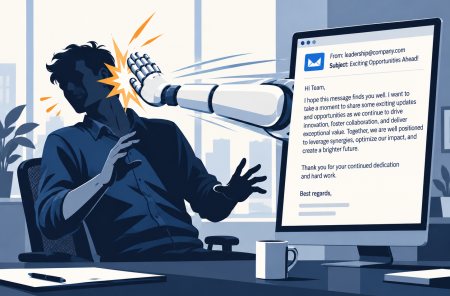



Agnes Kim could feel the shadow long before the email arrived. In the months leading up to that July morning, when a message confirmed she was among the thousands of Xbox employees laid off in Microsoft’s latest wave of cuts, she already knew the pattern. Big tech, for all its perks, had become a place of constant waiting — waiting for the next restructure, the next budget review, the next round of names on a list. After eight years at Microsoft, Kim had watched the industry shift from ambitious growth to a survival mentality, and she no longer wanted to be at the mercy of someone else’s pendulum. So instead of spiraling into panic or grief, she did something that surprised even herself: she had been quietly preparing for this moment for months. While still carrying her full-time executive role, she spent nights and weekends turning a vague dream into a concrete plan. She founded ViaJiin, a boutique Korean skincare startup based in the Seattle area, and by the time the layoff notice arrived, she had already built six months of momentum. Two days after receiving her pink slip, she announced the new venture on LinkedIn — not with hesitation, but with the kind of clarity that comes from having already done the hard work of asking, “What’s next?” She had skipped the usual five stages of grief entirely and landed straight on acceptance.
Kim’s path to that moment was neither sudden nor accidental. She came to Microsoft in 2018 after earlier roles at Sony Pictures Entertainment and Deloitte Consulting, eventually rising to director of Xbox’s market expansion in Asia. It was a role she loved, one that let her build teams and grow the gaming business in regions that felt close to her roots. But in the aftermath of the pandemic, as gaming demand cooled and the era of endless growth faded, the atmosphere inside the company began to change. Layoffs started rolling through every six months, and with each round, the anxiety became harder to ignore. Kim could see the toll it was taking on her team’s morale, and she realized that corporate stability was no longer something she could count on. She had always wanted to be an entrepreneur, but she had kept waiting for the “right” time. Then she understood that the right time would never arrive on its own — she had to make it. So in late 2025, she began tinkering with a new business concept. By March 2026, she had officially formed an LLC for ViaJiin. By May, she was running focus groups and testing her ideas with real customers. When the July cuts finally came, eliminating 1,600 Xbox jobs, Kim wasn’t starting from zero. She had a brand, a plan, and a growing sense of conviction that she was exactly where she needed to be.
To understand why Kim chose skincare, you have to understand a deeper story about identity and family. She spent part of her childhood in South Korea, from age eight to fifteen, and grew up watching her mother practice a meticulous, multi-step skincare routine every single day. Sunscreen wasn’t optional; it was a daily necessity, a quiet ritual of self-respect and discipline. In South Korea, where youthful skin carries heavy social weight, beauty is not just vanity — it’s a form of cultural expectation. That intense domestic demand has produced one of the most competitive beauty markets in the world, with more than 30,000 brands constantly pushing one another to innovate. Scientific research moves fast, ingredient trends evolve quickly, and the pressure to stand out is relentless. That same energy has turned South Korea into a global powerhouse: cosmetics exports have surged past $10 billion, and the United States recently overtook China as the top destination for Korean beauty products. Kim saw this wave coming and recognized an opportunity. American consumers were already fascinated by K-beauty, but they were also confused by it. With endless products, complicated 12-step routines, and countless influencers telling them what to buy, the experience felt overwhelming. Kim wanted to offer something simpler, more intentional, and more human — a way for people to experience the best of Korean skincare without the anxiety of choice paralysis.
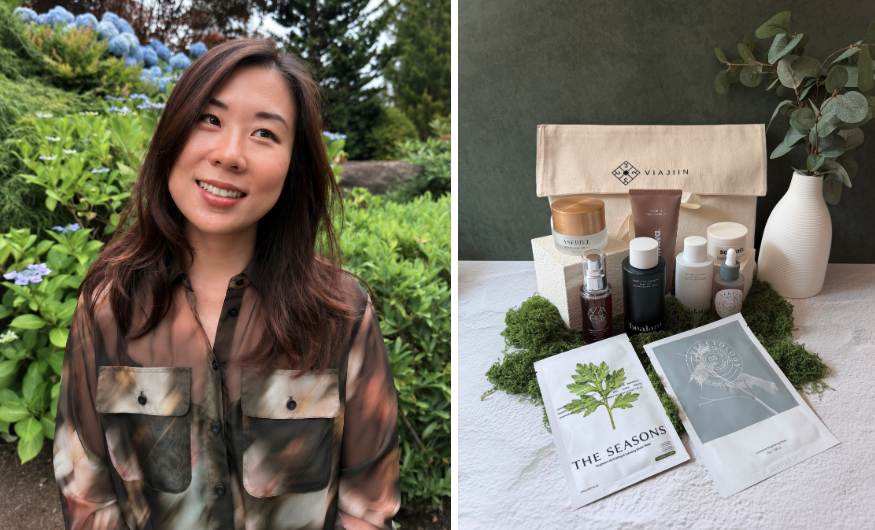
ViaJiin is her answer to that problem. Rather than building a massive catalog or pushing the latest viral trend, Kim curated a streamlined collection centered on a four-product kit: cleanser, toner, serum, and cream. Customers start with a digital skin quiz that helps them find the right combination for their needs, and then they receive a beautifully assembled set that takes the guesswork out of the routine. Kim deliberately avoids the mainstream Korean brands that already line the shelves at big-box retailers. Instead, she works exclusively with small, boutique Korean manufacturers whose products are harder to find and often made with more distinctive ingredients. As she puts it, “The products I carry, you can only get through me.” She handles the complicated work of importing them legally and compliantly, then packages them into a simple, accessible kit. Full sets sell for $179, with smaller duo sets available for $99. Since shipping her first orders in August, Kim has been doing nearly everything herself — hand-packing boxes, writing personalized notes, and creating small moments of delight for customers. She has hosted local “ViaJiin Nights” where people can test the products in person, and her kits have already secured shelf space at a K-Beauty & Skin store in Renton, Washington. For a brand still in its infancy, the early traction offers proof that her message is connecting with people who are tired of complicated beauty culture and ready for something more personal.
But building a business from nothing has also been an exercise in loneliness and reinvention. At Microsoft, Kim managed teams, attended meetings, and relied on layers of infrastructure to get things done. As a solo founder, she has had to become her own entire company — and she has leaned heavily on artificial intelligence to fill the gaps. During her final months at Microsoft, AI was everywhere, dominating conversations and shaping corporate strategy. Now she is using those same tools to do work that would normally require a team of employees and contractors. She calls Anthropic’s Claude her virtual strategist, and she has experimented with “vibe coding” using platforms like Lovable to build ViaJiin’s website and skin quiz without hiring a developer. “I don’t have a co-founder… I’m delegating to Claude and GPT,” she says. “People are very surprised by my website or the skin quiz. I’m not an engineer, but it looks like I hired a web designer.” The AI tools have given her speed and confidence, but she quickly discovered that software can only go so far when you are running a business that depends on physical products. There are FDA labeling regulations to navigate, customs paperwork to manage, and ingredient compliance to verify. That operational heavy lifting is stubbornly analog, requiring patience, attention to detail, and a willingness to do the unglamorous work. The transition from corporate structure to total independence has also brought moments of doubt. Without a team to delegate to, without a clear roadmap of objectives and key results, Kim sometimes finds herself staring at a blank calendar, wondering what today’s goal is supposed to be. “I think I understand why some people just work for the man,” she jokes. “When you work for Microsoft, certainty and structure are more there. There are definitely moments where I’m like, ‘What the f*ck am I doing? What is today’s goal?’”
Yet despite the uncertainty, Kim insists she has never been more certain about the direction of her life. The freedom of entrepreneurship, she says, is worth the anxiety that comes with it. She is energized by the daily hustle, the creative control, and the chance to build something that is entirely her own. She wants to grow ViaJiin into a national brand, and she intends to stay out of big tech for as long as she can. There is no nostalgia in her voice when she talks about her old job, no longing for the comfortable salary or the familiar rhythm of corporate life. Instead, there is the pride of someone who has finally stepped into who she was always meant to be. “I’m 1,000% energized. I absolutely would not trade it,” Kim says. “This is allowing me to be truly the version of Agnes that I thought I would be when I was 12, and I want to keep going at it.” The layoff that could have been a devastating ending turned out to be the beginning of something braver. Agnes Kim didn’t just survive the cut — she used it to cut a new path, one she chose for herself. And if there is any lesson in her story, it’s this: preparation can turn even the most uncertain moment into the start of something meaningful.