

After twenty years at Redfin and ten months of unemployment, I’ve co-founded a new company. My business partner and I will announce our plans after we’ve built our product, but in the meantime GeekWire asked me to explain what I learned in the transition between Redfin and this new venture. Many of us are in transition because society is in transition, with AI hollowing out big companies and making it easier to start new companies. In the past, my own transitions had been harrowing, because I ran out of money or lost my sense of purpose. Leaving Redfin, I thought “here we go again.” I felt self-conscious being in the grocery store at 11 a.m. on a weekday. I was ashamed when I couldn’t come up with an idea for a company. But I made it to the other side. To do that, I had to convince myself that I was an intrepid explorer, even if what I was exploring wasn’t Mount Everest, but instead what I could be. I wanted to feel brave about encounters I otherwise would’ve found embarrassing. Over the last year, I met people about becoming a high school teacher, a Whistler bagel shopkeeper, a candidate for the state legislature, the founder of a tree-planting nonprofit, the CEO of a pre-IPO company and a project leader for Sound Transit. None of those paths was mine, but all of them widened me. The way to prepare yourself to do one thing for a long time is first to consider everything else. I didn’t know it then, but that exploring was not the opposite of starting a company; it was the foundation of starting one.
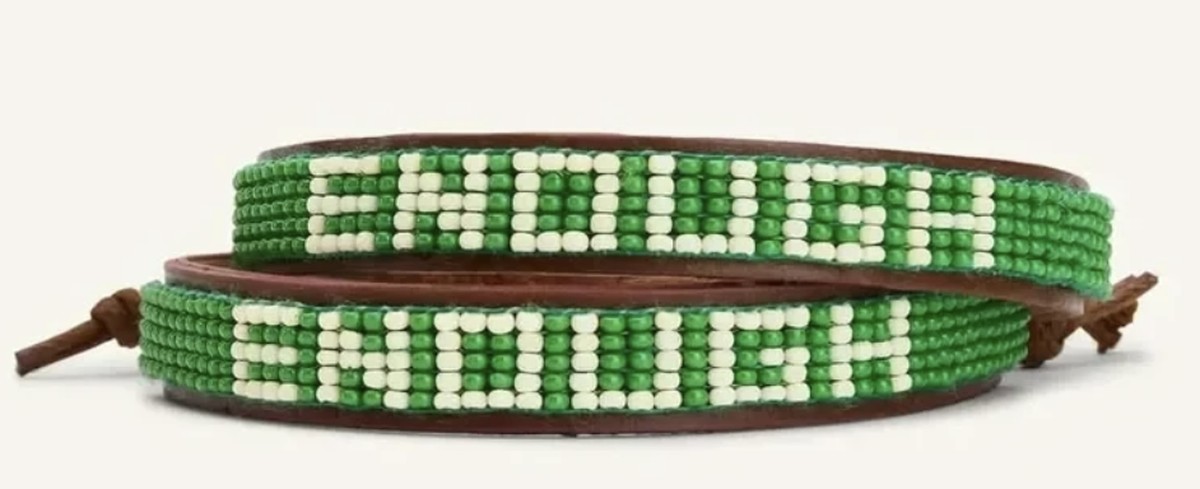
At the beginning of my exploration, a CEO recruiter told me the startup scene in Seattle was “dead” and that, for all of Seattle’s talent, more companies were forming in New York and even LA. I Googled “high-growth Seattle startups” and the list included one company that went bankrupt in 2023, and Redfin, which was acquired in 2025. Another friend told me that she was on a Discord channel with a bunch of CTOs who were miserable trying to do “AI transformations” at businesses with legacy codebases. At least for me, the logical response to all this has been to start an AI-native company in Seattle. It took me months to feel ready to do that. In January, a friend told me I wasn’t allowed to make any big decisions until September. Another said I had to wait until the frenzy of my last job had subsided. “You’ll know it has happened,” he said, “because food will start tasting better” (it never happened). At a conference, a fashion entrepreneur who’d built and abandoned vast residences in Jackson Hole and Costa Rica, and got divorced twice in the past three years, gave me a bracelet that said “we are enough.” Since I’d often been thinking I hadn’t done enough in the morning to deserve lunch, it was a relief to feel that I didn’t have to be creative or productive in order to justify my existence. But relieving that pressure also made it easier to be creative and productive. The bracelet didn’t tell me to stop; it told me to stop earning my right to exist. That changed everything.
On a call walking through Volunteer Park, I told a friend that the bracelet reminded me I could be happy and never start a company again. She said, “YOU JUST NEED A CO-FOUNDER.” She told me to share flawed ideas with people who could make them better. I set up meetings with potential co-founders, and we shared our ideas before they were ready, because our meetings had become deadlines. Then we used AI to turn our ideas into products, so we could see what was good and bad about each idea. Starting a company started to feel like a natural progression, instead of Athena sprouting out of Zeus’s head. When I confessed to a friend that everything we were working on still seemed so small, she said, “What about breakfast burritos?” She outlined her vision for a shop serving breakfast burritos all day, with a line out the door. Then she started talking about inventing a nursing home “that makes everyone happy.” Rather than running a McKinsey market-sizing analysis, she just thought about what she wanted to exist in the world. That’s something almost anyone can do. In her living room, I suddenly felt that humanity would always have an instinct—this is a bizarre word, but it’s what popped into my head—to fructify. I remember walking home from her house with my wife and hearing the thick sound of insects humming in the night as proof of life’s rich pageant. This is what I mean by surrounding yourself with good vibes. Not positivity theater, but being near people who believe that making things is natural and that the world is full of seeds.
The last step in my process maybe should’ve come first: choosing where I wanted to make a difference. I thought about all the companies that I honestly would’ve been proud to start, and they were all in the same industry. I had no experience in that industry, but a friend said I could offset that if I were willing to give it everything I have, which is what I’m now doing. I met amazing, generous investors who gave me a good idea, and a business partner who helped me think it through. Through all of this, I depended on my wife more than any husband ever should. She works herself to the bone treating people with cancer, but she took my calls in the middle of her workday, when I would talk in detail about what to cook for dinner and then—one more thing!—what’s the meaning of my life? Once, she was getting into our Chevy Bolt for her morning commute while I was rounding the corner with the dog, and I saw her brighten in the way many people did back when I was Redfin’s CEO. I found myself full of anticipation. She reached into the car, as if to grab a small gift, and heaved something at me from across the street, saying it “needs reprogramming.” Before I realized it was a garage clicker, I thought she had said I was the one who needed reprogramming. “Maybe that’s true,” I said to myself, trudging past the browned lawn, and the dirty dishes, and into a world of possibilities.
Looking back, I think the bracelet and the garage clicker were telling me the same thing from opposite directions. The bracelet said “we are enough”: you don’t have to be a famous CEO or a brilliant founder to deserve lunch. The garage clicker said “needs reprogramming”: you are unfinished, and that’s okay. Both are true. You are enough to begin, and you still need to be reprogrammed. That is the human condition, and it is especially true during a transition. AI is hollowing out old roles and creating new ones, and many of us are being asked to let go of the identities we built our lives around. We can’t do that alone. I needed my wife, friends, potential co-founders, strangers who dreamed of breakfast burritos and nursing homes, investors, even a fashion entrepreneur with a bracelet. I needed to stop treating exploration as a waste of time and start treating it as preparation. I needed to share flawed ideas instead of waiting for perfect ones. I needed to use AI not as a threat but as a way to prototype, to make ideas tangible enough to evaluate. I needed to remember that humans have an instinct to fructify—to make things grow—and that it can appear in the most unexpected places. Surrounding yourself with good vibes isn’t naive. It’s survival.
The woman with the breakfast burrito vision taught me that we don’t need a market-sizing analysis to justify a dream. We just need to want something to exist. The insects humming at night taught me that life is abundant and wants to keep going. The garage clicker taught me that I am a work in progress. The bracelet taught me that I am already enough to be loved. Together, they made it possible to start a company without pretending to be Zeus. I am not Zeus; I am a person who needs a co-founder, a wife, a community, and a little grace. And that is exactly how it should be. So here I am, co-founding a new company. It is not Athena. It is more like a breakfast burrito: humble ingredients, assembled by hand, better because it is shared. We will announce our plans after we’ve built our product. But the product is not the whole story. The story is that a person who once thought he had to be a successful CEO to deserve lunch learned to be enough, and then learned to start anyway. If you are in transition, I hope you find a bracelet. I hope you find a friend who tells you to just find a co-founder. I hope you find someone who asks what you want to exist in the world. I hope you have someone who throws a garage clicker at you across the street. And I hope you can say “maybe that’s true” and keep walking. Because the world of possibilities is waiting on the other side of the browned lawn and the dirty dishes. It is not a place you reach by being perfect. It is a place you reach by being willing. We are enough. We are also unfinished. Good. That’s not a paradox. That’s a beginning. That’s what I learned. And I’m still learning. But now I know the way: explore, share, choose, and let yourself be loved. The way to prepare yourself to do one thing for a long time is first to consider everything else. I did. I am. I will. And that is enough.