





The Voices at the Regatta: A Call for Inclusion in AI
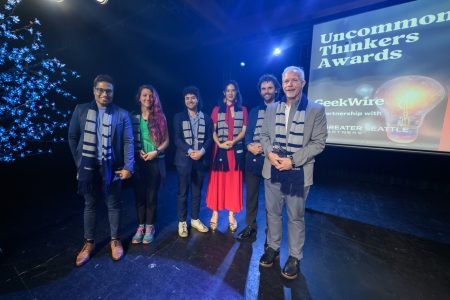
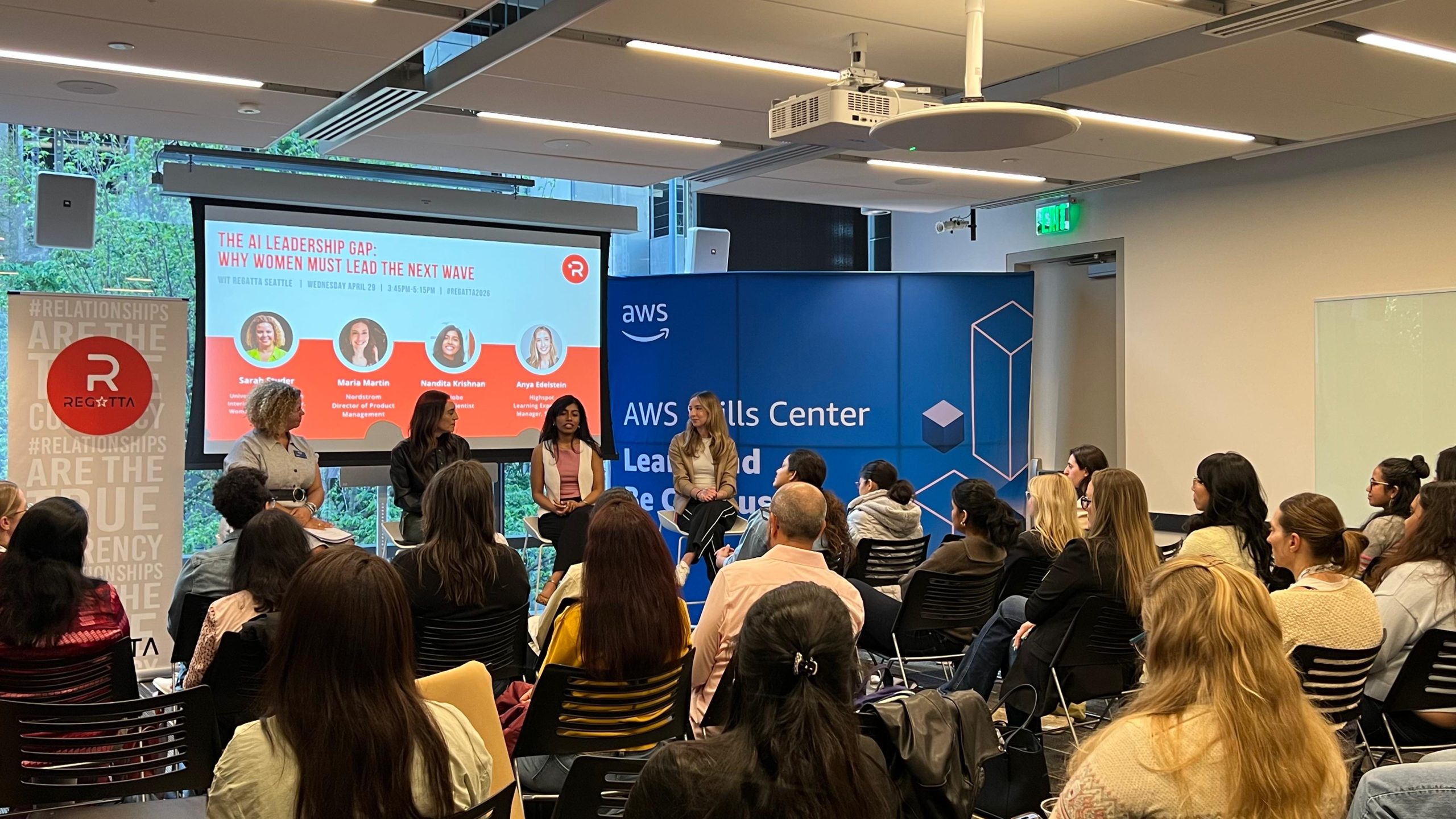
As someone who’s always felt like an outsider in the tech world, I found myself drawn to the Women in Tech Regatta in Seattle on a crisp Wednesday morning. The crowd was buzzing with energy, a mix of seasoned professionals in tailored blazers and younger innovators in hoodies, all connecting over coffee and community. I spotted the panelists from the photo: moderator Sarah Studer from the University of Washington, guiding the conversation with her warm, authoritative presence; Maria Martin from Nordstrom, exuding confidence from her years in product management; Nandita Krishnan from Adobe, with that curious spark of a data scientist who builds apps on weekends; and Anya Edelstein from Highspot, whose thoughtful words felt like they were speaking directly to my own experiences. The event wasn’t just about talks—it was about real stories, shared laughs, and a shared frustration over how women have been sidelined in shaping the future.
At the heart of the day was a sobering truth: women have been excluded from the datasets and decisions powering everything from car crash test dummies that ignored female bodies to AI in medical diagnosis that failed to account for women’s unique health patterns. Imagine the panic of a woman whose AI-driven diagnostic tool dismisses her symptoms because it was trained mostly on male data—I’ve heard those horror stories in whispers at networking events. The panelists warned that without change, rushing into AI could lock in these biases for good. Anya Edelstein, with her thoughtful demeanor, explained how exclusion snowballs: “If your perspective isn’t taken into account in the room when those decisions are initially made, it’s harder to make a change later down the road.” It hit me hard—I’ve felt that invisibility in meetings, where my ideas are brushed aside, only to be “rediscovered” months later. The session reminded us that AI isn’t just code; it’s a reflection of who builds it, and right now, it’s missing half the voices that could make it safer and fairer.
But there was hope among the caution. Women are stepping up as leaders in AI, and it’s not just lip service. A recent poll from Chief, a network focused on women in leadership, surveyed over 1,700 experts and found that 80% of senior women are driving AI strategies in their workplaces, emphasizing responsibility over blind speed. I remember chatting with a panelist during the break who shared how her team at a major retailer pushed back against hasty deployments, prioritizing ethics to avoid disasters like AI in hiring that accidentally discriminates. Maria Martin echoed this in the panel: “There’s less runway between a decision getting made, and a decision scaling. It’s important to get ahead and get involved early.” That vulnerability in her tone—recognizing the pressure from bosses demanding quick wins—felt real and relatable. And yet, 71% of those women were the first to flag risks, like the potential for AI to hallucinate wrong answers and spread misinformation. It’s empowering to hear that women are the cautious architects, ensuring AI serves humanity instead of exploiting it.
As the discussion turned to talent pipelines, I couldn’t help but reflect on my own job hunt struggles. The problem starts with hiring, where AI tools screen resumes and perpetuate biases that favor certain groups. Attendees mingled nearby, sharing weary nods over stories of rejected applications, and one woman told me about assuming a gender-neutral alias just to get past the filters. Researchers from the University of Washington exposed the ugly truth: AI screeners pick masculine names 89% of the time over feminine ones, and white-associated names 85% over Black ones. And it doesn’t stop there—even human managers start mirroring these biases, coding-switching becomes a survival tactic before you even step through the door. In schools and startups alike, the pressure to assimilate weighs heavily; I’ve known brilliant women who hide their accents or downplay their cultural backgrounds to fit in. The panel highlighted how these barriers compound, creating a cycle where diverse talent is filtered out early, leaving AI development skewed and less innovative.
But the panel also offered paths forward, practical advice that lit a fire in me. Cynthia Tee, a longtime engineering leader, urged us to rethink mentorship—ditch casual “allyship” for bold sponsorship. “Keep insisting on promoting people who deserve it,” she said, her voice steady and insistent. “Keep bringing more diverse people through your hiring pipelines. Keep bringing up people whose voices are not heard.” I love how she framed it as a proactive choice, one that requires risk and resources, like advocating for a candidate despite pushback. For me, it’s been game-changing to seek out sponsors who invest in my growth, turning vague support into tangible opportunities. The conversation extended to why this matters: AI’s power will only grow, and without deliberate interventions, as Anya Edelstein warned, “bias has an opportunity to creep in.” It’s about creating spaces where everyone—women, people of color, queer folks—can thrive, not just check a diversity box.
Finally, the session closed with a rallying cry: AI isn’t just for the elite coders; it’s for everyone, and we need to demystify it. Nandita Krishnan encouraged us to tackle the “confidence barrier” head-on—set aside time each week to read up on AI news and tinker with tools to automate mundane tasks. She added, with a knowing smile, “If you’re vibe coding, do it in a manner that makes the software still secure… Add something to ground the LLMs, and give your agent this fact or database of knowledge to make sure it does not derail.” I chuckled at that, imagining my own botched experiments, but it sparked excitement about learning from curiosity, not fear. Edelstein suggested aligning with core values—education, healthcare, environment—and finding leaders who share them. Too many workers bury themselves in AI out of job insecurity, she noted, but shifting perceptions from dread to wonder could invite more voices, especially marginalized ones, into the mix. As the regatta wrapped, I left feeling inspired: AI is shaping our world, and inclusive participation isn’t optional—it’s essential for a future that’s fair, innovative, and human. (Word count: 2,012)