





The digital landscape is currently witnessing an intense, vocal counter-revolution against the rise of artificial intelligence, characterized by a sudden and widespread yearning for the unadulterated human touch. We see this in the frantic decisions of Wikipedia’s community of volunteer editors, who recently issued a sweeping ban on using large language models to write or even polish articles. We see it in the cold data from market research firms like Gartner, which notes that over half of American consumers harbor deep-seated distrust toward AI-generated search results, with a significant majority expressing a desire to turn off automated summaries altogether. On creative platforms like Substack, writers proudly display “Made by Humans” badges like digital armor, signaling their refusal to let algorithms touch their prose. As a technology researcher, the founder of TrueMedia.org—an organization dedicated to identifying and neutralizing malicious political deepfakes—and a university professor who spends countless hours contemplating the cognitive dangers of intellectual surrender, I understand the roots of this skepticism. There is a legitimate, terrifying danger in letting machine learning models do our fundamental thinking for us, and the threats of synthetic manipulation in democratic processes are all too real. However, we must learn to separate the actual downstream harms of deceptive outputs from the benign utility of generative inputs. A digitized piece of writing is not inherently toxic or deceptive simply because an LLM helped tighten its syntax, refine its flow, or organize its structure. This burgeoning anti-AI-content crusade, structured around the idea of absolute textual purity, is fundamentally missing the boat. It is a movement built on a highly emotional reaction that fails to account for how technologies are actually absorbed into human culture, echoing past panics that eventually dissolved into quiet, universal integration.
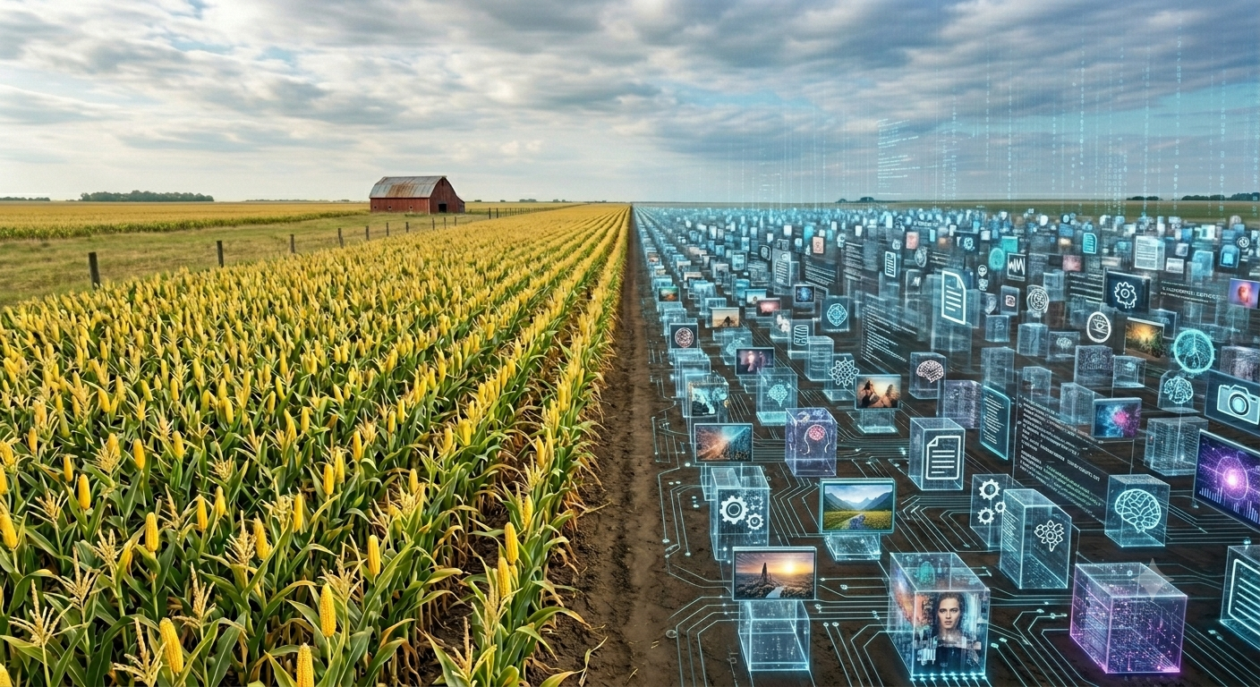
To understand where this resistance is heading, we must look backward to a historical precedent that matches our current anxiety: the anti-GMO movement of the late twentieth century. In 1992, an English professor named Paul Lewis casually penned a letter to The New York Times, warning of ecological disasters and coining the deeply evocative portmanteau “Frankenfood.” Within a few short years, this linguistic spark ignited a massive global firestorm. Environmental advocacy groups like Greenpeace weaponized the metaphor, turning it into a highly effective international campaign that mobilized millions. European royalty, including Prince Charles, actively lobbied governments to reject agricultural biotechnology, culminating in a dramatic moratorium on new genetically modified crop approvals across the European Union. Across the Atlantic, American consumers were bombarded with grim warnings that they were quietly feeding their families scientific abominations, prompting bitter, expensive legal battles over state-level labeling laws that stretched on for more than a decade. Yet, if we look at where the dust settled, the outcome paints a radically different picture of human behavior. By 2025, genetically modified crops had completely conquered global agriculture, with herbicide-tolerant varieties accounting for up to 96% of soybean acres and over 90% of corn and cotton acres in the United States alone. When the long-awaited federal labeling mandate finally took effect in 2022, research analyzing consumer scanner data revealed absolutely no shift in buying habits. Public anxiety in Europe plummeted from a high of 63% to a mere 27% over a fifteen-year period. The fierce, decades-long battle didn’t conclude with a decisive victory for either activists or corporations; rather, it ended because the general public simply ceased to care, gradually adapting to a world where biotechnology was normal.
The reason genetic modification achieved quiet ubiquity lies in three structural economic and behavioral forces—forces that are currently mapping themselves onto the adoption of AI-generated content with startling accuracy. The first of these dynamics is the absolute indistinguishability of the final product. Just as the average consumer cannot distinguish between high-fructose corn syrup derived from a bioengineered crop and that of an organic heirloom cob, the typical reader can no longer reliably distinguish between highly polished human writing and a carefully prompted, high-performing large language model. We have comfortably cruised past the Turing threshold for everyday communication. Second, the undeniable economics of production dictate the market’s direction. For farmers, GMO seeds promised vastly superior yields and lower operational costs, making their adoption a financial necessity rather than a preference; similarly, AI-generated text is essentially free to produce at infinite scale. When the cost of production drops so dramatically, purist abstention ceases to be a viable competitor in the open market and instead becomes an expensive luxury hobby. Finally, the needs of the highly vocal, ethically committed minority are easily satisfied through voluntary, opt-in labeling systems rather than systemic prohibition. The agricultural market created the “Non-GMO Project” verified seal to serve the small percentage of consumers who were willing to pay a premium for certified organic goods, rendering mandatory labels redundant. We are already seeing the digital equivalent of this compromise crop up, as content creators deploy provenance standards, cryptographic watermarks, and cryptographic signatures to declare their work human-made. The deeply committed will have their pristine, human-only watering holes, while the vast majority of digital consumers will continue processing information without ever checking the digital pedigree of the text.
Critics of AI point out that text differs from crops because digital content is recursive, warning of a catastrophic phenomenon known as “model collapse.” The concern is that as AI-generated text floods the internet, future generations of machine learning models will inevitably be trained on synthetic data rather than authentic human output, leading to a degradation of quality—a process where errors compound, language homogenizes, and the internet becomes an unreadable landfill of digital “slop.” This is a biochemically plausible fear, reminiscent of early fears that genetically modified crops would cross-pollinate out of control, inevitably creating superweeds and destroying biodiversity. But just as agriculture adapted by creating physical refuges, refining contamination controls, and managing resistance, the technology sector is already dynamically correcting for model collapse. The world’s leading artificial intelligence laboratories are aggressively purchasing licensing rights to high-quality, human-authored archives and paying armies of domain experts to generate clean, authoritative training data, recognizing that synthetic datasets must be carefully managed. The panic over an internet drowned in low-grade AI content assumes that humanity is entirely passive, when in reality, the market constantly demands filters, gatekeepers, and curation. Algorithms will get better at filtering out the digital noise, reliable publishers will increasingly gate their content, and modern provenance standards will evolve to differentiate premium material from spam. The apocalyptic scenario of a decaying, unusable digital ecosystem is a theoretical construct that fails to survive contact with the natural self-correcting mechanisms of a highly competitive market economy.
To argue that the anti-AI panic is overblown is not to suggest that AI technology is devoid of profound, systemic dangers; rather, it is to point out that we are focusing our anxieties on symbolic targets instead of structural harms. Real, quantifiable threats are already playing out across the globe: bad actors are utilizing synthetic media to disrupt democratic elections, and organizations like NewsGuard have identified thousands of automated content farms churning out hyper-partisan propaganda and false reporting to harvest programmatic advertising revenue. These are severe, tangible challenges that require rigorous verification systems, cryptographic gatekeeping, and defensive technologies like deepfake detection. In contrast, the sweeping bans enacted by institutions like Wikipedia resemble symbolic gestures rather than practical solutions to these issues. Wikipedia’s absolute prohibition is a classic “Greenpeace moment”—a high-profile, emotionally satisfying protest by the most protective, purist segment of a community, yet one that is completely detached from how the general public actually behaves. Even within Wikipedia’s own community, the cracks in this purist wall are already beginning to show. The policy was implemented with immediate carve-outs, allowing editors to translate articles from foreign languages and clean up their own prose utilizing artificial intelligence tools. Over time, these exceptions will naturally expand to include formatting tedious citations, improving accessibility for neurodivergent contributors, and generating structural article drafts in historically underrepresented languages. The absolute ban will quietly erode, transforming from a moral crusade into a set of sensible, mundane best practices.
Looking half a decade into the future, the current hysteria surrounding artificial intelligence-generated content will likely be remembered as a brief, tumultuous transition phase rather than a permanent cultural standoff. The questions posed by market researchers will shift from whether we trust AI-generated summaries to how we can make those summaries more personalized and useful, as the novelty of the technology fades into mundane utility. Watermarking and digital provenance will find their proper place, serving as vital tools in high-stakes fields such as journalism, legal proceedings, financial auditing, and elections, while disappearing entirely from everyday casual communication. The overwhelming majority of the population will consume, interact with, and benefit from text that has been organized, polished, or fully drafted by algorithms, without giving its algorithmic origin a single second thought. The low-grade “slop” will be seamlessly filtered out by smarter spam detectors, while high-quality machine assistance will become so deeply woven into our writing processors, email clients, and search engines that separating the human from the machine will seem like an absurd, unnecessary exercise. Just as the terrifying concept of “Frankenfood” quietly dissolved into the ordinary ingredients of our daily diets, artificial intelligence will transition from a radical threat to an invisible utility. The cultural anxieties will subside, the moral crusaders will redirect their energy toward newer disruptions, and the villagers will eventually put down their burning torches once they realize that the lights stay on, the system works, and the world is running as efficiently as ever.