





Paragraph 1: The Unspeakable Discovery Under the Florida Moon
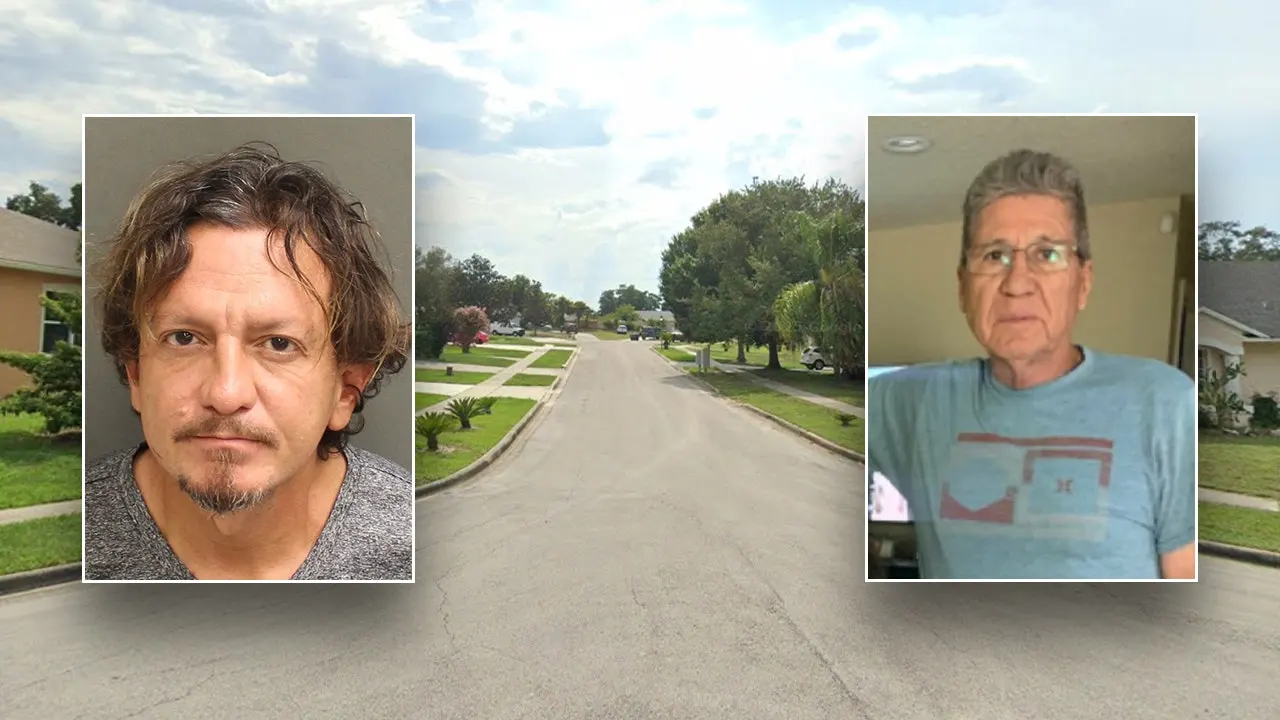
The humid Orlando night hung heavy over the quiet, tree-lined roadway just before midnight on a sweltering Friday in August. Deputy sheriffs, their flashlights cutting through the darkness, were scouring the area surrounding a modest family home, their minds racing with the grim possibilities surrounding the disappearance of 71-year-old Jorge Vazquez-Escutia. They had been searching for hours, hoping against hope for a sign that he was safe, perhaps having wandered off due to his memory loss. Then, they stumbled upon a cluster of three pieces of luggage, dumped haphazardly along the roadside, incongruous against the backdrop of suburban shrubs and the brick wall of a neighboring property. A faint, unmistakably foul odor emanated from one of the suitcases, a smell that seasoned officers immediately recognized as the sickly sweet perfume of human decomposition. A crime scene investigator knelt down, her gloved hands trembling slightly as she reached for the zipper. With a soft, ominous zzzzz, the suitcase opened, and the flashlight beam revealed a sight so grotesque that it would forever be burned into her memory: the severed head of Jorge Vazquez-Escutia, staring blankly back into the night. The initial hope of a wandering elderly man with memory trouble shattered instantly, replaced by the cold, horrifying reality of a meticulously planned and brutally executed murder. The other suitcases, located about 400 feet away, held more of his remains, wrapped in tarps, with luggage tags dangling that bore the name of the victim’s wife. This macabre discovery was not a random act of violence; it was a targeted, personal atrocity, leaving investigators to piece together the final hours of a man whose life was brutally ended not by a stranger, but by someone who was supposed to be family.
Paragraph 2: A Family’s Desperate Plea and the Dawn of Suspicion
Just twenty-three hours earlier, the story had begun with a frantic call to the Orange County Sheriff’s Office. A family member, worried sick, had gone to Jorge’s home when he failed to respond to calls for two days. The scene inside was profoundly unsettling: his phone, wallet, and keys were meticulously arranged on the kitchen counter, items he would never have left behind. His cars sat unlocked in the driveway, a stark anomaly for a man of routine. And outside, on the fence post, there were dark, rust-colored splotches that looked alarmingly like dried blood. The family’s anxiety was compounded by the knowledge that Jorge suffered from significant memory loss, making him incredibly vulnerable. But as they relayed their fears to the deputies, a even more disturbing piece of information emerged. The friends of his stepson, Jose Proano, had reached out to the family with a shocking, almost unbelievable confession: Jose had told them, point-blank, that he had killed his stepfather. It was a statement so outrageous it seemed like a delusion, but it ignited a firestorm of urgency. The sheriff’s office immediately issued a public alert, citing concerns for Jorge’s wellbeing due to his memory loss, hoping that a good Samaritan might spot him. Yet, as they delved deeper, the pieces began to align in a terrifying pattern. Jorge was a gentle, kind-hearted man, a neighbor who was always ready to lend a hand. The idea that his life could have been extinguished in such a violent, degrading manner left his loved ones reeling in disbelief, waiting desperately for any news that might prove the confession false, even as a sinking, gut-wrenching dread took hold.
Paragraph 3: The Security Camera’s Silent Witness
In the age of smart homes, the truth often lies in the pixels of a security camera. The investigation pivoted when deputies obtained footage from a neighbor’s surveillance system, covering the wall that separated their property from Jorge’s. The recording was a silent, damning testament to a cold-blooded act. On the morning of August 2nd, just hours after Jorge was last seen alive, the grainy black-and-white image captured a figure – a man wearing a black shirt – leaping over the back wall of the victim’s home with athletic ease. There was no hesitation, no casual visit; it was a definitive, purposeful entry. Over the next hour, the footage showed the man emerging from the house, dragging heavy suitcases and placing them in the backyard. At one point, in a chillingly casual act, the figure paused, reached down, and lifted what appeared to be a human arm, stuffed it into an open suitcase, and zipped it shut. Detectives watched the timestamp roll forward to 4:28 PM. The man in black was seen walking down the driveway, straining under the weight of three large suitcases. A note in the affidavit observed that the man’s left tricep was “clearly flexed” as he pulled them, a detail that spoke to the sheer physical toll of disposing of a human body. This was not the action of a panicked killer; it was a methodical, logistical operation of dismemberment and disposal, carried out in broad daylight under the supposed cover of normalcy. The visual evidence provided an undeniable framework for the timeline, and it pointed inexorably toward Jose Proano, whose cell phone data conveniently placed him at the scene during those exact hours.
Paragraph 4: The Fractured Mind of the Accused
The journey to find Jose Proano led investigators back to Northport, Florida, a coastal town roughly 150 miles away. Proano, a 44-year-old man on probation, had traveled to his mother’s home in Orlando earlier in the week, ostensibly for a visit. However, his presence was preceded by chaos. His ex-wife had contacted authorities, describing him as “acting erratic” and “making threats towards her,” painting a portrait of a man spiraling out of control. When detectives finally sat down with Proano, they encountered a man wrestling with severe mental illness. He openly discussed his schizophrenia, describing the voices in his head that told him to worry about his family, specifically his mother. This paranoia had manifested in a series of 911 calls he made, begging deputies to check on his mother because he believed “bad things were happening.” In a tragic, ironic twist, the deputies did check on the home, found everything fine, and reassured Proano – all while he was allegedly planning and carrying out the ultimate act of violence against the man he resented. Proano’s narrative was one of resentment and fractured family dynamics. He harbored a deep-seated “negative relationship” with his stepfather, accusing Jorge of “restricting his ability to see his mother.” In his distorted perception, Jorge was the barrier between him and his maternal connection, a perceived transgression that, in the dark logic of his delusion, demanded an extreme and bloody resolution. The investigation revealed a history of violent behavior; in 2022, he had been charged with armed burglary, a crime that could have landed him in prison for decades, but a plea deal had reduced his sentence to mere probation. This prior brush with the law, which offered him a second chance at freedom, would tragically prove to be a catastrophic failure in preventing future mayhem, as the system failed to recognize the dangerous cocktail of mental distress and violent tendencies that had been brewing within him.
Paragraph 5: The Interrogation and the Cracks in the Alibi
When the meeting with investigators began, Proano was initially defiant, adamantly denying any involvement in his stepfather’s disappearance. He stared at the security footage stills presented to him, insisting that the man in the black shirt could not be him. Yet, the detectives had woven an air-tight web of circumstantial and physical evidence. They pointed out the defensive injuries on his body – a network of scratches along his hands and arms, and a particularly large, deep scratch running down the right side of his cheek. These wounds were consistent with what a desperate, elderly man would inflict while fighting for his life against an assailant. Proano offered no explanation for them, save for vague allusions to an accident. The pressure mounted as his phone records were presented. The phone, his personal device, had pinged off a cellular tower in the immediate vicinity of the crime scene during the exact timeframe the man in black was seen on the video. Faced with the irrefutable marriage of visual technology and digital geolocation, Proano began to waver. He was “adamant” that the person wasn’t him, but when confronted with the data, he finally conceded the obvious, admitting that “it was in fact his cell phone and that it was in fact on scene.” This admission was the pivotal crack in his defense, shattering the fragile construct of his denials. The interview room, filled with the weight of a brutal murder, saw the cold, detached resolve of a man who had meticulously planned a killing, dismembered a body, and then attempted to dispose of the evidence in garbage bags, only to be betrayed by his own digital footprint and the physical trauma etched onto his skin.
Paragraph 6: The Aftermath of a Brutal Betrayal
The charges were swift and absolute. Jose Proano was formally charged with first-degree murder, stalking, and subsequent charges related to the desecration of a human body. He was booked into the Orange County Jail without bond, a man whose life had devolved from a troubled probationer into a cold-blooded killer. The reopening of his 2022 armed burglary case added yet another layer to the legal entanglement, ensuring he would remain in custody indefinitely. For the family of Jorge Vazquez-Escutia, the nightmare was just beginning. They had to endure the grotesque logistics of reclaiming a loved one who had been sawed apart and discarded like trash. Their grief was compounded by the cruel nature of the betrayal; the murderer was not a shadowy intruder but the son of their beloved matriarch, a man they had welcomed into their lives. In the wake of this horror, the community rallied, setting up a GoFundMe page to cover funeral expenses. The page’s description of Jorge painted a stark, heartbreaking contrast to the violence that took him: “a kind-hearted, gentle, and generous man who was always ready to lend a helping hand to neighbors, friends, and family alike.” These words honor the man he was, not the horrific way he died. The case stands as a chilling reminder of the fragility of domestic peace and the devastating consequences when mental illness escalates into a premeditated, violent descent. As the Orlando sun rose over the city, the ominous suitcases that had held a life’s secrets were now locked in an evidence locker, a silent monument to a crime that shattered a family and left a community grappling with the horrifying truth that sometimes, the monster under the bed lives not in a dark corner, but behind the familiar face of a family member who smiled for years and then, one day, chose to destroy everything.