





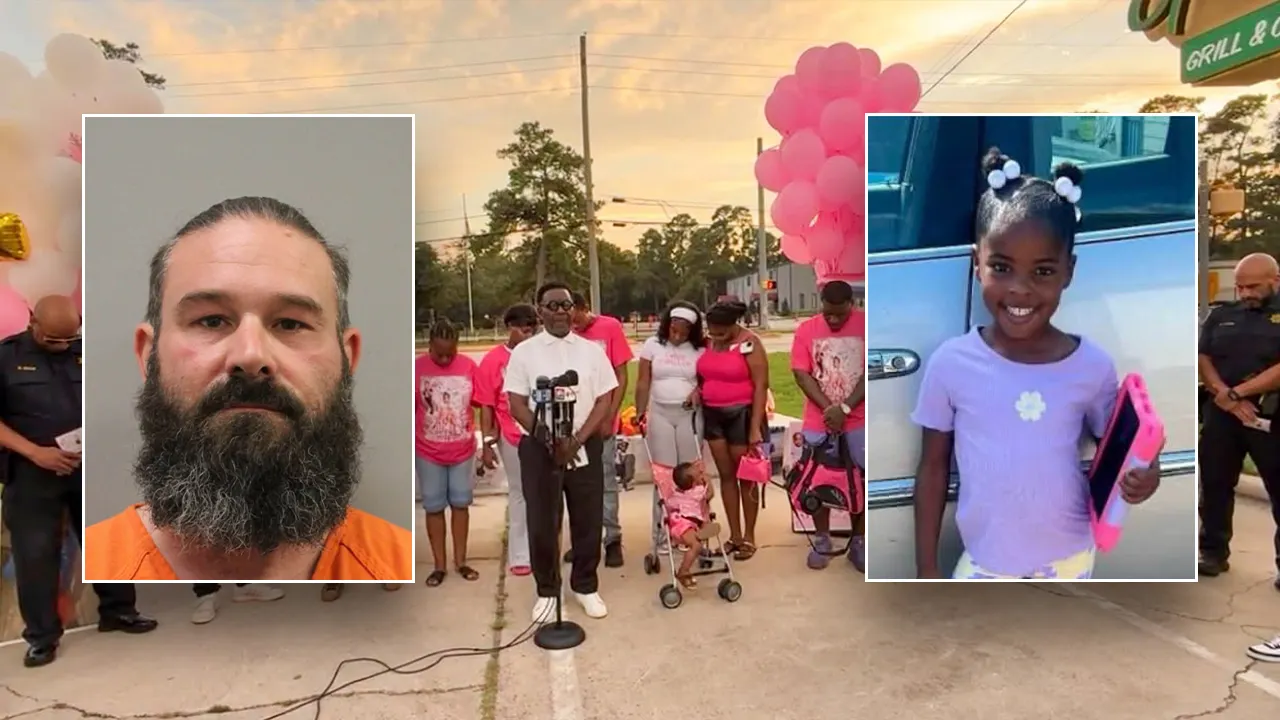
A 47-year-old Texas man is now behind bars, accused of snuffing out a young life in a senseless act of road rage that has left a community reeling in grief. Jeremy Porter was arrested and charged with capital murder on Tuesday in connection dengan the fatal shooting of 5-year-old Zah’Layah Walter, according to Harris County Sheriff Ed Gonzalez. The arrest came less than 24 hours after the violence unfolded, a rapid breakthrough that authorities credited to dogged investigative work, including evidence pulled from automated license plate readers. Porter was booked into the Harris County Jail in Houston, where he now awaits prosecution on a charge that under Texas law carries some of the most severe consequences known to the justice system. The swift legal action offered a measure of accountability, but for a family shattered by loss, no arrest could ever bring back the little girl whose life was cut tragically short on a dark stretch of roadway. Sheriff Gonzalez confirmed the arrest publicly, and the Harris County Sheriff’s Office made clear that the pursuit of justice was only beginning, even as the emotional wounds remained raw andeep.
The violence erupted Saturday night in the northwest reaches of Harris County, an area where residential streets and busy thoroughfares often see families heading home after weekend visits. Zah’Layah was riding in a vehicle alongside her mother, Monica Hicks, and her four siblings when gunfire suddenly tore through the night air, according to authorities. The family had been traveling from Hicks’ mother’s house back to their own apartment, a routine drive that no one could have imagined would end in tragedy. Witnesses and investigators later pieced together the terrifying sequence: someone opened fire on the family’s vehicle as it traveled on Grant Road near Jones Road, bullets slamming into the car and striking the 5-year-old. By the time the attackers had vanished into the darkness, Zah’Layah had been fatally wounded, her tiny body bearing the brunt of violence that should never have touched a child. The Harris County Sheriff’s Office said the investigation remains ongoing, and detectives continued to examine ballistics, surveillance footage, and digital leads to ensure that every angle was pursued. The sheer randomness of the attack—a family simply driving home, children buckled in the backseat—made the case particularly haunting, a stark reminder that a moment of someone else’s rage could rip apart an ordinary evening in an instant.
Hicks later recounted the harrowing ordeal to local outlet KHOU, her voice still trembling with the shock of what unfolded in those terrifying seconds. She said she was driving home from her mother’s house with her five children, the quiet rhythm of a weekend visit suddenly shattered by the crack of gunfire. “All my kids in the back seat were screaming, and they continued to shoot in my car,” Hicks told KHOU, describing a scene of pure pandemonium. In that chaos, with her children wailing and bullets flying, Hicks had but one instinct: get her family to safety. She kept driving, her hands gripping the wheel, her eyes fixed on the road ahead, praying that the assault would end. But it was not until she pulled into her apartment complex, the engine idling in the safety of home, that she realized something washorribly wrong. “And I did not know my daughter was hit until I pulled into my apartment,” she said, the words hanging heavy with a mother’s unbearable anguish. The realization that her youngest child had been struck, that a life so small had slipped away while she was focused on escape, was a blow that no parent should ever have to endure. The image of that moment—a mother discovering her daughter’s injuries in the aftermath of violence—served as a devastating emblem of how quickly joy can turn to tragedy, how a routine journey can end at a hospital or a morgue instead of a warm welcome home. Hicks’ surviving children, her four other young ones, now carried the psychologicalweight of that night, their screams etched into memory alongside the loss of a sibling.
The Harris County Sheriff’s Office has pledged to remain alongside the family as the case moves forward, emphasizing that the arrest was only one step in a longer journey toward healing and accountability. In a statement posted on X, the department offered a rare glimpse of raw, human commitment: “We stood alongside the family of 5-year-old Zay’Layah Walter, whose life was tragically taken in a roadway-related shooting. The person accused of taking her life has been arrested,” the post read. “We remain committed to seeking justice for [Zah’Layah] and supporting her family.” The choice of words—”stood alongside”—signaled more than official duty; it acknowledged the profound loss and the department’s role as a source of steadiness in a storm of sorrow. Still, the investigation was far from over, authorities said, with detectives continuing to examine the circumstances surrounding the shooting, explore possible motives, and determine whether anyone else was involved. The Harris County Sheriff’s Office could not immediately be reached by Fox News Digital for further comment, but the public message was clear: law enforcement intended to see this case through, to ensure that those responsible faced the full weight of the law, and to honor the memory of a child whose life was stolen before it truly began. For the community, the arrest brought a measure of relief—a dangerous suspect taken off the streets, a swift response that showed officials were listening—but it could not erase the grief that had settled over the neighborhood like a heavy fog.
Beyond the legal proceedings, this tragedy has touched a raw nerve in the broader Houston area, sparking conversations about the epidemic of roadway shootings and the vulnerability of families on public roads. How many more children, people wondered, would have to be caught in the crossfire of someone else’s feud or fury before meaningful change came? The case highlighted the critical role that technology, such as automated license plate readers, could play in solving violent crimes, allowing investigators to track suspects with a speed and precision that would have seemed impossible in decades past. But it also underscored a grim reality: that such tools were reactive, not preventive, arriving after the damage was done, after a mother had already lost her daughter, after a child’s voice had already been silenced. Community leaders and ordinary residents alike began to call for greater vigilance, for witnesses to come forward, for anyone with information about the shooting to cooperate with investigators. There was a shared understanding that justice, while swift in this instance, needed to be buttressed by a collective refusal to let such senseless violence become normalized. The sight of a 5-year-old’s name trending on local news, her cheerful face glowing in a family photo, served as a painful reminder of what was at stake every time a driver became enraged behind the wheel, every time a dispute escalated into bullets instead of words. The street where Zah’Layah was killed, a road that would forever bear the scar of that night, became a makeshift memorial of stuffed animals, balloons, and handwritten notes—a testament to a community’s determination to remember a little girl and confront the uncomfortable truth that could have been any one of their children.
As the days pass, the focus inevitably shifts to the legal road ahead for Jeremy Porter, who now faces capital murder charges that could ultimately carry consequences ranging from life in prison to the death penalty, depending on prosecutorial decisions and the course of the trial. But for those who loved Zah’Layah Walter, the legal circus was cold comfort. The family faces a future without her—without her laughter, her questions, her tiny hand reaching for her mother’s. Monica Hicks, who showed extraordinary composure in recounting the horror of that night, now must summon even greater strength to shepherd her remaining children through grief, to help them make sense of a senseless act, to find a way to heal a household rent by violence. The children who shared that backseat, who heard the gunshots and felt their mother’s terror, will carry memories of that night for the rest of their lives; they lost not only a sister but also their innocence, their sense of safety, their belief that the world was a place where you could drive home from grandma’s house without fear. The 5-year-old whose life was taken was more than a statistic, more than a case number—she was a daughter, a sibling, a joy to those who knew her, a promising little light extinguished far too soon. In the midst of grief, the Harris County Sheriff’s Office has asked the public for patience, for prayers, and for any additional information that might help solidify the case against the accused. For now, all that remains certain is that a family is mourning, a community is aching, and a man sits in a jail cell accused of a crime that has left an indelible stain. The pursuit of justice will continue in courtrooms and corridors of power, but the true legacy of Zah’Layah Walter will be measured not in verdicts or sentences, but in the ways that strangers were moved by her story, in the resolve that her death would not be in vain, in the fragile hope that someday, no child would have to fall victim to the rage of another. Until that day, her name will be whispered by those who loved her, and her face will remain etched in the memory of a city that refused to look away.