






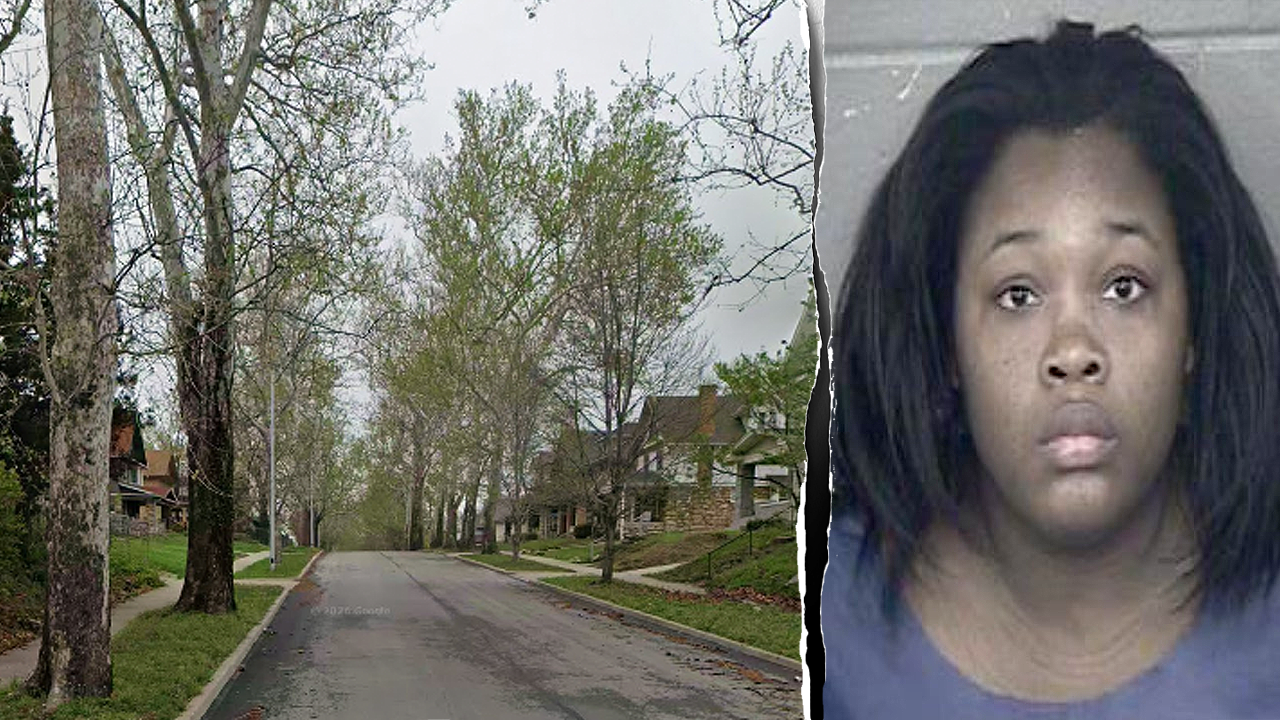
There are moments in life that shatter everything in their path, leaving behind questions that no courtroom can ever fully answer. On a quiet Tuesday morning in a Jackson County courtroom, Mariah Thomas stood before Judge Sarah A. Castle and quietly accepted a reality that will define the rest of her life. The 28-year-old Missouri mother had come to face the unthinkable: the death of her one-month-old daughter, Za’riah Thomas. In a plea agreement that ended a long and agonizing legal ordeal, Thomas pleaded guilty to first-degree endangering the welfare of a child resulting in death. The judge sentenced her to 13 years in the Missouri Department of Corrections, with credit for time already served. A far graver charge of first-degree murder, which prosecutors had added at some point during the proceedings, was dismissed as part of the deal. There was no probation, no path to early freedom beyond the sentence itself. As she was led away, Thomas left behind not only a courtroom but a family and a community forever altered by a tragedy that defies easy understanding.
The details of what happened on February 9, 2024, are as heartbreaking as they are difficult to read. Around 1:30 in the afternoon, police and emergency responders were called to a home in Kansas City after a report that a baby was not breathing. When officers arrived, they found Za’riah Thomas unresponsive, with visible burns across her tiny body. Kansas City Fire Department personnel pronounced the infant dead at the scene. The circumstances were immediately recognized as beyond ordinary tragedy. Investigators were told that Thomas had been trying to put her daughter down for a nap, but in a moment of catastrophic confusion, she said she placed the baby in the oven instead of the crib. A family member later recalled Thomas saying, “I thought I put her in her crib and I accidentally put her in the oven.” The baby had been wearing a bodysuit over a diaper, and investigators noted that her clothing appeared to have melted onto the diaper. A baby blanket recovered from the living room also showed significant burn marks, adding to the grim evidence of what had occurred in that home.
The legal case that followed was shaped by the strangeness and sorrow of the facts. Initially, Mariah Thomas was charged only with first-degree endangering the welfare of a child resulting in death. Later, prosecutors added a first-degree murder charge, a decision that raised the stakes and left the public to wonder how the justice system would weigh an act that appeared to be a horrifying accident against the legal definitions of criminal culpability. In the end, Thomas accepted the plea agreement, and the murder count was dismissed. She declined to speak with detectives at first after being advised of her rights, but she did agree to provide a blood sample and to allow investigators to access data from her cellphone, according to court documents. At the time the original charge was announced, then-Jackson County Prosecutor Jean Peters Baker acknowledged the profound gravity of the loss. “We acknowledge the gruesome nature of this tragedy, and our hearts are weighted by the loss of this precious life,” Baker said. “We trust the criminal justice system to respond appropriately to these awful circumstances.” Judge Castle, after reviewing the case, found that Thomas entered her guilty plea freely and voluntarily, understood the charge against her, and had no defense based on mental disease or defect.
But behind the legal language and the plea documents is a human story that cannot be reduced to charges and sentences. Mariah Thomas is a young mother who, by all accounts available in the record, found herself in a moment of catastrophic error that no parent could ever imagine surviving. The case is not one of malice in the traditional sense; there is no indication that Thomas intended to harm her daughter. Instead, the evidence points to something that is both more fragile and more terrifying: the way exhaustion, routine, and a lapse in awareness can converge into tragedy. New parents are often running on empty, functioning on broken sleep and autopilot, their minds juggling a thousand small tasks. It is in that haze that a crib and an oven can become confused in the most horrifying way imaginable. Even if the justice system has spoken, the emotional weight of what happened will never be lifted from Thomas. She will carry the memory of that day with her for the rest of her life, not only as an incarcerated person but as a mother who lost her child under the most agonizing circumstances. No sentence can compare to the sentence she will serve in her own heart.
For the family and the community, the loss of Za’riah is no less profound. A baby girl with a name that means hope and strength never had the chance to grow, to take her first steps, to say her first word, to become whoever she was meant to be. Instead, her life ended in a flash of terrible confusion, leaving behind a family torn between grief, anger, and perhaps a deep, complicated pity for the woman who was supposed to protect her. The plea agreement may have brought a measure of closure to the legal process, but it does not erase the empty crib, the unused baby clothes, or the painful anniversaries that will come and go. The dismissal of the first-degree murder charge suggests that prosecutors came to recognize the nuances of this case, that they understood this was not a calculated act of violence but something more inexplicable and more tragic. Yet the law still had to respond, because a child had died and someone was responsible. The 13-year sentence walks a line between accountability and mercy, acknowledging the enormity of the outcome without pretending that justice can ever restore what was lost.
This case also speaks to something larger about how society understands and supports parents, especially those in the fragile early weeks after a child is born. The postpartum period can be a time of immense vulnerability, when sleep deprivation, hormonal changes, anxiety, and overwhelming responsibility can cloud judgment and lead to tragic errors. While the specific facts of Mariah Thomas’s case are unique, they serve as a stark reminder that parents need help, compassion, and support, not just judgment. Communities must ask themselves what can be done to protect both children and the caregivers who love them, whether through better education about safe sleep, more accessible mental health resources, or stronger networks of family and friends who can step in when a parent is struggling. The court has issued its ruling, and Thomas will now spend years in prison, but the grief and shock of this tragedy will linger with all who touched it. Perhaps the only meaningful way to honor Za’riah’s short life is to learn something from her death, to hold our children closer, to look out for the exhausted parents around us, and to pray that no family ever has to endure a loss like this again.