




It was supposed to be an ordinary travel day, a routine trip through Harry Reid International Airport in Las Vegas, when Ho-Yin Mo’s life suddenly stopped. Federal immigration authorities took the California legislative aide into custody on a Thursday afternoon, pulling him out of the busy terminal and into a system that his friends, colleagues, and community say they never expected him to encounter. For those who knew him, he was not a statistic or a case file. He was a familiar face, a trusted voice, and a bridge between cultures. Mo, who once anchored the news at KTSF, a Chinese-language station in San Francisco, had become a familiar presence in Bay Area living rooms for years. Later, he traded the news desk for a role in public service, working as a field representative for California Assemblywoman Catherine Stefani. His arrest, at an airport far from home, came as a shock to the people who had watched him sit across from them at community meetings, translate their concerns into policy language, and show up with genuine warmth at cultural events. The abruptness of the moment — one minute heading home, the next in handcuffs — turned a quiet travel itinerary into a defining chapter of a broader national conversation about immigration enforcement.
The legal mechanics behind Mo’s arrest are straightforward on paper, but they are tangled with human complexity. According to the Department of Homeland Security, Mo lawfully entered the United States on January 13, 2020, on a temporary basis, but he allegedly violated the terms of that admission by failing to leave by May 15, 2020. In essence, he overstayed his visa. DHS was direct in its statement, noting that work authorization or a pending immigration application does not, by itself, confer legal status. That point is critical: Mo may well have had permission to work in the United States, and he may have had documents that looked legitimate, but under federal immigration law, those pieces of paper do not erase the fundamental defect of having remained past a lawful period. For immigration enforcement officials, this is a matter of law and order, a straightforward question of whether someone has a right to be here. For Mo’s supporters, however, the situation is far less clear-cut. They see a man who has built a life, contributed to his community, and served the public with distinction. The idea that he is suddenly a priority for arrest and deportation feels, to them, like a betrayal of the values they thought he embodied. The gap between those two perspectives is not simply a matter of facts; it is a matter of how different people define fairness, belonging, and the rule of law.
Mo’s trajectory is not the typical story of a person living in the shadows. He arrived in the United States on a temporary basis in early 2020, at a moment when the world was on the verge of shutting down due to the COVID-19 pandemic. The weeks and months that followed were chaotic, with travel restrictions, closed embassies, and a cascade of bureaucratic delays. Overstaying a visa during that period may have seemed less like a deliberate choice and more like an accident of circumstance. Yet the law does not recognize the unpredictability of a global crisis as an excuse. Mo nevertheless managed to build a visible and productive life. As a news anchor, he delivered stories to a community that often found itself underserved by mainstream media. He was more than a talking head; he was a guide, a listener, and a connector. His work on former San Francisco Mayor London Breed’s 2024 reelection campaign as an outreach organizer for Asian American and Pacific Islander communities further cemented his reputation as someone who could mobilize people and make them feel included. Breed’s spokesperson, Joe Arellano, noted at the time of Mo’s hiring that his visibility through KTSF connected with a broad audience and that his professional background made him a strong fit. That was no small praise in a city where trust is hard to build and easy to lose.
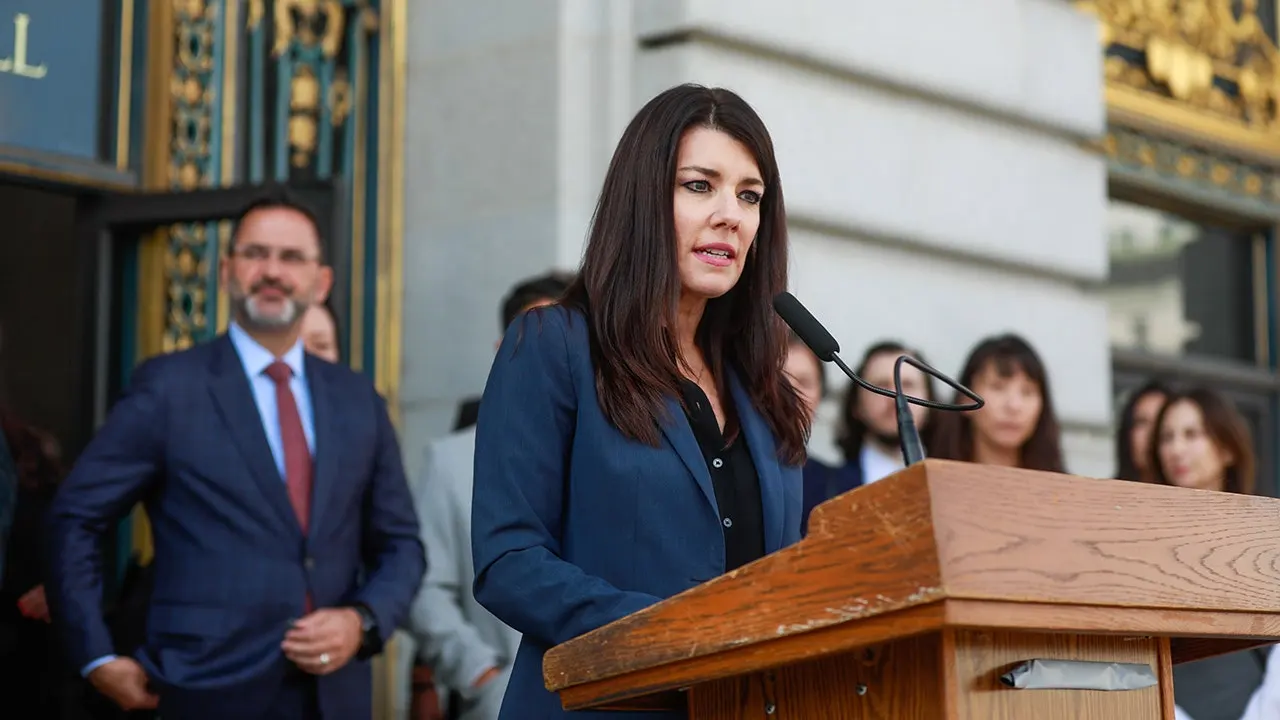
When Mo joined Assemblywoman Stefani’s office in January 2025, he stepped into a role that required patience, empathy, and deep local knowledge. As a field representative, he was a bridge between constituents and the machinery of state government, helping people navigate complicated systems, advocate for their neighborhoods, and hear from their elected leaders. Stefani, who represents portions of San Francisco and San Mateo County, described him as a selfless public servant and a valued, legal employee of the California State Legislature. Her choice to call his employment “legal” was significant, because it highlighted a distinction that many people do not understand: an individual can be legally employed by a state government while still lacking lawful immigration status under federal law. That nuance was lost in the immediate political reaction to his arrest, but it matters. Stefani spoke warmly of the connection Mo brought to their work, saying that when she and Mo met with Chinese-American constituents, his presence created a sense of belonging for people who had watched him as a television reporter. She added that the entire community eagerly awaited his return to his home and job, where he is loved and adored. Her words reflected a sentiment that goes beyond politics: this is a man who mattered deeply to the people around him, and his sudden removal left a void.
The arrest also became a flashpoint in the wider conflict over immigration enforcement under the Trump administration. The Department of Homeland Security framed Mo’s detention as a deliberate rejection of what it called the “horrendous Biden-era policy” that allowed aliens in the country illegally to travel freely around the nation by air. Under the previous administration, domestic air travel was generally not used as an immigration enforcement tool; people without legal status could board planes if they had valid identification, and the focus of enforcement was largely on removal of those with criminal records or recent border crossers. The Trump administration, by contrast, has made clear that no one is above the law, including staff members of state legislatures. First Assistant U.S. Attorney for the Central District of California Bill Essayli echoed that sentiment in a blunt post on X, writing, “No one is above the law, not even the California legislature and its staff.” The policy shift is unmistakable: the administration is using arrests at airports and other public venues as a visible demonstration that illegal presence is not acceptable, regardless of professional standing or public sympathy. For supporters of the administration, this is a return to faithful enforcement of immigration law. For critics, it is a cold, performative cruelty that tears apart communities and criminalizes people who have otherwise lived openly and productively for years.
At the time of this report, Mo was expected to remain in ICE custody pending removal proceedings. His case now moves through a system that is often slow, legalistic, and unforgiving, where the outcome will depend on the details of his immigration history, any applications he filed, and the discretion of immigration judges. Whatever happens, his story has already become a symbol. For one side, it represents the end of a loophole that allowed undocumented immigrants to “jet around our country” as if they were citizens, and it sends a message that the era of indifference is over. For the other side, it is a reminder that the immigration system can be devastatingly indifferent to the human ties people build over years, decades, and lifetimes. Ho-Yin Mo is not a faceless example; he is someone’s colleague, someone’s mentor, someone’s trusted voice. He walked through life with a smile and a purpose, serving a community that now struggles to imagine civic life without him. His future may be decided by a judge, but his story, with all its warmth and complication, will remain a lesson in how the law touches real people, in the choices we make, and in the grace we extend to one another across the divides of policy and politics.